
Hand-Knotted or Tufted: Why It Matters for Cleaning
Two rugs can have almost identical pile on the floor and very different structures underneath. In a hand-knotted rug, individual pile yarns are tied into a woven foundation. In a hand-tufted rug, yarn is inserted through a base fabric and often held by an adhesive and an applied backing. Neither construction is automatically better for every home, but a cleaner needs to know which one is present. Moisture, mechanical handling, backing condition and fringe care can all be affected.

You can collect clues by looking at the reverse without pulling threads or peeling layers. Those clues help you ask better questions, not certify a rug from a photograph. A heavily backed item may hide its structure, and repairs can alter what one corner shows. The aim is to avoid choosing an entire cleaning method from the visible pile alone.
What the reverse of a hand-knotted rug can show
When the pattern is visible on both sides and you can see rows of small individual knots or irregularities in a woven foundation, hand-knotting is a possibility. The fringe may be an extension of the foundation's warp yarns rather than a decorative trim stitched on later. On some rugs the weave is very fine; on others the reverse is open and easy to read. Do not use knot count by itself as a measure of quality or as permission for a vigorous clean.
The Metropolitan Museum of Art's examination of the Emperor's Carpet illustrates how pile knots, warps and wefts form a woven structure and why the reverse helps reveal it. That historic carpet is not a model for every household rug, but the structural vocabulary is useful. A rug may contain wool pile over cotton or silk foundation, so a “wool rug” label does not capture every fibre the cleaner must protect.
Check the edges where the woven foundation is finished. Loose rows, torn warp yarns or a fringe that is breaking close to the main rug deserve attention before wet work or strong vacuuming. The handmade rug care guide gives general context; a specific fragile edge may narrow the safe plan further.

What an applied backing can conceal
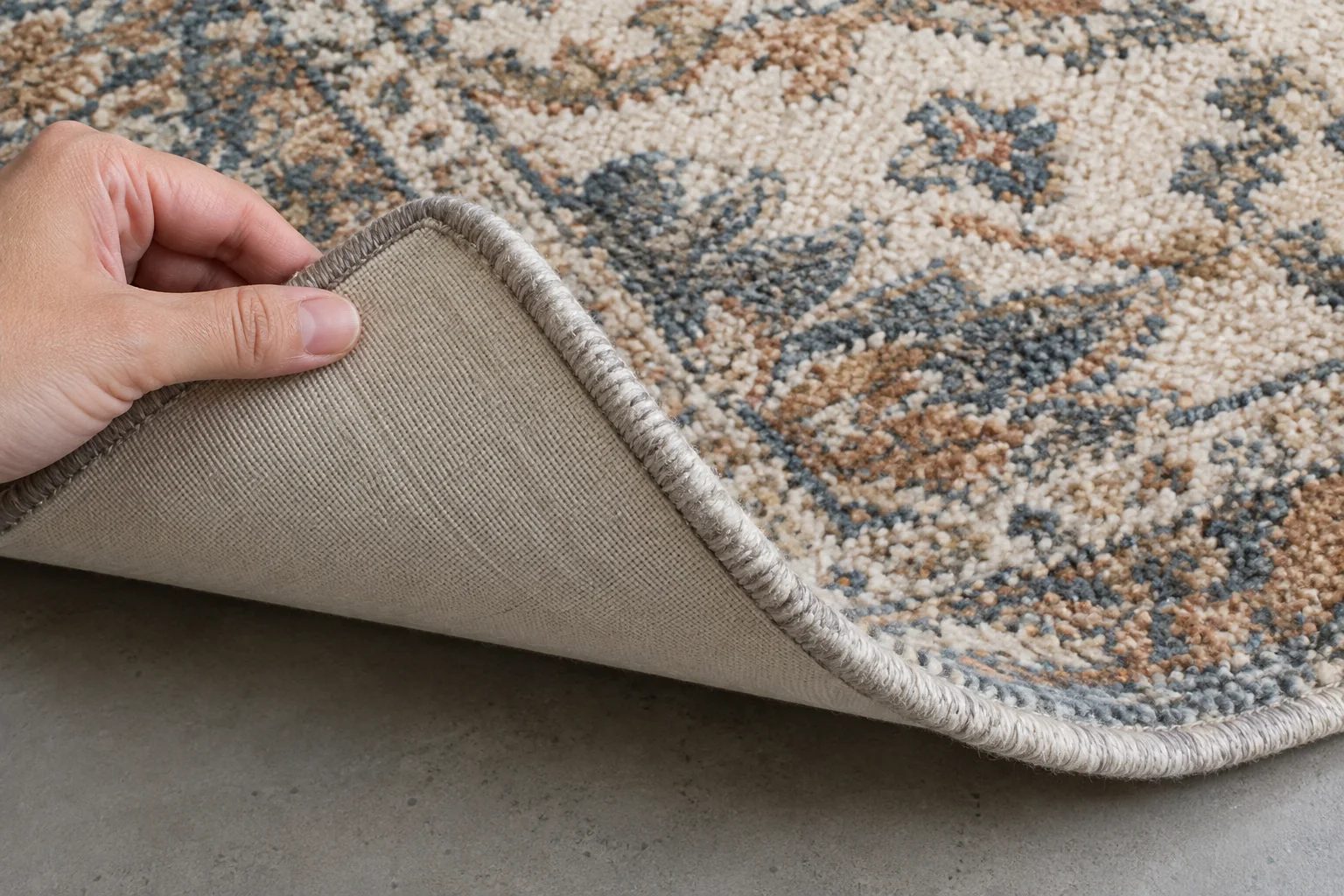
A hand-tufted rug often presents a plain cloth on the reverse, sometimes with adhesive between the cloth and the tufted base. That backing can hide the individual yarn insertion points. A thick pile and patterned face may resemble a hand-knotted rug from above, so turn a manageable section gently and photograph the back. Do not peel a loose corner to prove what is underneath; peeling may turn a small defect into wider separation.
Tufted rugs vary considerably. Some are sound and appropriate for professional cleaning after inspection. Others have ageing adhesive, loose tufts or powder beneath the rug. A backing that is already breaking down will not be restored merely by washing it. Water and movement may make delamination or odour more evident. Tell a cleaner about powder or cracking before they propose a whole-rug treatment.
Applied fringe can be attached to a tufted rug for appearance. It may need different handling from a structural warp fringe on a hand-knotted rug. A cleaner should inspect where it joins the body rather than applying one fringe technique to every rug. If the fringe is damaged, cleaning may remove soil but not repair missing or loose attachment stitches.
Why construction changes the cleaning plan
Cleaning a rug involves more than treating the top layer. Liquid can reach the foundation or adhesive, agitation can stress edges, and drying must address the whole thickness. A woven structure may have different dye and shrinkage risks from a tufted construction; neither is automatically safe to immerse. The fibre mix, prior repairs and condition still need inspection.
Suppose the face looks like robust wool. On a hand-knotted rug, the cleaner may need to consider colour movement through cotton foundation yarns and damage at an old fringe. On a tufted rug, they may need to inspect adhesive and the bond to its backing cloth. A method that removes soil from wool pile could leave a woven foundation distorted or a tufted backing compromised. The plan has to address the complete object.
The Canadian Conservation Institute's rug guidance notes several construction types and recommends conservative vacuuming, especially where threads or fringe are loose. Its advice is aimed at valuable and vulnerable rugs. The general lesson for a home is to inspect structure before applying force, not to assume a machine setting suits every rug of the same visible fibre.
Inspect without causing another problem
If the rug is heavy, get help before lifting it. Roll back a small area rather than folding it sharply. Keep wet or weak sections fully supported. Photograph the overall reverse, a close view of its pattern or cloth backing, both long edges, both fringed ends and any repair. Note whether the rug sheds yarn from the face or powder from the back; those are different clues.
Do not cut a yarn for a home identification test. Avoid scraping an adhesive layer to see whether it is latex. A powdery backing should be documented, not rubbed into the floor. If you find loose knots or torn edge binding, stop strong vacuuming and ask whether repair should precede cleaning. The existing oriental rug care guide provides wider maintenance advice for woven pieces.
If the rug is damp, check the floor underneath and allow both surfaces to dry separately. Do not lay a fragile back onto a wet underlay or expose it to direct heater air. A cleaning decision can wait until the cause and extent of moisture are known, except where urgent water damage calls for prompt professional help.
A cleaner should explain the likely limits
Ask an oriental rug-cleaning specialist what they can identify from the reverse, which dyes and fibres they will check, and how they will handle the fringe and edges. For a tufted rug, ask specifically about backing condition and whether cleaning can proceed without worsening any separation. The answer may require an in-person look, not only a square-metre quotation.
Discuss the goal: removing dry grit, treating a spill, reducing odour or improving the whole appearance. One procedure may not achieve all of them safely. A cleaner might recommend limited treatment, repair first or a textile conservator for an antique piece. Ask what result can realistically be expected if yarn, backing or adhesive has already deteriorated.
Use the contact page to send photographs and the label before collection. Include a note about any prior washing, stain remover, flood or period in storage. Such history often matters more than an unverified description such as “Persian style”.
Recognise construction, then choose care
The back of a rug is part of its cleaning story. Visible knots, woven foundation and integral fringe point to different issues from an applied cloth and adhesive-backed tufting. Neither name alone settles the method. Gather evidence without damage, check the vulnerable edges and ask for a plan that accounts for the whole rug before allowing moisture, heat or strong mechanical work.
Related Rug Cleaning Services
Explore professional cleaning options selected around the fibre, construction and condition of each textile.
Rug Cleaning Near You
View local rug cleaning information, appointment guidance and coverage across popular London districts.
Continue Reading
Read more practical guidance about fibres, stains, cleaning methods, drying and routine rug care.
Send us rug photographs and a few details.
Include the approximate dimensions, material if known, stain information and your London postcode.