
How to Check a Rug Edge for Early Unravelling
A single loose thread along a rug edge may seem too small to warrant attention. At the perimeter, however, binding and woven finishes help hold the textile together and take repeated knocks from shoes, chairs and vacuum heads. A snag can become a larger opening if the edge keeps catching. The useful response is to locate the weakness, document it and reduce stress before an intensive clean or a home trim makes it harder to repair.
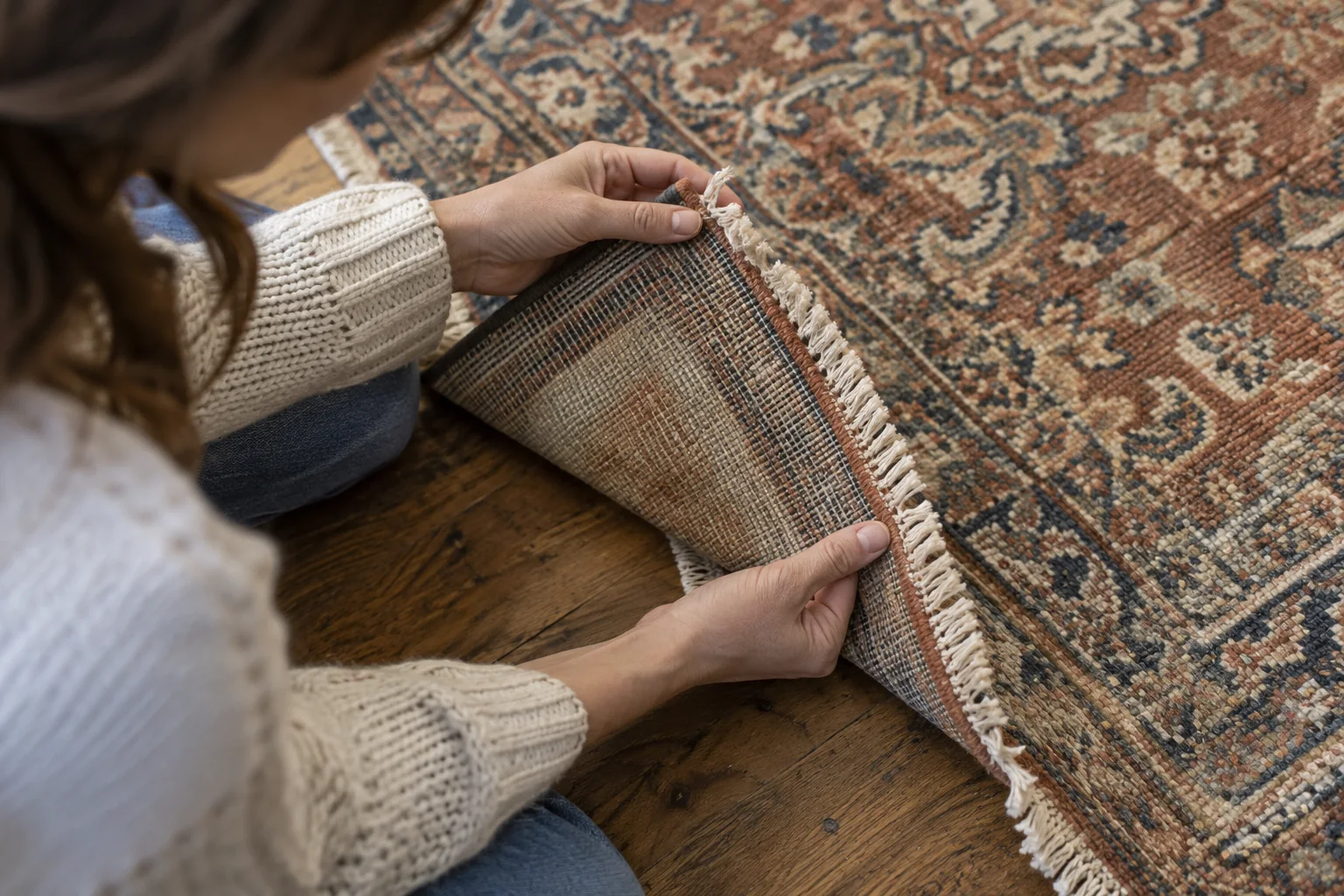
You do not need to diagnose the rug's entire construction to notice a change. You do need to avoid pulling the yarn to see whether it is “really loose”. Different rugs use sewn binding, woven selvedges or overcast stitches, and a corner may be finished differently from a long side. This guide focuses on safe observation and a sensible threshold for repair advice.
Find the parts of the edge that carry stress
Walk around the rug in good daylight and look at both long sides, both ends and all four corners. The long edge may have a stitched wrap or a woven selvedge. The short ends may have fringe, a hem or a separate binding. A woven finish and a sewn-on trim can both wear, but repair decisions differ. Photograph the entire perimeter first so a close-up has context. The handmade rug care guide explains broader care for woven constructions.
Look where furniture feet, door bottoms or a vacuum head pass most often. A lifted corner can catch on shoes. A bound side beside a sofa may rub against its leg whenever the furniture shifts. A curled edge is not always an unravelling edge, but it may expose threads to more contact. Note the practical cause as well as the visible damage.
The Canadian Conservation Institute's rug guidance identifies wear as a major source of rug damage and cautions against grabbing a large rug by one edge to move it. That handling advice matters even for a small defect: pulling the edge can transfer the rug's weight to the very stitches that are loosening.

What early damage can look like
Watch for a binding stitch that has opened, yarn ends projecting from the side, a corner whose wrap no longer reaches the pile, or a small gap between edge trim and body. A line of exposed foundation may appear where binding has worn thin. In a woven rug, the first pile row near an end can loosen if the finish no longer holds it. A tufted rug might show a separate cloth backing peeling at the edge.
Compare an affected section with an intact section of the same edge. Are the stitches equally spaced? Does the edge feel firm and lie flat, or does one part flare? Is the loose yarn a stray surface fibre that can simply be removed later, or is it connected to the binding? Do not answer by pulling. If it is connected, force can enlarge the gap.
The Canadian Conservation Institute's textile guidance describes a selvedge as a finished woven edge. The term is useful when discussing a woven rug, but a homeowner need not label every finish precisely. Good photographs of front, side and reverse are more useful to a repairer than a confident but uncertain construction name.
Handle the rug without adding load to the edge
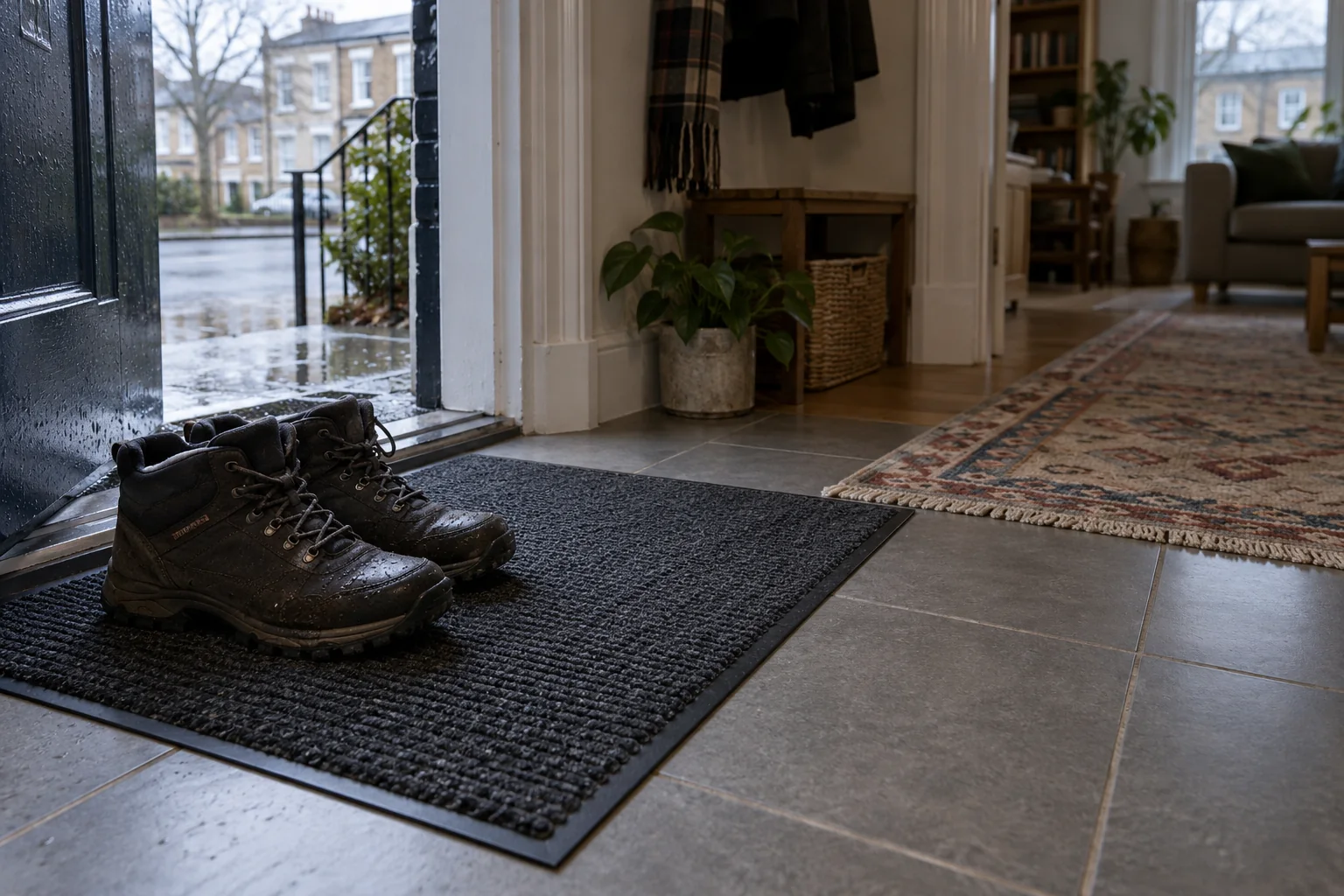
If you must turn it, lift a manageable section and support the body. Enlist help for a large or heavy rug. Do not drag it across the floor by a corner, fold a weak edge sharply or shake it by the fringe. Place it on a clean surface for inspection, then lower it rather than dropping it onto the damaged side. If the backing is brittle or the rug is damp, limit handling and seek advice first.
Keep the vulnerable area out of direct foot traffic if possible. A temporary change in furniture layout may prevent snagging while you arrange repair. Do not put adhesive tape directly on the yarns or floor to “hold the edge flat”. Tape can leave residue, pull fibres and hide how far the opening extends. A rug pad may reduce sliding, but it does not resecure stitches that have already failed.
For a worn rug in regular use, check whether an edge has become a trip hazard. A person catching their foot can pull the rug and worsen the damage. Move it out of the walkway if necessary rather than relying on a hurried home patch.
Pause forceful vacuuming and wet cleaning
A powered brush can grab a projecting yarn and unwind more than the original snag. Vacuum around a sound pile with settings appropriate to the rug, but avoid the damaged section until it has been assessed. The Canadian Conservation Institute's surface-cleaning note says textiles with numerous broken or loose elements are poor candidates for routine mechanical cleaning. The conservation technique is more cautious than ordinary domestic practice, but the principle applies: do not clean through a structural weakness as though it were normal pile.
Wet work adds further handling while the rug may be heavier and more vulnerable. A loose binding can snag during washing or extraction. A detached backing can take up moisture differently from the face. If the rug is already booked for cleaning, tell the cleaner about the edge before collection so repair or stabilisation can be considered first. The antique rug care guide offers more context for fragile pieces.
Do not cut the loose thread flush with the pile. It might be an end that a repairer could resecure. Avoid sewing through the rug with an arbitrary heavy thread unless you know the construction and repair method. An incorrect stitch can distort the edge or make future conservation more difficult.
When and what to ask a repairer
Seek advice when a binding stitch has opened, a corner continues to catch, a gap is growing or the first row of rug structure appears exposed. An oriental rug-cleaning specialist may be able to assess the cleaning sequence and refer for edge repair if needed. For a valuable historic rug, ask for a textile conservator's view before any irreversible alteration.
Send overall and close photographs of the affected side, an intact comparison area, the reverse and the edge's position in the room. Include measurements of the opening and note when it first appeared. Ask whether the problem is a loose surface trim, a failing woven selvedge or damage to the foundation. What would the repair secure, and could cleaning safely take place before or after it?
Use the contact page to describe any past washing, flood or furniture snag. An estimate based only on the total rug size cannot answer the edge question. Ask for the proposed work and any expected visual change in plain language.
A small inspection can prevent a larger repair
Rug edges are easy to overlook because attention goes to stains and colour in the middle. Check them while vacuuming, after moving furniture and before booking a deep clean. Photograph a loose stitch rather than pulling it, reduce traffic at the weak point and seek repair advice when the finish begins to open. The earlier the structure is examined, the more options there may be to keep the rug in use without worsening the damage.
Related Rug Cleaning Services
Explore professional cleaning options selected around the fibre, construction and condition of each textile.
Rug Cleaning Near You
View local rug cleaning information, appointment guidance and coverage across popular London districts.
Continue Reading
Read more practical guidance about fibres, stains, cleaning methods, drying and routine rug care.
Send us rug photographs and a few details.
Include the approximate dimensions, material if known, stain information and your London postcode.