
Mixed-Fibre Rugs: Why One Method May Fail
A rug described as “wool and viscose” may have a resilient-looking wool field with glossy accent yarns that respond quite differently to moisture and brushing. Another may have synthetic face yarn over a cotton foundation, or a silk detail at the border. The cleaner cannot choose a method for the majority fibre and assume every smaller component will follow. Water, detergent, heat and mechanical action reach more than one part of a rug.

The useful question is not simply “What percentage is wool?” It is where each fibre sits, how it was made into the rug, whether the colours are stable and which component is least tolerant of the proposed treatment. This guide shows what to inspect at home and how to frame an assessment without pretending that a label or a small test gives complete certainty.
Start with a map of the rug's components
Read the label, product specification or seller's information. Note whether percentages describe the pile, the whole rug or just a collection name. A rug can mix fibres within one motif, place different yarns in adjacent areas or use one material on the face and another in the foundation. Look at fringe, binding and backing separately. A woven edge may have different dye and wear from the main field.
Photograph the rug as a whole and then photograph each distinct texture in good daylight. A matte field and glossy motif are useful observations, but they are not fibre identifications. Viscose can resemble silk; finished synthetic yarn can look woolly. Do not pull yarn from the rug for a home burn test. If the specification is absent or vague, describe the fibre as uncertain to the cleaner and keep the purchase record if you have it.
The WoolSafe Organisation's fine-fibre guidance advises treating a blend with the sensitivity of its most vulnerable fibre. It explicitly uses wool and viscose as an example. That is a practical risk principle, not an instruction to apply one fixed low-moisture process to every mixed rug. Construction, dyes and condition still need checking.
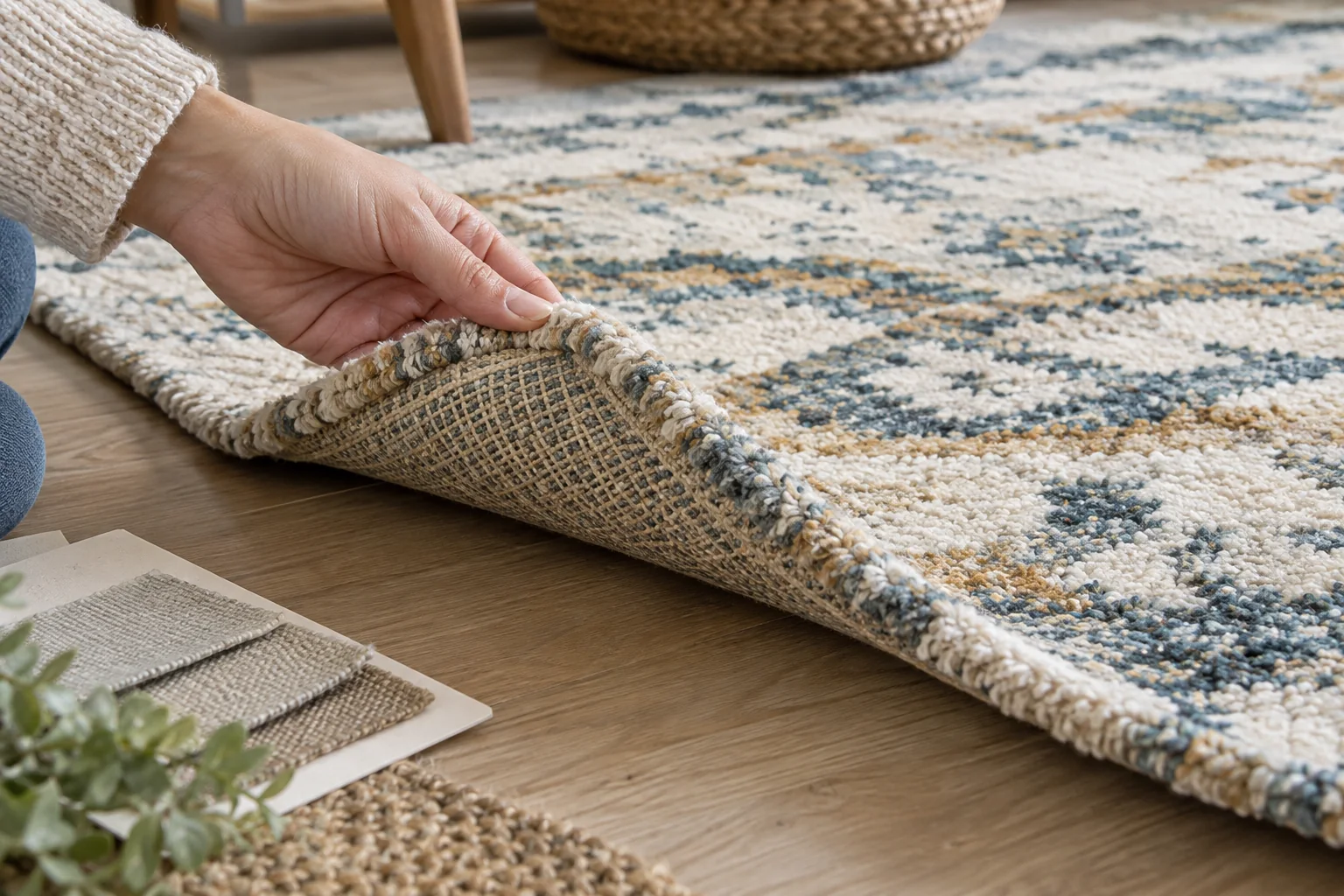
A resilient pile can sit over a vulnerable foundation
Cleaning liquid does not stop at the visible fibre. It may reach a cotton foundation, adhesive-backed tufting, dye in a border or an underlay. A rug with a synthetic pile can still shrink, curl, bleed or develop a backing problem if the other components are unsuitable for the process. Conversely, a wool pile that tolerates careful professional cleaning may be paired with decorative yarn that cannot tolerate the same agitation.
Lift a manageable edge without folding sharply. Look for a woven reverse, applied backing cloth, powdery adhesive, repairs or detached binding. Photograph anything that looks weak. A label sewn to the underside may list several materials, but it may not state which is used in each part. Ask the seller for a more precise construction sheet if the rug is new and valuable.
The existing guide to the best rug materials compares common fibres, but an individual rug can cross those categories. A method suitable for a plain wool rug should not be transferred to a wool-viscose rug by ignoring the glossy motifs. Nor should a specialist promise full immersion because a label lists a high percentage of a washable-looking fibre.

Colour stability varies within one rug
Each colour and yarn may have been dyed or finished differently. A dark motif next to a pale field creates an obvious transfer risk if moisture moves dye across their boundary. A fringe may be undyed cotton even when the pile is colourfast. Test results from one corner do not automatically cover every colour, pile type or backing layer.
The Canadian Conservation Institute's colourfastness guidance makes clear that even a specialist test is only one factor in deciding whether a museum textile can be wet cleaned. A household hidden-spot dab is still more limited. It can reveal immediate colour transfer, but not prove that an entire rug will dry evenly after prolonged contact and agitation.
If colour appeared on a white cloth during a previous spill, save a photograph and tell the cleaner. Do not repeat tests around the rug to “find a safe colour”. Testing itself wets or alters small areas. If the rug has high financial or sentimental value, a conservator or specialist should decide how much testing is justified.
One method can produce several visible results
Imagine a rug with a matte wool field, shiny viscose motifs and a cotton foundation. A wet process might remove dirt from the wool, alter the sheen of the motifs and move coloured residue through the foundation. The result could be cleaner overall yet less visually even. A dry compound might reduce surface soil while leaving a deep water-soluble stain. A strong brush could remove loose dirt and simultaneously distort a delicate accent yarn. A single label such as “gentle” does not resolve those trade-offs.
The Canadian Conservation Institute's note on commercial dry cleaning of museum textiles explains that varied components may respond differently to wet cleaning, but also insists that all parts be compatible with the chosen solvent. That source is about museum treatment, not a prescription for household rugs. Its wider lesson is to assess every component and the likely type of soil before choosing a process.
Ask what the cleaner proposes to remove. Dry grit, an oily patch and a sugary drink call for different considerations. A method that minimises risk to one fibre may leave a particular stain; the right decision may be to accept some visible residue rather than damage a vulnerable motif. These are choices to make openly before treatment, not surprises to explain afterwards.
First care at home should stay conservative
Keep dry grit from grinding into the rug by vacuuming only where the construction is sound and the maker permits it. Use a suitable low-suction setting, avoid a powered brush on delicate pile and keep fringe clear. Stop if yarns catch or the backing sheds powder. A loose edge is a reason to seek repair advice before routine cleaning continues.
For a fresh liquid spill, blot gently with a clean white cloth, check underlay and floor, and record what was spilled. Avoid pouring water across a border or applying a product to all colours at once. Do not choose a wool detergent because wool appears in the fibre list; it may contact a second material. The article on DIY rug-cleaning mistakes gives wider reasons to pause before experimenting.
If a previous product has already been used, keep its packaging and explain where it was applied. The cleaner needs to know which areas have different chemical histories. Let the rug and floor dry separately if they are damp. Do not use a heater to hurry one section while the other stays wet.
Questions that make a quotation meaningful
Send a rug-cleaning specialist photographs of the face, each distinct yarn, the reverse, label and any stain. Ask which fibres and structural parts have been identified and which remain uncertain. What is the most vulnerable component? How will colours and backing be checked? What contact time, moisture, temperature and mechanical action does the proposed process involve?
For a particularly delicate design, a luxury rug-cleaning assessment may be appropriate. Ask how the rug will be dried, what limitations are likely and whether a small trial could change the plan. A good answer can include a recommendation to clean only part of the rug, seek a textile conservator or leave a stable mark alone. Provide your history through the site's contact route before agreeing to collection.
Let the weakest component set the boundary
Mixed-fibre rugs invite oversimplification because the face often looks like one object. Cleaning has to account for its separate yarns, dyes, foundation and finish. Gather the available evidence, avoid destructive identification tricks and ask for a process justified for the whole construction. The safest choice may not be the one that promises the brightest immediate result; it is the one whose risks and likely gains are clear before work begins.
Related Rug Cleaning Services
Explore professional cleaning options selected around the fibre, construction and condition of each textile.
Rug Cleaning Near You
View local rug cleaning information, appointment guidance and coverage across popular London districts.
Continue Reading
Read more practical guidance about fibres, stains, cleaning methods, drying and routine rug care.
Send us rug photographs and a few details.
Include the approximate dimensions, material if known, stain information and your London postcode.