
Why Rug Fringes Need Different Care from the Pile
Fringe is often the lightest part of a rug and the first to look grey. That appearance invites more vigorous cleaning than the dense pile receives. On a woven rug, however, fringe may be the ends of warp yarns that continue through the foundation. Pulling, brushing or bleaching them can weaken something structural, not merely a decorative tassel. On another rug the fringe may be sewn on as a trim, with its own attachment and cleaning limits.
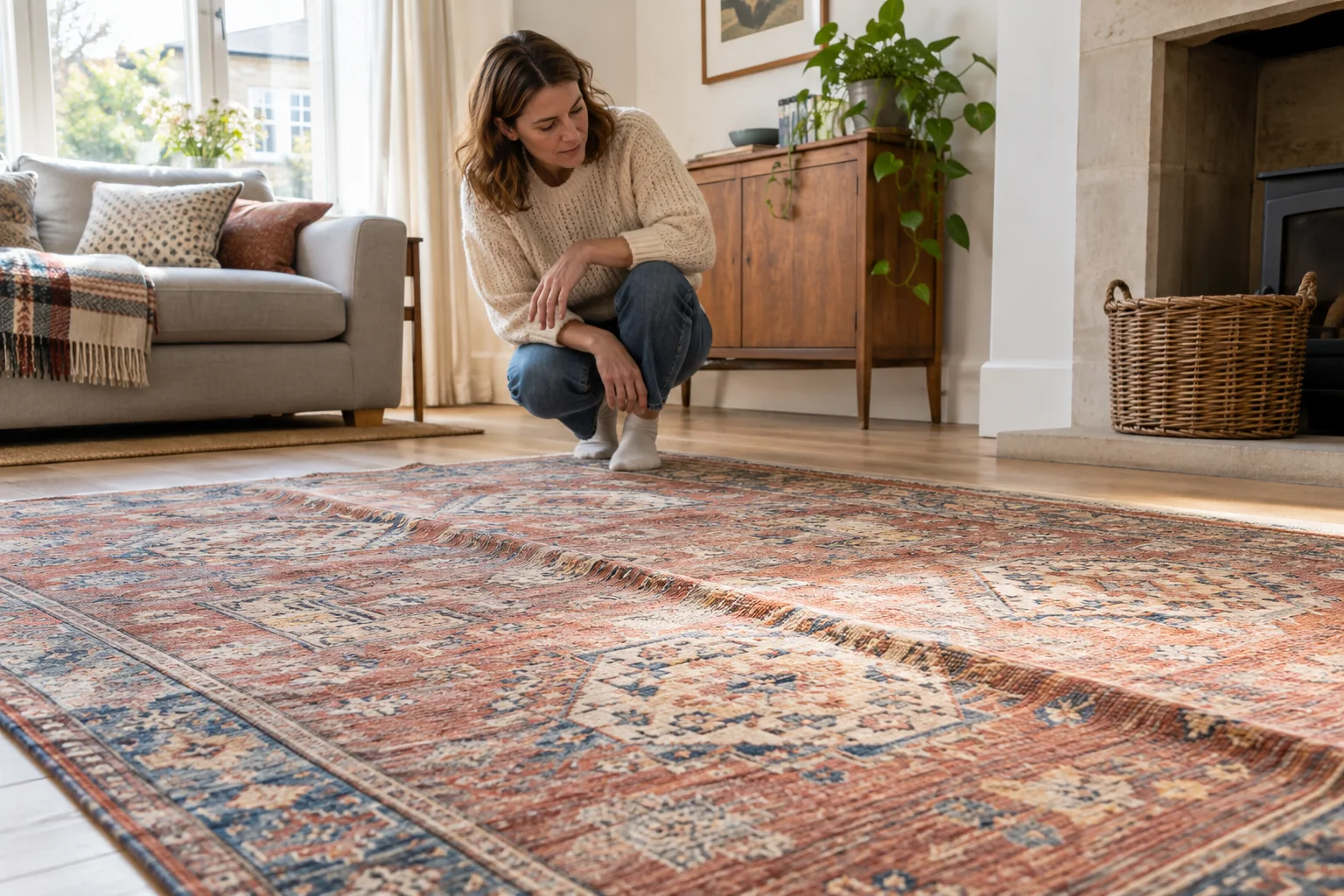
Before trying to whiten or straighten a fringe, identify how it joins the rug and whether threads are already breaking. Cleaning can remove some soil; it cannot replace lost yarn or reattach a failing edge. This guide shows what to inspect and how to avoid turning a dirty-looking fringe into a repair problem.
First ask whether the fringe is structural
On many hand-knotted and woven rugs, lengthwise warp threads extend beyond the main body and form the fringe. They may be twisted, knotted or simply finished at the ends. If those yarns loosen close to the first row of knots, the edge of the rug can begin to unravel. An applied fringe on a tufted or machine-made rug can look similar from above but is attached as a separate component.
Turn a manageable end gently and examine where the fringe meets the main textile. Photograph both front and reverse. Look for stitching that holds an applied trim, or for yarns that appear continuous with the foundation. Do not pull an individual thread to test the connection. The cleaner can inspect uncertain construction, especially where a backing cloth hides the join.
The Canadian Conservation Institute's basic rug guidance warns users to watch for loose threads and fringe during care. Its guidance is aimed at valuable and vulnerable rugs, yet the logic applies to any woven edge: damage at the end can matter beyond its colour. Our oriental rug care guide provides wider context for woven constructions.

Why vacuuming catches fringe so easily
Loose ends can be drawn into a vacuum head or wrapped around a powered brush. A single snag may tighten and pull yarns unevenly. Keep the head on the pile and stop before the fringe, then deal with loose surface dust on the fringe separately if it is sound. Do not run a beater bar across tassels to make them lie flat.
For a fragile textile, the Canadian Conservation Institute's mechanical surface-cleaning note describes protective screening and specifically says to cover fringes. That is a conservation technique, not an instruction to improvise a mesh in a domestic machine without checking whether it could catch threads. If the fringe is splitting or loose, pause vacuuming that area and seek advice.
If the pile needs routine vacuuming, select low suction appropriate to the rug, follow the pile direction and keep the machine clear of the ends. A person can lift or hold the fringe safely aside while another vacuums nearby, provided no thread is pulled taut. Watch where chair legs and door edges pass; repeated mechanical contact can fray fringe even when no vacuum touches it.

Dirt, ageing and damage are different problems
An ivory fringe may be darker than the pile because it sits exposed at the edge and collects foot traffic and floor dust. It may also have yellowed with age, light or prior products. A brown line close to the body could be transferred soil or a previous water mark. None of these can be diagnosed from colour alone.
Look for broken yarn ends, uneven length, loosened knots and an edge that seems to open. These are structural observations. Compare with an end protected beneath furniture if possible. Take a close photograph before cleaning, preferably with a ruler. If the fringe is missing in patches, no amount of whitening will make it continuous again.
The Institute's washing note for non-coloured textiles points to untwisting fringe and fuzzy yarns as possible signs of past washing. That observation should make you wary of interpreting a ragged finish as simple dirt. It also does not mean every washed fringe is irreparable; it means condition and history belong in the assessment.
Why bleach is a poor shortcut to white
Strong whitening chemicals can alter the colour and strength of yarns and may migrate into the first rows of the rug. The fringe could be cotton while the pile is wool or silk, and dyes at the boundary may respond differently. Even if a product makes the tassels look lighter today, it may leave a weakened or uneven result. A cleaner should identify the fibre, dye and attachment before considering any stain or colour treatment.
Do not pour a household bleach or peroxide solution on the fringe and let it soak into the end of the rug. Do not combine products or scrub with a stiff brush. The apparent improvement can disguise fibre loss until the fringe is handled later. A small hidden test cannot establish the long-term effect on yarn strength or the behaviour of nearby colours.
Water alone also needs control. A saturated fringe can wick moisture into the foundation and dry with a line near the edge. If a drink reaches the fringe, blot with a clean white cloth and check the reverse and floor. Tell a professional what was spilled and which products, if any, touched the yarns. The guide to DIY rug-cleaning mistakes covers the wider risk of layering products before the construction is understood.
Cleaning versus repair
Cleaning may reduce soil on intact yarn. Repair may be needed when warp ends are breaking, knots unravel or applied fringe detaches. Ask for these as separate recommendations and prices. A contractor who promises to “clean the fringe” may not be offering any structural work. Conversely, replacing an applied trim may change the rug's appearance but be appropriate when it is badly worn.
If the fringe belongs to a historic or valuable woven rug, ask a textile conservator before allowing trimming or replacement. Original length, twist and attachment can be significant. A new fringe sewn over a damaged original may hide a problem rather than stabilise it. Take photographs and agree on the goal before any yarn is cut.
An oriental rug-cleaning assessment should include the ends, not only the pile. Send close views of both fringes, front and back, plus any loose yarns. Ask how the fringe will be protected during dust removal, washing and drying, and whether repair should precede cleaning. Use the contact page to explain whether your main concern is greyness, a stain or physical loss.
Protect the end while caring for the rug
The easiest way to preserve fringe is to keep it out of vacuum brushes, furniture movement and repeated wet treatments. Inspect where it meets the body and stop strong cleaning if threads are loose. A clean-looking fringe is a useful cosmetic aim only after its structural role is understood. When appearance and strength conflict, protecting the yarns gives the rug a better future than forcing the ends to look newly white.
Related Rug Cleaning Services
Explore professional cleaning options selected around the fibre, construction and condition of each textile.
Rug Cleaning Near You
View local rug cleaning information, appointment guidance and coverage across popular London districts.
Continue Reading
Read more practical guidance about fibres, stains, cleaning methods, drying and routine rug care.
Send us rug photographs and a few details.
Include the approximate dimensions, material if known, stain information and your London postcode.