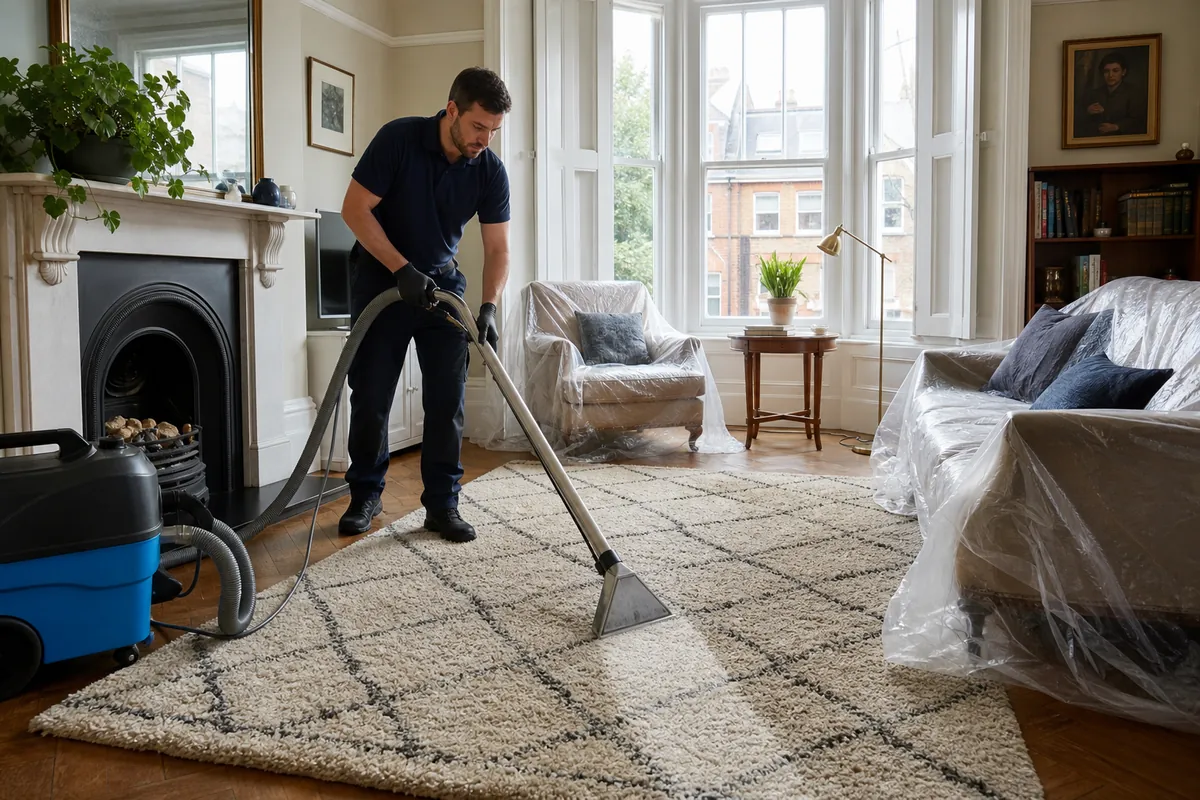
We clean suitable rugs in Kentish Town using on-site machine extraction. This process introduces moisture and requires drying; we do not offer dry cleaning. We assess the complete rug, including added details and edges, before agreeing preparation, local treatment and extraction using portable equipment brought to your property.
Mobile service in Kentish Town · Cleaning method agreed after inspection
A clear explanation of the actual service we provide
Our cleaning service uses liquid application and recovery through an extraction machine. The rug is treated at your property and dries there afterwards. We make that clear before the appointment so the proposal matches what will actually happen. If you are enquiring about a textile with an added border, decorative feature or later repair, we consider that feature as part of the whole construction. Its response can matter just as much as the open central surface.
The visit is organised around useful soil removal and the concerns you want assessed. We inspect first, prepare suitable accessible loose particles and use selected local attention where appropriate before the extraction sequence. The operator follows the material findings through the work rather than assume an added detail behaves like the rest of the rug. At completion we explain the outcome, any continuing limitation and the drying arrangements. You receive a practical description of our service without needing to choose technical equipment settings or diagnose an unfamiliar connection yourself.
Showing an added detail in the context of the rug
A whole-item photograph helps us see where an edge or added feature belongs within the design. We ask for approximate size and closer views of concerns, together with care information that reliably relates to the rug. Known repairs and products previously used are useful background. You do not need to pull a connection apart to explain it. We record what can be observed and keep uncertain materials open for assessment, rather than assigning a treatment from a photograph alone.
We discuss the broader cleaning request alongside that feature. General soil and individual stains may need attention even when one edge prompted the enquiry. The proposal records those priorities and the surface expected to be available around furniture. Other requested rugs are listed individually. This lets us prepare for a defined extraction appointment while leaving the final decision about suitability to the checks at the property, including any joined area whose condition cannot be established reliably through an initial image.
Checking the complete construction before agreement
At inspection we examine the surface, accessible support, edges and finishing details, including any known later addition. Relevant fibre and dye response checks inform suitability and handling. The point where materials meet can affect how the rug tolerates treatment, so a stable centre does not replace attention to the connection. We explain the implications in plain terms, connecting findings to the work proposed rather than presenting the assessment as a detached technical exercise with no effect on the appointment.
If extraction cannot appropriately be carried out, we explain the restriction or decline the proposed treatment. We do not substitute a different cleaning service. Where the rug is suitable, the aim is recovery of soil and assessed residue within the existing condition. A weakened join, missing fibres or colour loss is not automatically repaired through cleaning. Identifying those limits before application gives the customer a realistic basis for deciding about the service without reducing the visit to warnings or ignoring the useful improvement that suitable extraction can achieve.
What we confirm before extraction
Detail
Assessment
Effect on work
Main surface
Fibre and dye response
Treatment suitability
Added feature
Condition and connection
Appropriate handling
General soil
Accessible surface and priorities
Defined cleaning aim
Physical damage
Strength and existing change
Limits explained
Preparing particles and arranging safe access for the work
We vacuum suitable accessible areas to recover loose grit, dust and debris before introducing liquid. Handling is adapted for the actual textile and any vulnerable edge found during inspection. Added details are not dragged into the same unrestricted action as the centre. Removing particles first supports the main clean and helps reveal marks that remain within the fibres. The preparation follows the accessible scope agreed, giving reachable ends and quieter areas a defined place rather than concentrating only on the most obvious stain.
We establish the working arrangement around the rug at the same time. The floor beneath, available space and equipment route are considered before application. Furniture movement is agreed, with covered surfaces identified where items stay in place. Access to a connection or edge is clarified rather than forced or assumed. These practical decisions support a methodical sequence and let the customer understand what the team will reach, without an awkward detail becoming an unresolved scope question once the machine is already operating.
Illustrative home setting: the complete rug is assessed before treatment.
Assessing stains without inventing their cause
For a local mark we consider the surrounding fibres, checked colour response and any known incident history. Previous product use can affect that discussion. Where the cause is uncertain, we keep it uncertain instead of identifying a substance solely from appearance. Suitable local treatment aims to release contamination that can appropriately be addressed. We explain its purpose within the complete clean, including any limitation where the visible concern involves altered dye or fibre rather than removable material alone.
Local attention is monitored and followed through with extraction recovery so released residue is collected. We decide whether another compatible step is useful from the actual response, rather than repeat treatment automatically until every contrast disappears. A stain beside an added detail may still have its own history; proximity does not prove that one caused the other. We discuss the observed outcome clearly, keeping the original concern within the final account while also recognising general dirt removal over the rest of the accessible textile.
Applying the extraction process to suitable fibres
Our portable machine applies the chosen cleaning process and collects used liquid containing dirt released from the rug. Application and recovery are coordinated over manageable sections, with operating choices based on the checked construction. The route includes reachable borders within the agreed scope, with suitable handling where an added feature changes the approach. The team retains responsibility for technical choices and explains what they do for the item, rather than expect the customer to select settings from a service name or decorative style.
Moisture is introduced during this work. The rug therefore needs a drying stage at the property, which is part of the service explanation before and after treatment. We monitor the response rather than treat extra liquid as a repair for a weak connection or a persistent physical difference. Soil and lasting condition remain separate questions. That distinction keeps the process focused on useful cleaning of the actual item, without an implication that every added section must finish with identical colour or texture to material that has a different history.
Illustrative extraction using cleaning liquid and recovery through portable equipment.
Collecting soil and reducing residual moisture
The recovery action draws used cleaning liquid back through the equipment. We assess collection as we progress and make appropriate further recovery passes where needed. This removes released contamination and reduces the moisture left for drying, giving a practical purpose to collection beyond simply finishing a wet pass. The included surface is followed to its agreed accessible boundaries. Less conspicuous sections remain within that route instead of the most open central area becoming a substitute for the whole proposed clean.
We compare the result across areas with different use and exposure. Dirt removal may reveal a contrast caused by worn pile, fading or an older repair, which cannot be resolved by repeatedly applying more solution. Where relevant, we explain that finding against the actual textile. Further compatible cleaning attention is considered for contamination still capable of useful response, while physical differences are described honestly. This gives the customer an account of improvement that recognises both general cleanliness and the particular feature that originally drew attention to the rug.
Reviewing the work and explaining drying at home
The final check covers the priorities agreed before treatment, including local marks and any edge detail that influenced handling. We discuss how the rug responded and use appropriate finishing where suitable. Any remaining issue is connected to the findings rather than given an unsupported explanation. We also confirm boundaries where furniture prevented access. This produces a clear description of the completed work on the requested surface, rather than ending the discussion with the fact that the machine has made its last pass.
We then explain the remaining moisture in relation to the rug and room. Construction, thickness, indoor conditions and the recovery achieved all affect drying. Relevant ventilation, ordinary use and furniture positioning are discussed before the visit ends. Where a visual detail is better assessed once the fibres settle dry, we identify it. We do not attach one timetable to every textile or describe the rug as immediately ready simply because application has finished; the explanation follows the actual extraction service carried out at the property.
The service and its remaining drying stage
Stage
What happens
What it means
Vacuuming
Loose particles recovered
Preparation before liquid
Extraction
Application and collection
Moisture introduced
Review
Response discussed
Result and condition clear
Drying
Rug remains at property
Ordinary use explained individually
Confirming the proposal and practical attendance
The proposed charge is prepared for the item, approximate size and cleaning concerns described. Photographs support the initial discussion, with physical inspection confirming suitability and any required change before application. We agree included work and price at that point. Extra rugs or fitted carpet areas are identified separately if requested. This gives the customer definite terms to consider and avoids a broad quotation that quietly depends on assumptions about added details, hidden surfaces or repair work beyond the cleaning appointment.
We arrange entry and the route for portable equipment before attending. Parking, floor level and any lift or stairs are considered, alongside furniture movement and space to work. More than one item can have a practical order while retaining individual suitability decisions. The arrangement also accounts for drying in the affected room. These details allow the team to arrive with a usable plan in Kentish Town and concentrate on the rug, its condition and the cleaning priorities rather than resolve basic access questions after machinery is inside.
Machine extraction cleaning price guide
Use these starting prices as a guide. Share the item size, condition and access details so the work and final quote can be confirmed.
Service
Published starting price
What is included
Timing
Carpet cleaning
From £25 per room
Inspect, pre-treat, clean
Room dependent
Rug cleaning
From £20 per rug
Inspect, assess spots, clean
Size dependent
Steam rug cleaning
From £25 per rug
Check suitability, extract
Varies
Oriental rug cleaning
From £35 per rug
Fibre, dye and condition checks
Varies
Luxury rug cleaning
From £40 per rug
Assess and select method
Varies
Mattress cleaning
From £30 per mattress
Inspect and clean fabric
Varies
Upholstery cleaning
From £12 per seat
Check fabric and clean
Varies
Sofa cleaning
From £35 per sofa
Assess fabric and clean
Varies
Planning your Kentish Town extraction visit
We identify the rug and accessible surface, discuss the concerns to assess and prepare the route for portable equipment. The work and charge are confirmed before treatment. Additional items are described separately, with suitable handling decided on each actual textile.
Local postcode districts: NW5. We confirm the visit against your full address.
No. We provide on-site machine extraction only. It introduces moisture into suitable rugs, and drying is required afterwards at the property.
Can you assess a rug with an added border?
Yes. We inspect the detail with the complete construction and relevant response checks before agreeing extraction. Its condition can affect handling or suitability.
Should I separate an unfamiliar connection?
We do not need you to pull it apart to describe the enquiry. Photographs and known details support the discussion, followed by inspection of the actual rug.
Can cleaning repair a weak join?
Cleaning is not a promise to repair construction. We explain physical issues separately and only agree treatment that is appropriate for the present item.
Will all stains come out?
Some marks include permanent colour or fibre alteration. We assess suitable local attention and explain the actual result rather than guarantee complete removal.
How do you explain drying?
We discuss the treated rug and room, including relevant ventilation, furniture and ordinary use. The explanation reflects actual construction and moisture after recovery.
Discuss machine extraction for your Kentish Town rug
Send the approximate size, an overall photograph and views of any added detail or mark. We will discuss the actual service and confirm suitable work before application.