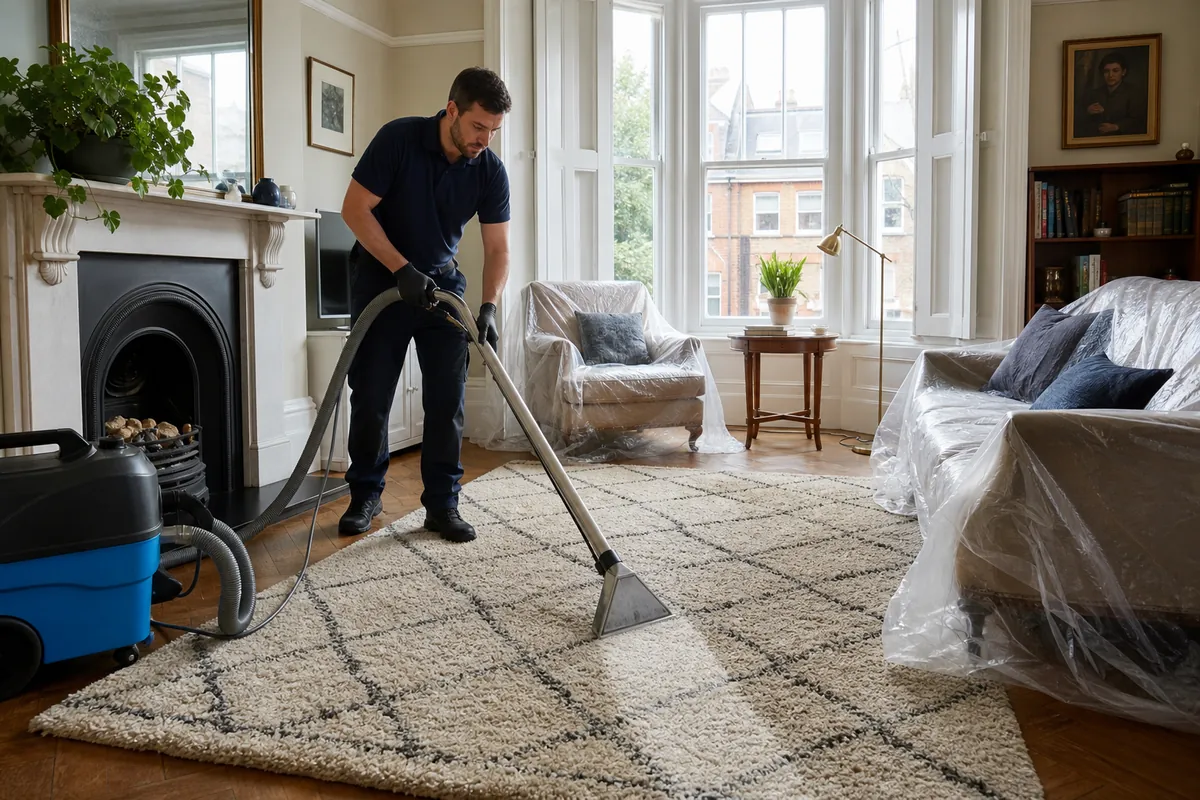
Our Knightsbridge rug service is on-site machine extraction, which introduces moisture and requires drying. We do not offer dry cleaning. We inspect the rug and any known repair before agreeing suitable work, then prepare accessible soil, address appropriate marks and recover cleaning liquid using portable equipment at your property.
Mobile service in Knightsbridge · Cleaning method agreed after inspection
Cleaning planned around the repair that exists today
A previously repaired rug can still need a general clean, but the repair is part of the item we assess. We ask where it is and what you know about it, then inspect its present condition alongside the surrounding material. An old invoice or description can provide background without proving how the section will respond now. We explain what can be agreed for extraction before starting, keeping soil removal separate from a promise to renew or strengthen the earlier work.
The actual company service uses a portable machine to apply and recover cleaning liquid at your property. It includes suitable preparation, selected local attention and a review of the outcome. Moisture remains after recovery and the rug dries in the room. We explain that sequence clearly so the appointment matches the service provided. The customer receives a practical plan for the accessible textile, including any handling restriction caused by the repair, without having to choose technical settings or open a connection to help us prepare.
Introducing the whole rug and the known repair
We ask for an overall photograph, approximate size and available care details. A closer image can locate the repaired section within the design, while information about what was done and when helps the initial discussion where known. We do not need the customer to pull at a seam or expose an unfamiliar connection. Uncertain details are recorded as uncertain, leaving the actual rug for inspection rather than turning a partial history into a conclusion about suitability before the visit.
The cleaning priorities are described alongside that history. General dirt, local marks and a repaired feature may all be relevant without being the same issue. We record the accessible area around furniture and discuss any requested movement explicitly. Additional textiles have their own entries. This prepares a clear proposal and identifies what needs checking on arrival, so the appointment concerns defined cleaning work rather than an unrestricted request to restore every repaired or worn element merely because the rug is due for attention.
Assessing the repaired construction in its current state
Inspection considers pile, accessible support, borders and finishing details, including the known repair and nearby material. Relevant fibre and colour response checks guide extraction suitability. We look for weakness and differences that could affect handling rather than assume the repair behaves exactly like the original area. Findings are explained through their effect on the proposed work. This makes the assessment useful to the customer and keeps an earlier description from replacing the present item’s actual condition as the basis for agreement.
If the construction or response prevents appropriate extraction, we explain the restriction or decline that treatment. Where the rug is suitable, we establish a realistic aim for removal of soil and assessed residue. Colour loss, missing fibres and structural damage can remain after cleaning; liquid does not automatically strengthen a repair. We identify relevant limits before application, allowing the customer to consider a concrete service on definite terms rather than expect the machine to correct every difference between original and altered sections.
Assessing a rug with an earlier repair
Detail
What we consider
Practical effect
Repair history
Known information and present state
Relevant context
Construction
Fibre and colour response
Extraction suitability
Weak features
Accessible condition
Appropriate handling
Physical change
Wear or colour loss
Realistic limits
Preparing loose particles with adapted handling
Suitable vacuum preparation removes accessible dust, grit and debris ahead of the wet process. We select action for the actual textile and take account of vulnerable details found during inspection. A repaired area is not used as a strength test through forceful handling. The purpose is to recover loose particles that can appropriately be addressed and clarify which marks remain in the fibres. Preparation follows the available surface agreed, including reachable ends rather than only the main open centre.
We set out the working arrangement at the same stage. The supporting floor, machine position and room for hoses and the cleaning head are considered before application. Furniture movement is agreed before it happens, with covered surfaces made clear when items stay in place. If access around a repair needs particular attention, that is resolved within the plan. These practical details allow the operator to follow an orderly route instead of encountering an unresolved corner or hidden boundary after the main sequence has started.
Illustrative home setting: the individual textile is assessed before extraction.
Choosing appropriate local attention for marks
We assess a mark against the surrounding textile and checked dye response, using known incident history and previous products where available. An uncertain cause is not assigned from appearance alone. Suitable treatment aims to release compatible contamination for recovery. We explain the role of that attention within the whole clean, keeping a mark near the repair from automatically being blamed on the repair itself. The actual area and response guide the decision rather than a simple assumption based on its position.
Local work is monitored and completed through extraction recovery. We collect released material and consider further compatible attention where the response makes it useful. Repetition is not automatic whenever a visual difference persists. A permanent dye or fibre change can remain after residue has been addressed, which we explain plainly. The final account recognises partial improvement where relevant and keeps the original concern visible alongside general cleaning, without pretending every longstanding patch must disappear before the service has achieved a useful result.
Carrying out the actual extraction service
For a suitable rug, our portable extractor applies the selected cleaning process and draws back used solution carrying released dirt. The operator coordinates application and collection through manageable sections, with the checked construction guiding technical action. The route covers the agreed accessible surface, including reachable borders and spaces beside furnishings. We explain the machine’s purpose for the item and retain responsibility for operating choices, rather than requiring the customer to select unfamiliar settings based on the rug’s age or repair history.
This process introduces moisture. Drying follows at the property and remains part of the explanation before and after treatment. We watch the textile’s response as the sequence develops and do not use heavier wetting as a substitute for a material decision. A faded or weakened section is not repaired by more liquid. The work remains focused on releasing and recovering suitable contamination, with the earlier repair still considered during handling rather than forgotten once the first machine pass has been made.
Illustrative extraction with liquid application and machine recovery.
Recovering dirt and checking the included surface
The collection stage carries dirt-bearing liquid away through the equipment. We evaluate recovery during the route and make suitable further recovery passes where required to reduce moisture remaining in the rug. That is part of the removal process, not simply an optional finish after application. Quieter reachable ends remain within the sequence, so a central pass does not stand for the complete accessible area agreed. The purpose is both removal of contamination and support for the drying stage that follows.
We then compare the surface across areas with different histories. Original and repaired material can retain differences of texture or colour after soil is removed. Wear and exposure can also affect sections independently. We explain relevant physical features rather than label every remaining contrast an unresolved stain. Further compatible attention is considered for contamination that can usefully respond, while unnecessary wetting is avoided where a difference cannot be rebuilt through cleaning. This gives the result a realistic basis on the actual rug.
Reviewing the work and explaining remaining moisture
Our final review returns to the cleaning priorities and any repair-related handling limit agreed before application. We describe the local response and wider appearance, with suitable finishing where appropriate. Persistent concerns are explained against the findings instead of being left outside the account. Furniture boundaries are confirmed, and a feature better judged once dry is identified where useful. This gives a clear description of completed work on the item rather than simply announcing that the machine has finished its route.
We explain drying using the textile and room conditions assessed during the visit. Construction, thickness and moisture left after recovery matter, together with relevant ventilation and furniture positioning. Ordinary use is discussed for that setting rather than through a deadline applied to every repaired rug. The customer understands what remains after extraction and how the space returns to use. This closes the practical account of the service, with the moisture-bearing nature of the process clear before the equipment is packed away.
The service we carry out
Stage
Our action
What it means
Preparation
Suitable vacuuming
Loose particles removed
Extraction
Apply and recover solution
Moisture introduced
Review
Explain actual response
Result and condition clear
Drying
Discuss rug and room
Remaining stage at home
Confirming the proposal and organising the appointment
The proposed charge describes the requested rug, approximate dimensions and priorities. Photographs, care wording and known repair history support the initial discussion, while physical assessment confirms suitability and any change before treatment. We agree the included work and charge before application. Extra rugs or fitted floor areas are listed separately when requested. This keeps the proposal reviewable and avoids a broad price depending on assumptions about hidden surfaces, furniture movement or repair work beyond the cleaning appointment.
We discuss entry, parking and the floor where the rug is used, including lift or stairs for portable equipment. Furniture arrangements and working space are agreed explicitly, with drying considered alongside access. Several items can have a practical order while keeping individual treatment decisions. These details prepare an organised visit in Knightsbridge, allowing the team to concentrate on the rug and its cleaning needs once inside rather than settle avoidable basic route questions after machinery has arrived at the property.
Machine extraction cleaning price guide
Use these starting prices as a guide. Share the item size, condition and access details so the work and final quote can be confirmed.
Service
Published starting price
What is included
Timing
Carpet cleaning
From £25 per room
Inspect, pre-treat, clean
Room dependent
Rug cleaning
From £20 per rug
Inspect, assess spots, clean
Size dependent
Steam rug cleaning
From £25 per rug
Check suitability, extract
Varies
Oriental rug cleaning
From £35 per rug
Fibre, dye and condition checks
Varies
Luxury rug cleaning
From £40 per rug
Assess and select method
Varies
Mattress cleaning
From £30 per mattress
Inspect and clean fabric
Varies
Upholstery cleaning
From £12 per seat
Check fabric and clean
Varies
Sofa cleaning
From £35 per sofa
Assess fabric and clean
Varies
Planning an extraction visit in Knightsbridge
We organise the requested textile, accessible area and equipment route, with known repair details considered during assessment. Included work and charge are confirmed before treatment. Additional items receive separate descriptions and their own suitability decisions.
Local postcode districts: SW1X, SW7. We confirm the visit against your full address.
No. The company provides on-site machine extraction only. It introduces moisture and the rug requires drying afterwards at the property.
Can you assess a previously repaired rug?
Yes. We inspect its present construction, condition and response, including the repair. That assessment establishes whether extraction can appropriately be agreed.
Does cleaning strengthen the repair?
Cleaning is not a promise to renew or strengthen construction. We explain existing physical features separately from the soil removal the service can achieve.
Do I need to open the repaired area?
No. Known details and photographs support the enquiry; inspection of the actual rug informs treatment without requiring you to pull at an unfamiliar connection.
Can all old marks be removed?
Some involve permanent dye or fibre change. We assess suitable attention and explain the actual response rather than guarantee complete disappearance.
How is drying arranged?
We discuss the actual rug and room, including relevant air movement, furniture and ordinary use. The explanation follows the extraction carried out.
Discuss your Knightsbridge rug extraction clean
Send an overall photograph, approximate size and any known repair details. We will explain the actual service and confirm suitable cleaning work before application.