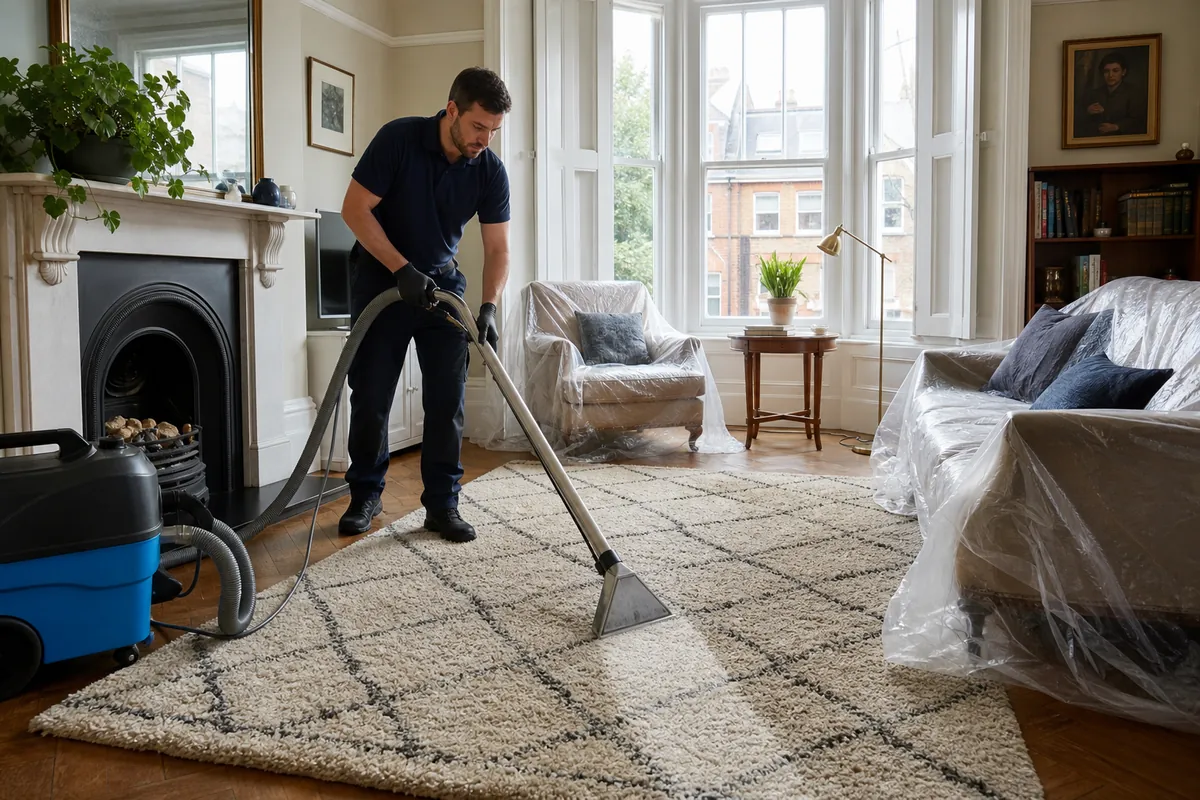
We clean suitable Oriental rugs at your Highbury property with portable machine extraction. Our visit starts with the rug itself: its fibres, dyes, foundation and condition. We explain the proposed clean, prepare the accessible surface, address appropriate marks and recover released dirt before discussing drying in the room.
Mobile service in Highbury · Cleaning method agreed after inspection
A cleaning plan for the rug and its actual construction
An Oriental rug can sit on a separate underlay for years, making the two feel like one furnishing. For cleaning, however, we identify the textile and its supporting accessory separately. A label on an underlay does not identify the rug above it, and a familiar design does not tell us everything about the fibres or dyes. We examine the item we are being asked to treat and connect those findings to a clear proposal for extraction.
Our work takes place in your home. We bring portable machinery, establish a suitable working arrangement and agree what can be cleaned before starting. The purpose is to remove soil and address compatible local concerns while respecting the rug’s present condition. We explain what belongs to cleaning and what reflects wear or another physical issue, then account for the result and remaining drying stage. You receive a service organised around the textile you use rather than a general description based only on its pattern.
Identifying the textile above the underlay
At enquiry stage we ask for a view of the complete rug, approximate dimensions and photographs of the areas troubling you. Available care wording can be useful when it clearly belongs to that item. We record the separate underlay as a separate detail, including anything you know about how the rug rests on it. This gives us a reliable starting point without treating information from one layer as proof of the other’s material or cleaning requirements.
We also ask about known spills, products used previously and visible repairs. Your observations help locate the concern; they do not have to provide a technical diagnosis. On arrival we inspect what is physically present and confirm which accessible surfaces are included. Where furniture covers part of the rug, the proposal distinguishes its full size from the area available to work on. Movement is discussed explicitly, so the intended clean does not depend on an assumption about who will shift an item once machinery is ready.
Checking fibres, colour response and finishing details
We look beyond the central design to the accessible foundation, borders, edges and fringes. These features can influence how the rug tolerates handling and moisture. Relevant fibre and colour response checks inform the decision about machine extraction, alongside the condition we can see. An intact centre does not settle a question about a weakened end. We describe the findings in terms of the proposed work so you understand how inspection affects the treatment rather than simply hear a list of unfamiliar material terms.
The decision concerns this particular rug in its present state. If extraction cannot be carried out appropriately, we explain the limitation and decline that treatment where necessary. For a suitable item, we identify realistic goals: recovering embedded soil, improving general cleanliness and addressing assessed marks. Wear, missing fibres and fading have a different origin and can remain visible. Establishing that distinction before application gives the result a fair basis and prevents a cleaning appointment from being mistaken for reconstruction of an ageing textile.
How we establish the proposed rug clean
Detail
Our assessment
Purpose
Rug identity
Match care information to textile
Reliable starting point
Foundation and edges
Inspect accessible construction
Suitable handling
Separate underlay
Discuss as an accessory
Clear working arrangement
Colour response
Check before treatment
Decide extraction suitability
Preparing the rug and arranging the working surface
We begin suitable preparation by vacuuming accessible loose dirt. Grit and dust need attention before the moisture-bearing part of the service, and handling follows the actual structure rather than one setting for every patterned rug. We adapt action near a vulnerable fringe or edge instead of dragging it into an unrestricted pass. This stage also lets us see which concerns remain after loose particles have been removed, helping distinguish a surface accumulation from a mark within the fibres.
The support beneath the rug forms part of the practical assessment of the working arrangement. We discuss the floor, the separate underlay and any movement needed to provide suitable access; cleaning that accessory is not automatically included in a request for the rug. Equipment and hoses are positioned with the room layout in mind. Once the accessible area is agreed, preparation follows it consistently, including reachable edges rather than only the open centre. This establishes a usable setting for the actual extraction sequence.
Illustrative home setting: the actual rug and surrounding space guide the plan.
Giving individual marks a considered treatment
A dark area in an intricate design needs assessment against its surrounding colours and fibre condition. We ask about an observed spill where one is known, then consider the checked response and any products already applied. The chosen local attention aims to release contamination that the textile can tolerate being treated for. We explain that purpose before proceeding. A prominent mark does not justify an automatic aggressive approach, and an uncertain history is kept as an uncertainty instead of filled in with an invented cause.
Local treatment is connected to recovery through the equipment. We observe how the area responds, collect released material and decide whether any further compatible attention is useful. Repeating a product indefinitely cannot replace dye lost from the fibre. Where a permanent change contributes to the mark, we discuss it in that context. This lets the appointment address the original concern without making complete disappearance of every old patch a condition for recognising the useful soil removal achieved across the rest of the rug.
Cleaning suitable material with portable extraction
The extractor introduces the selected cleaning solution and draws used liquid back from the rug with loosened soil. We coordinate those actions through sections the operator can follow properly, choosing suitable application for the assessed construction. The service is moisture-bearing and the item must dry afterwards. We explain what the machine is doing while retaining responsibility for the technical choices, so you are not expected to select unfamiliar operating settings or determine a treatment from the rug’s decorative style.
The route covers the accessible surface agreed at the start. Borders and areas alongside furnishings remain part of that plan where they can be reached. If a region carries heavier soil, we consider appropriate attention while watching the textile’s response. More water is not a substitute for a material decision, particularly around an older edge or an area with a different history of wear. Our aim is controlled removal of dirt from suitable fibres, with inspection findings continuing to guide the work after the first pass.
Illustrative extraction work using portable equipment at the property.
Removing used solution and reviewing the differences
Recovery carries the used cleaning liquid out through the machine. We pay attention to how each section is collecting and make suitable recovery passes to reduce the moisture left behind. This is a practical part of the clean, helping remove contamination rather than merely spread it in a damp surface. The operator follows the included area methodically and gives the less conspicuous reachable parts the same place in the route as the centre where the main pattern is easiest to see.
Once soil has been recovered, we compare the areas of use. A protected corner can retain a different colour from a section exposed to light, while a frequently walked route can have flattened fibres. Those distinctions may become clearer on a cleaner rug. We explain what the machine work has improved and what remains a physical feature of the textile. That prevents an old difference in colour or pile from being pursued with unnecessary wetting simply because it is still visible beside a less-used part of the design.
Explaining the result and the drying arrangement
The final check returns to your original priorities. We look at the treated marks, the wider surface and the finishing details that influenced handling. Suitable pile finishing is included where appropriate. We describe remaining concerns plainly and confirm any boundaries created by furniture, keeping the account linked to the area actually agreed. If a detail will be easier to judge once dry, we identify it rather than pretend a freshly treated, damp surface shows every aspect of its final appearance.
We then explain drying in relation to this rug and its room. Construction, thickness, indoor air movement and the moisture remaining after extraction all matter. We discuss ordinary use and furniture positioning, together with the actual support arrangement considered during the visit. A separate accessory does not make the textile instantly ready for normal use. The guidance closes the practical gap between the last machine pass and a dry rug, giving you a clear understanding of what is still happening at the property after we finish.
What the appointment covers
Stage
What we do
What you understand
Preparation
Recover accessible loose particles
Purpose before wet treatment
Extraction
Apply and recover cleaning liquid
Moisture-bearing service
Review
Explain marks and wider appearance
Actual result and limits
Drying
Discuss rug and room conditions
Next stage at home
Confirming the charge and the visit to Highbury
Your proposal brings together the rug’s approximate size, its condition and the concerns requested for attention. Images allow an initial discussion; the physical checks confirm suitability and any change needed before treatment. We explain the included work and charge before application. Other rugs or fitted carpet areas can be identified separately if requested. This keeps the agreement specific enough to review and avoids a general description that could be interpreted as every textile, support layer or hidden surface in the room.
We arrange the practical access for portable equipment as part of booking. Entry instructions, parking, floor level and any stairs or lift are discussed with the route to the working room in mind. Furniture movement and the spaces affected by drying are also considered. Where several items are wanted, we can agree a sensible order while assessing each on its own merits. The appointment can then focus on the clean, with the basic arrangements understood before the team arrives and the equipment is positioned in your home.
Oriental Rug Cleaning price reference
Use these starting prices as a guide. Share the item size, condition and access details so the work and final quote can be confirmed.
Service
Published starting price
What is included
Timing
Carpet cleaning
From £25 per room
Inspect, pre-treat, clean
Room dependent
Rug cleaning
From £20 per rug
Inspect, assess spots, clean
Size dependent
Steam rug cleaning
From £25 per rug
Check suitability, extract
Varies
Oriental rug cleaning
From £35 per rug
Fibre, dye and condition checks
Varies
Luxury rug cleaning
From £40 per rug
Assess and select method
Varies
Mattress cleaning
From £30 per mattress
Inspect and clean fabric
Varies
Upholstery cleaning
From £12 per seat
Check fabric and clean
Varies
Sofa cleaning
From £35 per sofa
Assess fabric and clean
Varies
Arranging Oriental rug cleaning in Highbury
We plan your visit around the rug, the working room and access for our portable machine. The agreed proposal identifies the item and reachable surface. Any additional textiles are listed separately, with their own suitability considered before treatment.
Local postcode districts: N5. We confirm the visit against your full address.
Yes. Our service uses portable extraction equipment at the customer’s property. We assess the individual rug before agreeing treatment and explain the moisture and drying involved.
Can the underlay label identify my rug?
It identifies that accessory, not necessarily the rug. We keep those details separate and assess the actual textile, using care information that can reliably be matched to it.
Is every Oriental rug suitable for extraction?
No. Construction, dye response and present condition determine suitability. We explain any restriction and decline the proposed treatment when the item cannot be handled appropriately.
Will you clean the fringe?
We inspect fringes as part of the item and discuss suitable attention. Their strength and response can differ from the main surface, so they do not automatically receive identical handling.
Can all marks be removed?
We assess marks individually and explain realistic possibilities. Permanent changes to dyes or fibres can remain after removable contamination has been addressed.
How is drying explained?
We discuss the actual rug and room after recovery, including relevant air movement, furniture and ordinary use. We do not attach one fixed drying time to every textile.
Discuss your Oriental rug in Highbury
Send an overall photograph, approximate measurements and details of the areas you want us to assess. We will discuss the on-site extraction visit and confirm the work before starting.