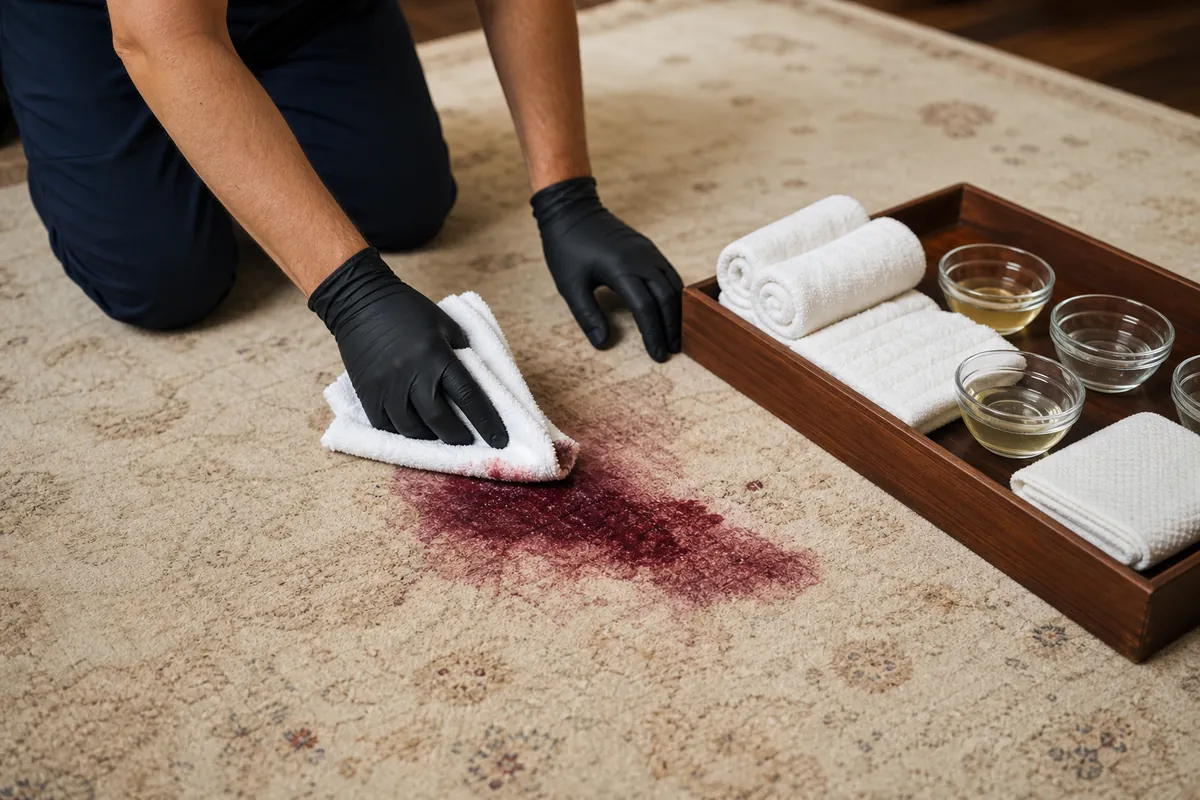
We clean suitable Oriental rugs in Islington with portable extraction equipment at your property. The service is based on the textile we inspect, including colours, supporting yarns, fringes and current condition. We prepare the pile, address appropriate deposits and recover released soil, then review the finish and explain drying for the actual room.
Mobile service in Islington · Cleaning method agreed after inspection
The cleaning decision follows the textile in front of us
Care information is useful when it can be reliably linked to the rug. If a copied note or older instruction has an uncertain match, we keep that uncertainty clear and assess the actual item. Fibres, colours, supporting construction and present strength guide our decision about extraction. We explain the appropriate scope and realistic cleaning aim before work, so you understand what the service can do for the rug you use now.
Our Islington service takes place at your property with portable machines. Suitable dry preparation removes accessible particles, selected attention addresses appropriate deposits and controlled application and recovery remove attached dirt. The rug finishes drying at the address. We inspect the result and explain the influence of any existing wear or lasting colour change, with practical arrangements for the room. You receive a connected removal service and a specific account of its outcome, with treatment decisions managed by our team and explained as the appointment progresses.
We assess material response and reliable care information
The inspection covers pile, relevant colour response, supporting layers and accessible edges. We consider any attached label or reliable care history alongside the present construction. Separate instructions are treated according to what is known about their source, without turning an uncertain match into a confirmed specification. The actual textile determines suitability and appropriate handling. We explain any limitation affecting the proposed extraction and decline unsuitable work where the fibres, colours or condition prevent appropriate treatment.
We also discuss the improvement you want, locating the concerns on the rug itself. A darkened pattern area, worn route and particular spill can involve different causes. Removable soil may coexist with permanent fibre or colour change. We identify relevant examples and set the cleaning aim against that condition. This makes the proposed service understandable and gives the final review a clear starting point. The result is assessed as suitable cleaning of the present rug, with its existing material changes recognised where they affect appearance.
Supporting yarns, edges and repairs guide the scope
We examine accessible foundation details, bindings and fringes with the central pile. A weak connection or known repair can affect local handling even when another section appears sound. We ask about reliable earlier work and consider what can be seen now. The agreement explains how those findings shape the appropriate extraction scope. We distinguish treatment of suitable contamination from rebuilding missing or damaged construction, so the role of our cleaning service is clear before active work starts.
The room arrangement is planned alongside those checks. We agree furniture movement, identify the reachable area and check the supporting floor and space for portable equipment. A section remaining covered is made explicit in the quotation and work boundary. This gives the cleaning route a practical outline. Reachable edges are considered with the main field, and any detail requiring restraint stays in view throughout preparation. The service therefore follows both the textile’s material limits and the actual accessible space at your property.
What guides the extraction agreement
Assessment detail
What we consider
Effect on the work
Care information
Reliable source and item match
Useful assessment context
Pattern and pile
Fibres and colour response
Compatible treatment
Foundation and edges
Strength and known repairs
Appropriate handling
Room setting
Floor and furniture movement
Reachable scope
Suitable preparation clears particles from the included pile
We use appropriate vacuum preparation to collect accessible grit, dust, hair and loose debris. Action follows pile direction, edge strength and the condition of fringes or repairs. This dry removal contributes directly to the clean and reduces loose material before solution is introduced. It also exposes attached deposits and texture differences more clearly. Our team carries out this stage as part of the appointment, with the resulting observations used to inform suitable local attention and machine extraction.
A pattern can appear different because of directional fibres, wear or altered colour as well as soil. We consider those influences as the surface becomes clearer. This supports a practical judgement about where further cleaning can help and what may remain part of the item. Preparation is not an isolated step; it provides information for the work that follows and improves the starting surface for removal. The actual textile continues to guide the process as we move from accessible particles to attached contamination.
Illustrative image: the actual textile informs suitable treatment.
Appropriate local treatment follows the deposit response
Known spills and previous products are discussed where available, then considered against the affected fibres and colours. We select compatible attention for a suitable mark and apply it with controlled working time and action. The response is observed and released residue recovered as appropriate. A mark crossing pattern colours or lying near a weaker edge remains subject to the material limits established earlier. Further treatment is decided from the effect seen, with the textile’s condition governing intensity throughout.
The outcome of local work can include a persistent difference where colour or fibre change is permanent. We explain the removal achieved and its relationship to the initial condition. The wider extraction also addresses suitable general dirt within scope. At completion, these responses are discussed together so the account covers both the concern raised and the broader service. You receive a description of the actual treatment on your rug, including the relevant limits of its response without assuming that every lasting shade has the same cause.
The extraction stage removes released contamination
Selected solution and appropriate working action loosen dirt attached to compatible pile. The portable extraction tool recovers the contamination with used liquid and moisture as we work across the agreed surface. Handling follows the shape, backing and present strength of the textile, including reachable borders. Application is managed with recovery. The machine work takes place at your address under the floor and furniture arrangement already established, with the observed material response guiding progress through the included area.
Some sections may hold more soil than others. Where further attention is suitable, we direct it according to the construction and removal response. We also consider wear and pile direction when interpreting a remaining visual difference. This keeps the treatment appropriate for the actual item. The main clean leads to recovery, finishing and drying information rather than ending with solution application alone. You receive a service that physically removes released material and explains how that work relates to the result and remaining room restrictions.
Illustrative image: machine recovery removes released dirt and used liquid.
Recovery and finishing complete the active clean
Appropriate extraction passes remove used solution, dirt and moisture from the treated field. Additional recovery is completed where suitable for the material. Supporting layers and thickness influence what remains, so those details are part of managing application and removal together. We then inspect the surface and revisit the selected deposits. The main machine stage has a defined conclusion, with the rug still needing to complete drying at the address after moisture recovery has finished.
The finish review includes accessible bindings, fringes and repair details discussed earlier. We explain how condition influenced handling and where existing changes remain relevant. Suitable pile is settled where appropriate and the appearance considered in the room’s light. Directional shade effects are explained if they matter to the result. This connects the construction checks with the actual outcome of the service and gives you an account of both broader removal and suitable local attention across the accessible textile.
Drying is planned for the room and supporting surface
We give a drying estimate based on fibres, pile depth, supporting layers and moisture remaining after recovery. Temperature and airflow also contribute, and the floor beneath the rug is considered in the arrangement. The item remains at the property. Any deadline for room use is discussed during booking so the expected interruption can be understood before treatment. At completion, the explanation follows the actual environment and work rather than a fixed assumption about every Oriental rug.
We describe the area that needs to remain clear and temporary restrictions on traffic or furniture contact. The arrangement includes any pieces moved for access and the textile’s actual position. Another rug cleaned during the visit may have different needs, which are explained separately. You know what still requires time after the machine work and how the room is managed during that period. This practical information makes the transition from completed extraction to ordinary use a clear part of the service.
The on-site service sequence
Stage
Our work
What we explain
Prepare
Collect accessible particles
Current surface condition
Treat
Address suitable deposits
Observed local response
Extract
Recover soil with used liquid
Main removal outcome
Review
Inspect finish and room needs
Drying and temporary restrictions
The service agreement remains clear through the final review
Photographs of the whole rug and close details, approximate measurements and reliable care wording support the initial quotation. We establish entry, parking, floor level and the equipment route while discussing the material and concerns. At inspection, final suitability, accessible scope and charge are confirmed before treatment. Any uncertain history remains identified as such. The agreement follows the actual textile and room, with appropriate work and practical limits made understandable before the cleaning starts.
Before finishing, we review the priorities established with you and explain the observed response. The account covers suitable deposits, general removal and lasting condition affecting appearance. Coverage boundaries are confirmed along with drying arrangements. Our company makes the relevant product and handling choices while explaining their practical effects. You receive an organised on-site service from the first material assessment through particle removal, selected attention, application and recovery to the final stage of drying in the room where the rug is used.
Oriental Rug Cleaning price reference
Use these starting prices as a guide. Share the item size, condition and access details so the work and final quote can be confirmed.
Service
Published starting price
What is included
Timing
Carpet cleaning
From £25 per room
Inspect, pre-treat, clean
Room dependent
Rug cleaning
From £20 per rug
Inspect, assess spots, clean
Size dependent
Steam rug cleaning
From £25 per rug
Check suitability, extract
Varies
Oriental rug cleaning
From £35 per rug
Fibre, dye and condition checks
Varies
Luxury rug cleaning
From £40 per rug
Assess and select method
Varies
Mattress cleaning
From £30 per mattress
Inspect and clean fabric
Varies
Upholstery cleaning
From £12 per seat
Check fabric and clean
Varies
Sofa cleaning
From £35 per sofa
Assess fabric and clean
Varies
Arranging Oriental rug cleaning in Islington
We confirm the address and access for portable equipment, including entry arrangements and any stairs or lift. Photographs help discuss furniture movement and the surface to be treated. The final suitability assessment, practical scope and charge are agreed at the property before cleaning.
Local postcode districts: N1. We confirm the visit against your full address.
Can you assess a rug with incomplete care information?
Yes. We examine the actual fibres, colours, construction and present condition. Reliable care details support the assessment, while uncertain information remains identified. Suitability and handling are explained before extraction is agreed.
What if an older instruction might belong to another rug?
We consider what is known about its source without treating an uncertain match as a confirmed specification. The item presented is assessed directly and the appropriate work follows its actual material response and condition.
Are fringes and repairs considered?
Yes. We inspect accessible edge and foundation details alongside the pile. Their strength and existing condition can influence handling or scope, which is explained before the treatment agreement.
Does cleaning include attention to specific marks?
Suitable deposits receive selected compatible attention. We observe the response and explain what it achieves, including any lasting fibre or colour change, alongside the broader extraction result.
Where does the rug dry?
It stays at your address. We provide an estimate and traffic or furniture arrangements for the actual construction, retained moisture and room environment, with drying planned as part of the service.
What information helps with a quotation?
Full and detail photographs, approximate dimensions and reliable care history support the discussion. We also establish property access and working space, then confirm final suitability, coverage and charge after inspection.
Discuss an assessment for your Oriental rug
Send current photographs, approximate measurements and your Islington address with any reliable care details. We will discuss suitable extraction and practical access and prepare a quotation confirmed following inspection.