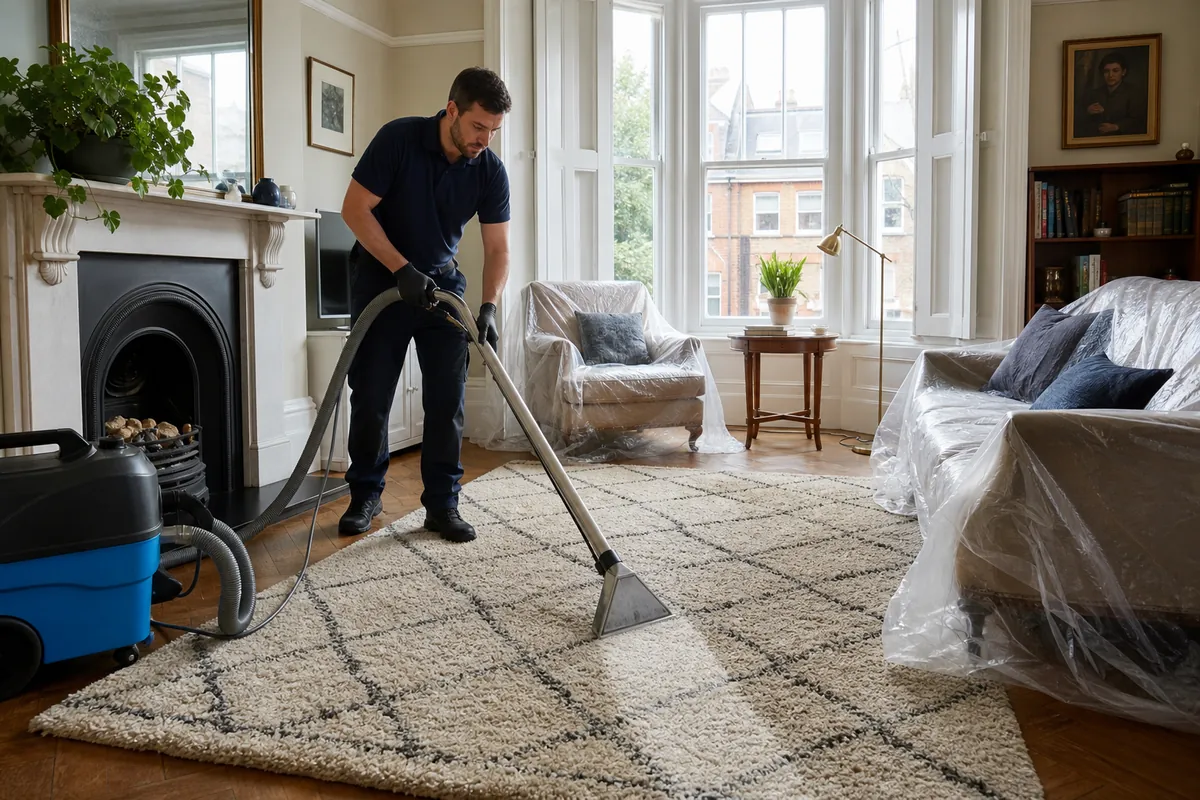
If your rug needs attention again, we assess its present condition before deciding what cleaning will be useful. Our Shoreditch service takes place at your property with portable machines. We remove accessible particles, treat suitable marks and recover released soil, explaining the process and the room conditions needed while the rug dries.
Mobile service in Shoreditch · Cleaning method agreed after inspection
A current assessment, even when the rug has been cleaned before
The right cleaning request starts with how the rug looks and feels now. You may have noticed a new spill, a dull walking area or a gradual build-up since its last professional clean. We consider those changes individually rather than assuming that the previous process should simply be repeated. Our Shoreditch appointments are carried out on site, with portable equipment and a method selected after we inspect the construction and current condition.
We ask about approximate size, known material and earlier treatments when preparing a quotation. Photographs help show the whole item and any particular concerns. We also agree furniture movement and identify access restrictions before the appointment. At the property, assessment leads into suitable preparation, local work, controlled cleaning and recovery. The final explanation covers the response and drying conditions, giving you a clear account of useful work on the actual rug rather than a general recommendation based only on how long it has been since the last visit.
Mobile serviceLondon and the surrounding M25 area
Material checksFibres and dyes assessed before treatment
Clear pricingPublished starting prices with a confirmed quote
Open dailyMonday–Sunday, 07:00–19:00
We distinguish a new incident from accumulated soil
A recent spill and an overall loss of freshness can both justify attention, but they do not necessarily need identical treatment. We ask what has changed and where you notice it. If a previous clean left a mark or a worn section, that history helps us understand the present request without assuming the same cause for every difference. We examine the affected fibres and the broader rug so the scope reflects the current condition rather than a vague desire to repeat something previously done.
We also ask which products have been used since then, including any household treatment on a new mark. That information informs the assessment but does not replace our inspection. We keep the expectation realistic where colour or fibre changes may be permanent. The aim is to identify useful cleaning available now: loose material to remove, suitable deposits to treat and general soil to release and recover. It gives the service a purpose tied to the textile, instead of treating an elapsed period as the only reason for work.
Construction and strength are checked again before treatment
A rug can change through everyday use. Edges may weaken, repairs may become more apparent and heavily used areas may show additional wear. We inspect the pile, backing, joins and borders before selecting the process, even when the item has received professional cleaning before. Relevant colour checks are considered where appropriate. We explain the suitable approach in terms of the actual findings rather than assuming that an earlier treatment proves the rug will tolerate the same work indefinitely.
Delicate pieces need an individual decision about machine suitability. If the proposed process is inappropriate for the present construction or condition, we explain that before agreeing treatment. We also identify lasting wear or colour changes that cannot be removed as though they were soil. This keeps the intended result realistic. You receive a clear description of what we can appropriately attempt and why, with the useful work considered alongside the limits rather than a blanket promise to restore every previous difference.
What a fresh assessment considers
Detail
What we examine
Why it matters
Current soil
General build-up and new incidents
Defines useful work
Previous treatment
Known products and earlier result
Informs expectations
Present strength
Backing, edges and repairs
Controls method suitability
Colour differences
Contamination, wear or dye change
Sets realistic aims
Dry preparation begins with removal, not another product application
We first remove accessible loose particles using suitable dry equipment action. Dust and grit can accumulate gradually throughout the pile, even where there is no obvious stain. We work through the included area deliberately, considering the different demands of central pile, fringes and weaker edges. Removing this material before wet cleaning gives the following stages a better starting point. It also avoids mixing loose debris with solution and asking the extraction stage to handle all forms of contamination at once.
As the surface clears, we reassess what is left. A dark area may contain attached soil, but a flattened or abraded section may still look different because of its condition. We do not repeat stronger dry passes in an attempt to reverse every visual change. Preparation serves a defined role within the sequence and helps us select useful local work. The next stage responds to what the assessment shows, rather than treating the existence of a remaining mark as proof that preparation has failed.
Illustrative image of on-site rug cleaning.
Local treatment is selected for the concern in front of us
We assess specific marks and apply compatible products where appropriate, considering the incident history and earlier applications. Suitable working time allows the product to act on the deposit before controlled agitation where the textile permits. A local mark is not automatically treated with the same product used on a different occasion. The decision is based on the current fibres, colour response and contamination we can assess, keeping the work purposeful rather than simply repeating a familiar action.
We explain the limits of that attention. A permanent dye change, damaged fibre or uncertain history can affect the outcome, and complete disappearance cannot be promised. Where a mark improves only partly, that can still be a useful result within the condition of the item. Local treatment is then connected with the broader clean of the agreed area. This prevents one visible concern from taking over the whole service while ordinary soil elsewhere in the rug remains outside the attention it needs.
The main clean releases attached soil in a controlled way
For a rug suitable for extraction, compatible solution is applied with regard to the pile, backing and present strength. Suitable working action assists in loosening attached contamination so it can be recovered. We manage coverage across the accessible area and monitor the response instead of using more liquid or force solely because a rug has been cleaned before. A previous appointment does not determine today’s volume, settings or treatment pattern; the textile in front of us guides those decisions.
The room is prepared for this on-site work. We examine the supporting floor, plan suitable protection for nearby surfaces and organise equipment space. Furniture movement is agreed before the visit, and any area that stays beneath an item is defined as a practical access restriction. The portable machines come to the property and the treatment is carried out there, with the room layout included in the plan. This lets the cleaning proceed through a consistent sequence rather than improvised changes of setup midway through treatment.
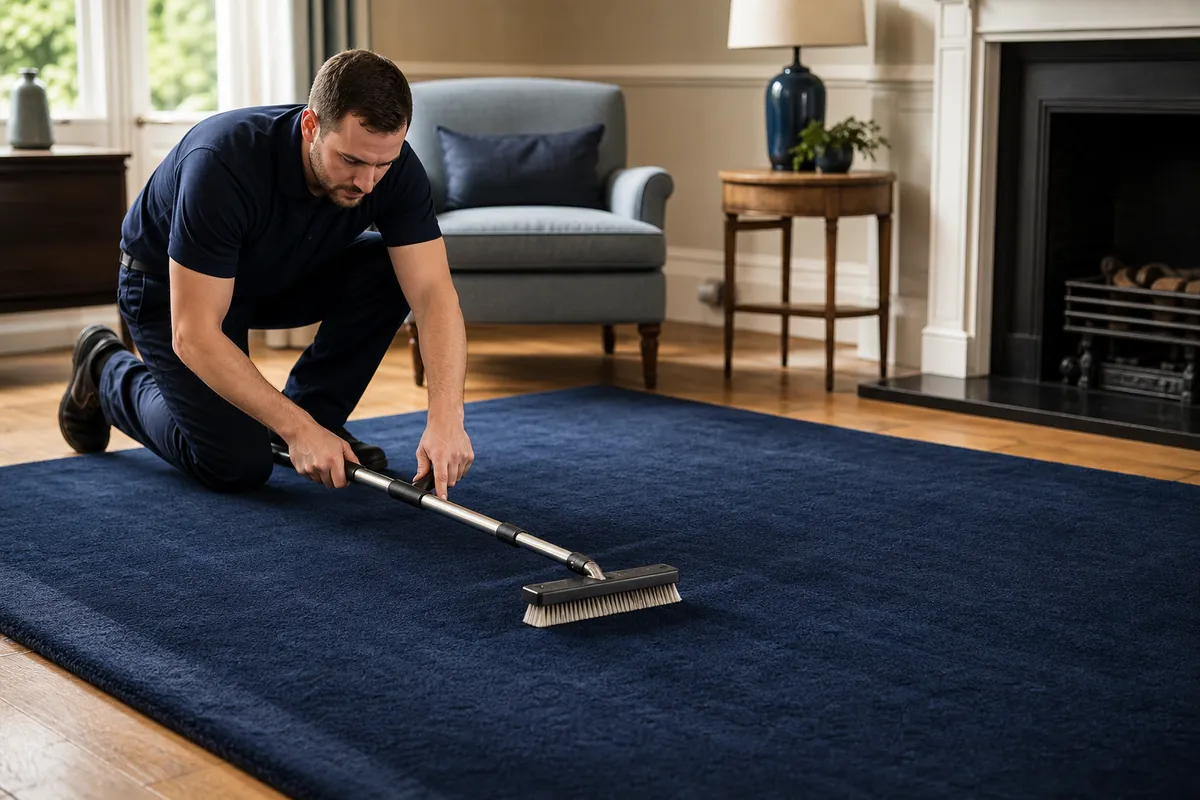
Illustrative image of suitable finishing after treatment.
Recovery completes the release-and-removal sequence
Machine extraction collects the used solution together with the contamination released from the fibres. We work through the agreed area in controlled passes, managing coverage and overlap. This removal stage is why the service is more than applying another treatment or making the surface feel damp. Preparation, local attention and the main solution stage all lead towards taking compatible soil out of the textile, with the selected method adapted to the rug’s construction and condition.
Where appropriate, extra recovery passes can remove further moisture without repeatedly introducing additional product. We watch the response and consider remaining differences against the inspection. A worn strip or altered dye is not treated as proof that another wet pass will solve it. Our aim is a completed clean with purposeful recovery, followed by realistic drying information for the property. We explain that connection so you understand what the equipment has done and why the stages work together.
We review improvement before discussing any further work
The completed clean is reviewed against the changes discussed before work. We revisit the new concern and the broader treated pile, explaining the response and any limitation still relevant to appearance. Appropriate finishing settles suitable fibres. The rug is still progressing through drying, and its immediate shade can reflect both moisture and pile direction. We include that context when describing the result rather than assuming a temporary wet difference automatically needs another treatment. The customer receives a specific account of improvement on the textile actually assessed and cleaned during this appointment.
The account is specific to the rug and the scope completed. If someone else attends for you, we explain which items were treated and what the remaining observations mean. Any question after drying can then be related to that shared understanding. We want you to have a clear basis for assessing useful improvement, rather than a vague suggestion that the textile needs continual repeat treatment simply because one worn area still differs from a protected section after contamination has been removed.
How the agreed cleaning is completed
Stage
Our action
Purpose
Preparation
Remove accessible particles
Clears loose material
Treatment
Select compatible products and action
Releases suitable contamination
Recovery
Extract soil and used solution
Completes removal
Review
Explain response and room conditions
Connects result with drying
Drying conditions complete the practical plan
We explain ventilation, traffic and furniture contact after the work, considering the rug’s thickness, treatment and room airflow. Those factors affect drying at home, so we do not promise the same exact time for every item. If furniture was moved by agreement, we describe the relevant conditions before it is restored. The person managing the room receives practical next steps tied to the treatment completed rather than a general instruction that may not fit the layout or textile.
When arranging the visit, we confirm the equipment route, parking and any stairs or lift access. Additional rugs and fitted carpet can be discussed as part of one request, with each item identified and assessed individually. This keeps the quotation and sequence clear. We finish by connecting the result, remaining limitations and drying arrangements, allowing the household to bring the space back into use with an understanding of what has actually been cleaned and what the rug needs next.
Price guide
Starting prices for Shoreditch
Published starting prices; the final quote reflects the rug and access.
For a booking in Shoreditch, include your full postcode and property access information. The map shows the service area.
Local postcode districts: EC2A, E1, E2. We confirm the visit against your full address.
Arranging your Shoreditch cleaning visit
We confirm the address, included items and practical access route before booking. Room layout and any furniture restrictions help us plan the equipment setup and the area that can be cleaned at the property.
Published customer feedback
Reviews shown to Shoreditch customers
“I booked a last-minute clean before guests arrived, and they delivered beyond expectations. The rug looks brand new!”
“Highly professional and efficient service. They cleaned two rugs at my flat and even gave advice on long-term care. Great value for money and a friendly team.”
The present rug guides the process
We assess current construction, strength and contamination instead of automatically repeating an old method. That keeps each stage focused on useful work for the item as it is now.
A specific completion explanation
We describe the response of the agreed areas, any remaining differences and the relevant drying conditions. You receive enough context to understand the result once the room is restored.
We inspect its current condition and discuss previous treatment before agreeing a method. An earlier clean does not automatically establish suitability now, especially if construction, wear or product history has changed.
How often should the service be repeated?
We base our discussion on the rug’s present soil, use and condition rather than one fixed interval. A new incident or accumulated contamination can require different work, so we assess the useful cleaning available.
Is your Shoreditch service completed on site?
Yes. We bring portable cleaning machines to the property and carry out the agreed preparation, treatment and recovery there. We also explain drying conditions for the room.
Will an old remaining mark disappear this time?
We assess the mark rather than promise that another treatment will remove it. Some differences involve permanent colour change or wear, and we explain any limitation alongside suitable local work.
Can you clean a delicate rug?
We consider the fibres, backing, edges and relevant colour response before agreeing machine treatment. If the proposed process is unsuitable, we explain that directly before work starts.
What if furniture still covers part of it?
We agree movement and responsibilities in advance. Any section that remains inaccessible is identified in the scope, so the quotation does not suggest full access where the room arrangement prevents it.
Next step in Shoreditch
Discuss rug cleaning in Shoreditch
Tell us what has changed, the approximate size and any previous treatment you know about. We will discuss the suitable work, practical arrangements and a quotation for on-site cleaning.