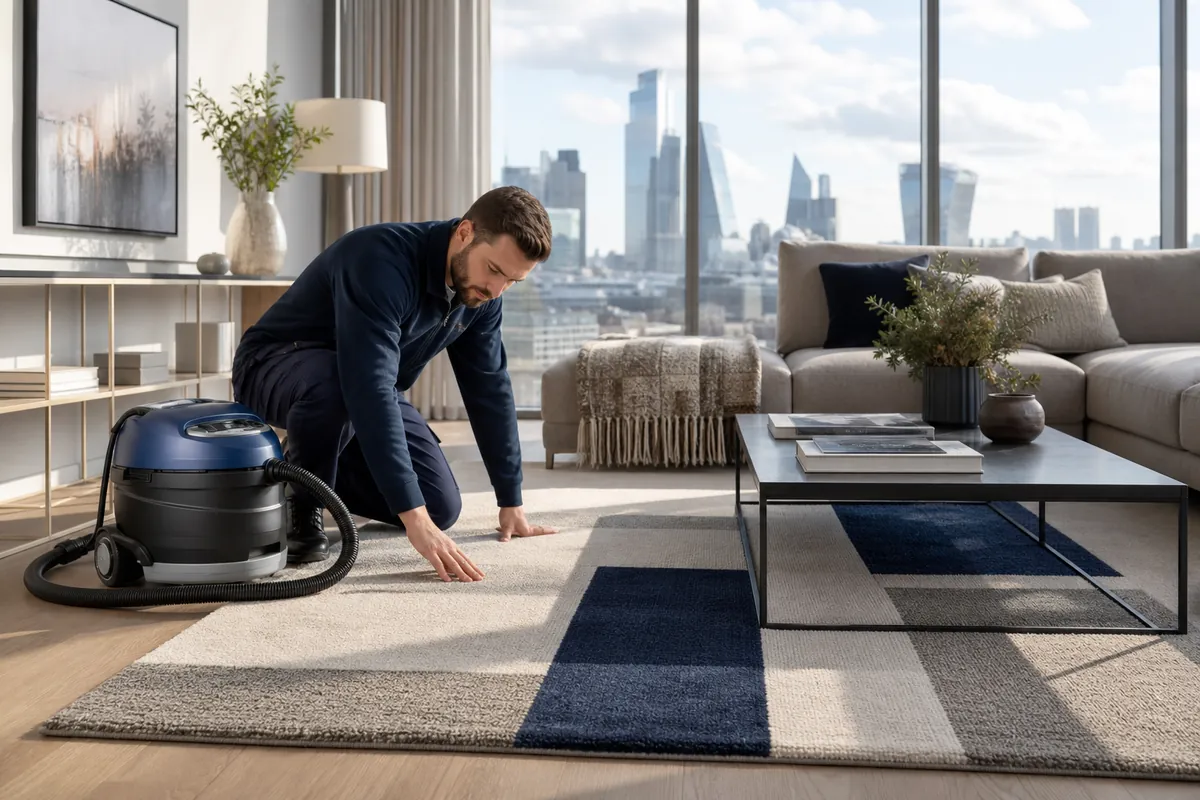
We provide steam rug cleaning in Battersea using portable hot-water extraction machinery at your property. We plan the work around the rug and the room, starting with inspection and suitable preparation. Selected stain attention, controlled liquid recovery and a final review form part of the visit, with drying and furniture arrangements explained before leaving.
Mobile service in Battersea · Cleaning method agreed after inspection
A complete rug clean that fits the room around it
A rug rarely sits in an empty space. Chairs, tables, doorways and the floor beneath all affect access to it, so we consider them when organising the appointment. That allows the cleaning itself to stay focused: prepare the accessible textile properly, attend to suitable deposits and extract the dirt released from the pile. You know the area included and how the sequence works around the room before treatment begins.
Our steam service is hot-water extraction carried out at your address. It uses cleaning liquid rather than relying on vapour alone, and the rug needs drying afterwards. We establish suitability from the material, dye response and construction, then explain the practical plan. The appointment includes more than machine passes: it brings inspection, preparation, local treatment and recovery together, followed by a review of the finish. The result and the next stage in the room are discussed clearly so there is no uncertainty about remaining marks or moisture.
Confirming the accessible area before work begins
We ask about the size and shape of the rug and look at how furniture sits over it. Photographs are helpful during the quotation discussion because they show both the item and its surroundings. At the property, we confirm the reachable surface with you. Any movement of furniture is agreed before starting. If an item remains in place, we identify the concealed section as a scope boundary rather than implying it will receive the same work as the open field.
We consider the route for portable equipment and the space needed at the rug’s edges. Stairs and access restrictions are discussed when booking, while the room assessment confirms the practical details. These arrangements help us organise a coherent cleaning route without repeatedly changing the working area. They also support the later drying explanation, because the rug stays at the property after treatment. You receive a clear account of where we will work and which parts of the textile are included in the appointment.
Inspecting the rug independently of the room layout
A convenient working space does not by itself make a rug suitable for extraction. We assess the fibres, accessible backing and construction, including bindings, fringe and signs of previous repair. Loose yarn, worn sections and fragile edges can require different handling from the stronger centre. We look at the present condition rather than relying only on a pattern or material description. This gives the proposed clean a practical basis before a tool contacts the pile or cleaning liquid is introduced.
Material and colour response are checked to determine whether our process is appropriate. We explain any restriction that affects the scope and decline treatment where the rug cannot accept extraction. Existing fading and damaged pile are identified separately from deposits. This helps set a realistic aim: remove soil from the textile without claiming to rebuild missing yarn or restore lost dye. Where the checks support cleaning, you understand why we can proceed and which details guide the preparation and machine handling that follow.
What we confirm before the clean
Point
Our check
Purpose
Room
Access and furniture
A practical scope
Textile
Material and colour response
Confirm suitability
Construction
Edges and backing
Set handling limits
Condition
Wear and lasting damage
Realistic expectations
Setting priorities for the soil and marks you can see
We ask what prompted the booking and examine those concerns across the rug. A darker walking route may carry dirt as well as wear, while a small sticky patch can continue attracting dust after a spill. We consider the whole accessible textile so individual attention sits within a useful overall clean. Your account of the incident helps, but you do not need to identify a stain category or prescribe the treatment. We assess what is present and explain how the planned stages may help.
We also ask about products already used and any change in texture you have noticed. A patch may now include residue from an earlier attempt as well as the original deposit. That information is considered with the inspection rather than treated as a guarantee about what can be removed. We agree the main priorities before work and return to them during the review. This makes the result discussion specific to your concerns, including both local response and the wider improvement from general soil removal.
Illustration of on-site work arranged around the room.
Preparing the pile and choosing suitable local attention
We vacuum the agreed accessible rug using handling suited to its texture and condition. Dry grit can settle below the visible tips, especially on busy routes or beside furniture. Removing those particles first reduces debris in the wet stage and gives us a clearer surface for stain assessment. Reachable margins are included, with care around loose strands and vulnerable edging. As preparation clears the pile, we reassess any remaining patch rather than assuming every originally dark area needs the same product treatment.
We select local attention where the textile and deposit support it. Product is applied to the relevant area, allowed time to act and worked appropriately when needed. We watch whether residue releases and explain if the remaining difference appears to be lasting colour or fibre change. Repeated application is not useful simply because an outline stays visible. The treatment prepares removable material for extraction while the wider clean remains in view, giving both the individual concern and the rest of the rug a practical place in the appointment.
Applying solution with a route for recovery
We divide the machine clean into manageable sections based on the rug and available space. Solution helps release attached dirt from the fibres, with application controlled to the checked material and soiling. Suitable action may assist release, while borders and changes in thickness are considered as the route progresses. We keep application connected to removal instead of treating the whole surface as a place to leave liquid. The objective is useful cleaning within the limits established during inspection.
Hot water forms part of the extraction method, but it does not replace the preparation or the need to recover deposits. We do not describe the process as sterilising the rug or as vapour-only treatment. Greater wetness is not used as evidence of greater care. We observe the textile and how the soil responds, keeping the amount of liquid tied to its purpose. This makes the sequence understandable: release dirt in a controlled way, then draw it away rather than leave it within a wet pile.
Illustration of hot-water extraction at the customer property.
Recovering liquid across the agreed surface
The portable extraction head draws cleaning liquid and suspended soil into the recovery system. We guide it with appropriate contact and inspect sections as they are completed. Further suitable recovery work reduces retained moisture after cleaning. This completes the removal prepared by the earlier stages, because dirt that has loosened needs to leave the textile. We give recovery considered attention over the accessible area rather than making a quick final pass once solution has been applied and the surface appears refreshed.
Edges and narrow spaces are handled within their construction limits, without pulling weak binding into a convenient position. Furniture boundaries stay as agreed, and any included movement is fitted into the sequence. A section that remains concealed is identified in the scope and the final account of the work. These arrangements give the cleaned area a clear boundary and let you understand any detail that received more limited handling because of condition or access. The result is tied to the actual rug we could reach and treat.
Reviewing the finish in the room’s light
We inspect the rug as a whole once the main machine work is complete. The direction of the yarn and the way light falls can change apparent shade, so those effects are assessed before deciding whether more attention is useful. Where appropriate, we settle the pile towards an orderly finish. We revisit the priorities agreed earlier and examine remaining patches. Further suitable work is considered where it is likely to help, rather than repeated merely because an old difference has not become identical to its surroundings.
We explain visible improvements and lasting features in plain terms. General dirt may have lifted while wear or fading remains apparent, and a treated mark can reduce without disappearing. The textile is still damp, so its exact dry appearance may differ from the current surface. We put that into context with the inspection and scope. You receive a clear account of the completed work, including any restriction, before the discussion turns to the moisture still present and the practical arrangements for drying at your property.
The complete cleaning sequence
Stage
Our work
Next step
Preparation
Vacuum dry particles
Assess remaining marks
Local treatment
Release suitable residue
Recover through extraction
Machine work
Remove liquid and soil
Review the surface
Completion
Explain result and moisture
Drying at home
Explaining when the room can return to normal use
Extraction recovers liquid but leaves retained moisture in the rug. We discuss drying according to its thickness, density and the conditions around it. Air movement and temperature influence the process, so we do not promise one guaranteed duration for every item. The rug stays at the property while moisture leaves. Our explanation follows the textile we have cleaned and the environment we can observe, helping you understand why the end of machine work is not necessarily the point of full ordinary use.
We clarify relevant arrangements for furniture, coverings and activity over the damp surface. The instructions are specific to the item and room layout rather than a broad list of care suggestions. Mention a timing need during the enquiry so it can be discussed before booking. We finish with the result reviewed and drying explained, leaving room for questions about remaining marks or the next stage. You know what has been completed and how the rug is being left to dry in the space where we worked.
Steam Rug Cleaning price reference
Use these starting prices as a guide. Share the item size, condition and access details so the work and final quote can be confirmed.
Service
Published starting price
What is included
Timing
Carpet cleaning
From £25 per room
Inspect, pre-treat, clean
Room dependent
Rug cleaning
From £20 per rug
Inspect, assess spots, clean
Size dependent
Steam rug cleaning
From £25 per rug
Check suitability, extract
Varies
Oriental rug cleaning
From £35 per rug
Fibre, dye and condition checks
Varies
Luxury rug cleaning
From £40 per rug
Assess and select method
Varies
Mattress cleaning
From £30 per mattress
Inspect and clean fabric
Varies
Upholstery cleaning
From £12 per seat
Check fabric and clean
Varies
Sofa cleaning
From £35 per sofa
Assess fabric and clean
Varies
Arranging your Battersea rug cleaning visit
We plan the appointment around the rug details and route for portable equipment. Tell us about stairs, parking restrictions and furniture affecting reach. The accessible scope and movement are agreed before the work, with drying included in the explanation of the service.
Local postcode districts: SW11. We confirm the visit against your full address.
We use hot-water extraction with portable equipment at your property. Liquid assists soil release and is recovered with loosened dirt. It is not a vapour-only treatment.
Do you plan around furniture in the room?
Yes. We agree any movement and identify the accessible area before starting. If an item remains over the rug, its concealed section is a stated boundary of the scope.
Can every rug receive machine extraction?
No. We check material, dye response and construction first. We explain any restriction and decline the proposed clean if the rug cannot accept our process.
Is local stain treatment included in the overall plan?
We assess marks and select suitable local attention within the agreed clean. The response depends on the residue and any permanent change already present in the fibres or colour.
Will the rug need drying after cleaning?
Yes. Recovery reduces liquid but leaves moisture within the textile. We explain drying conditions and relevant furniture or room-use arrangements before finishing the appointment.
How can I request a Battersea quotation?
Send photographs, dimensions and the concerns you want addressed. Include access and furniture details so we can discuss the proposed scope and a practical visit to your address.
Arrange steam cleaning for your rug
Contact us with details and photographs of your Battersea rug. We will discuss suitability, access and a quotation for hot-water extraction at your property.