Describe the work and the current cleaning priorities
Provide a current whole-rug image, approximate measurements and reliable care information. Locate the affected sections and describe the wider cleaning improvement wanted. Explain whether building work is finished, so the practical timing can account for further dust being generated nearby.
Name the material only where it is known from the work or packaging. Describe existing vacuuming, brushing or wetting and any result observed. Avoid calling all pale particles plaster if their source is uncertain; accurate limits are more useful than a confident guess.
Arrange the space after dust-generating work has stopped
Discuss a workable visit date and identify tasks still generating debris. Clear safe small belongings from the approach, explaining furniture that limits access. Arrange support for heavier handling; shaking or beating a large rug indoors is unnecessary preparation and may distribute material into the surrounding room.
- Keep loose building materials away from the cleaning approach.
- Identify separate dust on furniture or flooring as another task.
- Explain any essential room use while cleaning and aftercare are arranged.
Select compatible action for the rug and known debris
Inspection connects fibre and supporting-layer information with colour response and the strength of original or repaired details. Known debris is considered alongside those findings. Compatible chemistry and equipment action follow relevant checks; a pale surface cannot identify either the rug’s materials or one universally suitable process.
Understand whether extraction fits the present construction and what preparation is needed first. Unknown material or a vulnerable component may require another decision before work. The route should suit the combined item rather than depend on making every particle disappear through a wet pass.
Distinguish loose dust from an attached deposit
Show a hardened splash separately from fine loose material, without scraping it off for the photograph. Explain any known wet contact or household product used. An adhered deposit, deposited dust and damaged yarn can require different aims.
Avoid rubbing debris deeper into the pile or pouring water over it to test whether it dissolves. Seek guidance specific to the material and textile. The cleaner can assess purposeful local attention while explaining any lasting physical or colour alteration that ordinary cleaning cannot reverse.
Make dry preparation part of the actual clean
Professional preparation removes accessible loose particles using equipment and action compatible with the rug. This is a removal stage with its own purpose, rather than simply a quick gesture before liquid treatment. Selected local work follows the assessed deposits and recorded earlier attempts.
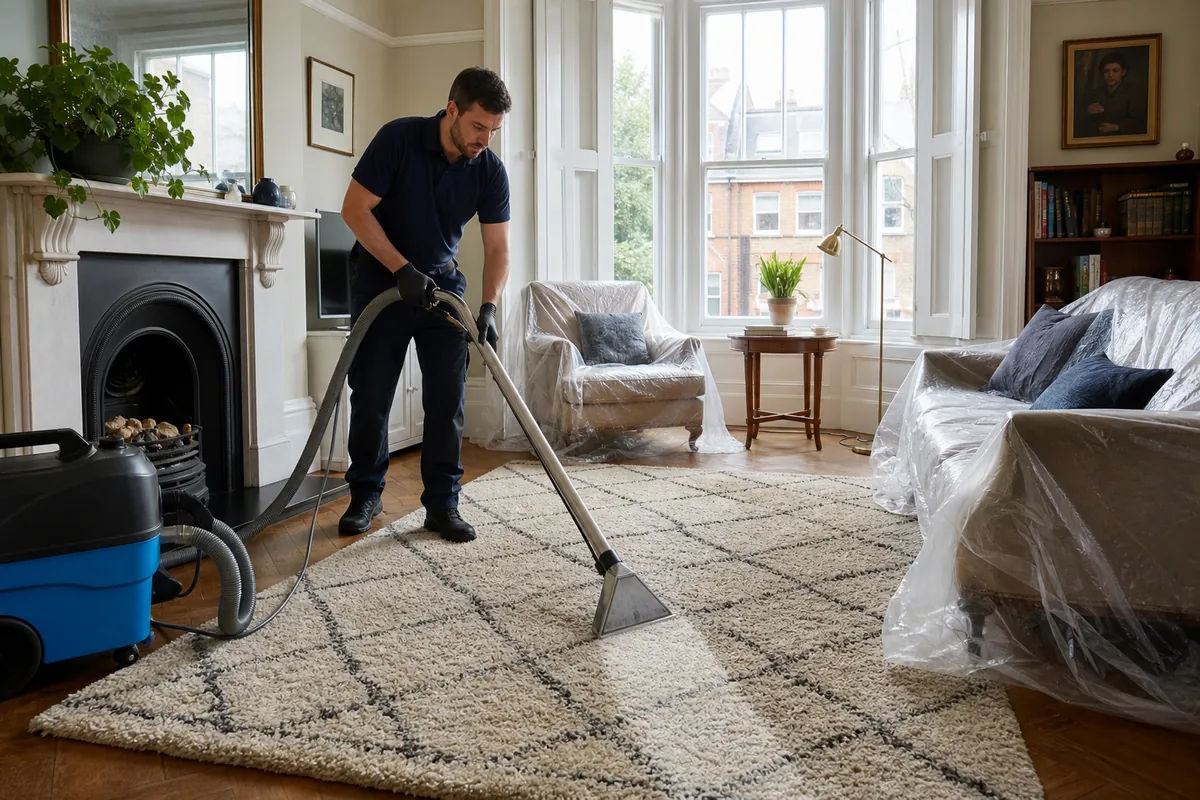
Compatible broader cleaning then addresses remaining soil across the agreed textile. For suitable hot-water extraction, controlled solution delivered through the tool is recovered by suction with released contamination. Working and recovery suit the current construction. The process joins appropriate particle collection with further removal instead of using saturation as a substitute for preparation.
Keep the treated rug clear during drying and review
Follow the supplied placement, airflow and return-to-use advice. Explain furniture returning and any remaining work in the room before treatment. Avoid covering or rolling the rug merely to restart another task before its actual readiness conditions are met.
At the advised stage, review original priorities and wider improvement under comparable light. If particles are noticed later, describe when they appeared and whether nearby work continued. Their presence is an observation to assess, rather than automatic proof of one continuing source.
Define the Shepherd’s Bush service without silently adding a builders’ clean
Give rug dimensions, access and cleaning priorities for the proposal. Clarify included preparation, local attention and broader removal. Cleaning walls, furniture, building equipment or the whole room is another scope and should be explicitly discussed where wanted.
At handover, understand the work performed and the maintenance action appropriate to the assessed pile. Keep the timing of any later building task clear. A useful explanation helps the household distinguish routine care from another new contamination event.
Reduce reintroduction and keep routine care manageable
Arrange suitable rug protection or supported removal before another dust-generating project. Once ordinary care is permitted, lift small hard objects and use the advised vacuum action. Check the attachment as directed by its manufacturer and stop at a vulnerable catch.
- Keep protective materials separate from an incompletely dried rug.
- Report another deposit under its own known source and timing.
- Seek advice before scraping a newly noticed hardened splash.