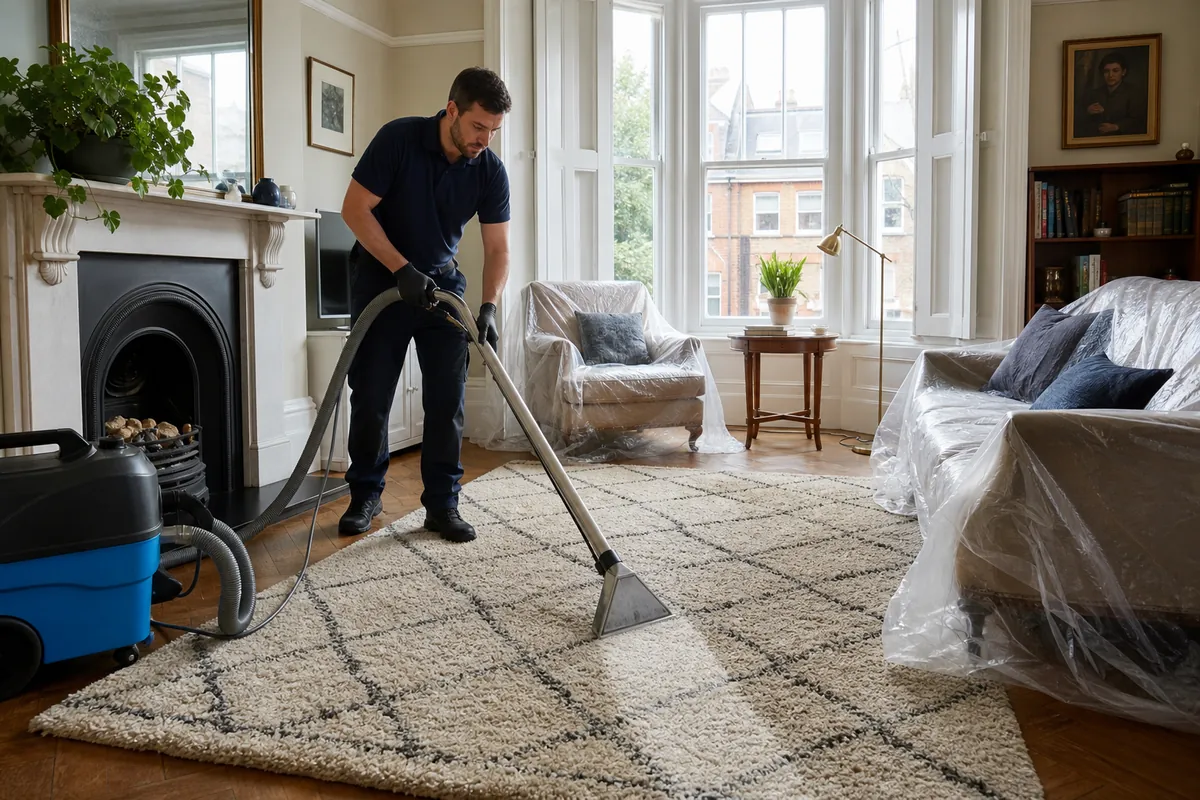
We clean suitable luxury rugs in Bayswater using portable extraction equipment at your property. We assess the rug itself and clarify any separate layer beneath it before agreeing the work. Preparation, selected treatment and recovery remove soil from the accessible textile, followed by a result review and drying arrangements for the actual room.
Mobile service in Bayswater · Cleaning method agreed after inspection
The rug clearly identified within its room setting
A valued rug may rest over a separate mat or directly on the floor. We establish that arrangement as part of planning, while assessing the textile’s own fibres, colour response and construction. Sharing a position does not make different materials one cleaning item. We describe the work proposed for the rug and make its scope clear, giving you a practical service without an implied treatment of everything below it.
Our extraction clean takes place at your address with portable machines. Dry particles are removed before suitable local attention and the main solution stage; the equipment then recovers liquid with released dirt. Moisture remains for drying afterwards. We agree the accessible area around furniture, review the response and explain what needs to happen next in the room. The appointment is guided by the actual item and its current condition rather than price or decorative description, with useful removal distinguished from any lasting wear or colour change that cleaning cannot replace.
Clarifying the textile and the supporting arrangement
We ask for a whole-rug photograph, approximate size and the concern you want addressed. If a separate mat is present, we identify it as a separate part of the arrangement rather than assume it is included or behaves like the rug. Any attached or uncertain connection is considered during the assessment. We look at what can appropriately be examined at the property, keeping the condition intact instead of asking you to pull components apart to establish a cleaning proposal from a photograph.
Known spill details are discussed according to what was observed on each surface. A mark on the pile does not prove an identical condition below, and a difference on the floor is not automatically explained by the rug above it. The extraction scope concerns the textile agreed for cleaning. We keep any separate request clear so the quotation and completed account remain accurate. This allows the rug clean to have a useful purpose in its own right, with the support considered for setup and drying rather than silently absorbed into the service.
Inspecting the rug before choosing handling
We examine the pile with accessible backing, borders, fringe and repairs. Present strength matters, including where materials meet or an edge has weakened through use. Available labels add information alongside the actual item, not in place of it. Relevant fibre and colour response checks help determine whether extraction is appropriate. We translate significant findings into their practical effect on the proposed work, so you understand how contact or treatment might differ across the textile rather than hear technical observations detached from the clean.
If our machine process is unsuitable, we decline the proposed treatment. Any local restriction is explained before work and reflected in the scope. We also identify missing yarn, fading and damage separately from deposits. This keeps the objective realistic: remove dirt from remaining fibres without claiming to rebuild the structure or dye already lost. Where the checks support cleaning, the same observations continue to guide preparation and recovery and provide context for the final review, instead of being forgotten once the main equipment stage begins at the address.
What guides the individual clean
Detail
Our assessment
Purpose
Rug material
Fibre and dye response
Confirm suitability
Construction
Backing, edges and repairs
Handling choices
Support
Floor or separate layer
Practical arrangement
Concern
Deposits and lasting changes
Realistic result
Setting a reachable boundary around furniture
We consider the rug’s position, floor and available working room together before setting up. Furniture movement is agreed explicitly, with sections left beneath stationary items identified as concealed. Full dimensions are useful but do not establish that every part can be reached. This gives the work a definite outline and avoids an implication that the hidden area received identical treatment to the open field. The practical setup supports application and removal as well as preparation, not just enough access to place a tool at the first edge.
We discuss the equipment route during booking, including entry, stairs and relevant parking arrangements. At inspection the suitable area, work and price are confirmed before treatment. Current room views help connect the quotation with what will actually be available on the day. If another rug is requested, it receives its own description and assessment. These arrangements let the appointment focus on the textile once inside, without a late question about movement, an accessory or an extra item changing the meaning of the clean after liquid is already in use.
Illustration of assessing the item before agreeing treatment.
Removing loose dry material before treatment
We vacuum the accessible pile with contact suited to its texture and condition. Dust and grit can be held within a design even where the surface appears fairly bright, so we work across the available field and reachable margins rather than only a prominent stain. Loose strands and weak trim are handled carefully to avoid catching. This takes material out before the liquid stage, reducing debris that would otherwise mix with the solution and already contributing direct removal as part of the complete appointment.
As the surface clears, we reassess what remains attached. A dusty shadow may diminish while a sticky deposit or stiff patch becomes easier to distinguish. That gives local attention a clearer target than the initial appearance alone. We consider texture, light and wear when judging shade, instead of treating every difference as one stain needing product. Preparation therefore removes particles and improves the next decision, connecting it with the broader extraction rather than ending at a tidy first impression or leaving the household to substitute that task before the service.
Treating suitable deposits within the textile’s limits
We select local attention from the checked material, current deposit and any known earlier application. Product is placed where it can do useful work and given an appropriate period to act. Suitable gentle action may assist release, with nearby colours and vulnerable details still guiding contact. The objective is residue prepared for recovery, not a temporary change in appearance. We observe the patch as treatment develops rather than rub at the visible outline solely because it is old or particularly noticeable in the design.
Further attention needs a practical benefit. A lasting alteration to dye or fibre may remain after removable material leaves, and we explain that distinction when relevant. The surrounding rug still receives the general clean agreed for its ordinary soil, so one resistant mark does not eclipse the work elsewhere. At completion we return to the same positions and describe local response alongside the wider result. You receive an account of actual attention to the concerns, within the item’s present condition rather than a universal promise of complete disappearance.
Illustration of on-site work with the room setting considered.
Completing the main extraction clean
We apply solution in workable portions of the rug to help attached dirt detach from the yarn. The amount and any working action follow the inspected construction, with changes in depth, borders and strength considered as the route progresses. Application is kept close to recovery instead of leaving the whole textile wet while practical access remains unresolved. We assess useful soil release rather than the quantity of liquid as evidence of care. The purpose is controlled removal from this item under the room arrangement already agreed with you.
Liquid leaves the rug through the recovery head, carrying the soil freed by treatment into the portable equipment. We work over the treated field and inspect how each part responds. An extra recovery pass can be useful for removing more liquid without putting solution back in, and we judge that from the textile. The route includes the accessible margins, with fragile trim handled according to its condition. This stage gives the earlier cleaning actions their removal result: material has left the pile instead of merely being loosened and left damp within it.
Reviewing the cleaned surface with the scope clear
We inspect the rug in the room’s light and revisit the priorities identified before treatment. Directional yarn can affect shade, so we consider that before deciding whether a patch needs more attention. Where appropriate, suitable finishing helps the pile lie clearly for viewing. Additional local work is assessed where it is likely to help. The review connects the individual stages with the rug as a whole, not only a wet path left by equipment or a successful-looking section around one deposit.
We explain improvement and lasting differences from wear, faded colour or earlier damage. A treated mark can retain a trace, and a protected area may still differ from a busy route. The textile is damp, so its exact dry appearance is still developing. We confirm any access or handling limit alongside those observations and keep a separate accessory or floor concern distinct. You receive a clear account of the actual rug cleaned, with the result tied to the assessment and work rather than an implied treatment or certification of every material beneath it.
The service and its next stage
Stage
Our work
What follows
Preparation
Remove dry particles
Assess attached residue
Treatment
Help suitable deposits release
Recover the material
Extraction
Draw out liquid and dirt
Review the surface
Completion
Explain moisture and contact
Drying at home
Explaining drying and the return of ordinary contact
The rug stays at your property while moisture left after recovery dries. We discuss its depth, backing and retained liquid with the room’s temperature and air movement, taking the supporting arrangement into account. A single guaranteed duration would not suit every item. Relevant furniture pressure, coverings and traffic are explained for the actual damp textile. This helps the next room arrangement follow its condition rather than the fact that equipment work has ended, with any moved pieces included in the completion discussion before they return over the surface.
If the room must be used by a particular time, tell us when enquiring so the practical interruption can be considered before booking. The person present receives the result and drying explanation even when somebody else arranged the appointment. We leave time for questions about a remaining feature or section, confirming what has been done and what still needs time. The visit ends with an understandable next stage for the rug treated, rather than the household having to infer readiness from the upper pile’s appearance alone while its supporting construction still contains moisture.
Luxury Rug Cleaning price reference
Use these starting prices as a guide. Share the item size, condition and access details so the work and final quote can be confirmed.
Service
Published starting price
What is included
Timing
Carpet cleaning
From £25 per room
Inspect, pre-treat, clean
Room dependent
Rug cleaning
From £20 per rug
Inspect, assess spots, clean
Size dependent
Steam rug cleaning
From £25 per rug
Check suitability, extract
Varies
Oriental rug cleaning
From £35 per rug
Fibre, dye and condition checks
Varies
Luxury rug cleaning
From £40 per rug
Assess and select method
Varies
Mattress cleaning
From £30 per mattress
Inspect and clean fabric
Varies
Upholstery cleaning
From £12 per seat
Check fabric and clean
Varies
Sofa cleaning
From £35 per sofa
Assess fabric and clean
Varies
Planning your Bayswater rug appointment
We discuss the item and route for portable equipment before attendance. Entry, stairs and parking restrictions are considered with the room layout. The reachable area, any movement and price are confirmed before cleaning, with drying explained for the actual textile and setting.
Local postcode districts: W2. We confirm the visit against your full address.
Is a separate mat automatically included with the rug?
No. We identify the rug and any accessory distinctly and confirm the scope. The rug clean does not imply that another item below it received treatment.
What if a supporting layer appears attached?
We assess the current construction and accessible connection before agreeing work. Its condition can influence suitability or handling, which we explain before treatment.
Does value establish extraction suitability?
No. We inspect fibres, colour response, construction and condition. If the rug cannot accept our process, we explain the limitation and decline the proposed clean.
Do you attend at the property?
Yes. Portable extraction machinery comes to your address and suitable rugs are cleaned there. The textile remains at the property for drying afterwards.
Will every mark or worn area disappear?
No. We treat suitable deposits, but missing yarn, lost dye and lasting damage can remain. The actual response is reviewed alongside general soil removal.
How do I request a Bayswater quotation?
Send dimensions and whole-item photographs with the concerns you want addressed. Include access, furniture and supporting-layer details so we can discuss a practical scope.
Discuss your valued rug
Share photographs and measurements for your Bayswater rug. We will explain suitability, practical access and a quotation for extraction at your property.