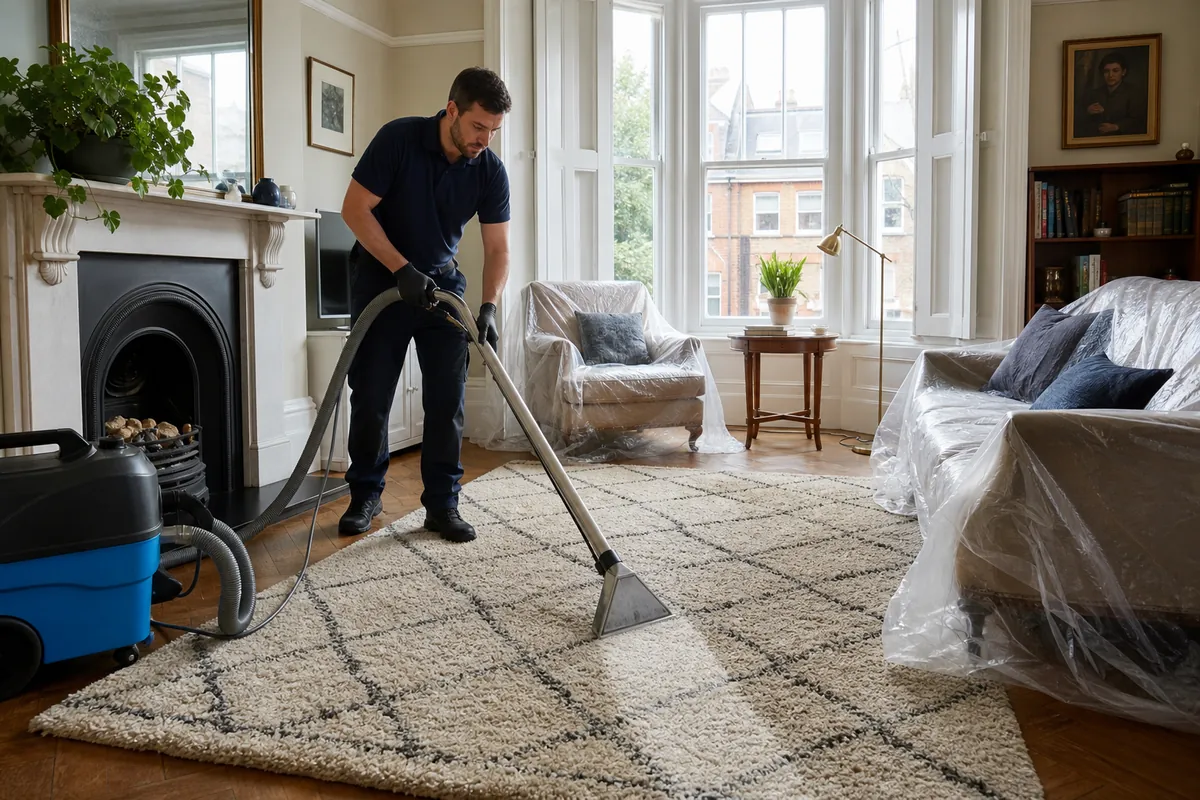
We assess Oriental rugs individually at your Dulwich property, including pieces with incomplete care information. Where suitable, our service uses portable machines for on-site extraction after vacuum preparation and selected local treatment. We explain the construction findings, recover released soil and discuss the result and drying conditions for the room afterwards.
Mobile service in Dulwich · Cleaning method agreed after inspection
You do not need to identify every material before contacting us
A missing label or incomplete purchase history can make it difficult to describe a rug. We can begin with the information you have: photographs, approximate dimensions and the areas that concern you. At your Dulwich address, we inspect the textile itself before agreeing extraction. We consider the face fibres, supporting construction, colours and condition together rather than asking you to choose a cleaning process from an uncertain material description.
The service takes place on site with portable equipment. Furniture movement is agreed beforehand, and any inaccessible sections are identified. Once suitable work is understood, we connect vacuum preparation, local attention to compatible marks, controlled solution and working action with machine recovery. The rug receives moisture and requires drying after treatment. We review the response clearly at completion and explain practical room conditions, keeping the service focused on what we can appropriately do for the actual item rather than assumptions about its origin or decorative name.
Available information is used alongside direct inspection
Any label, known fibre description or record of previous cleaning can help us understand the request. We consider that information without treating it as a substitute for seeing the current textile. Our inspection includes pile, backing or foundation, edges and repairs, with relevant colour-response checks where appropriate. We explain what the findings mean for the proposed extraction and any uncertainty that remains. The decision is based on the actual construction and condition rather than a guess made from the pattern alone.
Delicate or weakened components can restrict what our machine process can appropriately do. We also identify wear or altered colour that cleaning cannot reverse. This helps you judge useful soil removal realistically, even if the rug’s earlier history is incomplete. The service does not depend on claiming a precise origin or inventing material certainty where the available evidence does not support it.
We examine the edges and supporting connections
Borders, fringes and joins can reveal handling needs that are not obvious in the centre of the rug. We assess their strength and any repaired details before selecting equipment action. A visually sound face does not automatically mean every part can receive identical working. We explain relevant restrictions so the treatment remains connected to the supporting construction throughout preparation, application and recovery. This also makes clear why the rug is assessed as a whole rather than only where the visible stain sits.
The reachable area is established under the furniture arrangement agreed for the appointment. We identify anything that will stay in position and explain which sections remain inaccessible. The textile is not pulled while an item is still bearing on it, and unagreed movement is not assumed part of cleaning. A defined working space helps us give the accessible borders and central pile appropriate attention, with the quotation and treatment area describing the same practical job in the room.
Information used in the assessment
Detail
What we consider
What it informs
Available history
Labels and known earlier products
Assessment questions
Actual construction
Pile, support and strength
Extraction suitability
Colours and marks
Response checks and present evidence
Compatible local treatment
Borders and access
Connections and furniture position
Handling and coverage
Vacuum preparation clears particles from the accessible design
We remove loose grit, dust and everyday debris with suitable vacuum action before solution is introduced. The process is selected around the fibres and present strength, including careful handling of vulnerable details. A patterned rug may conceal particles across the surface, so preparation covers the included area deliberately rather than only the darkest section. This takes accessible material away early and reduces what would otherwise become mixed with liquid during the extraction stage that follows.
We watch how the pile responds and use the clearer surface to assess remaining differences. A deposit may need focused treatment, while another area may show compression or lasting abrasion. Increasing dry force is not assumed to solve those different causes. Preparation has a specific removal role within the service. It supports subsequent local and general cleaning, without being presented as a way to replace worn fibres or reverse colour changes identified during the inspection.
Illustrative image of checks before extraction is agreed.
Local marks are treated from their current evidence
We ask about any known spill and products previously applied, then assess the affected fibres alongside the material findings. Where local work is appropriate, compatible products are applied in a controlled way and allowed suitable time to act. Selected action can assist release where the textile permits. We do not invent a cause when the history is unknown, nor apply one strong treatment everywhere simply because several marks appear similar within the design.
We explain the intended improvement and the limits affecting it. A stain can leave both removable contamination and permanent dye or fibre change, particularly after earlier attempts. Complete disappearance is not guaranteed. The useful aim is release of compatible material that can be taken away during extraction. Local work stays integrated with the broader clean, giving individual concerns attention while ordinary accumulated soil elsewhere in the accessible rug still receives the preparation, solution and recovery stages included in the service.
Extraction application is controlled around the textile
For a rug assessed as suitable, selected solution is introduced to help loosen attached soil. We manage application according to pile, supporting materials and condition, rather than automatically adding more liquid to a dark or thick area. This is a moisture-based extraction service and drying is required afterwards. The process is explained before treatment, with the role of solution linked to subsequent recovery so application is understood as part of removal rather than a finished result by itself.
Where suitable, controlled working action supports the product, with appropriate contact time allowed. We adapt handling around weaker connections and monitor the response rather than repeating harder action indefinitely. Pile direction and existing wear may still alter shade as the tool moves. Those observations guide whether more treatment has a useful purpose. The aim is compatible contamination ready for extraction, with the machine work serving the construction actually present instead of a single fixed treatment for every Oriental rug.
Illustrative image of cleaning on site at a property.
Recovery takes away the released soil and used solution
The extraction tool collects contamination loosened during treatment with the used liquid. We organise controlled passes through the agreed area, considering coverage, overlap and borders. This removal completes the purpose of vacuum preparation, local treatment and the main clean. Products are not simply applied and left within the pile. Our portable equipment carries out the recovery at your property, with the material assessment still informing how the textile is handled through this stage.
Where appropriate, further recovery passes collect additional moisture without automatically introducing another solution application. We assess remaining appearance differences against the original findings rather than repeatedly wetting a worn or permanently altered patch. Recovery does not make the service moisture-free, and drying continues after machine work. We explain that transition clearly so the household understands what has been removed and why relevant room conditions still matter before the rug is returned to normal traffic and furniture contact.
We check the response against the concerns discussed
The final review revisits individual marks and the broader cleaned surface. Suitable pile finishing may be carried out where appropriate. We describe improvement and any remaining limitation directly, while putting damp appearance and pile direction into context. The dry textile can look different from the rug immediately after extraction. We therefore do not present one wet shade comparison as evidence that every change from earlier use, light exposure or previous products has been restored by cleaning.
If another person is present on your behalf, they receive a clear account of the included work and the relevant next steps. A later question can then be linked to a specific area and the treatment discussed. This is useful where material history is limited, because the result is understood against the actual assessment rather than assumptions about how the rug must once have looked. You have a practical explanation of useful removal and lasting limits after the equipment is packed away.
How suitable rugs are cleaned on site
Stage
Our work
Purpose
Preparation
Vacuum accessible loose particles
Clears material before solution
Treatment
Use selected products and action
Releases compatible contamination
Recovery
Extract used liquid and soil
Completes removal
Review
Explain response and room conditions
Clarifies drying and use
The room setup supports treatment and drying
Before wet stages, we inspect the supporting floor and consider suitable protection for nearby finishes. Equipment space and the route into the room are organised around the agreed furniture position. Parking, stairs or lift access are discussed when booking, along with the items included. These arrangements make the proposed clean practical within the property and ensure the quotation reflects the sections we can reach, rather than implying treatment through furniture that remains in place over part of the textile.
After extraction, we explain relevant ventilation, traffic and furniture-contact conditions for drying. Construction, the treatment and airflow influence timing, so we do not promise one exact drying period for every rug. Other pieces or fitted carpet can be listed in the request, with each assessed separately and a workable order agreed. The appointment finishes by connecting the response of the rug with remaining limitations and immediate room arrangements, giving the person restoring the space useful next steps before normal household use resumes.
Oriental Rug Cleaning price reference
Use these starting prices as a guide. Share the item size, condition and access details so the work and final quote can be confirmed.
Service
Published starting price
What is included
Timing
Carpet cleaning
From £25 per room
Inspect, pre-treat, clean
Room dependent
Rug cleaning
From £20 per rug
Inspect, assess spots, clean
Size dependent
Steam rug cleaning
From £25 per rug
Check suitability, extract
Varies
Oriental rug cleaning
From £35 per rug
Fibre, dye and condition checks
Varies
Luxury rug cleaning
From £40 per rug
Assess and select method
Varies
Mattress cleaning
From £30 per mattress
Inspect and clean fabric
Varies
Upholstery cleaning
From £12 per seat
Check fabric and clean
Varies
Sofa cleaning
From £35 per sofa
Assess fabric and clean
Varies
Arranging Oriental rug cleaning in Dulwich
We confirm the address, item and equipment route before the appointment. Photographs and any available care information help us prepare, while furniture details establish the practical accessible area.
Local postcode districts: SE21. We confirm the visit against your full address.
Yes. Available photographs, size and history help us prepare, and we inspect the current construction before agreeing extraction. We explain any uncertainty rather than asking you to guess the material.
Do you clean Oriental rugs at Dulwich properties?
Yes. We bring portable equipment and complete the agreed preparation, local treatment, extraction and recovery on site, followed by a review and drying information for the room.
Are all Oriental rugs suitable for your process?
No. Fibres, colour response, supporting materials and condition inform suitability.
Can you remove marks with an unknown history?
We assess the present evidence and select suitable local attention where appropriate. Previous products or lasting dye and fibre changes may limit the outcome, so complete removal is not guaranteed.
Does the rug need drying afterwards?
Yes. Extraction introduces moisture and recovers used liquid with released soil. Drying continues at home under relevant conditions, which we explain for the textile and room.
What happens around furniture and fringes?
Movement is agreed in advance and inaccessible areas are identified. Fringes and edges are assessed for strength and handled accordingly, rather than treated automatically like sound central pile.
Discuss your Oriental rug in Dulwich
Send photographs, approximate dimensions and whatever material information you have. We will discuss an individual assessment, practical access and a quotation for suitable on-site extraction.