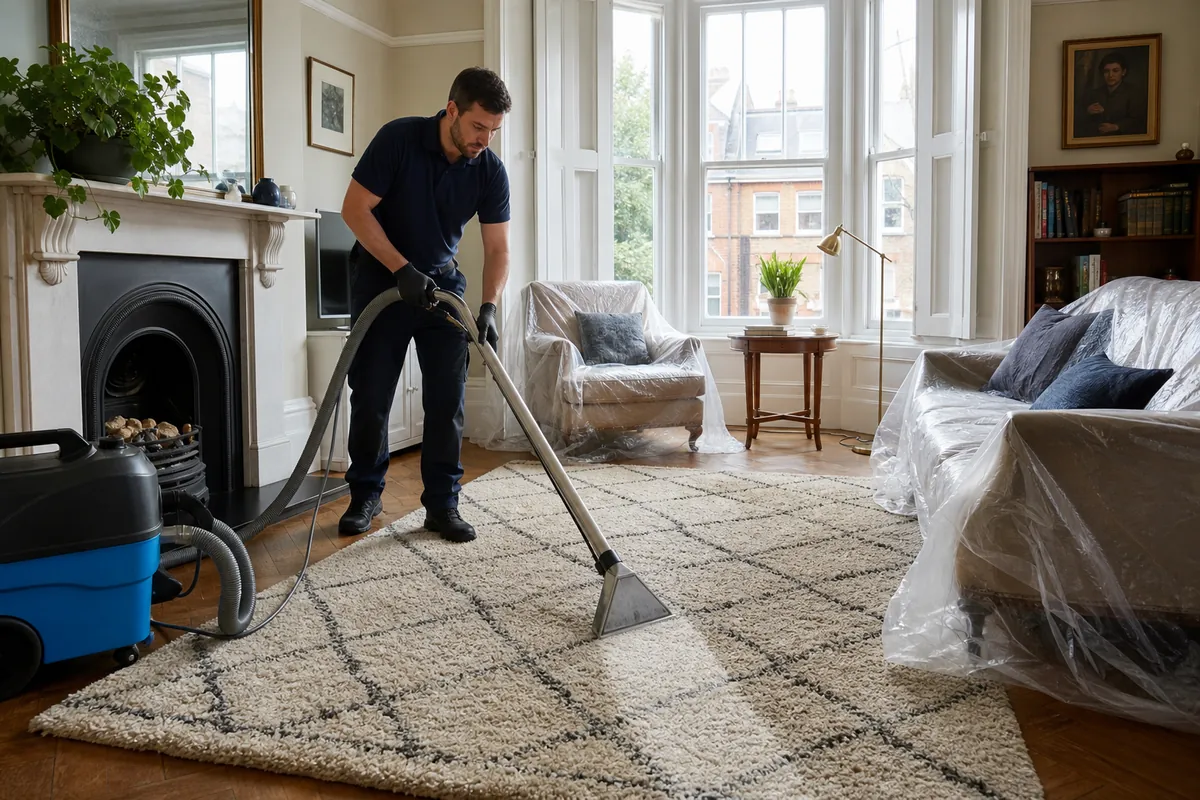
We bring portable hot-water extraction equipment to your Kew property to clean suitable rugs on site. We check the actual fibres, colour response and condition before agreeing treatment, then prepare and recover suitable dirt. The service introduces moisture, with the result and the drying stage explained for your rug and room.
Mobile service in Kew · Cleaning method agreed after inspection
A cleaning aim that keeps colour history in perspective
A difference in colour can be the reason you first consider a rug clean. It may be more visible where a furnishing has moved or where one area has been exposed differently over time. We ask what you have noticed, inspect the actual textile and separate the cleaning aim from an assumption about the cause. Dirt can affect appearance, but a change in colour is not automatically dirt that more treatment will remove.
Our service is hot-water extraction, commonly described as steam cleaning. Suitable rugs are treated at the property with portable machinery, combining preparation, local attention and recovery. We explain the proposed work before starting and follow the material response during the clean. Afterwards we discuss the actual improvement, any lasting condition feature and drying in the room. You receive a useful service organised around the item you have, without an unsupported promise to make every previously protected and exposed section match exactly.
Describing the contrast and the overall cleaning request
We ask for a complete image of the rug and approximate dimensions, with closer photographs of concerns where useful. A view showing the contrast in its ordinary setting helps us understand what prompted the enquiry. Known care wording, incidents and products used earlier can add context. You do not need to rearrange furnishings to create a stronger comparison or diagnose the fibre. The enquiry records the observation, with inspection at the property establishing what it means for a proposed clean.
We also clarify the wider priorities. General soil, an isolated mark and a colour difference can be separate parts of one request. Those aims are recorded alongside furniture coverage and the surface available to work on. Movement is discussed explicitly rather than presumed. If several rugs are wanted, each has its own description. This prepares a practical proposal while keeping final treatment decisions connected to the actual item, not a photograph that may show only one concern or one lighting condition.
Assessing colour response alongside construction
Our checks consider the pile, accessible backing, borders and ends, with attention to wear, repairs and weak sections. Relevant material and colour response testing informs suitability for extraction and appropriate handling. Reliable label information assists, but the current textile remains central. We explain findings in terms of the work that can be agreed, so a response at an edge or a weakened feature has a clear practical meaning rather than becoming an unexplained technical observation in the conversation.
We identify the difference between recoverable contamination and lasting colour or fibre change. Fading and abrasion may remain visible after cleaning, which is important when matching two sections is the customer’s main hope. If extraction is inappropriate, we explain the restriction or decline the proposed treatment. Where it is suitable, the plan focuses on useful dirt removal and assessed marks within the existing condition. This gives the result a realistic basis before application instead of allowing an initial colour comparison to become an unconditional restoration promise.
Assessing appearance before treatment
Detail
Our assessment
Purpose
Colour contrast
Response and actual condition
Realistic cleaning aim
Pile and backing
Accessible construction
Extraction suitability
Marks
Known history and response
Appropriate local attention
Furniture coverage
Reachable areas
Defined scope
Preparing loose dirt and the actual working area
Suitable vacuum preparation removes accessible particles before liquid application. Handling follows the checked construction, including adapted action around vulnerable ends. We work the agreed area across the rug rather than only the darker section that drew attention. Removing loose grit and dust supports the main clean and helps make remaining marks easier to assess. It also prevents a simple visual comparison from replacing the practical stages needed for a considered extraction service on the complete accessible item.
The working arrangement is established alongside preparation. We consider the supporting floor, room layout and position of equipment, including a manageable route for hoses and the cleaning head. Furniture movement follows the agreement; covered surfaces are identified where items remain. Those boundaries make the quotation practical and help the operator follow a consistent route. They also keep access to an awkward edge or a sheltered corner from becoming a late question after treatment has begun on whichever open section was easiest to reach.
Illustrative home setting: the actual textile and available space guide the plan.
Selecting appropriate attention for individual marks
A local stain is assessed against surrounding fibres and the relevant checked response. Known spill details and earlier products help where available; an uncertain cause stays uncertain. Suitable focused treatment aims to release contamination that can appropriately be addressed on the actual rug. We explain its role within the wider clean, including likely limits where the visible concern involves altered colour rather than removable residue alone. A dark patch does not automatically justify one assumed product or unlimited repetition.
We monitor the response and complete local attention through machine recovery, collecting released material instead of leaving treatment isolated in the pile. Further action is considered for usefulness and compatibility. A permanent dye change can remain after soil or residue is removed, which we explain plainly. The final account recognises the actual response, including partial improvement where relevant, while also describing the wider clean. This keeps one longstanding stain in context rather than making complete disappearance the only measure of the service.
Working hot-water extraction to the material findings
Our portable extractor applies the chosen cleaning process and retrieves used liquid with soil released from the fibres. We coordinate application and recovery through manageable sections and choose suitable action from the inspected construction. Reachable borders and areas around furnishings remain within the agreed route. Heavier soil can receive appropriate attention where the material supports it. We retain responsibility for operating decisions and explain their purpose, rather than expect the customer to specify unfamiliar settings from the rug’s appearance.
The steam-cleaning description does not mean sterilising vapour. Hot-water extraction introduces moisture and the rug must dry afterwards. We watch its response as work progresses, distinguishing contamination from wear or lasting colour differences. More liquid cannot replace lost dye or rebuild a flattened fibre. This keeps the treatment focused on useful cleaning rather than chasing a perfect match between areas with different exposure histories. The actual item and its checked response remain the basis for the work after the first machine pass as well as before it.
Illustrative extraction: used solution and released soil are recovered through the equipment.
Recovering released dirt across the included surface
Collection carries the used cleaning solution away through the equipment. We assess recovery as the operator follows the route and make suitable additional recovery passes where needed. This removes contamination and reduces the moisture remaining for drying. The stage includes reachable ends and less conspicuous sections within the proposal, rather than simply finishing a wet pass over the centre. A clear recovery sequence gives the whole accessible clean a practical conclusion and keeps application from being mistaken for the complete process.
We compare the result across differently used parts of the rug. A sheltered area may retain a colour or texture that an exposed section has lost over time. Once soil is removed, that history may still be visible. We explain such differences where relevant and consider any further useful attention for contamination, without repeatedly wetting a physical change that cleaning cannot reverse. This gives the final discussion a fair account of general improvement alongside the colour observation that prompted the enquiry.
Reviewing appearance and explaining drying at home
We return to the priorities agreed at the start and describe the actual response to local attention and wider extraction. Suitable pile finishing is carried out where appropriate. Any persistent issue is explained against inspection findings, with furniture boundaries confirmed in the account of completed work. Where final appearance is better judged once dry, we identify that. The review stays connected to this rug rather than ending with a broad statement that every contrast has been resolved or the original concern left unexplained.
Drying continues at your property. We discuss the rug’s construction and thickness, indoor conditions and the moisture left after recovery, including relevant ventilation and furniture positioning. Ordinary use is considered for the actual setting rather than one universal deadline. This completes the practical explanation of the moisture-bearing appointment: what has been cleaned, what still needs to dry and how the room returns to use. The customer does not have to infer those arrangements from the steam-cleaning name or discover them after the equipment has been packed away.
The hot-water extraction visit
Stage
Company work
Practical result
Preparation
Suitable vacuuming
Loose particles recovered
Extraction
Apply and collect liquid
Released dirt removed
Review
Discuss actual response
Improvement and limits clear
Drying
Explain rug and room factors
Remaining stage understood
Agreeing price and preparing an organised visit
The proposed charge relates to the requested rug, approximate size and concerns described. Photographs support an initial discussion, while physical assessment confirms suitability and any necessary adjustment before treatment. We agree included work and charge before application. Additional rugs or fitted carpet areas are listed separately when wanted. This makes the proposal specific enough to consider without depending on assumptions about hidden surfaces, furniture movement or an exact colour restoration that the actual material assessment does not support.
We plan access for portable equipment before attending, discussing entry instructions, parking and floor level with any lift or stairs. The working room and agreed furniture arrangements are considered together with drying. Where more than one item is included, we can establish a workable order while retaining individual material checks. These details support a practical visit in Kew, allowing attention to stay on the rug and the customer’s priorities once the machine reaches the space rather than avoidable uncertainty about the basic route or included areas.
Steam Rug Cleaning price reference
Use these starting prices as a guide. Share the item size, condition and access details so the work and final quote can be confirmed.
Service
Published starting price
What is included
Timing
Carpet cleaning
From £25 per room
Inspect, pre-treat, clean
Room dependent
Rug cleaning
From £20 per rug
Inspect, assess spots, clean
Size dependent
Steam rug cleaning
From £25 per rug
Check suitability, extract
Varies
Oriental rug cleaning
From £35 per rug
Fibre, dye and condition checks
Varies
Luxury rug cleaning
From £40 per rug
Assess and select method
Varies
Mattress cleaning
From £30 per mattress
Inspect and clean fabric
Varies
Upholstery cleaning
From £12 per seat
Check fabric and clean
Varies
Sofa cleaning
From £35 per sofa
Assess fabric and clean
Varies
Arranging your Kew rug cleaning appointment
We identify the rug and cleaning priorities, agree accessible surfaces and prepare the route for portable equipment. The work and charge are confirmed before treatment, with individual suitability considered for every additional item requested.
Local postcode districts: TW9. We confirm the visit against your full address.
Yes. We inspect the textile and relevant response, distinguishing suitable soil removal from lasting colour change. Cleaning is not a guarantee that protected and exposed areas will match.
What does steam cleaning mean here?
Our service uses hot-water extraction: liquid application and recovery with released soil. It introduces moisture and needs drying at the property.
Do you clean the rug in my home?
Yes. We bring portable equipment to the property and agree the working arrangement before treating a suitable rug.
Is every rug suitable?
No. Construction, dye response and present condition guide the decision. We explain restrictions and decline the proposed treatment where appropriate.
Will furniture be moved?
Movement is discussed and agreed. Where items stay in place, we identify the accessible surface and explain the boundaries they create.
How do you explain the drying stage?
We consider the actual textile, recovery and room conditions, discussing relevant ventilation, furniture and ordinary use rather than a fixed time for every rug.
Discuss steam rug cleaning in Kew
Send a full photograph, approximate measurements and details of your priorities. We will explain the proposed on-site extraction service and confirm suitable work before starting.