
◇
Dyes
Dark reds, blues, greens and contrasting pale areas should be tested for colour transfer before moisture is introduced.
Oriental rugs can vary widely in origin, fibre, knotting, dye type and construction. Before cleaning begins, the rug should be assessed for colour stability, foundation strength, previous repairs, contamination and moisture sensitivity. This helps avoid unsuitable one-method treatment and unrealistic stain-removal promises.
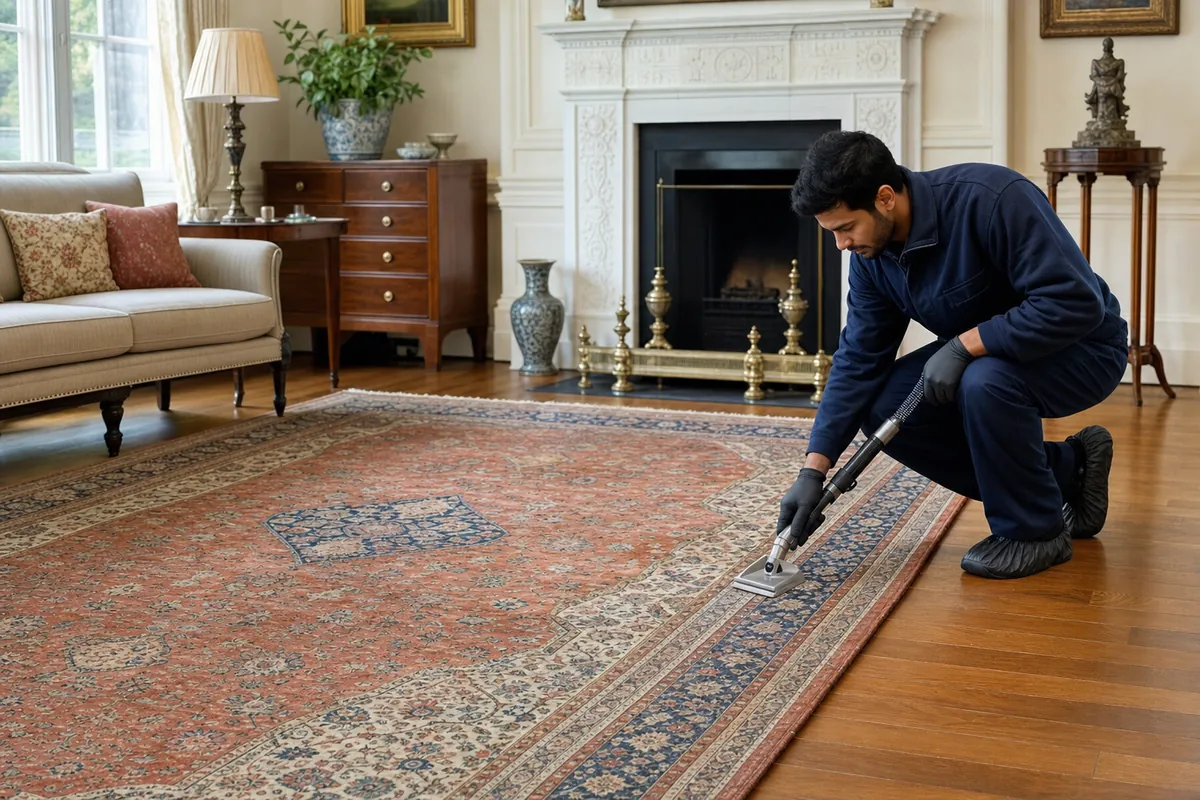
Materials, dyes, fringes and construction should be checked before a cleaning method is selected.
The term oriental rug covers a broad group of rugs traditionally produced across regions including Iran, Turkey, India, Pakistan, Afghanistan, China and parts of Central Asia. The name describes a category rather than one specific material or construction.
Some rugs are hand-knotted using wool or silk, while others are flatwoven, machine-made or produced with cotton foundations. Their cleaning needs can therefore differ considerably. Identification, inspection and testing should come before assumptions about the safest process.
Traditional oriental rugs are often recognised by detailed patterns, bordered layouts and hand-worked construction. However, appearance alone cannot confirm fibre type, age, origin or value. Two rugs with similar designs may respond very differently to moisture and cleaning products.
The reverse of the rug often provides useful information. Knot density, foundation yarns, repairs, colour variation and the way the fringes connect to the body can help indicate how the rug was made and which risks should be considered.
Wool is common because it is resilient, comfortable and capable of holding deep colour. Cotton is frequently used in the foundation and fringes, while fine decorative rugs may contain silk or silk-like fibres.
Each material responds differently. Wool can be affected by excessive alkalinity, heat and agitation. Cotton can retain moisture and may shrink unevenly. Silk requires more cautious handling because surface abrasion, water marking and changes in sheen may become visible.
Dark reds, blues, greens and contrasting pale areas should be tested for colour transfer before moisture is introduced.
The backing may contain wear, splits, loose knots or previous repairs that are not obvious from the surface.
Fringes may form part of the structural foundation and should not be treated as removable decorative trim.
A proper inspection should include both sides of the rug, as well as the edges and fringes. The technician should look for pile wear, exposed foundation, damaged binding, loose yarns, moth activity, water damage and evidence of previous cleaning.
Photographs and measurements can record the rug’s existing condition. This is especially useful where the rug has visible distortion, irregular edges, weakened sections or historic repairs.
Oriental rugs may contain several dyes with different levels of stability. Testing one colour does not prove that every section will respond in the same way. Red, blue or dark border dyes may behave differently from lighter central areas.
Previous spot cleaning, water damage or household products may also have changed the chemistry of a localised area. Where colour movement is suspected, moisture, dwell time and cleaning chemistry should be controlled carefully.
Fine road dust, sand, pet hair and tracked grit can settle deep between the fibres. Even when the surface appears reasonably clean, dry soil may remain around the knots and foundation.
This soil can act abrasively under foot traffic. Controlled dry soil removal is therefore an important part of rug care. The rug’s condition should determine how much vibration, brushing or mechanical action is safe.
There is no single method suitable for every oriental rug. A stable, durable wool rug may tolerate a more thorough controlled wash, while a silk, weakened or colour-sensitive rug may need a more conservative approach.
The process should reflect the rug’s construction and the type of contamination present. Surface maintenance, deep soil removal, pet urine treatment and stain correction are different objectives and may require different levels of moisture and handling.
Strong carpet shampoo, bleach, washing-up liquid and aggressive stain removers can affect dyes, leave residue or alter the texture of the pile. A product being suitable for synthetic fitted carpet does not mean it is suitable for a hand-made oriental rug.
Tea, coffee, wine, food oils, pet urine, ink and household products can affect fibres and dyes in different ways. Fresh contamination may respond better than an old mark that has already oxidised or changed the original colour.
Some visible marks are permanent fibre or dye damage rather than removable soil. Cleaning may improve the appearance, but complete removal should not be guaranteed where aggressive treatment could create a larger or lighter patch.
Pet urine can travel through the pile and into the foundation or flooring underneath. Treating only the visible surface may leave the main source of odour in place.
Repeated contamination can affect dyes, create tide marks and weaken some foundation materials. The correct treatment depends on the number of affected areas, the age of the contamination and whether the rug can tolerate a more extensive process.
Controlled drying helps reduce the risk of odour, colour transfer, shrinkage and shape distortion. Thick rugs and rugs with cotton foundations may retain moisture longer than the surface suggests.
The rug should not be returned to wood or laminate flooring while the reverse remains damp. Heavy furniture should also be kept away until the rug is fully dry and safe to use.
The final choice should follow inspection and testing rather than appearance alone.
| Approach | May be considered for | Main limitation | Drying level |
|---|---|---|---|
| Controlled rug washing | Stable rugs with suitable dyes and construction | Requires moisture and dye management | Controlled |
| Low-moisture cleaning | Selected surface maintenance | May not reach deep foundation soil | Usually shorter |
| Dry compound treatment | Some moisture-sensitive situations | Limited for heavy staining and urine | Low |
| Specialist off-site care | Complex, valuable or heavily contaminated rugs | Process depends on physical inspection | Individually managed |
No. Suitability depends on fibres, dyes, construction, age, backing condition, repairs and the type of contamination.
No. The term includes rugs from several regions and may cover hand-knotted, flatwoven and machine-made examples.
Some stable rugs may be suitable for controlled in-home cleaning, while delicate or heavily contaminated rugs may benefit from off-site treatment.
Stable dyes should not automatically run, but colour migration is a recognised risk. Testing and controlled treatment help reduce that risk.
Not always. Some stains permanently alter the fibre or dye. Safe improvement may be possible without guaranteeing full removal.
It depends on the depth and extent of contamination. Surface treatment may not be enough when urine has entered the foundation.
Use a suitable setting and avoid repeatedly pulling fragile fringes through a powerful rotating brush. Weakened rugs may need gentler maintenance.
Send dimensions, photographs of both sides, details of stains or pet contamination, known material, previous treatment, access and postcode.
Send photographs, dimensions and details of any staining, damage, odour or previous cleaning.