
How to Dry a Rug in a Small London Flat
A small flat can make even a minor rug spill awkward. There may be no garden, balcony or spare room, and laying the rug back on the floor can hide moisture in its backing. The answer is to plan the space before introducing more water: find a safe support, allow air to reach the textile, protect the floor and check the room's ventilation. If those conditions cannot be met for the particular rug, arrange off-site cleaning and drying rather than hoping that a radiator will finish the job.
This is a guide for a manageable rug after a clean-water spill or a cleaning method already permitted by its care instructions. It is not a drying recipe for sewage, floodwater, extensive saturation or a fragile antique. Those situations require prompt specialist assessment. The same applies if the floor, underlay or walls are already damp: treating the rug alone will not correct a continuing water source.
Decide whether the rug can be safely moved
Start with the label and construction. A small synthetic flatweave may be fairly light; a dense wool rug with cotton foundations can be very heavy when wet. A tufted rug may have a bonded backing that needs separate attention. If you cannot lift the item without pulling an edge, scraping the floor or bending it sharply, get another person to help or call a rug cleaner. Wet textiles can be vulnerable to stretching and damage from their own weight.
Do not drag the rug by its fringe or hang a heavy damp piece over a narrow clothes horse. This can put the whole weight on one fold and distort the textile. The Canadian Conservation Institute advises handling rugs by rolling and lifting rather than grabbing one edge; it also notes that a rug must be dry before storage. A broad, clean, stable support is preferable to a thin rail or a tightly rolled bundle.
Check whether a separate pad is damp. Remove and assess it independently. Look at the floor before placing any drying equipment there, especially if it is timber or laminate. A clean tile floor can be easier to protect, but it still needs to be kept clear of standing water. Photograph any existing damage and follow the flooring maker's care instructions.
Make a drying zone with air around it
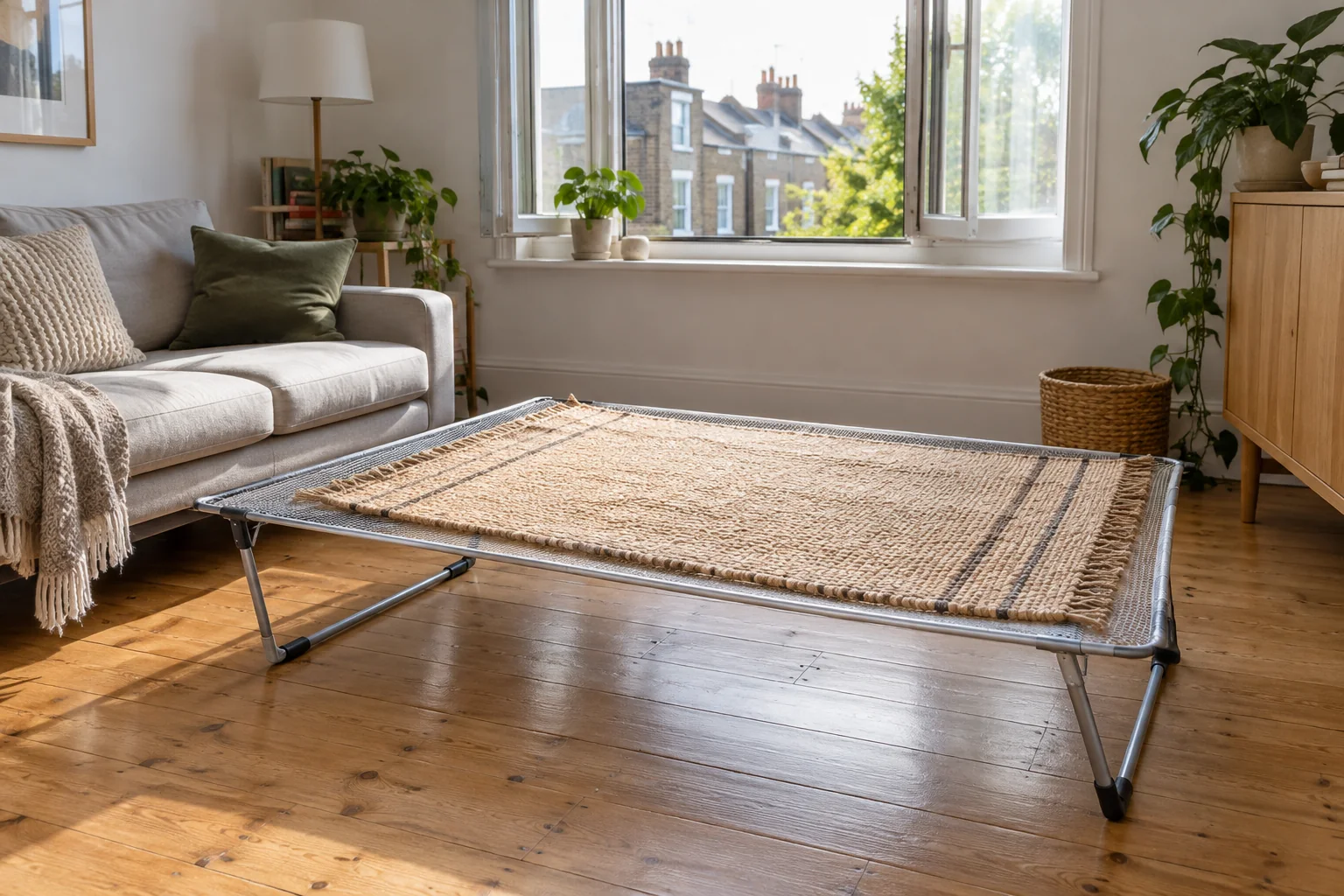
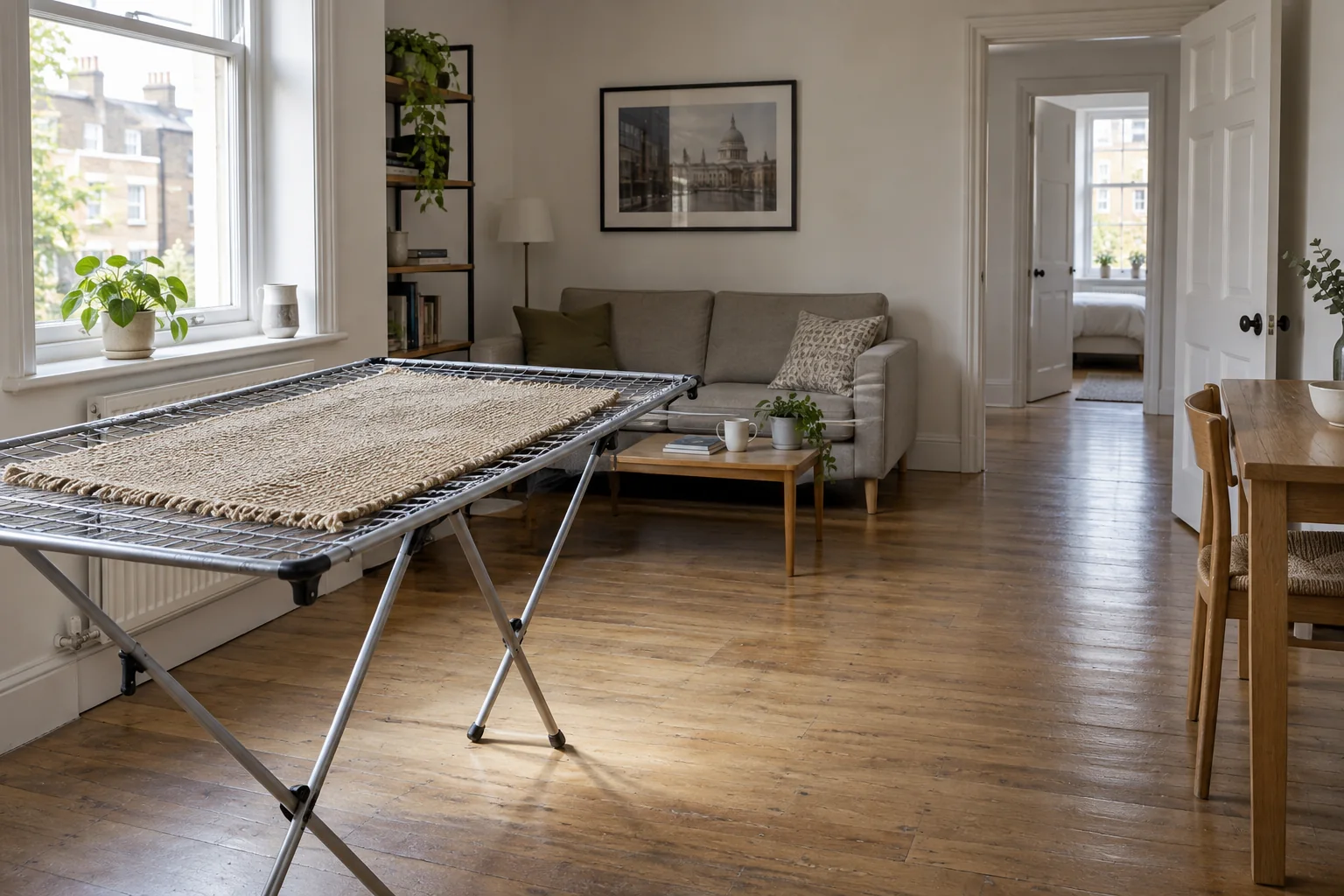
The drying zone needs enough space to support the rug without a steep bend and enough clearance for air to circulate around both faces. A purpose-made mesh support or broad clean rack may help with a small robust rug. Check that the support is stable, smooth and not likely to transfer dye or rust. Keep it out of walkways and away from children or pets who might knock it over. Avoid placing the wet textile directly on a sofa, bed or another carpet; those materials can absorb its moisture.
If floor space is extremely limited, consider whether the rug can be left with a professional cleaner until it is fully dry. Moving furniture to create a cramped temporary arrangement may block vents, doors or safe access. A pile of towels under the rug is also a poor substitute for airflow: towels become damp and may hold that moisture against the backing unless changed promptly. A plastic sheet protects one surface but can seal moisture into the rug-floor interface.
Drying should begin with removing excess water by a method appropriate to the rug. Blot a small spill gently with clean absorbent material; do not scrub. A saturated rug may need controlled extraction by a specialist. The US Environmental Protection Agency's guidance for water-damaged carpet emphasises drying the backing and pad as well as the face. Its advice is for building materials; a valuable or delicate loose rug needs a method matched to its fibre, dyes and construction.
Let room moisture leave the flat
Air movement at the rug helps only if the surrounding air can also lose moisture. Use the flat's existing ventilation as intended: keep trickle vents open where provided, operate extractor fans correctly and consider a suitable window opening when outdoor conditions allow. Government guidance explains that poor ventilation lets moisture accumulate indoors and turn to condensation on cooler surfaces. A wet rug adds to that moisture load.
Do not assume that a warm room is a dry room. Turning a radiator up while the windows stay shut may make the pile feel warmer, but the humidity can remain high and moisture can collect at a cool window or wall. If you use a dehumidifier, empty and maintain it according to the maker's instructions and keep checking the rug itself. A humidity reading describes the room air at the sensor; it does not prove the backing has dried.
A fan can move air gently around a safely supported rug, provided it does not blow loose fibres or disturb suspected mould. Do not aim a high-heat appliance at one patch. Direct heat can create uneven drying and damage vulnerable fibres or backing. Our article on how long rug drying takes explains why no fixed number of hours works for every rug.
Check the reverse, underlay and floor
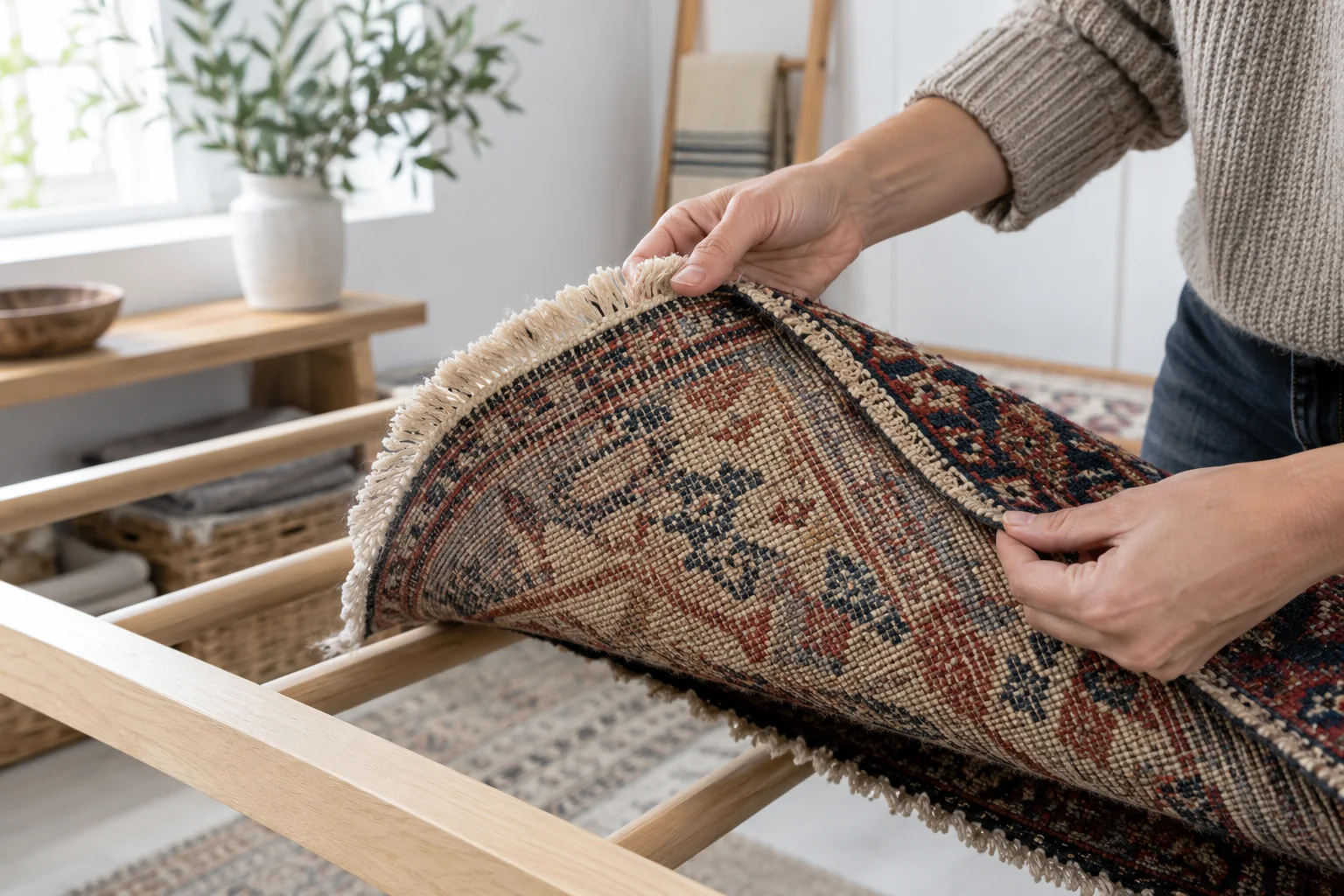
The pile can feel dry before the underside does. At sensible intervals, inspect an accessible edge and reverse without repeatedly dragging the item. Compare several points, including the thickest area and any wettest patch. Look for cool dampness, odour, dye movement or a backing that feels tacky. A damp pad needs its own drying or replacement decision. Do not put it back as soon as the rug face passes a touch test.
Check the floor where the rug normally lies. If it remains damp, discoloured, swollen or musty, leave it uncovered and investigate the cause. A recurring wet patch may be condensation or a building leak rather than a failure of rug cleaning. A professional moisture assessment can be needed for a floor finish or subfloor; a hand on the surface cannot tell you what is happening inside it.
Do not fold and store a rug that has merely stopped dripping. A tightly folded or rolled damp rug can trap moisture in the middle. Return it to the floor only when the rug, pad and floor are dry and the rug has retained its shape. If the reverse still feels damp or smells stale while the face appears ready, keep drying conditions in place and ask for help.
When off-site drying makes more sense
If the rug fills the living room, blocks safe circulation or cannot be supported evenly, the flat may simply lack a suitable drying area. A large wool rug, unstable dyes, delicate fringes or a bonded backing also raise the risk of home treatment. Ask a rug cleaning specialist whether the item can be assessed, cleaned and dried in controlled conditions. Describe the rug's size and material, the liquid involved, the time since wetting and any attempts already made.
An odour that persists after drying, visible growth or water from an unknown source calls for more than extra time beside a window. Do not repeatedly wet the rug or cover the smell with perfume. Our guide to mould on a rug explains why the source of moisture must also be addressed. If a leak or building defect is involved, notify the responsible person promptly.
You can contact us with photographs of the rug face, reverse, label and affected floor. We can discuss whether professional drying is practical and what cleaning risks need to be assessed. A small London flat does not automatically rule out safe drying, but it does make the available space, ventilation and ability to inspect every layer decisive.
Related Rug Cleaning Services
Explore professional cleaning options selected around the fibre, construction and condition of each textile.
Rug Cleaning Near You
View local rug cleaning information, appointment guidance and coverage across popular London districts.
Continue Reading
Read more practical guidance about fibres, stains, cleaning methods, drying and routine rug care.
Send us rug photographs and a few details.
Include the approximate dimensions, material if known, stain information and your London postcode.