
How to Tell Wool from Synthetic Rug Pile
If a rug has lost its label, you may be able to collect clues about its pile, but appearance and touch alone cannot establish that it is wool. Synthetic yarns can be made to look soft and irregular; wool can be processed to look smooth and uniform. Mixed fibres make the choice still less clear. For cleaning decisions, treat an unlabelled rug as an unknown construction until the pile, foundation, dyes and backing have been considered together.
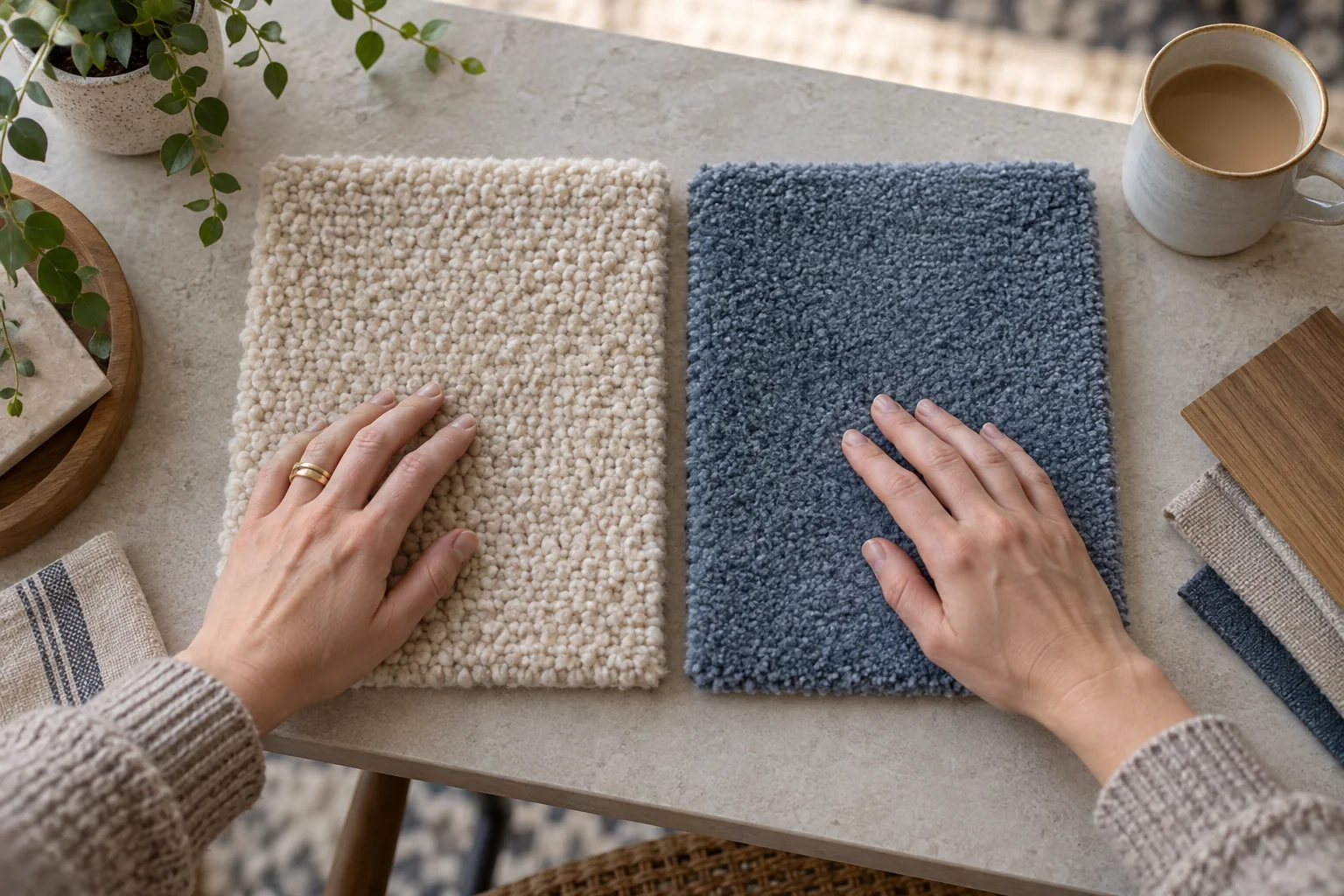
The question is worth answering carefully because cleaning advice changes with the material and the rug’s condition. Yet even a correct identification of the pile does not give permission to soak the whole rug. A wool face can sit over a cotton foundation or an adhesive-backed tufted construction. A synthetic face may have unstable dye, weak edging or a backing that responds badly to moisture. Your aim at home is to gather useful information without sacrificing a piece of the rug to a guess.
Begin with evidence you already own
Before inspecting a loose fibre, look for a purchase receipt, order email, product listing or care sheet. Search using the maker and exact model if you have them, and check whether the description refers to the pile or to the whole rug. Retail language such as “wool look” is not a fibre declaration. A listing may also specify a wool blend, a synthetic backing or cotton fringe. Save a copy of any product information because online listings can change.
Turn a manageable section of the rug gently and inspect the underside in good light. A secondary label may be sewn into an edge or hidden beneath binding. Photograph it before it fades further. If the rug is heavy, fragile or damp, do not fold it sharply or pull at a loose fringe to search for a tag. Ask for help moving it. The rug care directory gives broader context on fibres, but the actual construction of your rug still has to be checked.
The reverse can tell you as much about cleaning risk as the pile. Look for a woven foundation, an applied backing cloth, rubber-like coating or a powdery layer beneath tufting. You may see knots or rows of stitching; you may also see repairs. Those observations help a cleaner decide what to examine next. They are not, by themselves, a reliable way to name the face fibre.

Clues from the pile, with limits attached
Wool often has natural variation in its yarn and a springy feel, particularly in a rug that has not been crushed by years of traffic. Some synthetic fibres feel smoother or more uniform. These are tendencies rather than tests. Spinning, twist, finish, pile height and soil can all change how a yarn feels. A soft pile is not proof of wool; a coarse pile does not rule it out. It is also easy to confuse a wool blend with pure wool by hand.
Look across several areas rather than relying on one worn corner. Compare the pile under furniture with the walkway. Wear may remove surface softness or expose a different-looking yarn core. A patch that looks shiny may be pile direction, pressure or a fibre characteristic; it is not a chemical identification. If the rug contains several colours or textures, they may be made from different yarns. Treat each as potentially different rather than taking the appearance of one area as the answer for the whole object.
Loose fibres found near a rug are weak evidence. They may have come from clothing, a throw, upholstery or a pet bed. Pulling an intact yarn from a rug to inspect it damages the item and may disturb its structure. Photograph a loose strand if it clearly belongs to the rug, but do not make a destructive sampling decision just to satisfy curiosity. A cleaner or textile specialist can judge whether sampling is justified and how to document it.
Why the popular burn test is a poor home shortcut
Online advice often suggests burning a yarn to distinguish wool from plastic. Do not cut fibres from a household rug and set them alight in a room or near furnishings. The fire risk and potential damage are reason enough to avoid it. More importantly, the result may not answer the question you actually have: blends, coatings and contamination complicate interpretation, and one sampled yarn may not represent the rest of the rug.
The Canadian Conservation Institute’s fibre-identification note describes burn testing as a specialist technique used with documented samples and experience. It says neither a burn test nor microscopic examination is conclusive on its own, and blends can require further methods. That is very different from a quick household flame test being a dependable cleaning guide.
The same caution applies to internet photographs of fibres under a magnifying glass. A close photograph can be useful to show wear, twist or debris. It does not provide the controlled magnification and reference material needed for reliable identification. If a valuable rug needs a firm material determination, ask what evidence the specialist will use and whether testing will alter the treatment plan.
Mixed rugs are especially easy to misread
A rug can combine wool pile with silk accents, wool and synthetic yarns in one design, or a synthetic pile over natural-fibre foundations. A salesperson’s shorthand may describe only the predominant material. The cleaning behaviour of the less visible part can still determine the safe method. A decorative edge or fringe may be cotton even when the face is something else. Moisture reaching the foundation does not stop at a marketing category.
If one coloured motif looks smoother or brighter than the surrounding field, record that difference. Do not assume it is synthetic, silk or a stain treatment. A fibre-aware inspection can examine the separate areas. Tell the cleaner if one part has already reacted to a product, shed unusually or changed shade after a spill. The most useful question is often not “Is this rug wool?” but “Which parts could be affected by this proposed treatment?”
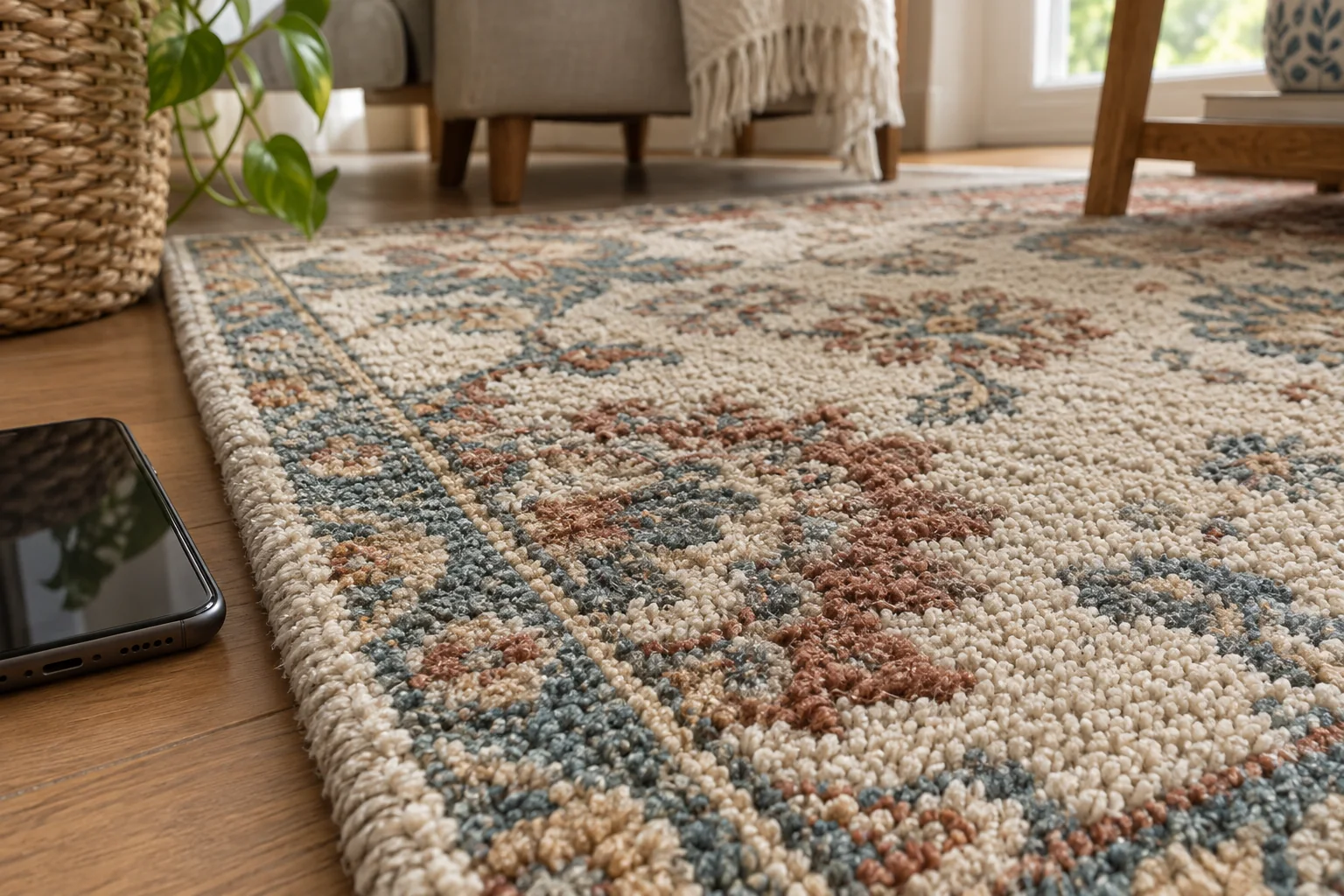
Handmade, hand-tufted and machine-made rugs can all contain wool or synthetic materials. Construction and fibre are related questions, not substitutes for each other. An adhesive-backed tufted rug may be vulnerable because of its backing even if its wool pile is robust. A machine-made synthetic rug may still be unsuitable for a hot or very wet process. Do not select a cleaning method from the fibre guess alone.
What to do while the material remains uncertain
Keep care conservative. Remove loose dust with a suitable vacuum setting only if the rug is sound, the pile does not catch and the fringe is kept clear. Test the vacuum on a small, unobtrusive section first, without using a beater or power head on a delicate rug. The Canadian Conservation Institute’s basic rug-care guidance recommends low suction and movement with the pile for valuable or vulnerable rugs. A badly frayed or antique rug may need even gentler handling.
For a fresh liquid spill, absorb what you can with a clean cloth, blotting rather than rubbing. Check beneath the rug and protect the floor. Do not add a wool detergent because the pile merely feels woolly; do not choose a high-temperature process because a strand looks synthetic. Dyes, backing and prior treatments remain unknown. If a product has already been used, keep its name and photograph the packaging so a professional can take it into account. The guide to reading a rug care label explains why repeating products can compound a problem.
If the rug is stained, smells persistently, sheds from the structure or has a loose edge, pause intensive cleaning. A useful consultation should cover the pile and reverse, colour stability, damage and your priorities. If identifying the exact fibre requires a specialist test, ask whether the result is necessary for the proposed work. Sometimes the risk can be managed by choosing a more limited intervention without pretending to know more than the evidence supports.
Send a cleaner useful photographs
For an initial rug-cleaning assessment, photograph the whole rug in natural light, a close view of the pile, the reverse, the edge and any label or repair. Add a ruler in one close-up if it helps show pile height. Include the affected area and a wider view so its position is clear. State the rug’s approximate dimensions, age if known, purchase source and every treatment already attempted. Do not guess a fibre in the booking form and present it as fact; “unlabelled, possibly wool” is more useful than a confident but unsupported description.
Ask how the cleaner would verify the material before wetting it, what happens if the backing is fragile and how the rug will be dried. If the rug might be antique, unusually valuable or structurally weak, mention that before it is collected. The contact page is a sensible starting point for sharing the photographs and questions. A considered answer may be a cleaning plan, a request to inspect it in person or a recommendation to seek a textile conservator.
An honest answer can remain provisional
You do not need a laboratory report to vacuum a sound everyday rug cautiously. You do need to recognise when a fibre guess is being used to justify a riskier treatment. Keep the evidence you have, leave uncertain details labelled as uncertain and choose care that respects the most vulnerable part of the rug. That approach is more useful than forcing an unlabelled textile into a simple wool-or-synthetic category.
Related Rug Cleaning Services
Explore professional cleaning options selected around the fibre, construction and condition of each textile.
Rug Cleaning Near You
View local rug cleaning information, appointment guidance and coverage across popular London districts.
Continue Reading
Read more practical guidance about fibres, stains, cleaning methods, drying and routine rug care.
Send us rug photographs and a few details.
Include the approximate dimensions, material if known, stain information and your London postcode.