
Rug Colour Bleeding: What to Record First
If red begins to spread into a pale part of a rug while you blot a spill, stop adding water or cleaning product. The colour change may be dye moving from one yarn to another, and extra moisture can enlarge the contact area. The most useful immediate actions are to limit further wetting, keep damp parts from touching clean pale areas, check beneath the rug and document what has happened for a specialist.
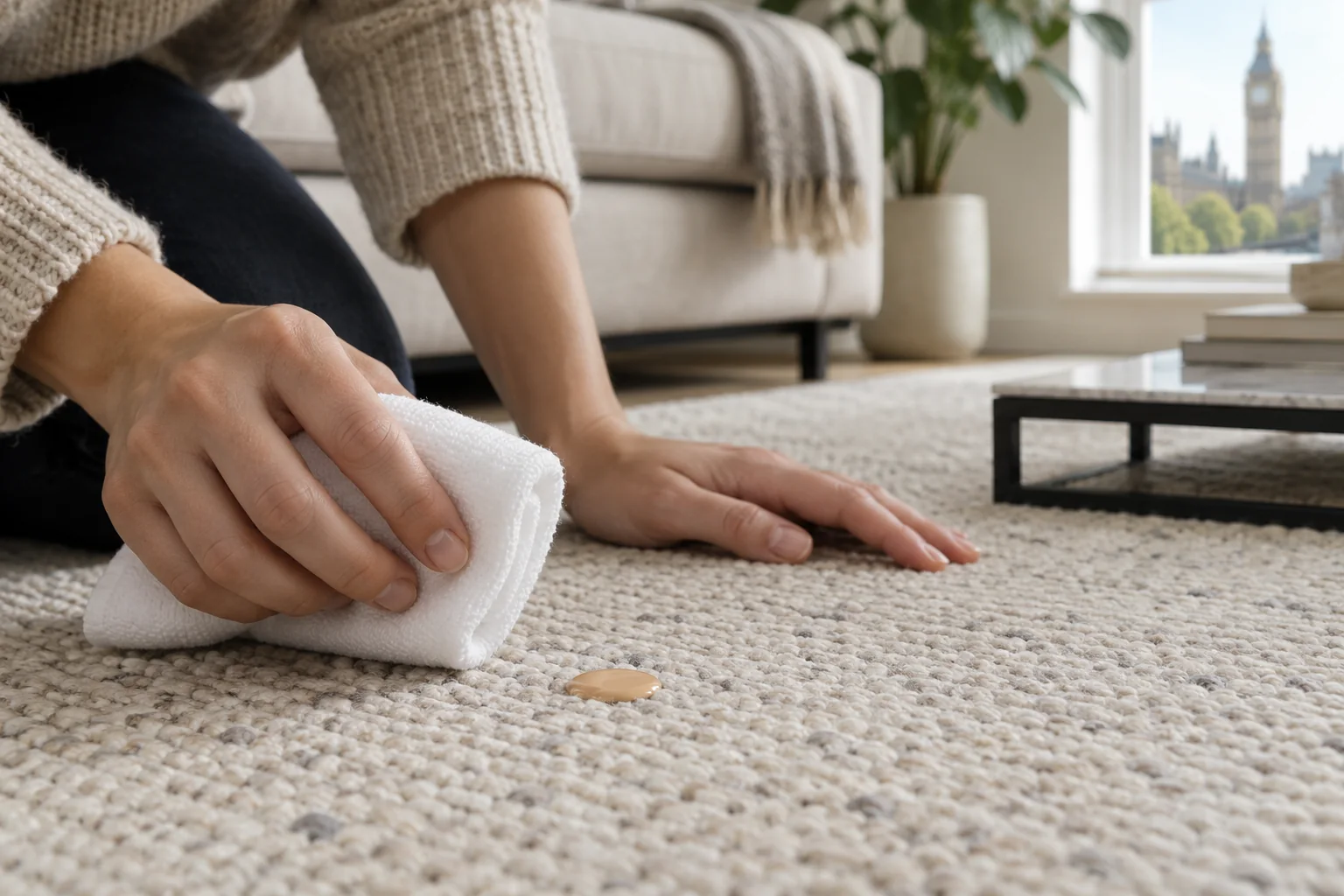
Do not mistake this for a stain that can necessarily be rinsed away. The visible colour may be the rug's own dye in a new place. A cleaner needs to know where it started, what liquid and product were involved and how the boundary changed. This guide helps you preserve that evidence and avoid household experiments that may make recovery harder.
Stop the process that is adding moisture
Put down the spray bottle, switch off the extractor or end the wet cleaning step. If you are using a product, keep its bottle and photograph the ingredients. Do not immediately rinse the area with more water to “wash out” the migrating dye. The dye may move farther, including into the foundation or backing, before anything can be removed.
The Canadian Conservation Institute's colourfastness-testing note tells conservators to stop a test if dye appears on the blotter and then dry the textile with cool airflow. That is a specialist protocol for museum textiles, not a home treatment recipe. Its core warning applies here: visible transfer is evidence that continued wetting is a risk, not a reason to test more aggressively.
If a glass has just spilled, remove the remaining liquid by gentle blotting with fresh white absorbent material. Avoid rubbing across a colour boundary. Replace damp cloths as needed; a cloth carrying dye can transfer it to another part of the rug. Do not leave a dyed wet cloth resting on a pale section.
Photograph the colour boundary before it changes
Take one wide photograph showing the whole rug and the location of the affected area. Then take close views of the exact boundary where colour has crossed into another yarn. Include a ruler or familiar object for scale without placing it on a wet delicate section. Use daylight if possible and avoid a phone filter that changes saturation. A short series over time is more informative than many nearly identical images taken at one moment.
Record the direction in which the liquid travelled and whether colour is visible on the reverse, underlay or floor. If you have a pre-spill photo of the rug, keep it. A receipt or seller's product photo may show the original design but can be colour corrected, so a real earlier household photograph is particularly useful.
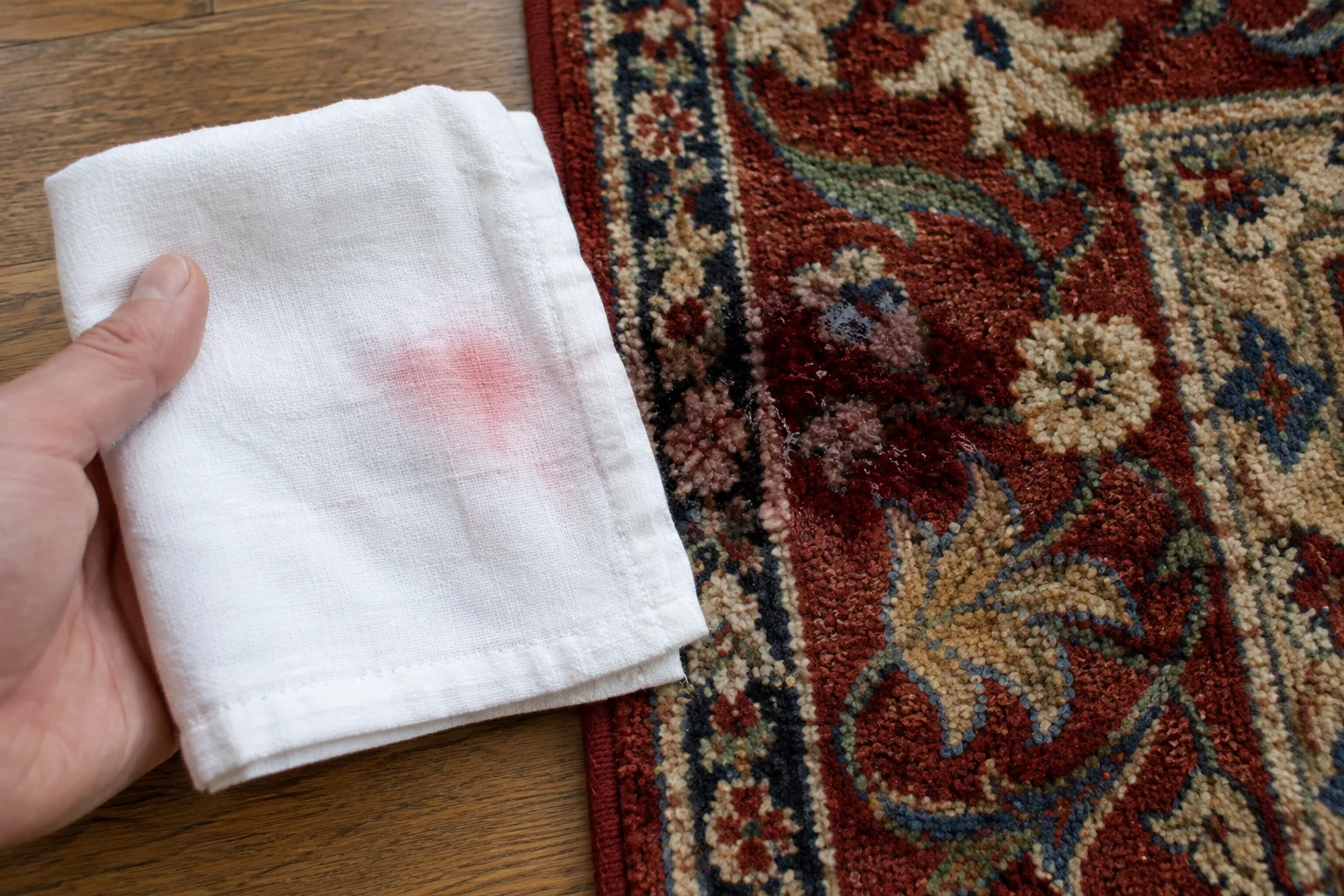
Make a simple timeline: when the spill happened, when wet cleaning began, the first moment you noticed transfer, and whether the mark expanded as it dried. Name the liquid, the product and the approximate amount. If someone else cleaned the rug, ask which method and solution were used. Avoid speculation about blame; clear observations are more useful for treatment.
Keep colours from touching while damp
If a corner or fringe is wet, do not fold it over a pale part of the rug. Support the textile rather than pulling it by a wet edge. If the underlay or floor is damp, separate those surfaces to dry when you can move the rug safely. A large wet rug may be heavy and structurally weak, so enlist help rather than dragging it.
Use ordinary cool room ventilation. Do not place an iron, hot hairdryer or heater near the colour boundary to force quick drying. Heat can affect both fibre and dye and may set other stain components. Nor should you leave a wet rug tightly rolled while waiting for a cleaner. Contact a professional promptly for extensive bleeding or a valuable piece and ask how it should be supported until it can be examined.
The Canadian Conservation Institute's textile guidance lists dye movement and tide lines among possible water damage to textiles. It also notes that wet textiles may stretch or tear under their own weight. These general principles explain why handling and drying are part of the first response, not just stain removal.

Why common home fixes are risky
Salt, vinegar, bleach, colour remover and detergent are all proposed online as quick fixes. None can be assumed safe for a rug with unknown dyes, mixed fibres and a backing. A chemical might remove the transferred colour but also strip the original one or weaken adjacent yarn. Another round of water may spread the boundary farther. A household spot test does not establish a safe treatment across every colour and layer.
Do not scrub one colour out of another. Friction can roughen the pile and drive liquid through the construction. Even if surface transfer improves, a changed texture may remain visible. If a product has already been used, tell the specialist rather than trying to neutralise it with something else. The DIY rug-cleaning mistakes guide covers the broader problem of successive remedies.
If the incident began with a coloured drink, separate the drink's stain from the rug dye movement when you describe it. For example, a red wine spill on a blue-and-cream rug may leave both wine residue and blue dye in the cream field. A cleaner needs to know which colours were present before the spill. The article on wine on a rug offers spill advice, but active dye migration changes the next step.
What a specialist needs to assess
Send the label or purchase information, an overall rug photo, close views of all affected colours, the reverse and any cloth showing transfer. Describe the fibre content as stated, but note if it refers only to pile. Report previous cleaning, dye movement during other spills and any professional treatment. A specialist may need to inspect the rug in person to judge which dyes remain mobile and whether further wet treatment is justified.
Ask an oriental rug-cleaning specialist what they can test safely, how they would limit contact between colours and how the rug would be dried. What result is realistic? Transferred dye may be reducible in some circumstances, but complete return to the previous colours cannot be promised from a photograph. For an antique or high-value rug, ask whether a textile conservator should lead the assessment.
Use the contact page to send the sequence and images before collection. If a cleaner offers a treatment, ask whether the goal is to prevent further movement, remove the transferred colour, clean other soil or all three. These are not necessarily the same operation or risk level.
Preserve options by recording facts
The first visible bleed is a signal to stop and observe. Limit moisture, blot only the fresh excess, keep damp colours apart, dry the rug and floor safely and photograph the boundary. A clear timeline and product history give a specialist more to work with than a rug that has been soaked in several unrecorded home remedies. The next intervention should follow assessment, not panic.
Related Rug Cleaning Services
Explore professional cleaning options selected around the fibre, construction and condition of each textile.
Rug Cleaning Near You
View local rug cleaning information, appointment guidance and coverage across popular London districts.
Continue Reading
Read more practical guidance about fibres, stains, cleaning methods, drying and routine rug care.
Send us rug photographs and a few details.
Include the approximate dimensions, material if known, stain information and your London postcode.