
What a Rug's Reverse Side Can Reveal
The face of a rug shows its design; the reverse often explains how it is held together. A woven pattern, an applied cloth, a care label, a repair or a damp patch beneath the pile can change the cleaning plan. You do not need to pull threads or identify every fibre to make the inspection useful. A few careful photographs can show a specialist whether the rug needs a closer look before water, agitation or even routine vacuuming.

The reverse cannot answer every question by itself. Some backings hide the construction, and a natural-looking weave can contain several materials. This guide sets out what to observe, how to handle the rug safely and what information to send when requesting a quotation.
Turn only what you can support
Clear furniture from the rug and use a clean, dry section of floor. Lift a manageable corner or roll back a short section instead of folding a sharp crease through the middle. If the rug is large, wet, heavy or fragile, ask another person to help or leave it for a professional. Do not drag it by a fringe or grab one edge to carry the whole weight.
The Canadian Conservation Institute's basic rug guidance cautions against lifting a large rug by a single edge and advises avoiding folds where possible. Its recommendations concern valuable textiles, but the handling principle is sensible for any rug with uncertain condition. A photograph taken safely from one corner is preferable to a complete turn that tears a weak binding.
Check the floor before putting the rug down again. A spill can reach the underlay and floor even if the pile seems dry. If those surfaces are damp, separate them and arrange suitable drying. Do not conceal a wet floor under a heavy rug while concentrating only on the face stain.
A woven pattern tells a construction story
Some rugs show their pattern on both sides, with rows of knots and interlaced foundation yarns visible from the reverse. The Metropolitan Museum of Art's examination of a historic knotted carpet illustrates how knots, warps and wefts can be read from the back. The household rug in front of you may be very different, so use the example to form questions, not to date or authenticate the item yourself.
Look where fringe joins the foundation and where edges are finished. Loose warp yarns, breaks, repairs and uneven rows matter for handling and cleaning. Photograph an intact section and any damaged section at similar scale. The existing handmade rug care guide provides wider context, but a visible weakness should still be assessed individually.
Do not use knot count as a shortcut to treatment. A dense knotted rug may have fragile silk foundation or unstable dyes; a coarse one may be sturdy. Pile fibre, foundation fibre, age and prior repair all contribute. The back provides evidence that the face alone cannot, without becoming a complete diagnosis.

An applied cloth has its own questions
A plain cloth on the reverse may be part of a tufted construction or an added lining. It can conceal where yarns enter the base. An adhesive layer may hold a secondary backing in place, but its composition cannot be confirmed just by touching a corner. The Carpet and Rug Institute's Carpet Primer shows that tufted backing systems can use several fabrics and chemical compounds. Avoid calling every coated reverse “latex” without evidence.
Look for separation between cloth and rug body, powder beneath the item, brittle edges or unusual odour. A backing that is already failing may limit washing and mechanical handling. Do not peel a lifting cloth to measure the damage; record its visible extent and ask a cleaner to inspect it. Powder could come from the underlay instead of the rug, so check both separately.
If the rug is new, the product specification may identify pile, backing and care restrictions. Keep a photograph of the label even if the print is small. A seller's web page may describe only the face yarn, while the reverse reveals that another material needs consideration. A cleaner should have both pieces of information.
Stains and repairs can appear first underneath
A liquid spill may leave a mark on the reverse even after the face has been blotted. A dark patch could be retained moisture, dye movement, previous treatment or old soil; appearance alone cannot distinguish them. Note the location relative to the face stain and the floor. Photograph it in daylight and mention any smell or texture change. Do not scrape or wet the backing to identify the cause.
Repairs may be easier to spot from the reverse than from the pile. Look for a patch, stitched section, reinforcement cloth or area of different tension. These can be sound repairs, but they may respond differently to washing or drying. A cleaner needs to know where they are and whether they are lifting. The article on how long rug drying takes explains why visible surface dryness is not the whole moisture picture.
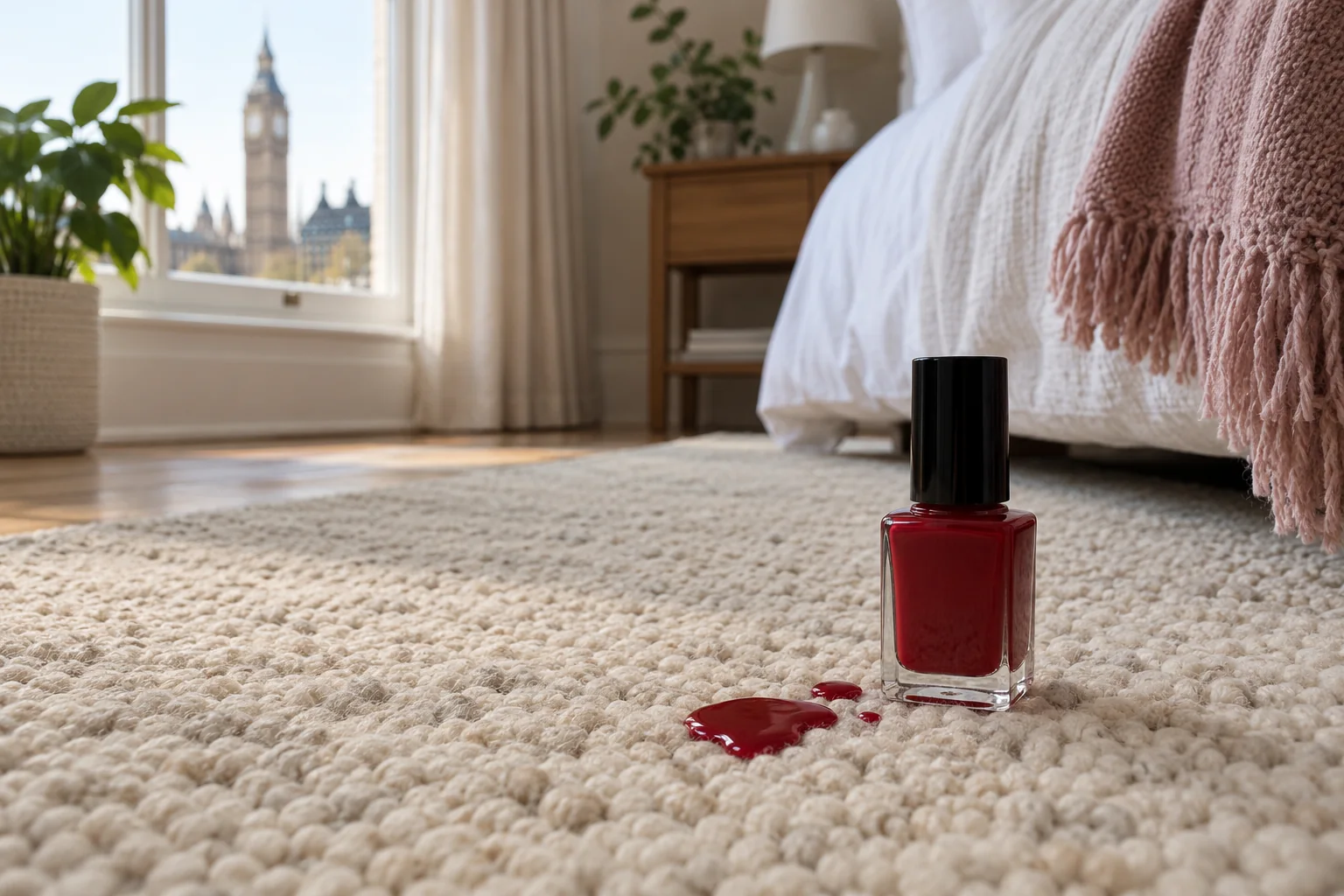
If you find active wetness, stop using the rug until the source is addressed. A damp underlay can affect flooring and keep the rug wet from below. If the cause is a leak rather than a recent drink, a cleaning appointment alone will not solve it. Arrange drying and investigate the moisture source promptly.
Make photographs that answer a cleaner's questions
Take a full face view, a full reverse view if it can be done safely, the care label, a close-up of each edge and a clear image of the problem area. Include a ruler for scale in a close view, but do not put a heavy object on weak yarn. Photograph both sides of any stain or repair. Tell the cleaner the rug's dimensions, purchase information, spill history and products previously used.
A rug-cleaning assessment should consider the pile and the reverse. Ask what construction they can identify, whether the backing is sound, how colours will be checked and how the rug will be dried. If the photographs show weak edges or an applied backing coming away, ask whether repair should precede cleaning. Use the contact page to share the images before collection.
Avoid expecting a precise fibre or age determination from a phone image. A specialist may need direct inspection or testing, particularly for a valuable piece. If the rug is antique or exceptionally fragile, a textile conservator may be the better first adviser.
The reverse is an early warning system
Checking beneath a rug periodically can reveal grit, moisture, underlay marks and backing problems before they become obvious on the face. It also helps you explain the rug's construction to a cleaner without guessing from its decorative style. Lift safely, photograph what you see and treat uncertainty as useful information. The reverse is not hidden housekeeping; it is part of the object that any responsible cleaning plan must respect.
Related Rug Cleaning Services
Explore professional cleaning options selected around the fibre, construction and condition of each textile.
Rug Cleaning Near You
View local rug cleaning information, appointment guidance and coverage across popular London districts.
Continue Reading
Read more practical guidance about fibres, stains, cleaning methods, drying and routine rug care.
Send us rug photographs and a few details.
Include the approximate dimensions, material if known, stain information and your London postcode.