
Why a Rug Smells Musty Only When Humid
A rug that smells normal on a dry day but musty when the air turns damp is giving you a useful clue. Humidity may be making an existing odour easier to notice, or it may be revealing a moisture problem in the rug, its underlay, the floor or the room. The pattern does not prove mould by itself. It does mean that spraying fragrance over the pile is unlikely to answer the important question: where is the moisture and what is holding the smell?
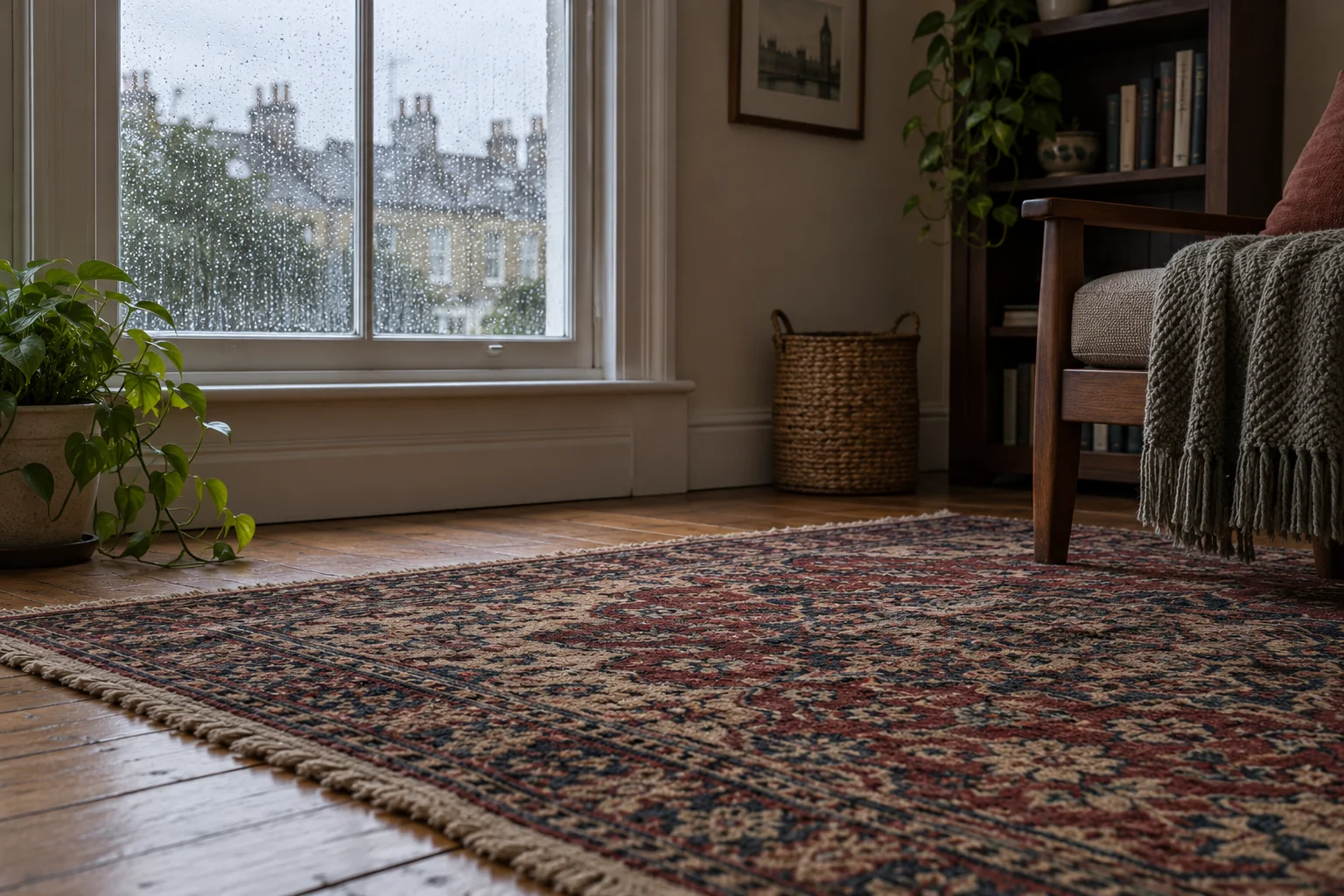
Start by keeping the rug dry and looking beneath it. Compare the face, reverse, pad and floor, then note whether the smell appears after rain, cooking, indoor laundry or a recent cleaning. If dampness is recurring or the floor is affected, the rug may be only one part of a building problem. The safest treatment depends on the source rather than the strength of the perfume used to cover it.
What humidity changes
Textile fibres, soils and backing materials interact with moisture in the air. A room that feels comfortable can still have humid pockets under a dense rug or against a cold floor. If an earlier spill or wash left residue or dampness in the backing, humid weather may make the odour more noticeable again. This explanation is plausible, but smell alone cannot tell you whether the source is soil, a degraded backing, microbial growth or something in the floor beneath.
The Canadian Conservation Institute explains that high relative humidity and poor air circulation favour mould growth on textiles and that a musty odour can accompany it. The US Environmental Protection Agency advises looking for moisture and mould in places that smell musty, including the underside of carpets and pads. These are reasons to inspect, not reasons to declare every musty rug mouldy without evidence.
Room conditions matter too. Condensation on a window, damp skirting or a smell strongest near an external wall may point beyond the rug. Government guidance on ventilation notes that indoor moisture from ordinary activities can collect on cooler surfaces when air exchange is poor. If a rug is returned to a damp floor after cleaning, improving the air alone will not correct the wet contact surface.
Trace the smell without spreading a problem
Note when and where the smell is strongest. Does it rise when the rug is lifted, or is it present throughout the room before you move it? Is one corner affected, perhaps under a plant pot or near an exterior door? Did the smell first appear after washing, a leak or a spill? Keep a short record over a few days, including weather and room humidity if you have a hygrometer. A trend is more useful than one reading.
Lift a manageable rug carefully; do not pull a fringe or sharply fold a heavy item. Inspect the reverse, separate underlay and bare floor. Look for dampness, staining, colour transfer, powdery backing, visible growth and floor damage. If you suspect mould, avoid vigorous brushing or dry vacuuming that could disturb material. A professional may need to examine a large or fragile rug and the building surface beneath it.
Smell different layers only from a sensible distance. Do not press your face against suspected mould or disturb a damp patch to confirm what your nose already suggests. Photograph what you find. If the floor is wet, notify the landlord, managing agent or appropriate trade promptly. A rug cleaning appointment cannot locate a hidden pipe leak on its own.

Avoid masking sprays and repeated wet cleaning
Fragrance can temporarily change what you notice, but it does not remove water or identify the source. Some sprays add liquid or leave residue in the pile. Repeated wet treatment can make matters worse if the backing or floor cannot dry. If a previous cleaner used a product, retain the name and date for any later specialist assessment; it helps explain residues and odours.
Likewise, a dehumidifier can lower room humidity but cannot prove that a thick rug foundation is dry. Run it according to the maker's instructions if it suits the room, keep ventilation in mind and inspect the rug and floor separately. Our article on rug odours explains why identifying the odour source comes before selecting a treatment.
If a known clean-water spill was recent, separate affected layers and dry them promptly. For a substantial soaking, unknown water source or a vulnerable rug, seek professional advice rather than experimenting with heat. The EPA notes that carpet backing and padding must dry as well as the visible face after water damage. That principle is easy to overlook when the top of a decorative rug feels dry.
Decide whether the room or rug needs attention first
If the room smells musty even after the rug has been moved to a clean dry space, investigate the room and floor. Check for leaks, condensation and ventilation problems. If the rug's reverse and pad are odorous while the exposed floor is dry, textile and underlay assessment may be the priority. Both can be involved: damp flooring may affect a rug, and a wet rug may hold moisture against the floor.
Do not treat a humidity reading as a diagnosis. A hygrometer can show that the room becomes more humid on certain days, but it does not measure moisture hidden inside timber, under a floor finish or in a bonded rug backing. If a patch returns in the same location, a building professional may need appropriate moisture testing. Health Canada advises looking for stains, dampness and musty odours and seeking expert help when the source is unclear.
If visible growth is present, isolate the affected area from routine use and get advice suitable to the scale and material. Our guide to mould on a rug discusses why removal and prevention must address the moisture conditions. Do not assume that a surface wipe will solve growth within an underlay or backing.

Getting a useful assessment
An assessment is more productive if you can explain the pattern. Send photographs of the rug face, reverse, pad and floor; note when the odour appears and whether any cleaning, spill or leak preceded it. Mention the rug's fibre and care label if known. A rug cleaning service can consider whether cleaning and controlled drying are appropriate for the textile, and what odour reduction is realistic. Building dampness requires its own investigation.
You can contact us to discuss the rug and provide those details. If you rent, report persistent floor or wall dampness to the property manager as well. The useful response to a musty smell in humid weather is to find and correct the moisture source, then decide what treatment the rug can safely tolerate.
Related Rug Cleaning Services
Explore professional cleaning options selected around the fibre, construction and condition of each textile.
Rug Cleaning Near You
View local rug cleaning information, appointment guidance and coverage across popular London districts.
Continue Reading
Read more practical guidance about fibres, stains, cleaning methods, drying and routine rug care.
Send us rug photographs and a few details.
Include the approximate dimensions, material if known, stain information and your London postcode.