
Why Jute Rugs Develop Brown Water Marks
A pale jute rug can dry with a brown outline after a glass of plain water tips over. The ring does not automatically mean someone used a dirty cloth or that a stain remover has failed. Moisture can carry material through a plant-fibre textile and concentrate it at the edge of the wet area. Soil, previous cleaning residue and material associated with the rug itself may contribute. The construction and drying conditions influence what becomes visible.

The sensible first response is to remove as much liquid as possible, check the floor beneath and document the boundary before adding anything else. Repeatedly wetting the ring to “blend” it can spread the water farther and make the final mark larger. This guide explains the likely processes, the limits of a home response and the questions to ask before a professional treatment.
Water is a challenge for a coarse plant-fibre rug
Jute is a plant fibre with a visibly coarse structure. A woven rug may also contain coloured yarns, a backing or stitching made from other materials. The fibre name on a listing therefore does not describe every part that can become wet. A drink entering the weave may reach the foundation, underlay and floor before the face looks very damp.
The WoolSafe Organisation's guidance for fine fibres treats plant-based fibres such as sisal, sea grass and coir as moisture sensitive and warns against spraying water-based spot products directly onto them. Jute rugs also deserve a construction-specific assessment. The point is not that every drop permanently ruins every jute rug; it is that a casual wet treatment may create a larger water mark than the original spill.
If you are unsure whether the rug is jute, do not identify it solely by a rustic look. Retailers use jute in blends and in backings beneath other face fibres. Look for a label or receipt, photograph the reverse and describe uncertainty to a cleaner. The site’s jute rug care guide provides broader routine advice, but the wet mark needs its own diagnosis.
How the brown boundary develops
As water spreads and evaporates, dissolved or suspended material can move with it. A visible tide line may form where that movement stops and deposits material. The Canadian Conservation Institute's textile guidance lists tide lines among possible forms of water damage to textiles. Research described by the US National Park Service shows that brown-looking tide lines on cellulosic materials are not always explained by one simple source of soluble dirt. That paper-based research should not be treated as a direct recipe for a jute rug, but it supports caution about assuming one cause from colour alone.
Several factors may coexist. A spill can mobilise floor dust trapped beneath the weave, residues left by a previous cleaner or naturally coloured material within the yarn. A rug dried unevenly may show a sharper boundary than one dried under controlled conditions. Dye movement is possible in a coloured design. The exact mix cannot be established merely by looking at a brown ring in a photograph.
The outline is often where someone is tempted to scrub. Scrubbing can roughen the fibres, change the weave's texture and drive material deeper. A cleaner may then face both a deposited line and a visibly abraded patch. Treat the appearance of a mark as a reason to pause and gather evidence, not to increase force.
First response while the spill is fresh
Remove the source and blot the wet area with a clean, white absorbent cloth. Press gently and replace the cloth when damp. Do not rub across the weave or pour water through it. If the spill contained colour, sugar, oil or a cleaning chemical, keep that information; the content matters as much as the amount. A plain-water event should also be recorded accurately.
Lift a manageable corner to see whether moisture has reached the underlay or floor. Support the rug rather than dragging a soaked section. Separate wet surfaces so they can dry, and provide ordinary room ventilation. Do not put a hot hairdryer or portable heater close to the rug to speed the process. Direct heat can create uneven drying or affect other components. If the rug is too large or heavy to lift safely, ask for help rather than pulling on an edge or fringe.
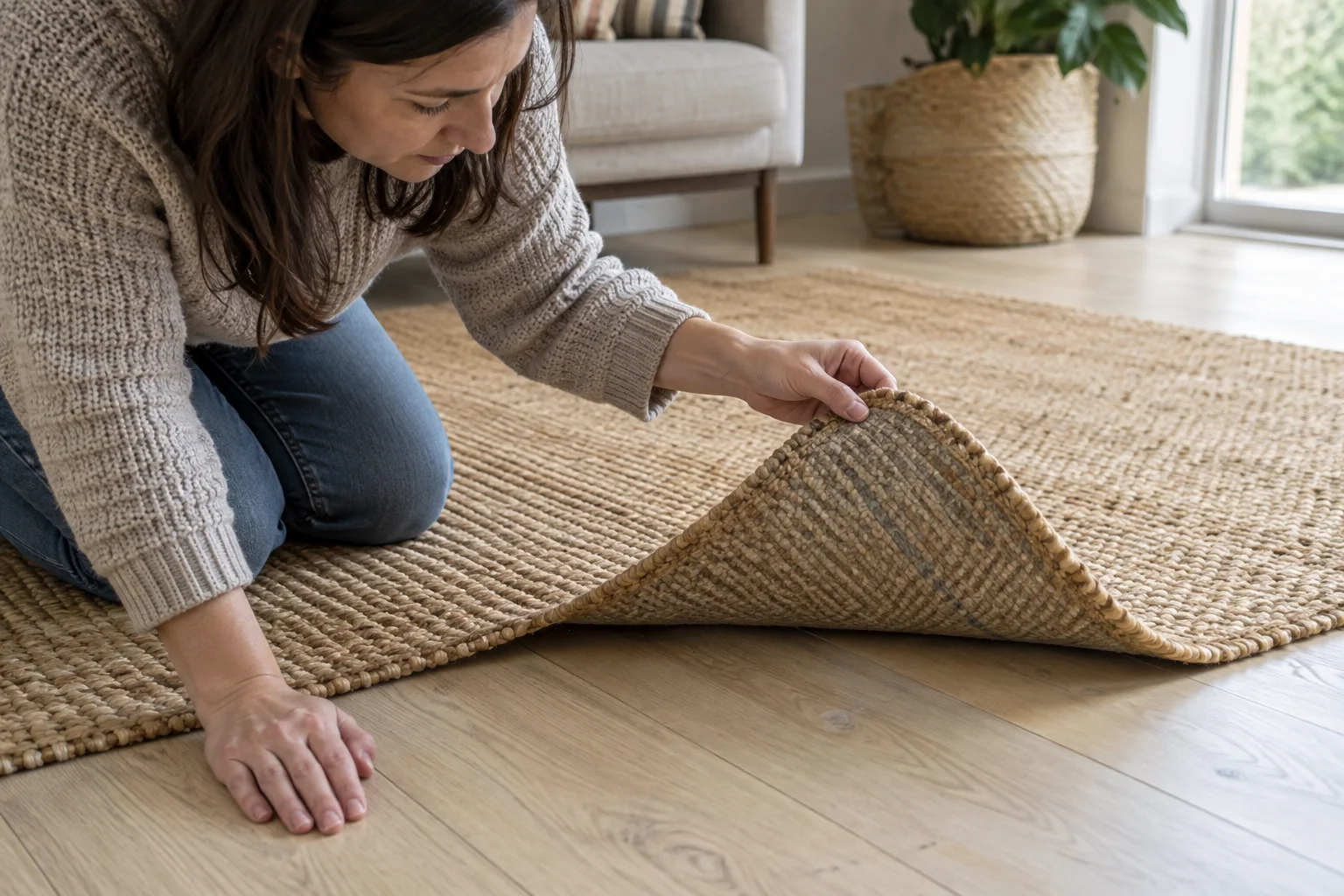
Photograph the wet area and its boundary in daylight. Make another photograph after drying from the same angle. Note when the spill happened, which products were used and whether the area was already marked. These details help a cleaner distinguish a fresh deposit from an older stain or previous treatment line.
Why another round of water may worsen it
Water can expand the wetted area, even when applied only to a narrow ring. The new boundary may dry farther out. A cloth that appears to pick up brown colour is not proof that the underlying process is finished; material can continue to travel from deeper in the rug. Adding detergent introduces another substance that must be removed without over-wetting. A household extractor may pull some liquid back but can also wet the backing more widely.
Do not assume a vinegar, salt or baking-soda treatment is harmless because it is familiar in the kitchen. The rug's dyes, finish and previous products are unknown. Powder can settle into a coarse weave and be difficult to remove. Colour removal chemicals can change the natural tone of jute rather than just the ring. A hidden-area test may warn of immediate colour transfer, yet cannot guarantee that a larger treated patch will dry evenly.
If you have already tried a product, stop adding more and save its name and ingredients. Do not hide the attempt when contacting a professional; it may explain a change in texture or pH. The article on DIY rug-cleaning mistakes describes why serial home treatments can make a simple spill harder to assess.
Dry the whole construction, including the floor
A coarse face can feel dry while an underlay remains damp. Check the reverse and floor separately before putting the rug back in place. A damp rug held flat over timber, laminate or a non-breathable pad may affect the floor finish as well as the textile. Keep furniture off the wet section until it has dried fully. A heavy object can press moisture into a local area and leave its own impression.
There is no useful universal drying time. Room temperature, ventilation, rug thickness and the amount of liquid all matter. A persistent damp smell, new darkening or a wet backing calls for prompt advice. Do not roll up a damp rug for storage or transport without discussing safe handling with a specialist.
What professional assessment can establish
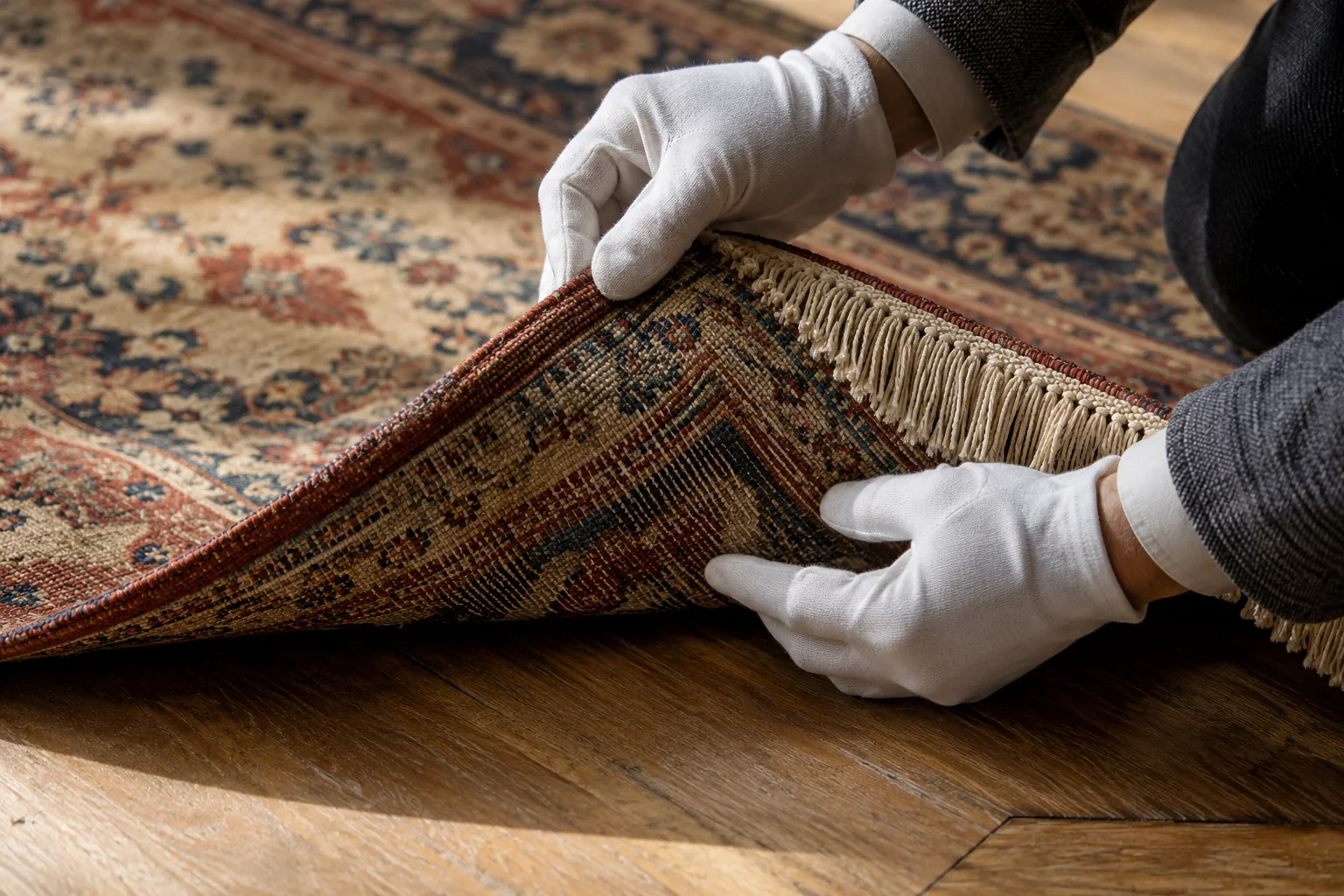
A specialist can inspect the face, reverse, dyes, backing and prior treatments before choosing a process. They can judge whether the brown boundary is likely deposited material, dye movement, permanent fibre change or a combination. Some marks may be improved; others may remain partly visible after soil is removed. Ask for that distinction before agreeing to a full clean.
For a low-moisture or dry rug-cleaning discussion, provide the label, photographs and spill history. “Dry cleaning” is not a promise that every method called dry will suit every jute rug. Ask what will contact the fibre, how residue will be removed and how the whole rug will be dried and checked. If a controlled wet treatment is proposed, ask why its likely benefit outweighs the risk of a wider line.
Use the contact page to send details before collection. If the rug is antique, unusually valuable or structurally weak, mention that at the outset. A textile conservator may be the right first adviser for such a piece.
A realistic aim for a brown ring
The aim is to prevent further movement and learn what caused the mark before treating it. Fresh liquid can be blotted, the floor can be separated and dried, and the event can be recorded. A brown outline does not justify repeated soaking or scrubbing. Controlled cleaning may improve its appearance, but an honest result depends on the specific rug, not a universal home remedy for “jute browning”.
Related Rug Cleaning Services
Explore professional cleaning options selected around the fibre, construction and condition of each textile.
Rug Cleaning Near You
View local rug cleaning information, appointment guidance and coverage across popular London districts.
Continue Reading
Read more practical guidance about fibres, stains, cleaning methods, drying and routine rug care.
Send us rug photographs and a few details.
Include the approximate dimensions, material if known, stain information and your London postcode.