An oily mark can need focused treatment within a wider rug clean. We visit your Wembley property with portable machines to inspect the material, assess the deposit and carry out suitable work on site. Our service includes preparation, compatible cleaning, recovery of released soil and a clear explanation of drying at home.
Mobile service in Wembley · Cleaning method agreed after inspection
Focused work on the deposit, with the whole rug considered
Cooking oil or greasy food can leave a patch that behaves differently from ordinary tracked soil. We assess that deposit rather than assuming a stronger general clean will automatically remove it. At the same time, we consider the rug’s wider condition so local attention connects with a useful overall service. Our Wembley appointments take place at your property, using portable cleaning equipment and a process selected after we examine the actual textile.
We discuss approximate dimensions, the incident history and earlier products before preparing a quotation. A whole-rug image and a closer view of the affected area help us understand the request. Furniture movement and access are agreed as part of the arrangements. The visit then follows the appropriate stages: inspection, dry preparation, selected local work, compatible machine cleaning and recovery. We finish with a review of the response and practical information about drying, keeping expectations realistic where an old mark or altered fibre condition limits the result.
Mobile serviceLondon and the surrounding M25 area
Material checksFibres and dyes assessed before treatment
Clear pricingPublished starting prices with a confirmed quote
Open dailyMonday–Sunday, 07:00–19:00
We identify what the mark contains and where it sits
A known oil spill gives us useful information, but the appearance still needs assessment. We ask what was spilled, when it happened and which products have already been applied. A food deposit may contain more than one component, and a darker patch may include ordinary soil as well. We inspect the affected fibres and its position within the rug so the local work is based on the deposit and textile, rather than a general assumption about every greasy-looking mark.
We also examine the surrounding area to understand the broader clean requested. Removing an oily deposit and improving accumulated everyday contamination are related aims, but they need not involve identical products or working time. We explain those roles before treatment. If the mark includes lasting colour or fibre change, that limitation is identified rather than treated as evidence that unlimited further product will help. You receive a realistic description of the useful work available on the actual rug.
The construction governs product and machine suitability
We inspect the pile, backing, edges and any repairs before choosing the process. Those elements can respond differently to moisture, products and mechanical action. Where appropriate, colour checks help assess the proposed treatment. The construction matters even when the spill itself seems familiar: a delicate decorative piece and a more robust rug may need different decisions for the same type of deposit. We explain the approach selected without expecting you to choose technical settings or diagnose the fibres yourself.
If a proposed machine method is unsuitable for a delicate or weakened rug, we say so before agreeing work. We also assess worn areas and changes that cleaning cannot reverse. The aim is to remove compatible contamination within the present condition of the textile, not to promise restoration of every difference. This gives the treatment a clear boundary while retaining a practical focus on what we can do for you, from the local mark to the general soil across the included area.
What informs treatment of an oily mark
Detail
Our assessment
Effect on the work
Known spill
Oil or food components and timing
Local product selection
Previous applications
Products already used
Treatment checks and expectations
Construction
Fibres, backing and strength
Machine suitability
Lasting changes
Dye or fibre condition
Realistic result limits
Dry preparation removes loose matter before local products
We begin physical cleaning with suitable dry removal of accessible particles. Dust, grit and everyday debris elsewhere in the rug are taken out before solution is introduced. The equipment action is chosen around the pile and condition, including care for fringes and weaker borders. This stage does not replace treatment of an attached oily deposit, but it prepares the wider textile and reduces loose material that would otherwise be mixed into the following wet cleaning process.
As preparation progresses, we can see the surface more clearly and refine the assessment of the mark. Loose debris and lasting pile differences are not treated as the same issue. We do not keep increasing dry working force to make every patch match. The purpose is a useful first removal stage, followed by targeted decisions for the material that remains attached. This keeps the work systematic without turning the service into a series of increasingly strong attempts based only on appearance.
Illustrative image of local rug stain treatment at home.
Local treatment is selected to release the oily deposit
Where the rug permits, we apply suitable local products to the assessed area in a controlled manner. We allow appropriate time for them to work on the deposit, considering the spill history and any earlier treatment. The aim is to help release compatible contamination so it can be removed, rather than merely spread it through neighbouring fibres. We keep the surrounding pile and colour response in view, with local application serving a defined purpose within the broader cleaning sequence.
Controlled working action may assist the product where appropriate. We select that action around the textile’s strength and construction, avoiding an assumption that harder rubbing is always the answer to a greasy mark. We explain when an old deposit or permanent colour change limits the expected result. Complete removal is not guaranteed, but useful local work can still be considered. The decision remains connected to the actual rug and the compatible process, not a household recipe or a promise based only on the spill name.
The general clean deals with ordinary soil around the mark
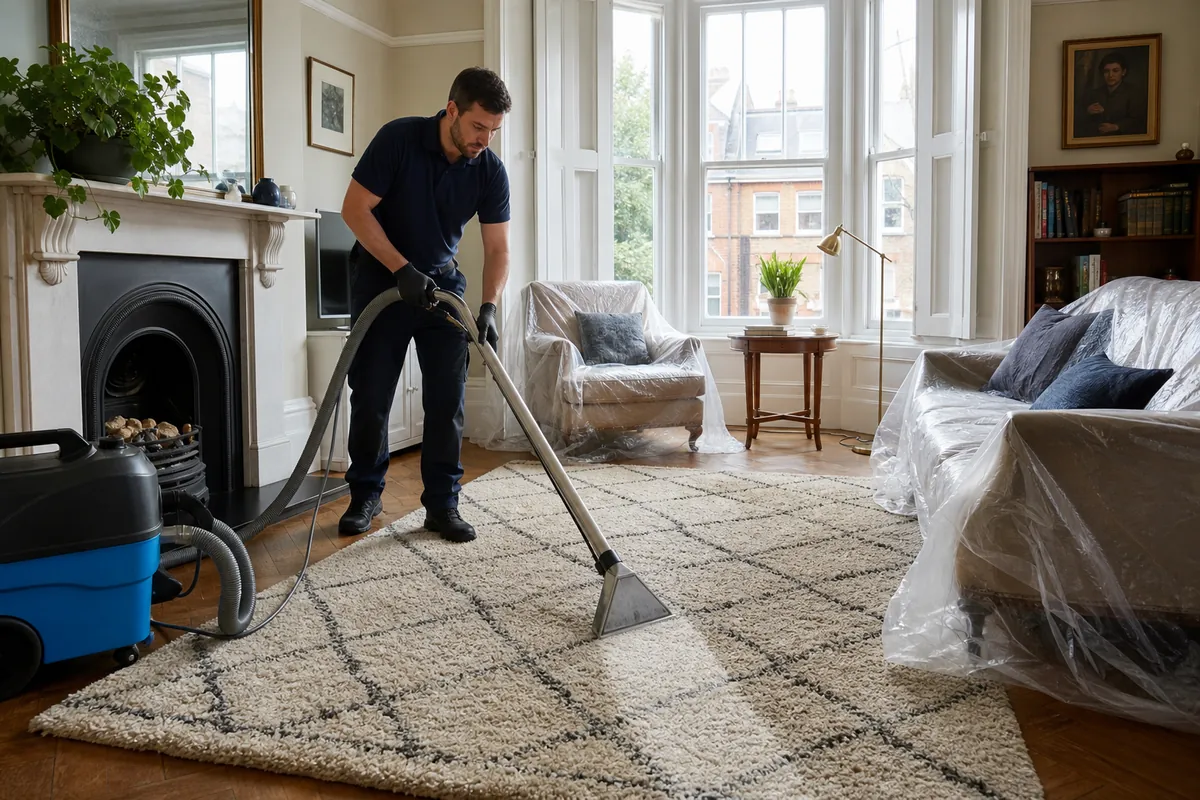
For a rug suitable for extraction, we apply compatible solution to the agreed accessible area and use appropriate working action to loosen attached soil. This wider stage addresses the contamination that has accumulated through ordinary use, alongside the local attention already given to the oily patch. Application is controlled around pile, backing and condition. We do not treat a difficult-sounding incident as a reason to introduce more liquid everywhere, because the textile still determines the suitable approach.
We organise the room before wet work, examining the supporting floor and considering suitable protection for adjacent finishes. Furniture movement is agreed beforehand and any section remaining underneath an item is identified in the scope. Our machines are portable, and the cleaning is carried out at the property with the available working space understood. This practical setup supports the treatment and recovery sequence rather than forcing improvised furniture handling or repeated equipment changes once solution has already been applied.
Illustrative image of on-site cleaning at a property.
Recovery takes away the material the treatment has released
Machine extraction collects used solution and loosened contamination from the suitable rug. We manage the passes across the included area with attention to coverage and overlap. The earlier local work has a purpose within this removal process: releasing a deposit is not the same as completing its removal. Likewise, general cleaning solution needs recovery rather than simply being left in the pile. We explain how those stages connect so you understand the function of the portable equipment we bring to your home.
Where suitable, additional recovery passes collect more moisture without automatically introducing further solution. We monitor the response and consider remaining differences against the inspection. Repeated wetting is not assumed to resolve permanent changes in dye or fibre condition. If a mark has improved only partly, we explain that rather than continuing the same action without a clear purpose. The aim is controlled removal completed within the agreed scope, followed by drying conditions suited to the textile and room.
We check the original patch after the main clean
The final review returns to the known spill and explains its response alongside the overall result. We identify any remaining mark or colour change and connect it with the assessment and treatment. Where appropriate, suitable pile finishing leaves the surface orderly. A damp rug may look different from the final dry textile, and pile direction can affect shade, so we discuss those observations in context instead of presenting an immediate wet appearance as proof of complete restoration.
We make the account clear to the person present, including someone attending for the person who made the booking. They understand which items were cleaned, what local work was carried out and any limitation that remains. If a question arises after drying, the relevant area can be described against that explanation. This keeps follow-up focused on the actual rug and service rather than leaving uncertainty about whether a remaining difference is a deposit, wear or altered colour.
How focused work becomes a complete clean
Stage
Our action
Purpose
Preparation
Remove accessible loose particles
Prepares the wider rug
Local work
Apply suitable treatment and action
Releases assessed deposits
Recovery
Extract contamination with used solution
Completes removal
Review
Explain response and drying conditions
Clarifies result and room use
Drying arrangements are explained before the room is restored
The rug dries at home after machine work, with the time influenced by construction, treatment and airflow. We explain practical ventilation, traffic and furniture-contact conditions for that room rather than giving one exact universal timetable. Where a table or other piece was moved by agreement, we discuss the relevant conditions before it is placed back on the treated textile. The aim is to connect the completed clean with a clear, workable next step for the household.
We confirm the equipment route, parking and any stairs or lift access when arranging the appointment. Other rugs or fitted carpet can be discussed within the same request, with each item identified and assessed separately. That keeps the quotation and working sequence clear. At completion, you understand the scope delivered, the response of the concern that prompted the booking and the conditions needed while drying continues, making the service practical from the first discussion through to normal room use.
Price guide
Starting prices for Wembley
Published starting prices; the final quote reflects the rug and access.
For a booking in Wembley, include your full postcode and property access information. The map shows the service area.
Local postcode districts: HA0, HA9. We confirm the visit against your full address.
Arranging your Wembley appointment
We confirm the address, included items and route for portable equipment before the visit. Furniture restrictions and any known spill details help us organise the scope and practical setup for work at the property.
Published customer feedback
Reviews shown to Wembley customers
“I booked a last-minute clean before guests arrived, and they delivered beyond expectations. The rug looks brand new!”
“Highly professional and efficient service. They cleaned two rugs at my flat and even gave advice on long-term care. Great value for money and a friendly team.”
The deposit and textile considered together
We select local work around both the contamination and the construction supporting it. That assessment keeps the treatment useful and the expectations realistic for the rug’s present condition.
Clear information after cleaning
Our final discussion covers the response of the spill, the broader clean and any remaining limitation. We also explain the room conditions needed while the textile dries.
Yes. We discuss the incident and earlier products, inspect the fibres and select compatible local treatment where suitable. The result depends on the deposit, material and any lasting colour or fibre change.
Will an oily mark always disappear completely?
No. Some deposits or previous treatments can leave permanent differences. We explain realistic expectations for the individual mark and the useful work available rather than promise complete removal in every case.
Do you clean at my Wembley property?
Yes. Our portable machines come to the address and the agreed cleaning is carried out on site. Inspection, preparation, treatment, recovery and a final explanation are included in the visit.
Is the wider rug included in the service?
We define the items and area in the quotation. Where the accessible rug is included, local stain work connects with a broader clean addressing ordinary particles and attached soil.
Can you treat a delicate rug with the same products?
We choose treatment after checking construction, condition and relevant colour response. If a proposed machine process is unsuitable, we explain that before agreeing work rather than applying one response to all rugs.
When can furniture be replaced?
We discuss drying and furniture-contact conditions after treatment. The textile and room airflow affect the timing, so the information is specific to the visit rather than one fixed promise for every item.
Next step in Wembley
Discuss on-site rug cleaning in Wembley
Tell us about the rug, approximate size and any known oil or food spill. We will discuss the suitable scope, practical arrangements and a quotation for cleaning at your property.