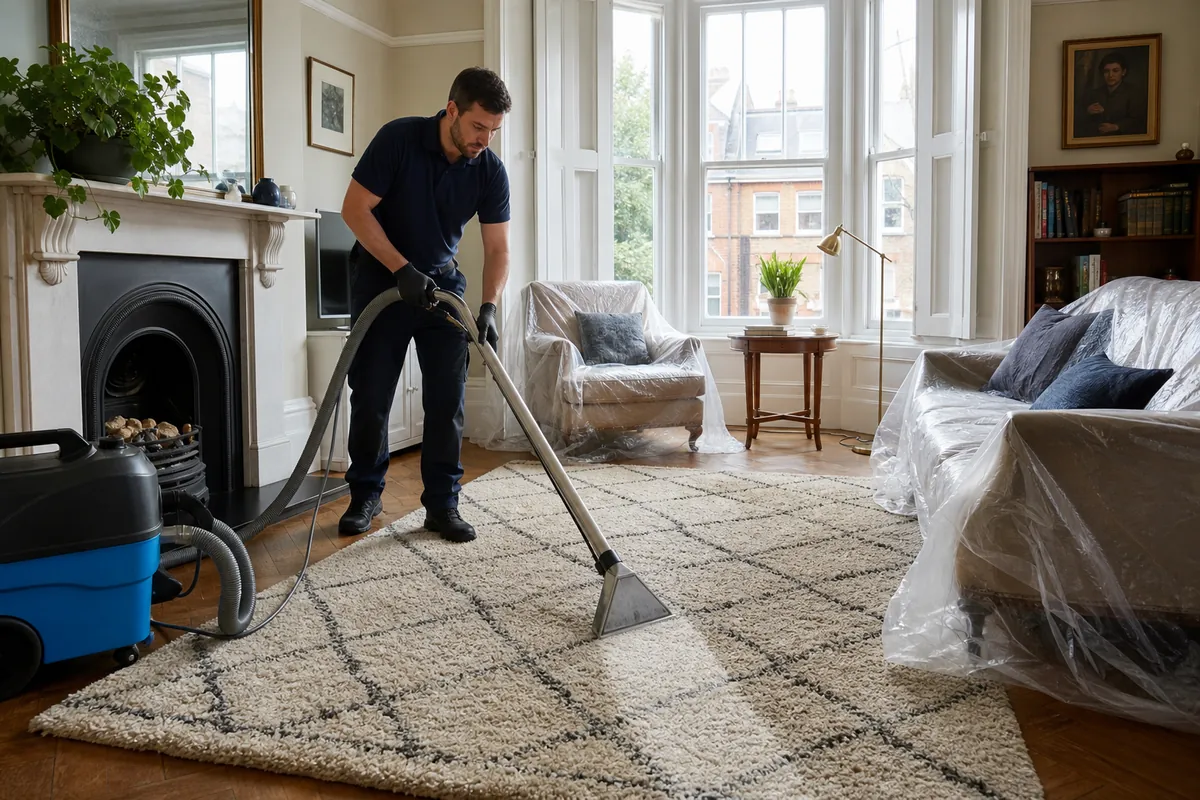
We provide on-site machine extraction rug cleaning in Forest Hill, not a dry-cleaning service. Portable equipment brings inspection, dry-particle preparation, suitable stain attention and controlled application and recovery to your property. The process introduces moisture and needs drying afterwards. We explain the agreed work, realistic result and practical room arrangements before completing the visit.
Mobile service in Forest Hill · Cleaning method agreed after inspection
The actual service is explained before booking
Our rug cleaning method is machine extraction at the customer’s property. Selected solution helps release contamination attached to the fibres and the machine recovers the used liquid with dirt and moisture. The rug then finishes drying at the address. We do not provide dry rug cleaning, and that distinction is clear from the enquiry. The Forest Hill visit is planned around the textile’s suitability and available space, with the cleaning sequence and practical effect on room use explained before work is agreed.
The assessment includes the pile and supporting construction, using available information and what can appropriately be inspected at the property. Accessible loose particles are removed first, suitable marks receive selected attention and the broader surface is cleaned with controlled extraction. Furniture movement and coverage are agreed, and the supporting floor is considered. You receive practical removal work and an account of what changed, with lasting wear or colour differences identified where relevant. The service also leaves a drying arrangement specific to the actual rug and room after the machines have finished.
We build the assessment from the item available to inspect
Photographs, approximate dimensions and reliable care information help the first discussion. A complete view shows the rug’s placement and wider condition, while closer views locate concerns. We use those details to identify questions for inspection at the property. You can describe the item and known history in ordinary language. The material decision is made after examining the actual textile, with the final scope and charge confirmed before treatment begins. This gives the service a clearly defined starting point.
At the visit, we look at the item in the room before setting up. A binding may need care, part of the pile may be hidden beneath a table and the floor below may affect the working arrangement. We discuss which furniture can move and state what remains out of reach. Arrival details are settled with the booking so we can bring the portable machinery to the right space. The cleaning and subsequent drying are then planned around the real item, not just the dimensions supplied with the enquiry.
Construction and colour response guide suitability
We inspect fibres, pile depth, backing and edge condition, noting damage, repairs or weakness affecting handling. Appropriate colour response checks guide compatible products and working action. Supporting layers may need restraint even when the face looks substantial. We explain findings relevant to controlled moisture and any section requiring limited attention. Where material or condition prevents appropriate extraction, the limitation is discussed before agreement and unsuitable work is declined. The service provided is on-site machine extraction for compatible textiles.
We show you any difference that appears to belong to the textile rather than to a deposit. A route through the centre can be both dirty and worn; a light area may have lost colour before we arrive. Cleaning can improve the first problem without reversing the second. We explain the distinction using the rug in front of us, so the proposed result is easy to understand. The work aims to take soil away, with existing changes recognised instead of being described as stains that more treatment will necessarily remove.
The actual service and its assessment
Detail
Our service or check
What it establishes
Method
On-site machine extraction
Moisture and drying are involved
Material
Fibres, backing and edges
Suitability for treatment
Colours and condition
Relevant response and wear assessment
Compatible work and limits
Room
Furniture, floor and access
Practical coverage and drying plan
Dry preparation collects accessible particles first
We start removal by vacuuming the area included in the clean. Dry debris often sits between yarns and along the margins as well as on the visible surface. We use handling that suits the pile, avoiding loose details that could catch. Taking this material out now means less debris is carried into the liquid stage. The rug will still receive wet extraction afterwards; the vacuum work is its groundwork, with a direct contribution to soil removal before any solution is applied.
Once dry debris has lifted, we have a better view of the marks. A patch that initially looked stained may have been mostly dust, while a sticky section can remain clearly different. We examine those findings before choosing the next action. Differences between sheltered and busy areas are also considered, because use can alter the yarn itself. Preparation therefore helps us refine the treatment as well as remove dirt. It leaves a more intelligible surface for local attention and the broader extraction you have booked.
Illustrative image: suitability checked before the agreed extraction.
Suitable marks receive selected local attention
Known spills and earlier products help the assessment where information is available. We examine the affected fibres with relevant colour checks in view, then choose compatible local work. Controlled application, appropriate time and measured action help release suitable contamination. The response is observed and material recovered where required. This provides a basis for deciding what further appropriate attention is useful, with dyes, backing and present strength continuing to govern treatment intensity throughout the local stage.
We discuss a mark in terms of what the local work actually achieved. A deposit may release while an old change in colour stays behind; that is different from residue still sitting on the yarn. We explain the response and continue with the rest of the agreed rug, where everyday soil also needs removal. At the review you can consider both results: attention to the original concern and cleaning of the surrounding textile. This gives the appointment a useful overall purpose even where a lasting trace cannot be reversed.
Controlled extraction releases and recovers attached soil
The cleaning liquid has a specific task: help free the dirt attached around the fibres. We introduce it in portions we can handle properly, working across the rug’s actual outline. The next step takes that liquid out through the portable machine with the released material. We adapt contact where the pile or structure changes and keep reachable borders in the route. The work is done in the room under the arrangements already agreed, rather than pulling or repositioning the textile unexpectedly once wet treatment is under way.
We keep watching the surface while the equipment is used. If one area remains darker, we consider its response and the earlier inspection before deciding what to do. There may be more dirt to release, or the shade may come from worn yarn or its direction. Extra attention needs a reason. This lets us control the treatment rather than add solution until every patch looks alike. The final explanation then describes the work completed and why moisture still needs to leave the rug afterwards at the property.
Illustrative image: the on-site machine process provided.
Recovery and finishing complete the active process
Recovery removes the liquid carrying the released deposits into the machine. We work over the treated area and assess where another suitable recovery pass would be useful. This may take more moisture out without another application of product. Removal is the completion of the earlier treatment, not an optional finishing touch. The rug will still be damp, because the remaining moisture has to leave its fibres and supporting materials over time. We explain that transition so the end of active cleaning and the start of drying are both clear.
Our finishing review includes the central field and accessible perimeter. Bindings, fringes and repairs are compared with the original condition, and we explain where weakness influenced handling. Cleaning has not rebuilt damaged construction. Suitable pile is settled, and variations from fibre direction or light are considered alongside contamination response. This brings targeted work and wider extraction into an account of the appearance, with the result assessed against the actual rug and the concerns recorded before treatment.
Drying arrangements reflect the actual room
We discuss the drying period from the conditions seen during this appointment. A thick rug, its supporting materials and the air around it all affect how long moisture remains. The floor and available room also matter when deciding how the item can stay in place. We explain those practical factors before leaving rather than giving every customer the same finish time. If you need the room for a particular event or activity, raise that when booking so the interruption can be considered before the cleaning is arranged.
At completion, we explain foot traffic, furniture contact and the area that needs to stay clear while drying continues. Pieces moved under the agreed plan are included in that arrangement. Several items in one visit can have different needs, which we describe individually. The purpose is a practical next stage for the extraction performed. You understand what requires time and how ordinary room use resumes once the relevant drying conditions have been met, with any essential route considered in the discussion.
The sequence at your property
Stage
Our action
Purpose
Prepare
Collect accessible dry particles
Clear loose material first
Treat
Select compatible local attention
Address suitable marks
Extract
Controlled application and recovery
Remove soil and used solution
Review
Explain finish and room restrictions
Plan drying after treatment
We explain the completed result and remaining changes
The final check returns to the aims recorded before work and describes how they responded. General soil removal and any mark given selected attention are discussed separately where useful. Visible wear, fading or lasting discolouration is identified when it affects the finish. The item may alter in appearance while it continues drying, which we explain too. We confirm the accessible surface treated and any restriction from furniture or construction, giving you a concrete account of the service actually completed.
The agreement made before work remains the basis of our completion discussion. We confirm the rug area treated and answer questions about any section that still concerns you. If other rugs or carpeted spaces are requested, their inclusion is discussed separately rather than silently added to the job. The result is explained with the drying arrangements that follow from it. You receive a transparent account of the extraction service performed at your address, from the first removal of loose debris to the condition being left for the room’s next stage.
Machine extraction cleaning price guide
Use these starting prices as a guide. Share the item size, condition and access details so the work and final quote can be confirmed.
Service
Published starting price
What is included
Timing
Carpet cleaning
From £25 per room
Inspect, pre-treat, clean
Room dependent
Rug cleaning
From £20 per rug
Inspect, assess spots, clean
Size dependent
Steam rug cleaning
From £25 per rug
Check suitability, extract
Varies
Oriental rug cleaning
From £35 per rug
Fibre, dye and condition checks
Varies
Luxury rug cleaning
From £40 per rug
Assess and select method
Varies
Mattress cleaning
From £30 per mattress
Inspect and clean fabric
Varies
Upholstery cleaning
From £12 per seat
Check fabric and clean
Varies
Sofa cleaning
From £35 per sofa
Assess fabric and clean
Varies
Arranging your Forest Hill extraction appointment
We confirm the property address and equipment route, including entry requirements, parking and stairs or lift access where relevant. Photographs of the rug’s setting help us discuss working space and any furniture movement. Suitability and the final scope are confirmed after inspection before treatment starts.
Local postcode districts: SE23. We confirm the visit against your full address.
No. We provide on-site machine extraction only. It applies and recovers moisture and needs drying afterwards. That is explained before booking so the actual method and practical effect on room use are clear.
Can the assessment start without every detail of the backing?
Available photographs and reliable care information help the enquiry. We examine the actual textile and accessible construction at the property before agreeing treatment, with any uncertainty affecting suitability explained during the assessment.
Why is dry vacuum preparation part of the service?
It collects accessible loose particles before selected local work and moisture-based extraction. It is one preparation stage within the full service, with the later application, recovery and drying requirements still clearly explained.
Can an old or uncertain stain be included?
We assess affected fibres and known incident or product history before choosing suitable attention. Permanent colour or fibre changes may limit removal, and the observed response is explained alongside the broader soil removal.
Is the work done at my Forest Hill property?
Yes. Portable extraction equipment comes to your address and the agreed cleaning takes place there. Working space, furniture, the supporting floor and drying arrangements are considered with the textile before treatment begins.
What if extraction is unsuitable?
We discuss the material or condition limitation before agreement and decline inappropriate treatment. Our company provides the on-site machine process described here, with suitability established for the actual item before the work starts.
Discuss machine extraction for your rug
Send photographs, approximate measurements and your Forest Hill address with the concerns you want assessed. We will explain the moisture-based service, discuss suitability and practical arrangements and prepare a quotation for the agreed on-site machine work.