We assess and clean suitable luxury rugs at your Blackheath property with portable extraction machines. Whether the concern is settled dirt, a spill or a dull area in the pile, we explain the work before starting. Preparation, stain attention, liquid recovery and a final review form part of the visit, followed by drying guidance.
Mobile service in Blackheath · Cleaning method agreed after inspection
We look beyond a rug’s surface appearance
A thick, soft rug can look clean from across the room while holding loose soil below the tips of the fibres. Equally, a change in how the pile feels does not establish what it is made from or whether extraction is appropriate. We examine those questions before cleaning. We want to understand the complete rug, the area causing concern and the improvement you hope to see, then explain the work we can reasonably undertake at your property.
Our service uses machine extraction, so it introduces moisture and requires drying afterwards. We bring the equipment to your home and work within the space agreed with you. The approach is based on assessment of the textile rather than its price, decorative style or a broad description such as deep pile. We remove accessible loose particles, attend to suitable marks and clean the assessed rug while recovering used liquid. You receive a practical explanation of the result and of the arrangements needed while the piece dries.
We find out what has changed in the rug
We begin with the concern that prompted the enquiry. You may have noticed grit, a sticky section following a spill, or an area that feels flatter underfoot. We ask when the change appeared and what cleaning or products have already been used. That history helps us decide where to concentrate the inspection. We do not turn a description of softness into a material identification; the actual fibres and construction still need assessment before we agree the extraction work.
An overall view helps us understand the rug’s size and where the affected area sits. Close views can then show the mark or texture without losing that context. If you have maker information, we consider it alongside the physical condition we find. Where the history is unknown, we say so rather than filling the gap with an assumption. This creates a useful starting point for the visit: a clear cleaning concern, the information available and a proposal that will be confirmed after examination at home.
We inspect the pile and supporting structure
We examine the fibre appearance, pile depth and visible backing or foundation, together with the way the edges are finished. Deep pile needs attention beneath its surface as well as at the tips, but depth alone does not determine treatment. We consider how the rug may respond to moisture, working action and recovery. Suitable checks of colours and treatment response support that decision. The inspection lets us distinguish a rug we can clean by the proposed method from one where proceeding would not be justified.
Condition matters as much as the original construction. We look for weakened edges, worn areas, distorted sections and evidence of earlier damage or repair. A rug can have a sound central field and a fragile border, so we do not allow the strongest section to stand for the whole piece. We explain any restriction affecting the work. If part is concealed by furniture, we discuss access before moving it and make clear what remains unexamined rather than treating it as already assessed.
What guides our cleaning decision
Feature
Our assessment
Effect on the work
Deep pile
Fibres and density
Preparation and recovery
Colours
Treatment response
Suitability decision
Backing and edges
Condition and construction
Handling limits
Local marks
History and visible change
Targeted treatment
We agree the space and position for cleaning
Because the rug is cleaned at your home, we plan how to reach the working area with the portable equipment. We consider the room layout, the floor beneath and any furniture on the rug. Movement is agreed in advance. The arrangement must allow us to work over the included area and leave the rug in a suitable position for drying. You know the practical scope before cleaning begins, including any section that remains inaccessible beneath an item left in place.
We also discuss how the room is used during the visit. A rug beside seating may be easy to walk around, while one crossing an essential route needs a clearer temporary plan. We explain the dampness that will follow extraction so it does not come as a surprise at the end. These arrangements are not a separate task left for you to resolve after the machine has run. They help us carry out the clean and make the drying stage manageable within the actual property.
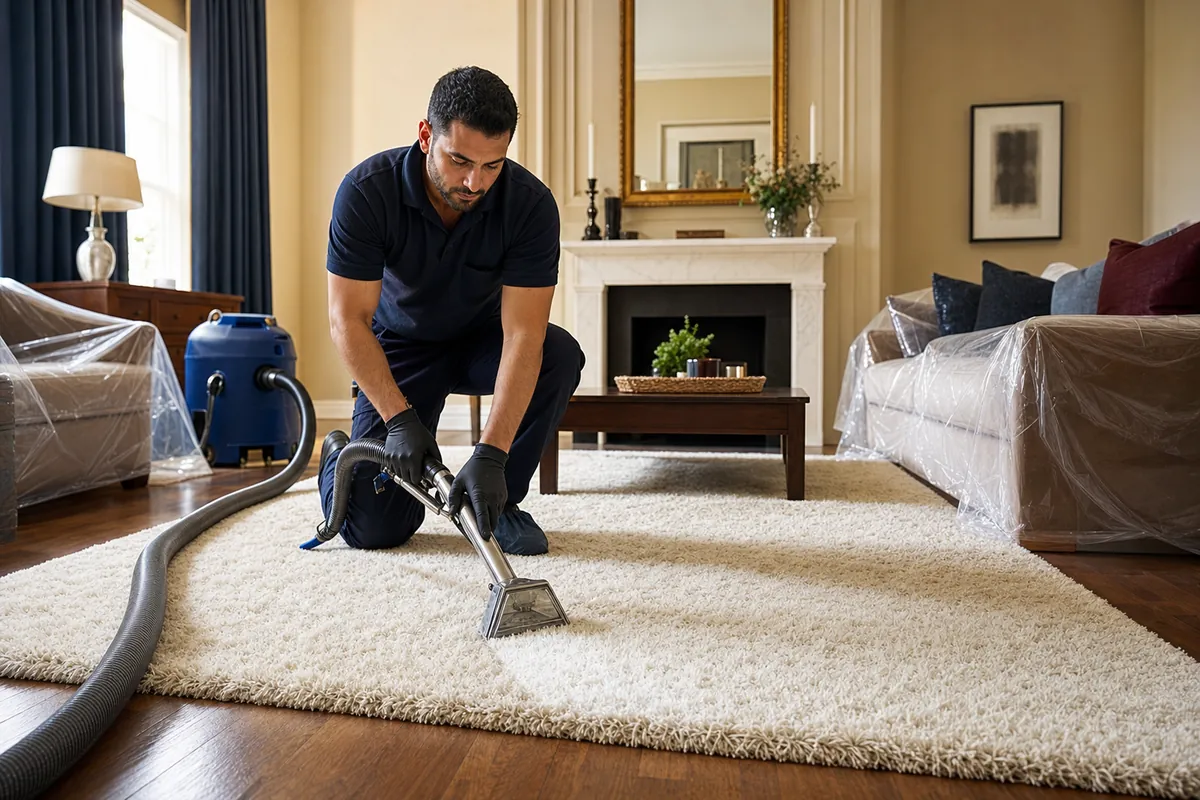
Illustrative deeper-pile rug cleaning; suitability is assessed for each piece.
We prepare the pile by removing loose soil
We use vacuum preparation suited to the assessed rug to gather particles before the wet stage. In a deeper pile, the visible surface can hide grit and debris that need deliberate attention. We work through the accessible area with appropriate handling, rather than applying aggressive action simply because the rug is thick. Removing loose material first reduces what remains in the pile when solution is introduced and gives the extraction stage a cleaner starting point for dealing with the remaining soiling.
The preparation follows the rug’s construction, including vulnerable edges and decorative ends. A fringe does not necessarily tolerate the same tool movement as the main pile, and its condition is considered separately. As we progress, we can also observe areas that lie differently or retain a particular deposit. We use those observations to guide the next step. The aim is useful soil removal and preparation for treatment, without implying that vacuuming alone can undo a stain, repair damage or restore flattened fibres.
We attend to local marks before the wider clean
We inspect each priority mark in its surroundings and discuss any known cause. A drink spill, residue from an earlier product and a patch of colour loss can look similar in a photograph but call for different expectations. We select targeted treatment only where the rug and its response support it. The product, amount and working action are considered together. This gives the problem area individual attention while keeping the condition of the surrounding textile part of the decision.
We monitor what happens rather than making a promise based on the stain’s name. Some contamination releases well; other marks may have altered the fibres permanently or become more complicated through previous treatment. When progress reaches a sensible limit, we explain that. We do not treat a remaining patch as a reason to keep escalating application regardless of response. You receive an account of the attention given and the improvement achieved, with any persistent discolouration discussed during the final review of the rug.
Illustrative on-site extraction and liquid recovery.
We use extraction to remove the released dirt
After assessment and preparation, the approved rug receives the agreed machine extraction treatment. Solution is introduced to work on the soil, and the cleaning tool draws used liquid back out of the pile. We organise the passes so that the accessible rug is treated systematically, adjusting our handling to its construction and response. The cleaning is carried out with portable equipment in your property. It is the combined application, working and recovery that removes dirt from the textile rather than simply dampening its face.
A dense pile requires attention to recovery as well as application. We consider what is being drawn back and use additional recovery where appropriate without automatically adding another round of solution. The intention is controlled cleaning, not maximum wetness. There will still be moisture in the rug afterwards, and we explain the need for drying. This is why the initial assessment, the machine work and the room arrangements belong together: each affects how we can complete the service at your home.
We review the rug’s appearance and feel
We return to the original concerns after cleaning and look at the rug as a whole. Where suitable, we finish the pile so that it is left orderly after treatment. We discuss the marked areas and any texture differences, distinguishing the response of soil from wear or the natural way the fibres lie. A deep pile can show light and shade from different viewing directions, so we explain what is visible instead of treating every tonal change as a patch of dirt.
The damp stage may not show the final dry appearance, particularly where pile direction influences the view. We identify anything better considered once drying is complete. Existing loss of pile, fading or damage will not have been repaired by extraction, and we explain relevant limits alongside the useful cleaning achieved. You can ask questions while the rug is in front of us. This review turns the result into something understandable and specific rather than leaving you with a general claim that the rug has been refreshed.
The on-site visit explained
Step
Our work
What you understand
Inspection
Examine the rug
The proposed clean
Preparation
Remove loose particles
The starting condition
Extraction
Recover released dirt with liquid
The cleaning performed
Review and drying
Discuss results and room use
What happens next
We explain how the rug will dry at home
We talk through the rug’s position, ventilation and use of the surrounding room before finishing the visit. Drying time depends on the construction, the moisture remaining and conditions in the property. A thick piece cannot be given the same fixed drying promise as every other rug. We explain the arrangements relevant to the clean, including any furniture that needs to remain clear of a damp area. Everyone using the room can then understand what has been treated and what still needs time.
When arranging a Blackheath visit, we ask for approximate dimensions, useful photographs and access details for our equipment. The enquiry helps us prepare, while the on-site examination confirms whether the requested extraction can proceed. We bring the service back to the same concern at completion: what was agreed, what we cleaned, how the rug responded and what happens during drying. This gives you a clear sequence from first contact to the end of the visit, with technical choices explained as part of our work rather than left to you.
Luxury Rug Cleaning price reference
Use these starting prices as a guide. Share the item size, condition and access details so the work and final quote can be confirmed.
Service
Published starting price
What is included
Timing
Carpet cleaning
From £25 per room
Inspect, pre-treat, clean
Room dependent
Rug cleaning
From £20 per rug
Inspect, assess spots, clean
Size dependent
Steam rug cleaning
From £25 per rug
Check suitability, extract
Varies
Oriental rug cleaning
From £35 per rug
Fibre, dye and condition checks
Varies
Luxury rug cleaning
From £40 per rug
Assess and select method
Varies
Mattress cleaning
From £30 per mattress
Inspect and clean fabric
Varies
Upholstery cleaning
From £12 per seat
Check fabric and clean
Varies
Sofa cleaning
From £35 per sofa
Assess fabric and clean
Varies
Arrange a rug cleaning visit in Blackheath
We plan the visit around your rug, its position and the access needed for portable equipment. Approximate dimensions and photographs support the quotation discussion. The rug is inspected at your property before we confirm the proposed extraction treatment.
Local postcode districts: SE3. We confirm the visit against your full address.
We inspect its fibres, construction and condition before agreeing extraction. Pile depth alone does not establish suitability. Where the checks support treatment, we plan preparation, application and recovery for that particular rug.
Does cleaning take place in Blackheath at my property?
Yes. We bring portable equipment and carry out the agreed extraction on site. We discuss the working space and drying position before starting.
Can a sticky patch receive separate attention?
Yes, we assess local deposits and their known history, then choose suitable targeted treatment. The response and the rug’s condition determine what improvement can be achieved.
Will cleaning make flattened pile new again?
Removing dirt may improve its appearance, but extraction cannot replace worn fibres or reverse every physical change. We explain remaining flattening or shading when reviewing the rug.
What if there is no material label?
We examine the available construction and response. If uncertainty prevents us from justifying the proposed treatment, we explain that limitation and do not proceed on the basis of appearance alone.
Is the rug ready for normal use immediately?
It remains damp after extraction and needs drying. We discuss the room arrangements, ventilation and use of the treated area before leaving the property.
Discuss your luxury rug cleaning in Blackheath
Tell us about the rug and the area you want improved. We will discuss an on-site assessment, the proposed extraction work and practical arrangements for your home.