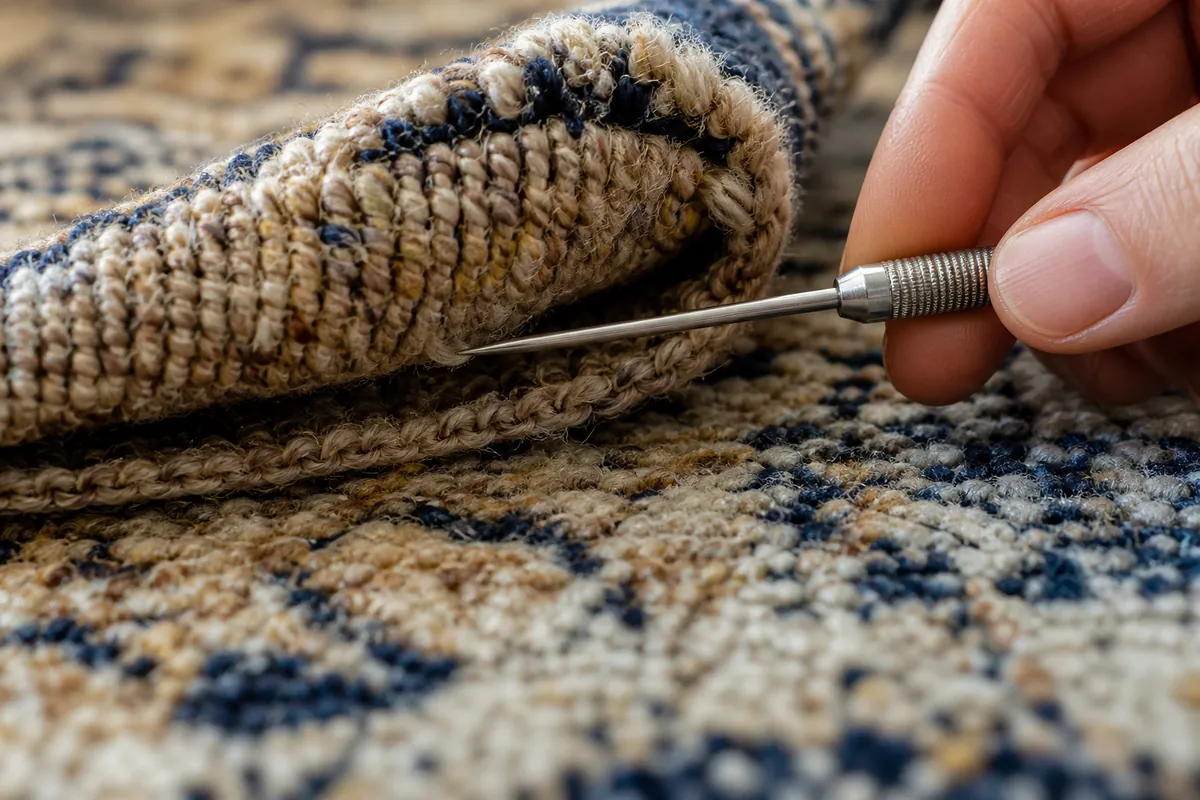
1. Introduce the lettering and the cleaning aim
Photograph the entire rug, then the inscription with enough neighbouring pattern to locate it. Describe whether the wording was present when acquired or added later, if known. A maker’s note about its materials is particularly useful; a family account can supply context without establishing fibre or dye composition.
Identify the actual cleaning concern separately: perhaps general dullness, a known spill beside a letter or a change across an edge. Include dimensions and available care information. This gives assessment a clear target without turning meaningful detail into a stain-removal instruction.
2. Arrange a view without stressing the decorated section
Explain furniture contact and whether the inscription crosses a fold, repaired edge or raised surface. Access should allow the cleaner to examine the relevant area without an improvised tug at one corner. For a heavy rug, agree who handles movement before attempting to expose the reverse.
- Keep a wider image beside the close lettering photograph.
- Point out any loose thread associated with the inscription.
- Clear lightweight belongings from the proposed inspection route.
3. Treat the lettering as another construction question
An inscription might be woven into the surface, embroidered or applied by a different technique. Its appearance alone cannot establish that it reacts like the surrounding pile. Inspection and appropriate discreet checks consider the combined materials and colour behaviour before a method is recommended.
Luxury describes the care context, rather than a particular fibre. A selected process must suit the actual rug, including any added thread, supporting material or later repair. Where the inscription’s composition remains uncertain, the recommendation should explain how that affects cleaning action in its vicinity.
4. Locate deposits without redefining the design
A spill outline can run across lettering while everyday dust changes the surrounding appearance. Describe the substance and earlier products where known, and show the boundary of the concern. Comparing an older photograph can clarify which colour or line is intentional without proving that a later change is removable.
Agree expectations for soil reduction separately from any restoration request. Cleaning cannot be assumed to recreate a missing stitch or replenish faded colour. A worn letter may remain visibly different after surrounding deposits have been removed; that distinction belongs in the initial discussion.
5. Follow the construction through preparation and cleaning
Preparation removes accessible loose particles using action appropriate to the pile and decorated area. Vulnerable threads need consideration before tools pass over them. Any local treatment follows the findings about the mark and previous applications, rather than being selected simply because it lies beside a dark letter.
Compatible cleaning products and working action release soil for removal. Where a wet process suits the complete construction, controlled application is paired with removal of the used solution and released dirt, followed by supported drying. A lower-moisture method also needs its cleaning material recovered. The inscription remains part of the assessment throughout this sequence.
6. Compare the detail when the rug is ready
Discuss the space needed for drying and the instructions for furniture contact or covering. Moisture can temporarily alter the appearance of neighbouring colours, so use the advised review stage before comparing the lettering with the starting photograph.
View the same section under similar light. A close image is useful for the inscription, while a complete view shows whether the surrounding cleaning aim has been met. Report an unexpected change before another household treatment makes the sequence harder to establish.
7. Include the inscription in the agreed brief
The quotation discussion should identify the rug, dimensions, access and decorated section, together with the cleaning priorities. Clarify any area requiring limited treatment and distinguish cleaning from repair work. This makes the intended outcome understandable to the person authorising the service.
At handover, connect the findings with practical care of the lettering. If a loose stitch needs another professional’s attention, keep that recommendation separate from routine maintenance. The owner should understand what was cleaned and what feature still needs individual consideration.
8. Make ordinary maintenance gentle around meaningful detail
Use the recommended vacuum setting and attachment for this construction, approaching an uncertain raised thread with care. Avoid catching the inscription with a rotating brush or repeatedly brushing a faded letter in pursuit of a darker appearance. The purpose of maintenance is to remove accumulated particles without turning decorative wear into a larger repair.
- Check the decorated area for a newly loose thread before vacuuming.
- Keep jewellery and small hard objects off the rug during nearby tasks.
- Show any later stitch repair when requesting the next cleaning assessment.