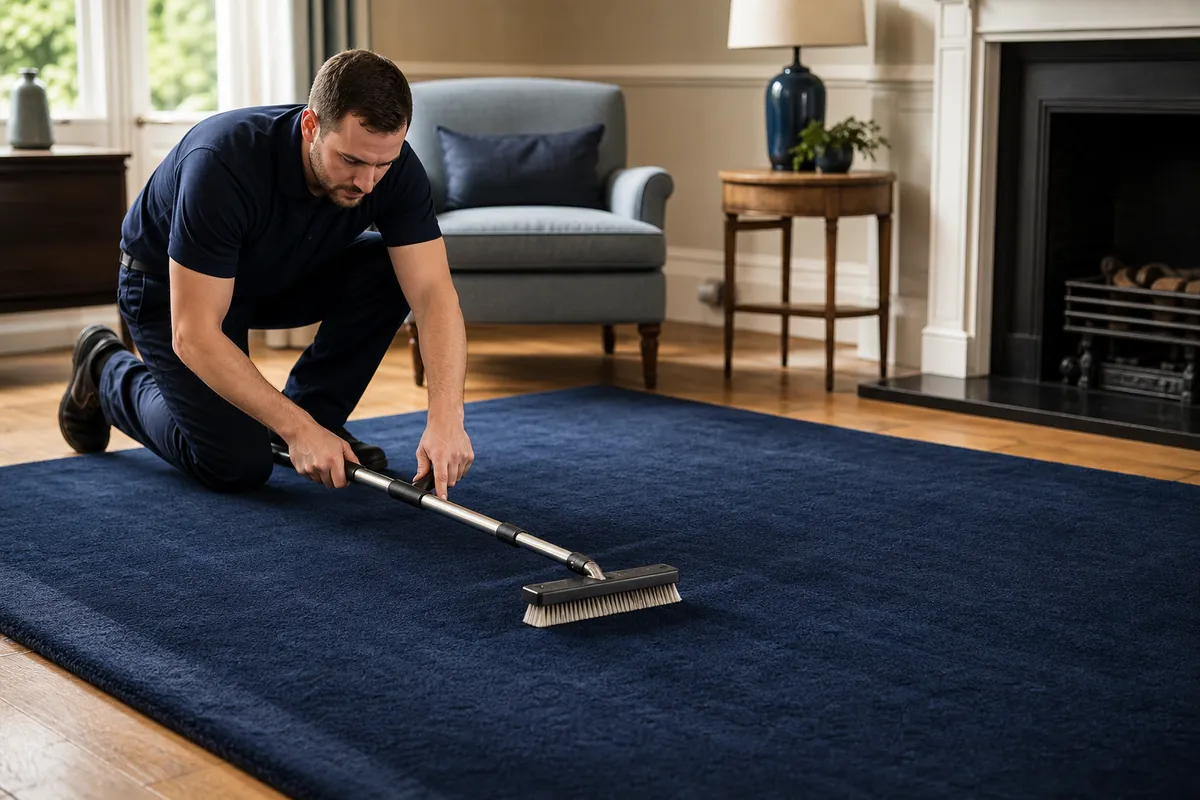
We inspect valued rugs at Kilburn properties before agreeing suitable machine extraction on site. Portable equipment is used for vacuum preparation, selected treatment and controlled cleaning with recovery. We account for the textile and its room setting, explain the response and give practical information for drying and restoring the arrangement after the moisture-based service.
Mobile service in Kilburn · Cleaning method agreed after inspection
The active clean and the stage afterwards planned as one service
Our work includes the discussion about what happens once the machine has finished. A rug needs suitable conditions while drying, and furniture contact has to fit that stage. We consider the room when arranging luxury rug cleaning at your Kilburn property, alongside an individual assessment of the item. The service uses portable machine extraction on site, with moisture introduced and used solution recovered together with soil released during treatment.
We can prepare a quotation from approximate dimensions, photographs and the areas you want improved. Material information and known earlier products help us understand the request. Any furniture movement is agreed beforehand, with the accessible rug area clear. At the visit, inspection guides preparation, local attention and the main clean. We explain the useful work available within the textile’s condition, then review the response when treatment is complete. The household receives an account of the result and practical next steps for the actual room, making the whole appointment understandable from booking through to use after drying.
The item is assessed before treatment is agreed
We examine the pile and the way it is supported, including the backing, edge finishes and visible repairs. Relevant colour checks help inform compatible products where appropriate. Available care information is considered with what the textile shows now. These findings guide moisture application, suitable action and handling, so the method follows the actual item. We explain the practical effect of the assessment in ordinary language rather than asking you to choose technical machine settings or judge compatibility from a decorative description.
The intended improvement is discussed against the current condition. We distinguish removable soil from wear, faded dye or damaged fibres that may continue to influence appearance. Delicate or weakened details can make extraction unsuitable, and we explain that before work is agreed. For suitable rugs, the inspection gives the remaining stages a clear purpose and provides a starting point for reviewing the response. You understand the useful work available and the limits relevant to judging the finished result.
Preparation takes accessible particles away before wet cleaning
We vacuum the rug before introducing liquid, taking loose debris from the accessible pile. The contact is chosen for its texture, with fringes, weak edging and other vulnerable detail treated carefully. Dust can be held in a design that still looks bright, so we cover the agreed surface rather than only the visible mark. This is real removal at the start of the appointment. It reduces what would otherwise enter the wet stage and gives later treatment a cleaner surface to act on, with the material checks still guiding how we work.
This stage also clarifies what remains. A small deposit can become easier to locate, while a compressed section may still show its use history through the way the pile lies. We use those observations to select useful further attention. Preparation contributes early removal and a clearer assessment of the surface, supporting local work and the main clean. It separates loose material from contamination still attached to fibres, allowing the following stages to address the latter within the condition established during inspection.
Details that guide the treatment
Detail
Our assessment
What it informs
Complete textile
Pile, support and repairs
Extraction suitability
Colours
Relevant response checks
Compatible products
Priority concerns
Deposits and current condition
Useful local attention
Room arrangement
Access and furniture movement
Practical working coverage
Selected products address marks within the wider clean
We assess a particular deposit with any known spill and previous product use in mind. Where local attention is suitable, we choose it for the checked fibres and place it on the useful area. Time is allowed for the treatment to act, with appropriate working only where the textile permits. Nearby colours and construction remain part of the decision. Its location is kept recognisable through the wider clean so we can show you what happened there afterwards, instead of leaving the original concern outside the completion discussion.
We discuss the likely result for the actual mark. Permanent dye or fibre change and old products can limit improvement, so complete disappearance is not guaranteed. Suitable local attention may still make a useful contribution within those limits. The wider accessible item receives its agreed preparation and extraction stages too, giving ordinary attached soil attention alongside the focused work. The final review can then explain the role of both local treatment and general cleaning in the overall result achieved at the property.
Illustrative image of individual assessment before cleaning.
Solution and working time help release soil
For a rug assessed as suitable, selected solution is introduced across the included area to loosen contamination held on the fibres. The application is controlled around pile, backing and condition, including vulnerable or repaired sections. Moisture is used and drying follows afterwards. We explain that connection before work, giving the solution stage a practical role within release and removal. The product is selected for the actual textile and attention required, with the room setup already understood before wet treatment begins.
Relevant contact time is allowed for the selected product, and appropriate working action assists where suitable. We adapt handling around the construction and watch the response as the clean progresses. Shade can change with pile direction, while lasting wear may continue to affect one section after useful soil release. Those observations guide whether more action has a purpose. This keeps the work directed at compatible material that can appropriately be removed, preparing the rug for recovery as the following machine stage.
Extraction takes the used solution and released soil out
The recovery tool collects liquid and contamination loosened during treatment in managed passes across the rug. We consider coverage and overlap within the agreed area, accounting for its shape and handling needs. Portable equipment performs this work at your property. The removal stage completes the purpose of vacuum preparation, local products and the broader solution work, bringing them together into a useful cleaning result for the actual item. The clean therefore has a defined progression from preparation through release to collecting material away from the fibres.
We assess the response during recovery and relate remaining observations to the starting condition. This helps the closing explanation distinguish soil removal from lasting changes affecting appearance. The machine work is performed within the room arrangement agreed beforehand, with access and nearby surfaces already considered. You can understand what each stage has contributed and why the review refers to the specific textile and concerns assessed, giving the result a practical basis beyond an immediate change in the look of the damp surface.
Illustrative image of suitable finishing following treatment.
Further recovery prepares the rug for its drying stage
Where appropriate, we make additional recovery passes to collect more moisture without another solution application. This gives recovery its full role within the extraction process and completes the machine part of the clean. The rug continues drying at home afterwards. We explain the transition in clear terms, connecting the used liquid removed during work with the conditions still needed in the room. The person present understands that recovery and subsequent drying are related stages within one moisture-based service.
The practical discussion considers the textile’s thickness, the treatment and airflow available. We explain relevant traffic and furniture-contact conditions so the next household action fits the actual item. Where furniture was moved by agreement, the person restoring it receives the information needed before normal pressure and coverage resume. This makes the service useful beyond active treatment, joining the soil-removal work achieved during the appointment with the period that follows and the eventual ordinary use of the room.
The result is reviewed against the concerns raised
We check priority areas and the broader cleaned surface before finishing, with suitable pile finishing where appropriate. We describe local response, overall improvement and any limitation that remains. Dampness and pile direction can influence the immediate view, so the account gives context as the textile progresses towards its dry condition. The review is specific to the item and work performed, helping the household understand how the original concerns responded within the material and condition found at inspection.
The person present receives an explanation even if the booking was made by someone else. We point out the areas given focused work and describe the response, leaving clear references for a later question once the rug is dry. Existing abrasion, colour change or compression is distinguished from dirt removed at the appointment. This makes the result understandable after the equipment has gone. You have an account of the actual textile and the observations made during treatment rather than only an impression from its damp appearance at one moment.
How the clean leads into drying
Stage
Our work
Purpose
Preparation
Vacuum accessible particles
Removes loose material
Treatment
Use selected solution and action
Releases attached soil
Recovery
Extract used liquid and contamination
Completes machine removal
Completion discussion
Explain response and room conditions
Clarifies drying and contact
The visit is organised around the property
We settle the setting before wet work, looking at the underlying floor and nearby finishes as well as the rug. Any furniture movement is agreed, and a section still covered is identified as beyond reach. During booking we discuss arrival and the route for portable machinery, including stairs or a lift where needed. The quotation then relates to the area actually available. These practical decisions allow an orderly sequence in the room, with the textile and surroundings understood together rather than access details changing once solution is already in use.
We finish by describing the room’s immediate needs while moisture remains. Relevant ventilation, activity and contact arrangements follow the item and treatment, not a finish time assumed for every rug. Other textiles or fitted areas can be requested too, but each needs its own assessment and an agreed place in the visit. The closing account brings the removal achieved together with lasting observations and drying. The household is left knowing what was done and how the cleaned rug should remain until it is ready for its usual role in the space.
Luxury Rug Cleaning price reference
Use these starting prices as a guide. Share the item size, condition and access details so the work and final quote can be confirmed.
Service
Published starting price
What is included
Timing
Carpet cleaning
From £25 per room
Inspect, pre-treat, clean
Room dependent
Rug cleaning
From £20 per rug
Inspect, assess spots, clean
Size dependent
Steam rug cleaning
From £25 per rug
Check suitability, extract
Varies
Oriental rug cleaning
From £35 per rug
Fibre, dye and condition checks
Varies
Luxury rug cleaning
From £40 per rug
Assess and select method
Varies
Mattress cleaning
From £30 per mattress
Inspect and clean fabric
Varies
Upholstery cleaning
From £12 per seat
Check fabric and clean
Varies
Sofa cleaning
From £35 per sofa
Assess fabric and clean
Varies
Arranging luxury rug cleaning in Kilburn
We confirm the item, address and route for equipment before the visit. Photographs and furniture details help us organise an individual assessment and suitable extraction with practical access understood.
Local postcode districts: NW6. We confirm the visit against your full address.
What makes the assessment individual for a luxury rug?
We examine the actual fibres, supporting materials, colour response and condition before agreeing extraction. The findings guide handling and products rather than the item’s value or decorative description alone.
Do you work at Kilburn properties on site?
Yes. Portable equipment comes to the address and the agreed preparation, selected treatment and extraction take place there, followed by a review and practical drying information.
Can all valued rugs receive extraction?
No. Delicate or weakened construction may be inappropriate. We explain any restriction before agreeing work, keeping the process based on the actual item and its current condition.
What does further recovery do?
Where suitable, additional passes collect more moisture without another solution application. They complete the machine removal stage while the rug still needs drying afterwards in relevant room conditions.
Will all marks disappear completely?
Earlier products or permanent changes to dye and fibres can limit improvement. We select suitable attention and explain realistic expectations for the actual concerns assessed.
When can furniture be replaced?
We explain relevant drying and contact conditions after treatment. Construction, the process and available airflow influence timing, so the practical information fits the rug and room.
Discuss your luxury rug in Kilburn
Send photographs, approximate size and the areas you want improved. We will discuss suitability, practical arrangements and a quotation for on-site machine extraction.