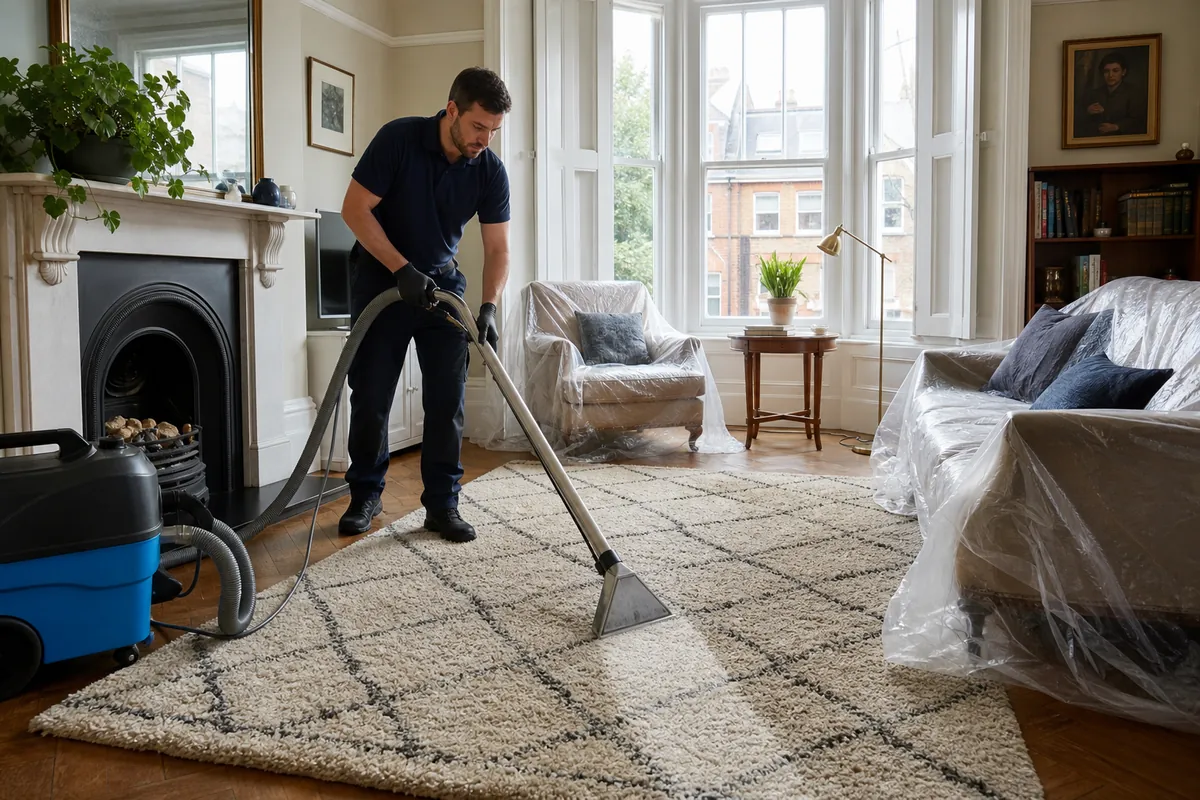
Our luxury rug cleaning in Lewisham is a considered machine service carried out at your property. We establish whether extraction suits the textile, then prepare and clean the agreed area with portable equipment. Attention to marks, controlled liquid recovery and a clear review of the finish form part of the same appointment.
Mobile service in Lewisham · Cleaning method agreed after inspection
A useful clean for a rug you want to keep enjoying
A decorative rug can be an important part of a room without needing an elaborate story around its cleaning. You want the dirt removed, the texture treated thoughtfully and a clear explanation of any mark that remains. We start with those practical needs. The value of the rug does not tell us how much moisture it can accept or whether its dyes are stable, so we examine its actual material and condition before choosing the working approach.
We provide machine extraction at your Lewisham address, bringing portable equipment into the room for the agreed visit. Our plan connects the inspection with vacuum preparation, local attention to suitable stains, cleaning application and liquid recovery. We finish by reviewing the surface and discussing the drying period. This gives you a service you can understand from start to finish, with decisions grounded in the textile rather than a standard promise that every valuable rug can receive identical treatment.
Clarifying the improvement you want from cleaning
We begin with the reason you contacted us. Perhaps the rug has lost its clear appearance around a seating area, feels coarse where people walk or has a spill interrupting the pattern. We inspect those concerns alongside the rest of the accessible surface. A successful plan needs to address the general build-up as well as the obvious mark, so we explain how the complete clean will be organised and where extra local work may make a useful contribution.
We ask about the rug’s use and anything already applied to it. That information can explain a patch that now feels stiff or looks darker than the original incident. If you have a label or know the material, we include it in the assessment, but you are not expected to provide a technical identification. Our role is to examine what is present and describe the proposed work plainly. The priorities agreed here also give us a clear basis for the discussion after cleaning.
Checking dyes, pile and underlying structure
We look at the way the rug is made, including accessible backing, borders and any attached fringe. A firm central pile can sit beside a vulnerable edge, and old repairs can affect how a section responds to handling. We note thin areas, loose yarn and changes in shape so those features are accounted for before machinery reaches them. This is a practical examination of the item, not a valuation or an assumption that an expensive appearance establishes suitability for extraction.
Material response and colour stability are checked before agreeing the larger treatment area. The findings guide our use of liquid, tools and working action. We explain any restriction that changes the expected scope, such as a weak section that cannot receive the proposed treatment. If the checks show that our machine process is unsuitable for the rug, we say so. When cleaning can proceed, you have an explanation of why the plan fits the textile and what the inspection means for the result.
What our assessment establishes
Part of the rug
What we consider
Effect on the plan
Pile
Material and present condition
Appropriate handling
Colour
Response to checking
Treatment suitability
Edges
Weakness and attachments
Working boundaries
Backing
Accessible structural details
Whether extraction is suitable
Lifting the dirt that can leave before wet cleaning
We prepare the pile with suitable vacuum work. Fine grit and loose dust can collect between yarns, particularly along the routes people take around furniture. Removing that material first gives the subsequent treatment a more useful starting point. We work through the accessible area in a considered sequence instead of moving immediately to the most visible stain. The cleared surface also makes it easier to distinguish an attached deposit from a patch whose dark appearance came mainly from loose soil.
The vacuum approach respects the texture and condition we have checked. A deep pile, a flat woven section and a loose edge need careful handling for different reasons. We keep the process within those limits and look again at the rug as preparation progresses. This is also an opportunity to see whether grit has concealed small debris or a vulnerable detail. The next stage can then focus on what genuinely remains, with less unnecessary material left in the pile to mix with the cleaning solution.
Illustration of assessing the textile before selecting treatment.
Making stain treatment specific to the mark
We assess individual marks by their appearance, texture and known history. A food deposit, a drink ring and a pale abrasion may all interrupt the same design but require very different expectations. Where treatment is suitable, we choose it in relation to the fibre and dye response and apply it to the affected area. We give the product a useful working period rather than immediately rubbing at the outline. This helps keep local treatment purposeful and connected to the extraction that follows.
We observe what releases and decide whether more attention is justified. Removable residue can be lifted from the fibres, but an old colour change may remain after the surrounding dirt has gone. We explain that difference without describing every resistant mark as a reason to stop the wider clean. The intention is to improve the rug through the work it can reasonably accept. Repeated force or extra product is not a substitute for recognising when the material itself has been altered.
Cleaning the field in manageable sections
We divide the accessible rug into a practical working route. The cleaning solution is applied with control, allowing it to help loosen remaining soil without treating the whole surface as a place to hold liquid. Appropriate gentle working may assist the release where the textile permits. We pay attention to the border and changes in thickness as we proceed. This organisation helps us maintain a consistent approach across the actual usable area, including sections whose soiling differs from the main traffic route.
The portable extraction tool follows as part of that sequence, drawing the liquid and suspended deposits into the recovery system. We adjust the handling to the rug’s response and keep each stage connected to the next. The purpose of the machine is to remove what has been released from the fibres, not simply to make the pile look wet. You can see a clear progression through the textile, with completed sections inspected before attention moves to another part of the agreed cleaning area.
Illustration of rug cleaning carried out at the customer property.
Reaching the perimeter without straining the rug
Edges can retain fine dust where the rug meets the floor or sits close to furniture. We include the accessible perimeter in our plan and use the tool with the condition of the binding and backing in mind. A vulnerable corner is not pulled into position just to make a pass easier. Where trim or fringe needs separate consideration, we explain that and work within the agreed limits. This keeps the details of the rug in view throughout the main machine stage.
Furniture affects the cleaning boundary, so movement is discussed before work begins. We establish whether a table, chair or other item will stay in place and what carpeted area is reachable around it. If movement has been agreed, we arrange the cleaning sequence accordingly. This avoids leaving you to infer that a hidden section has been cleaned simply because the visible surface looks refreshed. The scope remains specific to the space and the arrangements made for that particular visit to your home.
Assessing the finish with you in the room
After the main extraction, we take time to look across the rug rather than considering each tool path in isolation. Yarn direction and light can influence how the surface appears, particularly in a patterned or softly textured piece. We inspect from useful angles and settle the pile where suitable. If an area would benefit from further appropriate recovery or a little focused attention, we assess that at this point. The review helps present the cleaned surface in an orderly and understandable way.
We return to the concerns you highlighted at the start and explain the visible changes. A mark may have reduced without disappearing, or a worn area may remain distinct now that the surrounding pile is cleaner. We identify those differences clearly. The rug still contains moisture, so we avoid treating every shade visible at that moment as the final dry appearance. You receive an honest account of the work and any remaining issue, supported by the observations made during the inspection and cleaning.
How the visit fits together
Stage
Purpose
What follows
Preparation
Remove loose grit and dust
Clearer stain assessment
Local attention
Loosen suitable deposits
Recovery during cleaning
Extraction
Remove liquid carrying soil
Surface review
Completion
Explain the result and moisture
Drying at your home
Leaving the rug to dry in appropriate conditions
Our recovery work removes cleaning liquid, but the rug needs a drying period at the property. We consider the thickness, density and conditions in the room when explaining that next stage. Air movement and temperature affect how moisture leaves the textile, so the same timing does not apply to every item. We give guidance related to what we have cleaned and the environment we can see, rather than a fixed promise that ignores the differences between rugs and rooms.
We also discuss when furniture and ordinary activity can return over the surface. The instructions concern the damp rug and the agreed layout, including any areas that should remain free of coverings or pressure. If the room is needed for a particular event or regular activity, tell us during the booking discussion so the timing can be considered beforehand. We end the appointment with the condition of the rug explained, the drying stage understood and an opportunity for you to ask about the result.
Luxury Rug Cleaning price reference
Use these starting prices as a guide. Share the item size, condition and access details so the work and final quote can be confirmed.
Service
Published starting price
What is included
Timing
Carpet cleaning
From £25 per room
Inspect, pre-treat, clean
Room dependent
Rug cleaning
From £20 per rug
Inspect, assess spots, clean
Size dependent
Steam rug cleaning
From £25 per rug
Check suitability, extract
Varies
Oriental rug cleaning
From £35 per rug
Fibre, dye and condition checks
Varies
Luxury rug cleaning
From £40 per rug
Assess and select method
Varies
Mattress cleaning
From £30 per mattress
Inspect and clean fabric
Varies
Upholstery cleaning
From £12 per seat
Check fabric and clean
Varies
Sofa cleaning
From £35 per sofa
Assess fabric and clean
Varies
Planning a Lewisham visit for your rug
We confirm the rugs included, access arrangements and the space required around them. Let us know about stairs, parking limitations and furniture over the textile when enquiring. Any movement is agreed before cleaning starts, alongside the accessible scope and the quotation.
Local postcode districts: SE13. We confirm the visit against your full address.
Yes. We check its actual fibres, dyes and construction before agreeing extraction. A high value or decorative finish does not mean every part of the textile will tolerate the same approach.
Is the work carried out at my Lewisham property?
Yes. We bring portable equipment and clean suitable rugs at your address. Access to the room, the floor beneath the textile and the available space are included in our planning.
Can you clean a rug with a fragile edge?
We inspect the edge and discuss what it means for the proposed work. A reduced scope may be possible, but we do not proceed where the rug is unsuitable for our machine process.
Do individual stains receive attention?
We assess them and apply suitable local treatment as part of the agreed clean. We explain the response and distinguish remaining deposits from lasting damage or colour change.
Will the rug need time before normal use resumes?
Yes. Extraction uses liquid and leaves retained moisture. We explain the drying conditions and any relevant restrictions for furniture and use before finishing the appointment.
What information should I send for a quotation?
Photographs, approximate dimensions and a description of the main concerns are helpful. Mention large furniture and access restrictions so the proposed work can be discussed accurately.
Arrange a considered rug clean
Send details of your Lewisham rug and the areas you want improved. We will discuss the on-site extraction service, assessment and quotation for your appointment.