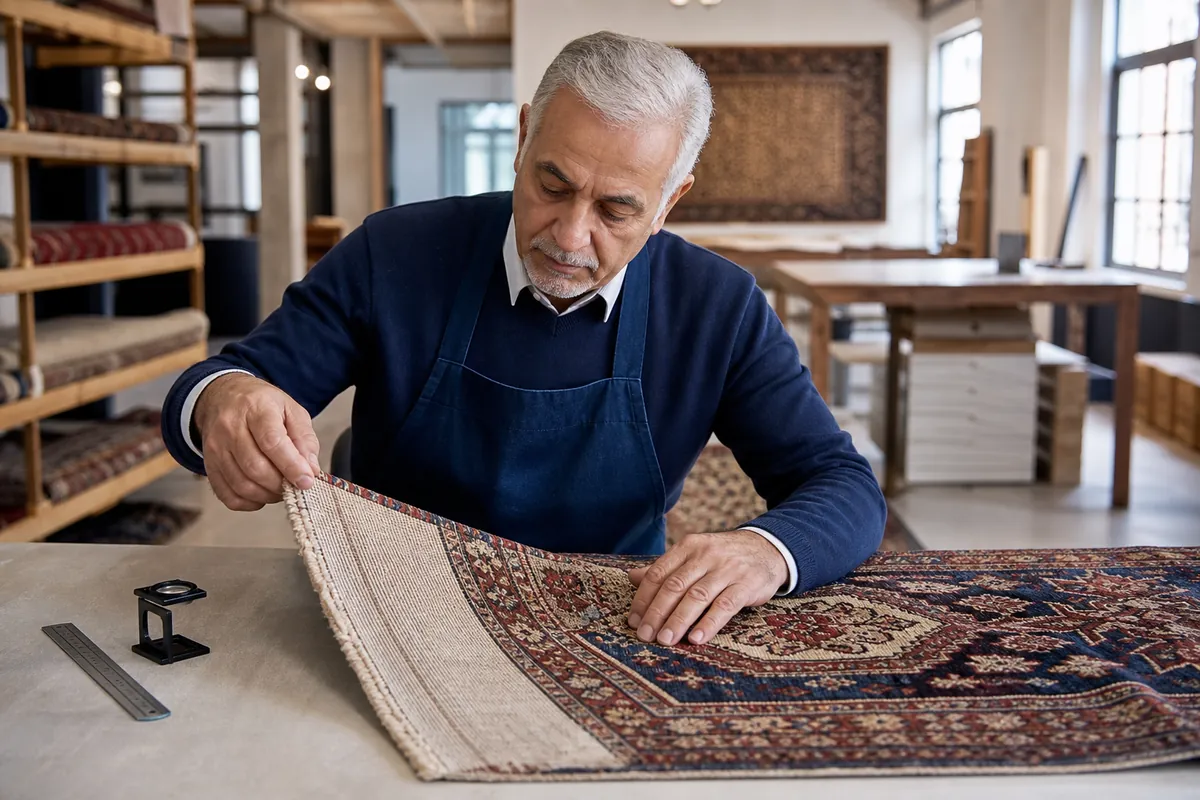
1. Connect the document with the actual piece
Send a complete rug photograph, dimensions and the relevant document image. Explain any uncertainty about which item it describes. If several pieces came from the same source, keep their paperwork separate rather than assigning one description to all.
State the cleaning priority plainly. A dull field, an isolated spill and a fragile edge raise different practical questions. Describe known changes since the record was written, including repairs and earlier cleaning.
2. Make the textile available without unnecessary handling
Describe its position, furniture contact and access route. Existing photographs can support the enquiry when the reverse cannot safely be seen. Agree movement before lifting a large piece or bending a vulnerable section just to match a detail shown in an old document.
- Keep original paperwork clear of the working area.
- Show a known repair within a wider photograph.
- Identify restricted access before the appointment is organised.
3. Build the present care specification
The cleaner examines fibre evidence, foundation, added components and strength, with discreet colour and suitability checks where appropriate. A historical statement about pile content may leave later materials unaddressed. The recommendation needs to account for the combined item now presented.
Ask for an explanation of the selected cleaning route and what the findings mean in practice. A quoted origin, age or value cannot determine how much moisture or agitation the textile can tolerate. Attribution and method selection remain different questions.
4. Add the treatment history missing from the document
Describe spills and products applied since the record was produced. Include temporary improvement or a changed texture after drying. If the history is incomplete, state which events are known rather than supplying a guessed sequence.
Inspection helps set expectations for deposits, wear and colour changes. An old photograph can show an earlier design without establishing an attainable cleaning result today. Agree the improvement being sought on the condition examined, with repair or restoration advice kept distinct.
5. Follow a cleaning plan based on findings
Appropriate dry particle removal prepares the textile with care around vulnerable sections. Targeted attention to marks follows the assessment and recorded applications. The selected process uses compatible cleaning action to release soiling and remove it from the agreed area.
If moisture is appropriate, controlled application, recovery and drying must work with support for the construction. A lower-moisture alternative also requires a clear removal stage for applied cleaning material. More intensive work should have a practical benefit, not merely pursue the appearance printed in an old catalogue.
6. Plan the rug’s next setting
Explain where the item will lie afterwards and any limits on airflow or normal room use. Follow the selected treatment’s placement and readiness guidance. An old record says little about the present floor, furniture or drying arrangement.
Review the finish at the advised stage using the current condition photographs. This gives a fairer comparison than relying exclusively on a historical image taken under unknown lighting and use conditions.
7. Keep the agreement centred on cleaning
Confirm the included item, cleaning aim and accessible scope. Clarify which questions await inspection and how a changed recommendation would be discussed. A valuation service, new repair or attribution opinion should not be assumed within a cleaning quotation.
At handover, retain the findings and aftercare alongside the starting images. Keep these current care records identifiable beside the older document, so later enquiries can distinguish historical description from the practical advice supplied for this visit.
8. Carry useful findings into routine maintenance
Use the recommended maintenance action for the assessed construction and edges. Add later incidents or alterations to the care record without rewriting the historical document. The two records serve different purposes and can remain useful together.
- Keep new repair information with dated condition photographs.
- Record products under the rug they actually reached.
- Share maintenance guidance with whoever looks after the room.