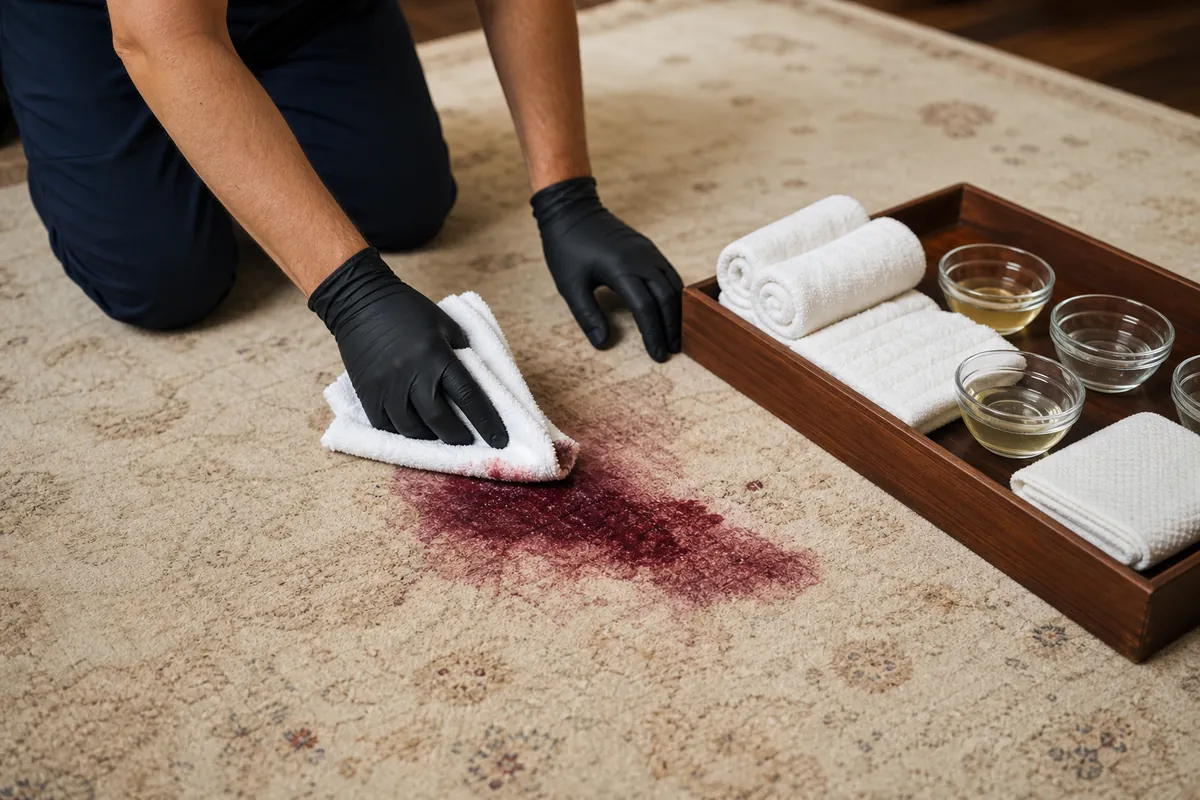
We clean suitable Oriental rugs in Brentford with portable extraction machines at your property. We examine the complete construction before treatment, using label information alongside the actual pile, foundation, colours and condition. Preparation and suitable stain attention lead into controlled cleaning and liquid recovery, followed by a result review and an explanation of drying at home.
Mobile service in Brentford · Cleaning method agreed after inspection
We read the label and inspect beyond it
A label stating the pile fibre is useful, but it may not describe the foundation, backing, fringe or any later repair. We consider its wording as part of the assessment rather than a complete set of cleaning instructions for the rug. Our inspection looks at the connected piece and how it responds now. That helps us explain whether the proposed extraction is appropriate and how the work can address your cleaning concern without assuming every component has identical requirements.
We bring portable equipment and carry out the agreed cleaning at your home. The service includes removal of loose particles, assessment of local marks and controlled application and recovery through the extraction tool. Used liquid carries released dirt out of the pile, leaving dampness that needs drying. We plan the workspace and discuss the practical arrangement before beginning, then review the treated rug with you afterwards. You receive clear company actions and an explanation of their result, rather than a care article that leaves you to decide how the textile should be cleaned.
We discuss the rug and the information available
We ask what you want improved, where the concern sits and what is known about earlier treatment. An overall photograph helps show the rug’s scale, pattern and setting, while details can locate a mark or show a label. We consider the exact wording rather than expanding a short fibre statement into an assumption about the entire construction. You do not need to interpret technical terms yourself. We use the information to prepare the quotation conversation and identify what needs closer examination during the visit.
Known repairs, products or spills can also affect the assessment, even if they are not beside the main stain. We keep reliable facts distinct from uncertain history and do not expect you to supply details that are unavailable. The final treatment decision is made from the actual rug and suitable checks at the property. This gives the booking a practical starting point: a clear cleaning aim, useful information and an inspection plan, without treating a printed material percentage as permission to apply one routine across every part of the piece.
We examine the pile and supporting components
We look at the pile, foundation and any visible backing or finishing, considering both construction and condition. Suitable response checks help us assess the colours and proposed treatment before the main clean. Different parts can have different materials or strength, so we examine them as connected elements of the same rug. We explain any finding that changes the extraction plan. The decision follows what can reasonably be established rather than a broad assumption based on the rug’s category or the softness of its surface.
A label can describe the original pile while an older repair introduces something different elsewhere. Wear or damage may also alter what the rug can tolerate today. We discuss those details before proceeding. If the evidence does not justify the requested treatment, we explain why we cannot undertake that clean. Where it is appropriate, the inspection guides the handling, local attention and machine work. You receive a decision about our actual on-site extraction service, with the whole textile considered rather than one listed fibre standing for everything beneath and around it.
Looking beyond the pile-content label
Part
What we consider
Why it matters
Pile
Listed and visible material
Surface treatment
Foundation
Construction and strength
Overall suitability
Ends and borders
Connections and wear
Handling limits
Repairs
Added material and condition
Current response
We inspect borders, fringes and existing weakness
We examine the edges and ends, including their connections and any altered sections. These parts may be more vulnerable than the main field and may not suit identical working action. We look for wear, missing strands and repairs before cleaning, so they can be accounted for in the plan. The inspection does not stop at the mark that prompted the enquiry. A weakness elsewhere can still affect how the piece is positioned and handled throughout the service.
We explain the difference between dirt around an edge and physical material that has been lost or damaged. Cleaning may improve soiling but cannot rebuild a join or replace a fringe. A repaired area may remain different in texture or colour afterwards. That does not automatically remove the value of a suitable clean; it makes the aim and limit clearer. You know which concerns the work is intended to address and which existing features will still be part of the rug when recoverable soil has been removed.
Illustrative response checks as part of a complete-rug assessment.
We prepare the working space and the rug
We agree how the equipment can reach the rug and where the work will take place. The surface beneath, furniture position and room available around the textile all matter to that arrangement. Movement is discussed before it happens, with any area left beneath an item identified as restricted. We also consider the rug’s position during drying. Planning the space for both stages makes the visit easier to manage and avoids leaving a damp rug in a setting that has not been discussed.
We then use suitable vacuum preparation to gather loose soil from the accessible area. Dust and grit can lie between fibres beyond what is obvious in the decorative face, so we treat this as a deliberate stage before applying liquid. Handling reflects the assessed construction and strength, with attention to vulnerable ends. Preparation reduces the material left for the wet clean and lets us continue observing the rug closely. Any newly visible detail that affects treatment can be considered before we move into the next stage.
We choose local attention for suitable stains
We examine priority marks and consider known incidents and earlier products. The surrounding textile stays part of that assessment, so a stain is not treated as though its chemical name alone decides the action. We select appropriate local treatment where the rug and response support it, controlling application and working movement. You do not have to choose a stain product before contacting us. The company carrying out the clean makes that judgement and explains the approach in relation to the actual mark and material.
We judge improvement as the work progresses and explain when a practical limit is reached. Some staining involves lasting colour change or earlier damage that another application cannot simply reverse. More product is not automatically a better service. Suitable marks receive individual attention within the broader clean, and their response is reviewed afterwards. This gives the concern a clear account at completion, including any remaining trace, rather than leaving you to assume that every visible difference is dirt that the machine failed to reach.
Illustrative portable machine extraction and recovery.
We extract the dirt released during treatment
For a rug accepted for cleaning, the portable tool applies solution and recovers used liquid. We work across the agreed accessible area in an organised sequence, with handling guided by construction and response. The working stage releases soil so it can be removed with recovery, rather than merely wetting the visible face. We retain any limits established during inspection, including vulnerable or restricted sections. The machine clean is carried out at your address as the next part of the assessed service, supported by preparation and appropriate local attention.
We manage application and recovery together. Where suitable, further recovery passes draw out more liquid without another solution application. A wetter rug is not our definition of a better result. Some moisture remains when the machine work is complete, and the textile needs drying. We explain that requirement from the start and keep it connected to the room arrangement. You understand the cleaning as a sequence of treatment, soil release and liquid removal, followed by drying at home, rather than an unexplained equipment pass that should leave no practical next step.
We explain the result across the treated piece
We review the rug and return to the concerns discussed before cleaning. Suitable finishing of the pile is carried out where appropriate. We explain the response of local marks and the wider appearance, with attention to any section treated differently because of condition. Questions can be discussed while the actual areas are in view. The review gives you a specific account of the work completed instead of a general statement about what extraction normally does or a promise that the rug now matches an original factory appearance.
Wear, fading, a repair or other physical differences may remain after cleanable dirt has been removed. We explain relevant observations without pretending that every cause can be reconstructed from the present surface. Dampness and pile direction can also affect the immediate view. Where an aspect is better considered once dry, we identify it during the review. You receive an understandable picture of the cleaning benefit, the visible condition and any continuing limit, with the rug as a whole still central to the explanation at completion.
Our work at the property
Stage
Company action
Purpose
Preparation
Gather loose particles
Ready the rug
Local attention
Assess and treat suitable marks
Address priority concerns
Extraction
Apply and recover solution
Remove released dirt
Completion
Review and discuss drying
Explain result and next steps
We discuss drying and complete the Brentford visit
We explain ventilation, the damp rug’s position and room use while it dries. The construction, liquid retained and conditions indoors influence the time needed, so we do not give one guaranteed deadline for every textile. Furniture arrangements are made practical for the actual room, including any clear area that needs to remain. If the rug affects an essential route, we include that point in the discussion. This leaves the household knowing what has been treated and how to manage the surrounding space after the equipment is packed away.
For a Brentford booking, approximate dimensions, photographs and any useful label wording support the quotation discussion. We ask about access for portable equipment and furniture affecting the work. Examination at the property confirms the treatment and practical arrangement. Once cleaning is complete, we explain the areas included, the response observed and the drying plan. The service follows the whole rug from assessment to completion, with material information used carefully and the actual construction guiding the decisions rather than a single label entry being treated as the entire care specification.
Oriental Rug Cleaning price reference
Use these starting prices as a guide. Share the item size, condition and access details so the work and final quote can be confirmed.
Service
Published starting price
What is included
Timing
Carpet cleaning
From £25 per room
Inspect, pre-treat, clean
Room dependent
Rug cleaning
From £20 per rug
Inspect, assess spots, clean
Size dependent
Steam rug cleaning
From £25 per rug
Check suitability, extract
Varies
Oriental rug cleaning
From £35 per rug
Fibre, dye and condition checks
Varies
Luxury rug cleaning
From £40 per rug
Assess and select method
Varies
Mattress cleaning
From £30 per mattress
Inspect and clean fabric
Varies
Upholstery cleaning
From £12 per seat
Check fabric and clean
Varies
Sofa cleaning
From £35 per sofa
Assess fabric and clean
Varies
Arrange Oriental rug cleaning in Brentford
We discuss the rug’s size, cleaning concern and access for portable equipment before arranging the visit. Photographs and label information can support the quotation conversation. The on-site assessment confirms suitability and the practical cleaning and drying arrangement at your property.
Local postcode districts: TW8. We confirm the visit against your full address.
Is a pile-content label enough to choose cleaning?
It is useful information, but it may not cover the foundation, backing, ends or repairs. We inspect the connected rug and its current response before agreeing extraction.
What if the rug contains several materials?
We consider the different components and their condition together. Treatment is agreed only where the assessment supports the proposed work, with any limit explained before cleaning.
Do you clean Oriental rugs at the property?
Yes. We bring portable extraction equipment and plan the workspace with you. The rug then needs drying at home after the used liquid is recovered.
Can fringes and borders be included?
We assess their construction and strength and explain appropriate attention. Cleaning does not replace missing material or repair a weakened connection, and a vulnerable section can affect the plan.
Will every stain disappear?
No complete-removal guarantee is given. We assess and treat suitable marks, with the result affected by age, substance, earlier products and permanent colour change.
What do you explain about drying?
We discuss the damp rug’s position, ventilation and furniture or room arrangements. Drying depends on construction and indoor conditions, so the guidance relates to the actual visit.
Discuss your Brentford Oriental rug
Share an overall view, approximate dimensions and the area you want improved. We will discuss assessment, access and a quotation for on-site extraction cleaning.