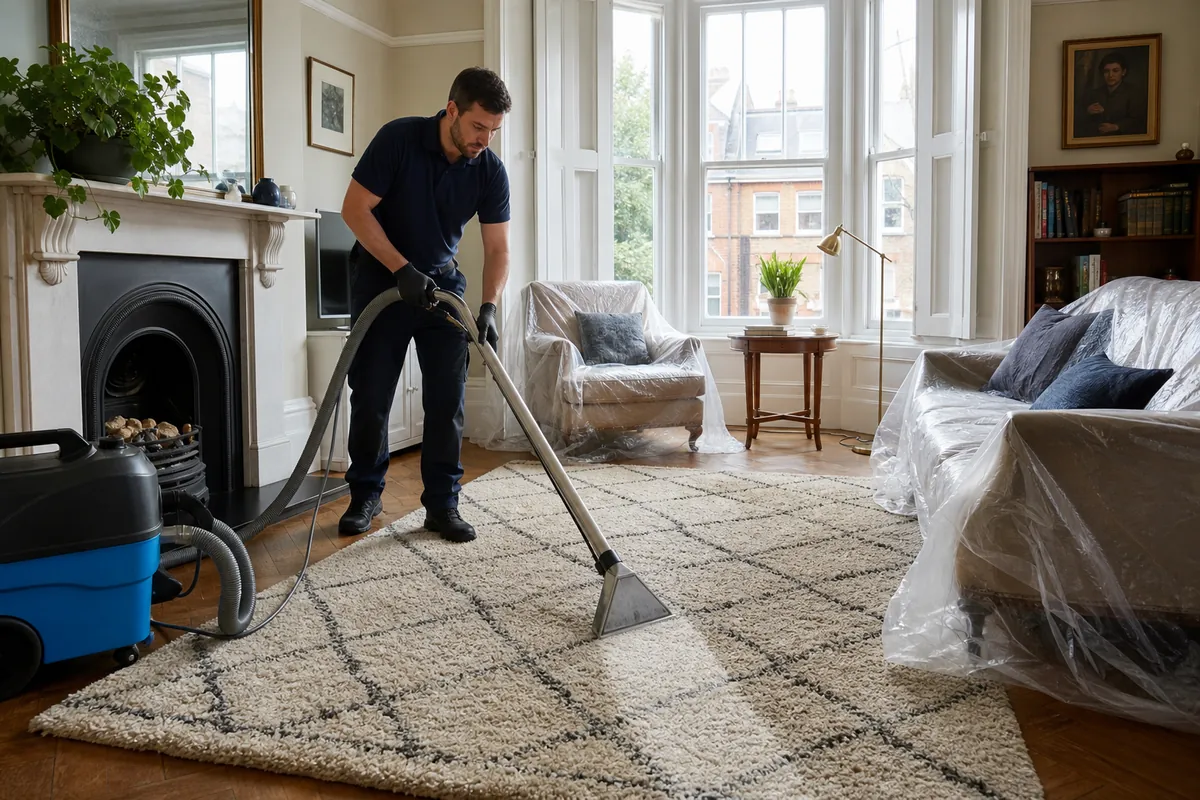
We provide oriental rug cleaning in Crouch End using on-site machine extraction where the item is suitable. We check the actual fibres, dyes, foundation and ends before agreeing the work. Vacuum preparation, appropriate stain attention and controlled extraction are followed by recovery and a clear explanation of drying at your property.
Mobile service in Crouch End · Cleaning method agreed after inspection
A cleaning decision based on the rug beneath the pattern
An oriental design can combine several colours and a construction that needs careful assessment before extraction. We look beyond the pattern to understand the pile, foundation, ends and present condition. This lets us explain what our actual machine service can reasonably do and where the item’s response limits treatment. We do not assume that a familiar design name identifies every fibre or that similar-looking rugs can all receive the same action.
Our portable equipment is brought to your Crouch End property and the rug remains there for cleaning and drying. We define the accessible surface and agree any movement of furniture before preparing the pile. Suitable local attention is coordinated with the extraction sequence so released contamination is recovered rather than simply treated and left. At the end, we revisit the concerns and explain the result in relation to the construction, including any lasting wear or colour difference and the practical arrangements for normal use.
Starting with the rug’s use and your priorities
We ask which change has prompted the request and how the rug fits into the room. A walking route, a darker end or an individual spot may each need assessment. A whole-item photograph and approximate measurements help describe that request, while close views show particular details. Known material information and previous products are useful additions, but you do not need to identify the weave or select treatment yourself. We use the discussion to prepare for inspecting the actual item.
The proposed scope is established before the cleaning decisions are finalised. We discuss whether the entire accessible rug is requested, what furniture overlaps it and whether another item should be included. Each rug is considered separately even where the patterns seem alike. This creates a practical quotation and a clear set of priorities for the visit. The service is not an unrestricted promise about every colour or mark; it is an extraction proposal confirmed after the material and condition have been checked.
Examining foundation, dyes and ends
We look at how the pile relates to the foundation and inspect the borders and fringes for existing weakness. Visible repairs or loose sections are part of that assessment. Appropriate response checks help establish colour and material suitability before machine extraction is agreed. We describe relevant findings and how they affect handling, rather than leaving them as technical observations with no connection to the proposed work. The actual construction is the basis for our decision, supported by any label or history available.
Some items cannot receive our extraction process because their dyes, foundation or condition would make it unsuitable. We explain that limit or decline the proposed treatment; another cleaning method is not substituted. We also identify lasting changes such as fading and pile loss so they are not confused with dirt. This gives the expected result a realistic basis. A cleaner patterned surface can still show wear and differences between protected sections and areas used more heavily over time in the room.
What construction assessment covers
Feature
Our check
Practical purpose
Foundation
Condition and weakness
Extraction suitability
Colours
Relevant response tests
Compatible treatment
Fringes
Structure and existing wear
Adapted handling
Pile
Soil and lasting changes
Realistic result
Vacuuming with the construction in view
Accessible loose dirt is addressed before the moisture-bearing stage. We use suitable vacuum preparation and vary handling around ends and vulnerable sections rather than applying central-pile action everywhere. Removing particles at this point gives the later process a better foundation and makes the remaining concerns easier to examine. It is preparation within the extraction appointment, not a separate dry-cleaning treatment. Reachable borders are considered alongside the open area, keeping the full accessible scope in view as the work progresses.
We organise the room so the textile can be worked through in a sensible sequence. The floor under the rug, equipment position and route for hoses are considered together. Furniture movement is agreed before anything is moved, and sections that remain covered are identified clearly. This gives you an understandable boundary for the clean and helps avoid changes of scope midway through application. The practical arrangement supports the construction decisions rather than leaving access to delicate ends unresolved once the machines are set up.
Illustration of checking response before agreeing extraction treatment.
Assessing marks against the surrounding colours
A local concern is examined within its part of the design and compared with the neighbouring pile. Known incident history and previous products can help treatment selection. Where the cause is uncertain, we keep that uncertainty visible rather than assigning a definite substance from the colour of a mark. Suitable attention is chosen to release removable contamination within the material’s checked response. We explain how it will be included in the broader clean and any realistic limit related to lasting discolouration.
We work in a controlled way and monitor the local response before considering further action. Appropriate extraction recovery follows so released material is collected through the actual service. More application is not assumed to improve a patch when the difference is permanent or the fibre cannot receive more work. We explain partial improvement at review, relating it to what was assessed and treated. This keeps a persistent concern within the account without presenting every oriental rug stain as guaranteed to disappear completely.
Coordinating application and recovery section by section
When suitability is established, our portable extractor is used through the accessible sections agreed. The application is chosen for the construction and the condition of the pile, and the machine collects used liquid carrying released dirt. We plan the route so a treated patch, the surrounding surface and reachable borders are part of a completed sequence. This gives the work a concrete structure instead of an unexplained pass through the centre. Technical settings and operating choices remain our responsibility within the assessment.
Extraction introduces moisture, so the item will need drying where it is cleaned. We monitor the textile as work proceeds and keep action within the agreed limits. An area with concentrated soil can receive suitable attention, while a colour difference caused by wear is not chased with increasingly heavy wetting. If the rug cannot receive extraction, we explain that before treatment. We do not describe another cleaning method as part of the service you can book with us.
Illustration of suitable on-site extraction and recovery.
Recovering contamination and checking coverage
The collection stage removes used solution and the soil released through suitable cleaning. We consider recovery while progressing across the rug rather than treating application alone as the completed task. Further suitable recovery passes can help reduce the moisture remaining in the construction. We assess how each section responds and keep track of the accessible surface, including less obvious ends. This allows the customer to understand the point of the equipment: dirt is released and recovered through a coordinated process at the property.
We also consider the difference between dirt levels and physical condition. A frequently used route may need more cleaning attention than a quiet edge, but abrasion, flattened pile and fading can remain visible after recovery. We explain these findings rather than calling every contrast a remaining stain. Cleaning cannot replace lost fibres or make parts with different use histories identical. The final result is reviewed for the actual rug, with the broader cleaning change and the response of individual concerns discussed separately and honestly.
Reviewing the pattern and practical finish
At the end we return to the concerns agreed before the clean and inspect their response alongside the wider surface. Reachable edges and borders are included in that check, with suitable pile settling where appropriate. Any lasting issue is explained in relation to the initial construction and treatment findings. We also confirm the boundary where furniture stayed in place, so the reviewed result relates to the area actually included. This produces a useful account of completion rather than only a claim that the machine work is over.
Drying guidance follows the rug and room, not a general timetable attached to the word oriental. Fibre, thickness, indoor conditions and moisture left after extraction all influence normal use. We discuss relevant ventilation and furniture arrangements and identify any appearance best considered once the pile is dry and settled. The rug remains at your property throughout. You understand how the remaining stage fits the actual wet cleaning carried out, without an unsupported promise that every construction will be ready at the same time.
The actual extraction appointment
Part
Our work
What is explained
Preparation
Suitable vacuuming
Starting surface
Local work
Assess and treat marks
Response limits
Machine stage
Apply and recover
Contamination collection
Completion
Review and discuss drying
Normal room use
Preparing a definite quotation and visit
We base the proposal on the requested item, approximate measurements, known condition and concerns, with photographs supporting the first discussion. A physical assessment confirms whether extraction can be agreed. We settle the charge before application and explain any restriction affecting the proposed work, so the price relates to a service whose actual scope is clear. Additional requested rugs are described individually rather than assumed to have identical needs because they share an oriental pattern or sit in the same room.
Attendance is planned around the route for portable equipment and the relevant property arrangements. We check entry instructions, floor level and parking, discussing stairs or lift access where needed. If several spaces are involved, we explain the order and how cleaning and drying affect their use. Any furniture movement is agreed as part of that plan. These details help keep the appointment focused on the textile work, with access and the practical boundaries understood before the machine arrives in the working room.
Oriental Rug Cleaning price reference
Use these starting prices as a guide. Share the item size, condition and access details so the work and final quote can be confirmed.
Service
Published starting price
What is included
Timing
Carpet cleaning
From £25 per room
Inspect, pre-treat, clean
Room dependent
Rug cleaning
From £20 per rug
Inspect, assess spots, clean
Size dependent
Steam rug cleaning
From £25 per rug
Check suitability, extract
Varies
Oriental rug cleaning
From £35 per rug
Fibre, dye and condition checks
Varies
Luxury rug cleaning
From £40 per rug
Assess and select method
Varies
Mattress cleaning
From £30 per mattress
Inspect and clean fabric
Varies
Upholstery cleaning
From £12 per seat
Check fabric and clean
Varies
Sofa cleaning
From £35 per sofa
Assess fabric and clean
Varies
Arranging oriental rug cleaning in Crouch End
We confirm the requested items and the practical equipment route before attendance. Entry and floor-level arrangements are discussed with access to the room. The appointment plan connects those details to assessment of the construction and the actual extraction service proposed for your rug.
Local postcode districts: N8. We confirm the visit against your full address.
We provide on-site machine extraction where suitability is established. The appointment includes construction and response checks, suitable vacuum preparation, local attention and controlled application with recovery. It introduces moisture and the rug needs drying at the property.
Are dyes and foundation checked?
Yes. We inspect the actual construction, condition, borders and fringes, using relevant colour and material response checks where appropriate. We explain findings affecting the proposed extraction rather than assuming a design name proves that every section can receive identical action.
What if the rug cannot receive extraction?
We explain the limitation or decline the proposed work before treatment. We do not offer a different cleaning process as a substitute. The service is agreed for the actual item and its current condition.
Can a local stain remain after cleaning?
Yes. Some marks involve permanent colour or fibre change as well as contamination. We assess and treat suitable concerns, then explain the actual response alongside the overall clean without an unconditional promise of complete removal.
Does the rug stay at my Crouch End property?
Yes. Portable machinery is brought to your address and the agreed work is completed there. The rug remains at the property throughout, including the drying stage explained for its construction and the conditions in the room.
How do you explain normal use afterwards?
We consider fibre, thickness, room conditions and moisture remaining after recovery. The closing discussion covers drying and relevant furniture placement, with any appearance needing review once dry connected clearly to the actual work performed.
Request oriental rug cleaning in Crouch End
Send a whole-rug photograph, approximate dimensions and any available material or treatment history. We will explain assessment and suitable on-site extraction, with the scope and quotation confirmed before application.