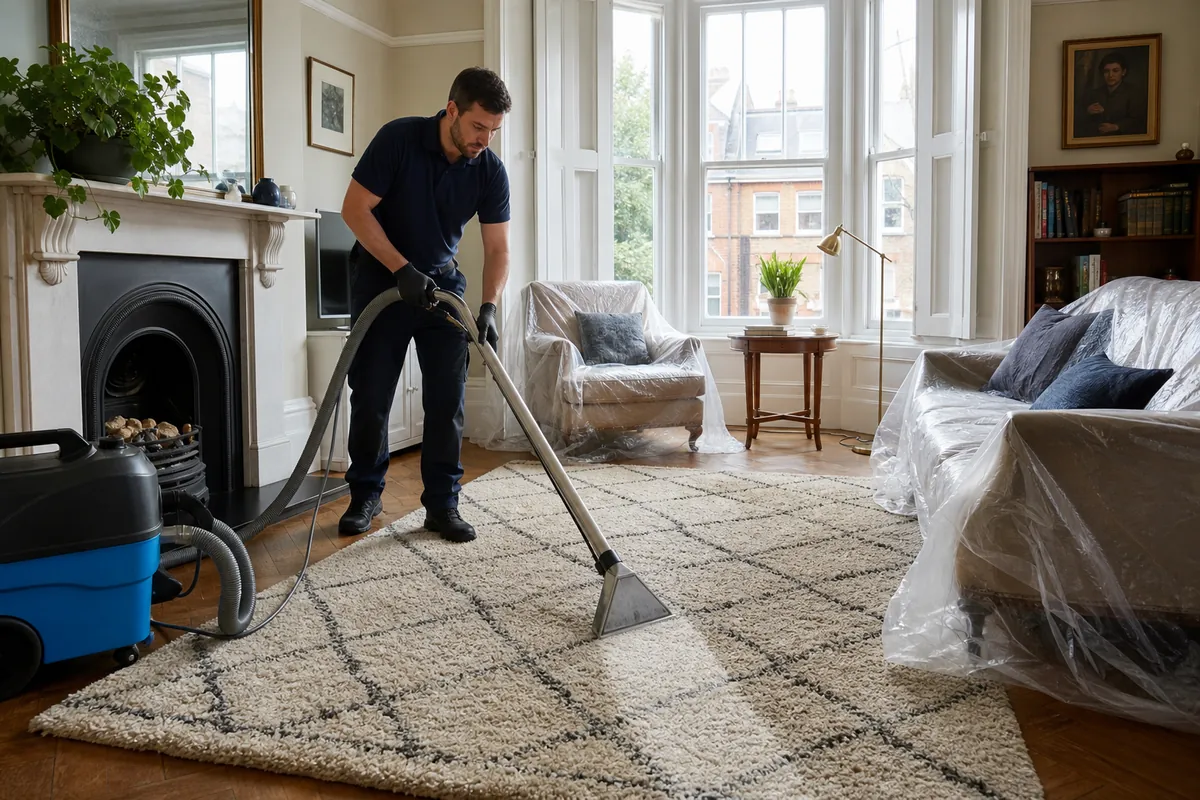
We inspect Oriental rugs at your Deptford property and agree extraction only where the construction and condition are suitable. Portable machines are used for the on-site service, from appropriate preparation and targeted marks to controlled cleaning and recovery. The rug receives moisture, and we explain its response and drying conditions before the room is restored.
Mobile service in Deptford · Cleaning method agreed after inspection
A fresh assessment of the rug as it is today
Whether a rug has been used continuously or has only recently been put back into a room, its present condition is what guides our cleaning. We examine the textile at your Deptford property before agreeing machine extraction. The work is completed there using portable equipment, with the rug’s colours, fibres, supporting construction and edges considered together. You receive a description of useful cleaning rather than an assumption that all Oriental pieces need an identical process.
Photographs, approximate dimensions and any known treatment history help us prepare a quotation. We discuss the marks you want assessed and the practical access around furniture, agreeing movement and responsibilities before the appointment. Our main work then connects suitable vacuum preparation, selected local treatment and controlled extraction with recovery of released soil. At completion, we explain what has improved, any limits that remain and the room conditions required while drying continues. The service stays focused on the actual item and the work available within its current strength and condition.
We establish the current construction and condition
We examine the pile, foundation or backing, edges and any visible repairs before choosing compatible products or machine action. The face of a rug does not show every detail that affects treatment. We look for sections needing controlled handling and consider relevant colour checks where appropriate. Known material information can help, but it does not replace assessing the textile in front of us. This gives us a practical basis for deciding whether the extraction service we provide is suitable.
Existing distortion, weak details or delicate construction may limit the proposed work. We also distinguish soil from lasting colour and fibre changes. A clean can remove compatible contamination while a well-used area still shows wear. This keeps the expected improvement realistic and allows the booking to be judged against the current item, rather than an imagined original appearance or a general claim attached to its decorative category.
The design is inspected with different use histories in mind
An exposed centre, a border near a door and a section previously covered by furniture may have received very different traffic and light. We compare those areas when assessing apparent shade changes. Soil can be part of the difference, but pile direction, abrasion and fading may contribute too. We explain the distinction so the aim of cleaning is clear, especially when one section is being compared with another that has been sheltered for much of its use.
We also locate particular concerns within the pattern so they can be checked again at completion. Where an incident history is known, we ask about the deposit and any earlier products. Where it is not, we avoid inventing a cause from appearance alone. The assessment identifies suitable attention without turning every darker shape into a stain or promising that stronger working can restore all differences between areas. The rug is considered as one textile with several details, not a set of identical surfaces.
What informs treatment of your rug
Detail
Our assessment
What it guides
Current construction
Fibres, support and edges
Machine suitability
Different sections
Use, soil and lasting changes
Realistic cleaning aims
Incident history
Known deposits and earlier products
Selected local attention
Colour response
Relevant checks where appropriate
Compatible treatment decisions
Vacuum preparation removes loose material before wet cleaning
Suitable vacuum preparation takes accessible dust, grit and debris out of the pile. We select equipment action around the fibres and strength, with appropriate care for fringes, borders and repairs. The included area is prepared deliberately even where the pattern conceals particles. This removal happens before solution is introduced, reducing loose matter that would otherwise enter the wet extraction stage and giving the following treatment a better surface on which to work.
As preparation makes the surface clearer, we observe what remains. A deposit may need focused local treatment, while an abraded patch can still look different without containing further loose soil. We keep those causes separate and do not increase force simply to make the immediate appearance uniform. The vacuum stage supports the wider extraction sequence. Its purpose is particle removal, rather than reconstruction of worn fibres or reversal of colour changes already identified as limits in the initial assessment.
Illustrative image of assessment before treatment.
Targeted attention is selected for compatible marks
We examine individual deposits against the material and colour findings, considering previous product use where known. Suitable local treatment is applied in a controlled manner and allowed relevant working time. Selected action may assist release where the textile permits. This gives an actual mark purposeful attention before the broader clean, while keeping the neighbouring fibres and colours part of the decision. We do not use one strong application across the rug simply because several concerns are visible within the pattern.
We explain that an old mark may contain both removable contamination and a lasting change. Earlier attempts can also affect the response, so complete removal is not promised. The useful aim is to release compatible deposits that the extraction stage can recover. Local treatment remains connected to cleaning the wider agreed area, addressing the individual concern without losing sight of ordinary accumulated soil elsewhere in the textile. You understand the purpose of each part of the service and the reasons a residual difference may remain.
Controlled solution and action prepare attached soil for recovery
Once suitability is established, compatible solution is introduced across the accessible area as part of machine extraction. Application is managed around pile, supporting construction and current strength. This is a moisture-based process, with drying needed afterwards. We explain the method clearly before work and do not measure progress merely by how wet the surface becomes. The purpose is appropriate release of soil attached to the fibres, followed by taking that contamination away with the machine.
Where suitable, controlled working action helps the product do its job, with appropriate contact time allowed. We adapt handling around borders, repaired details and weaker sections. The response is monitored as we proceed rather than intensifying the same action automatically whenever a shade difference remains. Wear and pile direction may affect the view even after useful release has occurred. Those observations guide whether further action has a purpose within the method selected for the actual rug.
Illustrative image of on-site machine cleaning.
Machine recovery completes the cleaning sequence
The extraction tool collects used solution with contamination loosened from the suitable fibres. We work through the included area in managed passes, paying attention to coverage and overlap. Recovery is the step that takes material away after the earlier application and working stages. Products are not simply left in the pile as the completed service. Our portable equipment carries out this removal at your property, within the practical room arrangement and treatment agreed after assessing the textile.
Suitable additional recovery passes can collect more moisture without automatically adding further solution. We assess any remaining mark or shade change against the original findings instead of treating it as a reason for indefinite wet repetition. A permanently altered colour or worn area will not necessarily respond to another pass. The aim is a completed clean within the rug’s condition, with recovery followed by drying under relevant room conditions. We explain both stages so their roles and limits are understood together.
We review the cleaned textile with the original concerns
Before finishing, we revisit the areas located in the pattern and describe their response. The broader surface is checked too, with suitable pile finishing where appropriate. We identify remaining marks, wear and colour differences clearly. Damp appearance and pile direction may influence the immediate shade, so the review recognises that the dry textile can look different. It is not a promise that every earlier difference has been reversed simply because the wet surface now shows a different contrast.
If another person is present for you, we explain the included work and practical next steps to them. A question after drying can then refer to the specific item, area and treatment discussed. We want the result to remain understandable after the equipment leaves the room. This is particularly useful when a rug has an uncertain history, because the service is judged against the assessed present condition and completed removal work rather than claims about how it must have looked before previous use or treatment.
Stages completed at the property
Stage
Our work
Purpose
Preparation
Vacuum accessible particles
Clears loose material
Treatment
Apply suitable solution and action
Releases attached contamination
Recovery
Extract soil with used liquid
Completes removal
Review
Explain response and room conditions
Clarifies drying and use
Drying and room arrangements are explained together
We inspect the supporting floor and consider suitable protection for adjacent finishes before wet stages. Furniture movement is agreed beforehand; sections that remain covered are identified as inaccessible. Equipment space, parking and stairs or lift access are discussed when booking. These arrangements make the scope practical within the property and ensure the quotation does not imply treatment through an item that cannot be moved. The portable machines work within that understood setting instead of requiring improvised handling midway through cleaning.
After extraction, the rug dries at home. Construction, treatment and airflow influence timing, so we explain ventilation, traffic and furniture contact rather than promise one exact period for every piece. Where the room is being rearranged, the next use is considered around those conditions. Additional rugs or fitted carpet can be listed in the request, each assessed separately. We finish with a clear link between useful improvement, remaining limitations and the immediate room arrangements needed before normal use resumes.
Oriental Rug Cleaning price reference
Use these starting prices as a guide. Share the item size, condition and access details so the work and final quote can be confirmed.
Service
Published starting price
What is included
Timing
Carpet cleaning
From £25 per room
Inspect, pre-treat, clean
Room dependent
Rug cleaning
From £20 per rug
Inspect, assess spots, clean
Size dependent
Steam rug cleaning
From £25 per rug
Check suitability, extract
Varies
Oriental rug cleaning
From £35 per rug
Fibre, dye and condition checks
Varies
Luxury rug cleaning
From £40 per rug
Assess and select method
Varies
Mattress cleaning
From £30 per mattress
Inspect and clean fabric
Varies
Upholstery cleaning
From £12 per seat
Check fabric and clean
Varies
Sofa cleaning
From £35 per sofa
Assess fabric and clean
Varies
Planning an Oriental rug visit in Deptford
We confirm the address, included item and equipment access before the appointment. Photographs, known product history and furniture details help us organise suitable extraction around the property.
Local postcode districts: SE8. We confirm the visit against your full address.
Yes. Available labels and earlier treatment information are useful, but our decision is based on inspection of the current textile. We explain any uncertainty affecting the proposed extraction and expected result.
Do you clean Oriental rugs on site in Deptford?
Yes. We bring portable equipment and complete the agreed preparation, suitable local work, extraction and recovery at the property. The appointment includes a review and drying information.
Will the same method suit every patterned rug?
No. Fibres, colour response, supporting construction and strength determine suitability. If our extraction process is inappropriate, we explain the limit before agreeing work.
Can you reverse wear in the centre?
Soil removal can improve appearance, but abrasion, compression and altered dye may leave lasting differences. We assess those causes and explain realistic improvement rather than promise restoration of damaged fibres.
Does extraction introduce moisture?
Yes. Compatible solution helps release contamination and the machine recovers used liquid with soil. Drying continues afterwards, with practical conditions explained for the actual rug and room.
What if furniture covers an edge?
We agree movement and responsibilities before the visit. If an item remains, the accessible area is identified so the quotation matches the sections we can actually assess and clean.
Discuss Oriental rug cleaning in Deptford
Tell us the approximate size, available material information and the concerns you want assessed. We will discuss suitable on-site work, access arrangements and a quotation for extraction.