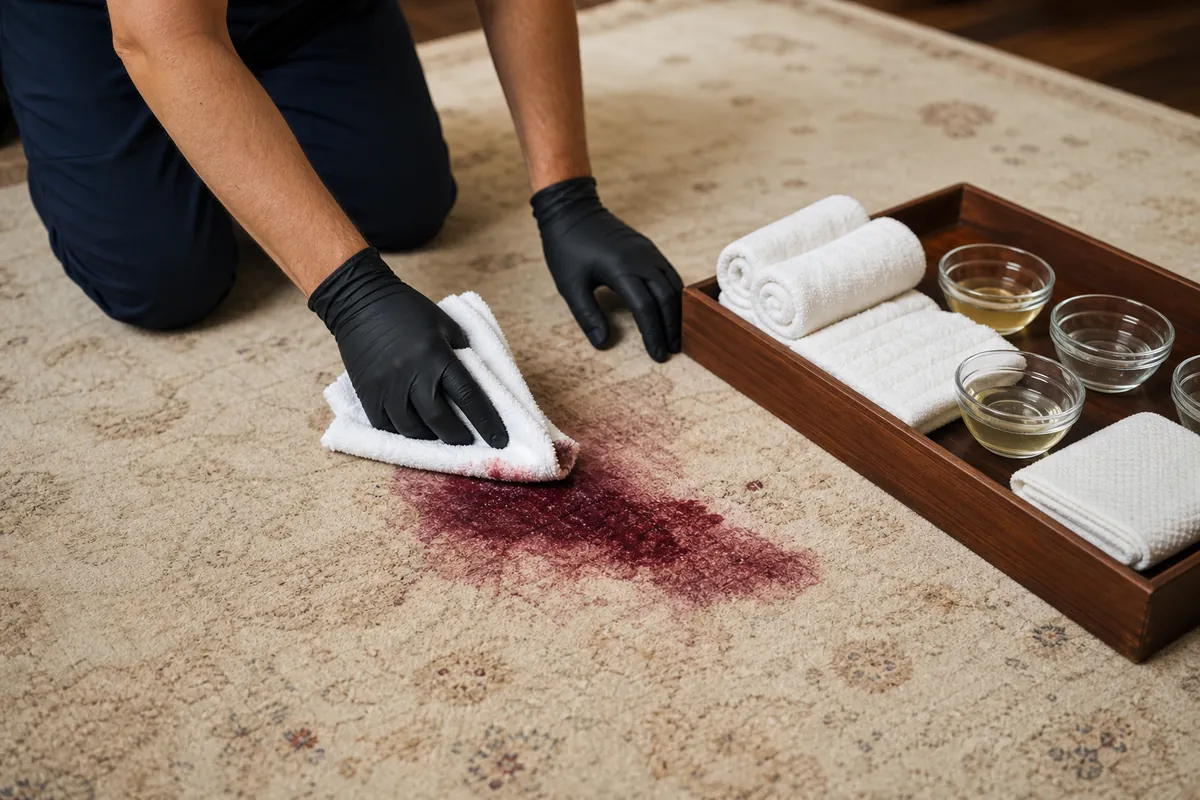
We clean suitable Oriental rugs at Hammersmith properties by on-site machine extraction. The visit combines material and colour checks, vacuum preparation, focused treatment and recovery of released soil using portable equipment. We agree the accessible cleaning area, review the rug’s response and explain drying and furniture-contact conditions for the room afterwards.
Mobile service in Hammersmith · Cleaning method agreed after inspection
A clear plan for the complete rug
The first useful photograph shows the whole rug, including its borders and the furniture around it. It helps us understand what you want cleaned and which details need closer assessment. For our Hammersmith service, approximate dimensions and a description of the concern are enough to start the quotation discussion. We inspect the actual textile at the property before agreeing suitable machine extraction, bringing portable equipment for the work carried out there.
The assessment connects the decorative face with the supporting construction, colours and current strength. That guides preparation, local products and controlled application, with recovery taking away the material released during cleaning. We also establish the accessible area and agree any furniture movement in advance. The process introduces moisture, so drying at home is included in our explanation. At completion, we revisit the priority areas and describe the response, leaving practical information that fits the room and the rug’s condition.
The construction check turns the request into a treatment plan
We examine the fibres, backing or foundation, borders and any visible repairs. These details explain how the item can respond to application and machine action. Relevant colour checks are considered where appropriate, particularly when several shades sit beside one another within the design. We explain the findings through their effect on the proposed extraction, giving you an understandable process for the actual rug. The inspection includes the present strength of the construction as well as the appearance of the face.
The result is a defined cleaning aim. We identify contamination that can receive suitable attention and point out wear, fading or fibre damage that may continue to affect the appearance afterwards. Delicate or weakened rugs may be unsuitable for our extraction, which we explain before agreeing work. For suitable items, the assessment guides the remaining stages so preparation, local treatment and recovery all follow the same understanding of the textile and useful improvement available.
Vacuum preparation clears loose material across the included area
Dust and grit can settle between fibres while the design still appears reasonably clear. We remove accessible particles with suitable vacuum preparation before introducing cleaning solution. The action is selected around the pile and supporting construction, with appropriate handling for fringes and vulnerable borders. We work through the agreed accessible area deliberately. This removes material at the start of the service and gives the later product and extraction stages a cleaner surface on which to work.
Preparation also lets us examine remaining marks more closely. A small deposit can become easier to distinguish from a darker shape in the pattern, while a compressed section may show the effect of regular traffic. We use those observations to select useful further attention. The dry stage reduces loose matter before the wet process and helps the following treatment reach the contamination still attached to the fibres, keeping the sequence organised around the different jobs each stage performs.
What guides the Oriental rug treatment
Detail
Our assessment
What it informs
Construction
Pile, support and present strength
Extraction suitability
Colours
Relevant response checks
Compatible treatment
Priority marks
Location and known history
Selected local attention
Accessible area
Furniture position and agreed movement
Clear cleaning coverage
Local treatment gives individual deposits focused attention
We locate the concern within the pattern and ask about known incidents or previous products. That history is considered alongside the material findings when selecting compatible local work. Suitable products are applied in a controlled manner and given appropriate time, with selected action where the textile permits. The nearby colours and fibres remain part of the decision. This gives a specific deposit attention before the broader extraction, with its position clear enough to revisit when the cleaning is complete.
We describe the expected response plainly. A spill can leave both removable material and a lasting colour change, while older products may influence the outcome. Suitable local work aims to release compatible deposits for recovery. It is connected with the wider rug clean, so the general soil receives attention as well as the particular mark. You understand why one area may improve differently from another, with the actual response explained rather than a universal complete-removal promise.
Illustrative image of assessment before selecting treatment.
Controlled solution prepares attached soil for extraction
For a suitable rug, selected cleaning solution is introduced across the included area to help loosen contamination held on the fibres. Application is managed around pile, backing and current condition, including repaired details. We explain that this is a moisture-based machine extraction process and that drying follows afterwards. The purpose of application is to support release and removal. The amount and distribution are selected for the textile and the treatment, with the room setup already understood before this stage begins.
Different areas may need different handling within the same clean. We keep the border, fringe connections and central pile in view while managing coverage. The inspection provides the basis for those decisions and the response during work informs them further. This gives the cleaning a controlled progression from preparation to suitable solution, helping release ordinary attached soil across the rug while the local products address particular deposits. Both parts lead towards the recovery stage that takes the loosened material away.
Appropriate working action helps the products do their job
Where suitable, selected action assists the cleaning solution in reaching and releasing contamination. We allow relevant product time and adapt handling around the rug’s construction. A repaired edge or delicate connection may need more controlled attention than sound central pile. We explain the practical purpose of working the product: soil has to be loosened in a compatible way before it can be collected with the used solution. This links the tool work directly to the removal stage.
We observe the pile as treatment progresses. Direction can influence shade, and wear can leave a section looking different even where contamination has been released. Those observations guide the next decision. We concentrate on useful work within the material’s condition, with controlled action serving the cleaning aim established during inspection. The process remains connected to the actual textile throughout, so the finished account can explain the response of the priority area alongside the broader result across the included rug.
Illustrative image of controlled machine recovery.
Recovery takes released soil away with the used liquid
The extraction tool collects contamination loosened during treatment together with the used solution. We make controlled passes through the accessible area, managing overlap and coverage around the rug’s shape. This is the removal step that completes the preparation, local attention and broader clean. Portable machines carry out the recovery at the property, with the surrounding floor and equipment position already included in the practical plan. The separate stages work together towards taking compatible soil out of the textile.
Where appropriate, further recovery passes collect additional moisture without a new solution application. We check the response as the work proceeds and relate remaining differences to the inspection. Recovery completes the machine part of the service while drying continues at home. We explain that transition clearly, including what has been cleaned and which conditions matter next. The household can then understand how the removal achieved during the appointment connects with the period before normal traffic and furniture contact resume.
The final review follows the original cleaning priorities
We revisit the areas identified within the pattern and describe how they have responded. The broader surface is checked too, with suitable pile finishing where appropriate. We explain remaining marks or wear alongside the useful improvement. Dampness and pile direction can affect the immediate appearance, so the review gives context for the textile as it continues drying. This makes the account specific to the actual rug and the work performed rather than a general statement about an instant finished look.
If another person attends for you, they receive the explanation of the included area and practical next steps. A question after drying can then be related to the location and treatment already discussed. The aim is an understandable result that remains useful once the machines are packed away. You know which concerns received local attention, what the wider clean involved and where lasting condition continues to influence the appearance after compatible contamination has been appropriately removed.
The extraction service at your property
Stage
Our work
Purpose
Preparation
Vacuum accessible loose material
Prepares the textile
Treatment
Selected products and controlled action
Releases contamination
Recovery
Extract used liquid with soil
Completes removal
Review
Explain response and room conditions
Clarifies drying and use
The appointment includes practical drying and room arrangements
We inspect the supporting floor and consider suitable protection for nearby finishes before wet work. Furniture movement and responsibilities are agreed beforehand, with any area remaining covered identified in the scope. Parking, stairs or lift access and the equipment route are discussed when booking. These details make the quotation reflect the accessible item and allow the portable machines to be organised around the actual property, supporting a consistent treatment sequence from inspection through to recovery.
After extraction, we explain relevant ventilation, traffic and furniture-contact conditions. The construction, treatment and available airflow affect drying, so the discussion fits the actual room and rug. Other items or fitted carpet can be listed within the request, each assessed individually with a practical order agreed. The closing explanation connects the result with immediate room use, giving the person restoring the space useful next steps and an understanding of the conditions needed before the treated textile resumes ordinary household service.
Oriental Rug Cleaning price reference
Use these starting prices as a guide. Share the item size, condition and access details so the work and final quote can be confirmed.
Service
Published starting price
What is included
Timing
Carpet cleaning
From £25 per room
Inspect, pre-treat, clean
Room dependent
Rug cleaning
From £20 per rug
Inspect, assess spots, clean
Size dependent
Steam rug cleaning
From £25 per rug
Check suitability, extract
Varies
Oriental rug cleaning
From £35 per rug
Fibre, dye and condition checks
Varies
Luxury rug cleaning
From £40 per rug
Assess and select method
Varies
Mattress cleaning
From £30 per mattress
Inspect and clean fabric
Varies
Upholstery cleaning
From £12 per seat
Check fabric and clean
Varies
Sofa cleaning
From £35 per sofa
Assess fabric and clean
Varies
Arranging Oriental rug cleaning in Hammersmith
We confirm the address, included item and access route before the appointment. Photographs and furniture details help us organise the assessment and suitable extraction within the property.
Local postcode districts: W6. We confirm the visit against your full address.
A photograph of the whole rug, approximate measurements and views of the concerns are useful. We discuss known material information, previous products and the furniture arrangement before assessing the actual textile.
Do you work on site in Hammersmith?
Yes. Portable machines come to your property and the agreed preparation, local treatment, extraction and recovery take place there. We review the response and explain the drying conditions afterwards.
How are fringes and colours considered?
We inspect their present condition and connections, with relevant colour-response checks where appropriate. The findings inform product selection, handling and whether our extraction is suitable for the item.
Can every Oriental rug receive extraction?
No. Delicate materials or weakened construction can make the process inappropriate. We explain any restriction before agreeing treatment, keeping the work based on the actual rug’s condition.
Will every old mark disappear?
The response depends on the deposit, previous products and whether colour or fibre changes are permanent. We select suitable attention and explain realistic improvement, without guaranteeing complete removal.
Does the rug need drying afterwards?
Yes. Our extraction uses solution and recovers used liquid with soil. Drying continues at home, with relevant airflow, traffic and contact conditions explained for the room.
Discuss your Oriental rug in Hammersmith
Send a full photograph, approximate dimensions and the concerns needing attention. We will discuss suitability, practical access and a quotation for on-site machine extraction.