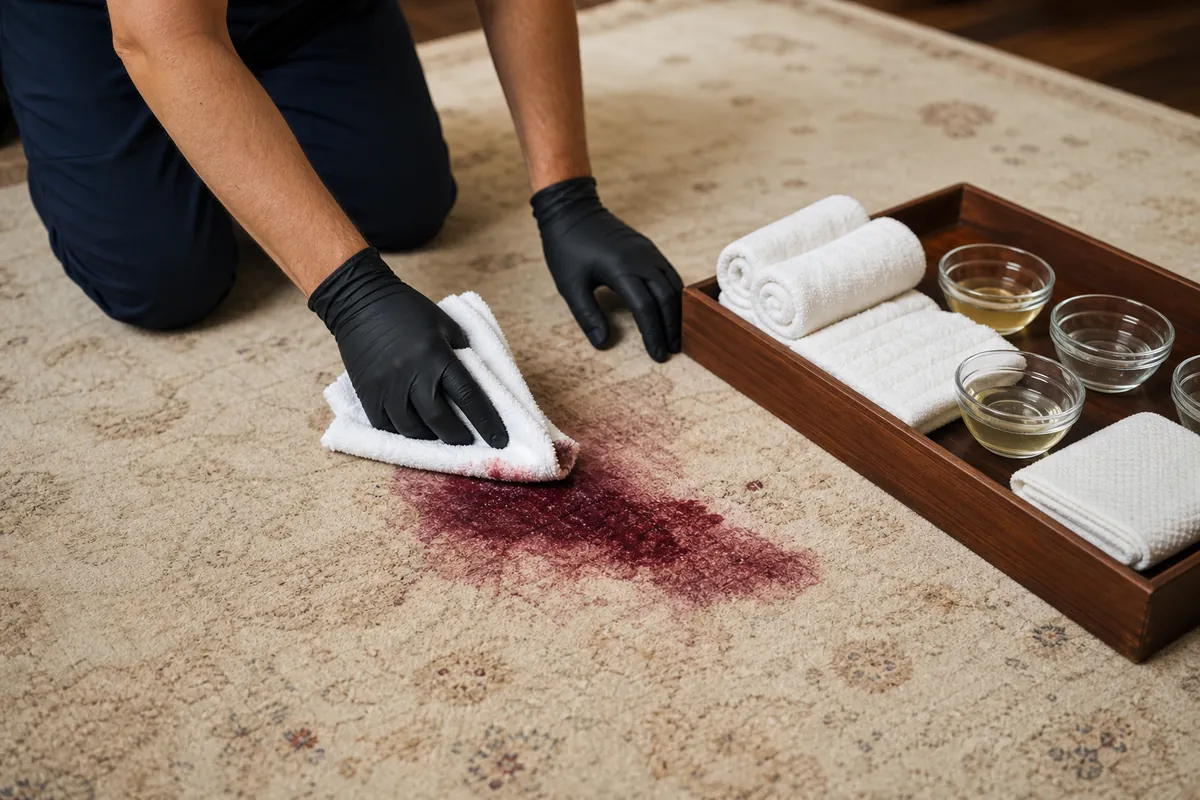
We provide Oriental rug cleaning in Harrow with portable extraction equipment at your property. The assessment covers fibres, colours, foundation and present strength, including raised or worked details where they occur. We remove suitable particles, address selected marks and extract released dirt, then explain the result and drying arrangements for the complete rug.
Mobile service in Harrow · Cleaning method agreed after inspection
The surface construction guides our working action
Not every rug has an uninterrupted field of open pile. A worked detail, raised yarn or flatter neighbouring fabric can change how a cleaning tool should move across its face. We examine the actual construction rather than assuming that its style name tells us everything. The cleaner considers those details with the foundation, dyes and repairs before deciding whether extraction is appropriate. Your aim remains practical: a cleaner rug, with general soil and particular marks addressed through suitable removal work.
We explain that work before you agree to the quotation. Preparation clears suitable loose material, local attention follows the assessed concerns and the machine stage applies solution with suction recovery to carry released dirt away. Our cleaner controls the action through each stage instead of treating a projecting yarn as ordinary fluff or a smooth area as proof that the whole textile will respond identically. The service is carried out on site, with a result review and drying guidance tied to your rug afterwards.
We examine the yarns and the material supporting them
The assessment includes the complete design and accessible details of its construction. We consider reliable maker or repair information with the visible pile, foundation or backing and the condition of edges. Where a surface has worked stitches or raised elements, we look at how they relate to the fabric beneath and neighbouring sections. A useful description from an owner can help, but the direct examination is what allows us to consider the present strength and treatment requirements of the actual textile.
A loose end or changed connection is noted without pulling it to establish a diagnosis. Its significance may differ from a removable deposit on nearby pile. We explain any finding that affects handling or the proposed cleaning action, including where a structural concern prevents suitable extraction. For an appropriate item, these observations provide practical limits for the work. The cleaner can pursue worthwhile soil removal while keeping the construction visible in the decision, rather than pressing an uneven area flat or assuming appearance alone establishes that it is strong.
Cleaning priorities are located separately from pattern details
We ask you to identify the general improvement wanted and any local concern within the whole design. A dark decorative stitch, adhered material and an altered yarn can look similar in a photograph but represent different questions. We assess them in context and ask about known spills or earlier products. This allows us to explain which areas may respond to selected treatment and which differences belong to the textile or reflect a condition change rather than removable dirt.
The quotation describes the agreed cleaning area and work, with any limit that affects the expected result. Where a worn or loose section will remain, we make that clear before treatment. A useful whole-rug clean can still be worthwhile even if one detail cannot become identical to its original state. We explain the local outcome realistically alongside broader soil removal, so your decision is not based on a promise that extraction will rebuild missing material or secure a connection that is already damaged.
Surface details within the assessment
Detail
Our consideration
Purpose
Pile and raised yarns
Material and construction
Select suitable working action
Supporting fabric
Accessible condition and strength
Assess the combined textile
Local mark
History and treatment response
Plan useful attention
Changed connection
Current weakness
Explain limits separately
The room is organised for supported, practical access
We discuss how the rug is positioned, what furniture limits access and what movement can practically be agreed. Vulnerable edges or worked details are considered during handling; they are not used as grips for pulling the textile across the floor. Any portion remaining beneath an object is identified in the scope. We also establish the equipment route, including stairs or lift details, so our portable machine can reach the room and work across the included area.
The cleaner considers the floor beneath the rug and the space needed for preparation, selected attention and recovery. A narrow view of a concern is not necessarily enough access for the complete cleaning task. We discuss the position available through drying as well, with temporary changes to furniture contact or normal room use where needed. This gives the visit a workable arrangement from the outset. You understand what will be treated and how the textile will remain afterwards before solution is introduced or equipment begins working over its surface.
Illustrative material checks before a suitable cleaning plan is agreed.
Particle preparation follows the details of the face
Suitable vacuum preparation removes accessible loose dirt and grit from the agreed textile. We choose the working action with the pile and current strength in mind, including raised yarns, connections and fragile ends where present. The cleaner does not apply one forceful motion indiscriminately across different structures. Preparation has a specific removal purpose before selected wet work, clearing particles that can be addressed appropriately rather than making mechanical effort itself the measure of how thoroughly the rug is being cleaned.
We observe the surface as loose material is removed and use that clearer view to guide subsequent actions. Some dullness can lessen, while an adhered mark or altered detail may remain distinct. That response is considered alongside the original assessment. We do not keep working one section merely to make every raised element sit alike; a construction difference may remain after useful cleaning. The next stage is chosen for removable contamination and the textile’s tolerances, keeping appearance, cleanliness and connection condition understandable as related but different aspects of the item.
Local treatment has a material-specific removal aim
We consider the history of a mark and any products applied before selecting local attention. Appropriate treatment may help release a deposit, with controlled application and working suited to the affected material. The cleaner observes the response and judges whether further work offers a sensible benefit. A location beside a raised detail may need particular control, and the same caution about construction continues during local work rather than being left behind after the first inspection.
Permanent colour change or damaged yarns can limit the visible result even when suitable soil is removed. We explain that where the findings support it, without treating every resistant mark as the same problem. A projecting or broken connection also remains a condition issue rather than a stain to scrub away. You receive an account of what can reasonably be attempted and why the cleaner may stop at a particular point, while the broader preparation and extraction still address useful removal from the rest of the agreed surface.
Illustrative on-site extraction with controlled recovery.
Controlled extraction carries released contamination away
Our portable equipment applies cleaning solution to suitable textile and recovers used moisture with loosened soil through suction. The cleaner manages the tool’s coverage and action across the rug, accounting for its construction and present response. Working around a raised or vulnerable detail remains part of this process. The aim is effective removal from a compatible item, not maximum liquid or pressure. We keep application and recovery connected so the cleaning stage is more than a product being distributed across the face.
We monitor recovery as the machine work progresses and use further recovery where appropriate. Released dirt and used solution need removal; a more neatly arranged surface alone does not establish that the task is complete. The rug will still require drying after extraction, which we explain in relation to its construction and position. We do not assume that a dry-feeling decorative yarn describes the supporting material beneath it. The process remains a controlled on-site clean followed by a practical drying stage at your property.
The review considers both the clean and the condition
At completion we return to the original priorities and examine the wider treated area. Suitable pile finishing may help settle parts of the surface for a consistent review. We explain observed improvement, local treatment response and any feature that remains because of wear, colour change or construction. The damp state can affect appearance, so the discussion recognises the current stage rather than presenting a quick view as proof of every aspect of the eventual dry finish.
Existing loose details and any access exclusions are kept clear in the account of the work. Cleaning does not secure a broken stitch, and a covered portion has not received the same treatment as a reachable one. We describe those boundaries with the useful result achieved. You know what the cleaner did, how your priority concern responded and what remains relevant to handling and drying. The service therefore ends with an understandable explanation of the assessed rug rather than a generic statement that an Oriental textile has been refreshed.
The practical cleaning sequence
Stage
Our work
What we explain
Preparation
Remove suitable particles
Approach across differing details
Local attention
Treat assessed deposits
Response and sensible limits
Extraction
Recover used solution with released soil
Actual removal process
Completion
Review result and drying position
Remaining condition and contact arrangements
Drying guidance covers the supporting textile as well
We discuss the rug’s drying arrangement with its construction, retained moisture and room conditions in view. Available air movement and normal contact with furniture or coverings shape the practical advice. We explain any temporary restriction relevant to the cleaned item rather than assigning every rug the same fixed waiting period. An important deadline for using the room is considered before booking, so the complete interruption can be understood while the appointment is being planned.
For a Harrow enquiry, send approximate dimensions, a current overall image and your cleaning priorities. Accessible views of a particular worked detail or concern are useful alongside reliable care and repair information. Include known product history and property access details so we can prepare a relevant quotation and visit. We confirm suitability through inspection and carry out the agreed removal stages on site. The final discussion connects the result, any condition limits and practical drying arrangements, keeping the service useful for both the textile and the household around it.
Oriental Rug Cleaning price reference
Use these starting prices as a guide. Share the item size, condition and access details so the work and final quote can be confirmed.
Service
Published starting price
What is included
Timing
Carpet cleaning
From £25 per room
Inspect, pre-treat, clean
Room dependent
Rug cleaning
From £20 per rug
Inspect, assess spots, clean
Size dependent
Steam rug cleaning
From £25 per rug
Check suitability, extract
Varies
Oriental rug cleaning
From £35 per rug
Fibre, dye and condition checks
Varies
Luxury rug cleaning
From £40 per rug
Assess and select method
Varies
Mattress cleaning
From £30 per mattress
Inspect and clean fabric
Varies
Upholstery cleaning
From £12 per seat
Check fabric and clean
Varies
Sofa cleaning
From £35 per sofa
Assess fabric and clean
Varies
Plan an Oriental rug appointment in Harrow
Tell us the rug location and practical route for portable equipment, including stairs or lift arrangements. We discuss furniture access and the quotation, then inspect the textile before agreeing extraction and carrying out the suitable work at your property.
Local postcode districts: HA1, HA2. We confirm the visit against your full address.
Yes. Show the whole item and accessible details when enquiring. We examine the yarns, supporting fabric, colours and current strength before deciding whether our extraction service and its working action are appropriate.
Will a projecting yarn be treated as loose fluff?
We consider whether it belongs to the design or construction and note relevant changes. A loose connection has a different significance from removable particles, so it is assessed rather than automatically trimmed or pulled.
Does cleaning secure a broken stitch?
No. Our service removes suitable soil and deposits. We explain structural concerns and how they affect treatment, keeping connection condition separate from improved cleanliness after preparation and extraction.
How do you select the machine approach?
The material, construction, colour response and condition guide application, working action and recovery. We assess the actual rug and explain limits before agreeing the work rather than applying one routine from its style name.
Is the raised surface enough to judge drying?
Not on its own. Supporting fabric or foundation can have different moisture conditions. We discuss the complete rug and its room position when explaining drying, furniture contact and other relevant restrictions.
What should I send for a quotation?
An overall photograph, approximate size and the improvement wanted are a useful start. Add accessible views of concerns, reliable material or repair information, known products and details of the equipment access to the room.
Discuss your rug’s cleaning needs
Send current photographs, approximate measurements and the concerns you want addressed. We will explain assessment, our on-site extraction service and arrangements for a relevant quotation.