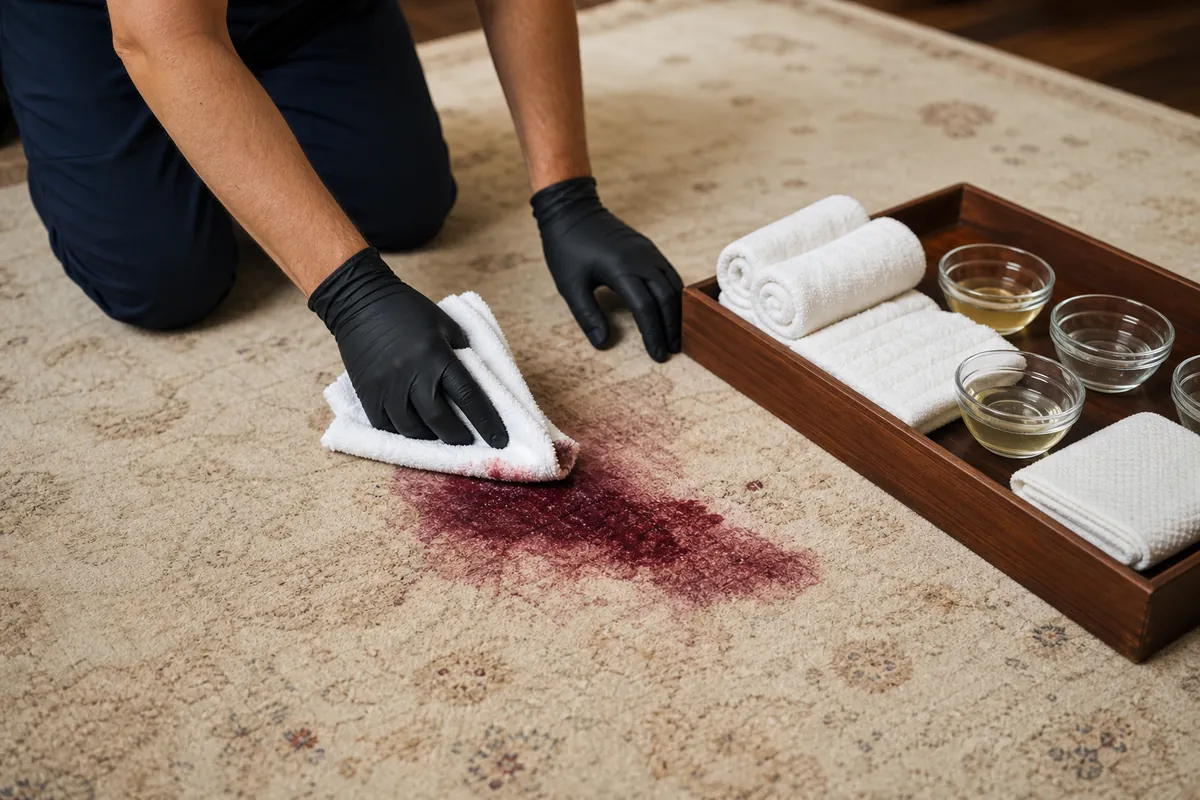
We clean suitable Oriental rugs in Maida Vale using portable extraction machinery at your property. We locate the concerns within the design, inspect fibres, dyes, foundation and ends, then agree the work. Preparation, appropriate local attention and liquid recovery are followed by a review and explanation of drying in your room.
Mobile service in Maida Vale · Cleaning method agreed after inspection
Making the cleaning priorities clear across a patterned textile
Describing a mark on a detailed rug can be surprisingly difficult. A dark area near a border may look like several other parts of the design, especially in a close photograph. We ask for an overall view and a recognisable reference so the concern remains clear from enquiry to inspection. That practical description supports the assessment without replacing it: the actual fibres, colour response and construction still determine suitable treatment for the rug at the property.
We provide a complete on-site extraction service for suitable items, bringing portable equipment and organising the working area with you. Loose particles are prepared before selected local attention and the main application-and-recovery sequence. We then return to the priorities discussed and explain the response, including lasting physical features and drying. The customer receives an account of what the company has done on the actual textile, rather than advice to try treatments independently or a broad assurance that every difference in a complicated design will disappear.
Giving each concern a recognisable position
We ask for a whole-rug photograph and approximate dimensions, with closer views where helpful. A reference such as the end nearest a doorway or a distinct border feature can locate the area you want assessed. Known incident details, earlier products and reliable care information add context. The customer does not need a technical diagnosis or a name for every material. We use the enquiry to understand the request and prepare for inspection, not to decide treatment from an isolated patch of colour.
The wider cleaning aim is recorded alongside individual marks. General soil can affect the rug beyond the most obvious concern, so the proposal describes the accessible surface wanted. Furniture coverage and movement are discussed explicitly, with other textiles listed separately when requested. These details give the quotation practical boundaries while allowing physical checks to confirm suitability and any change before application. The original concern can then remain identifiable throughout the appointment rather than being lost when the rug or room arrangement changes.
Inspecting the complete construction and relevant response
We examine the pile and accessible foundation, including borders, fringes, repairs and worn features. Relevant fibre and dye response checks guide extraction suitability and handling. One stable part of the design does not settle how every edge or finishing detail can be treated. We explain findings in terms of the proposed work, showing how the actual construction affects action or scope. This makes inspection useful to the customer without expecting them to interpret technical material descriptions or select equipment settings independently.
We distinguish suitable soil removal from lasting physical changes. Missing fibres, fading and damage may remain after cleaning, and a design’s existing colour variation is not automatically contamination. Relevant limits are explained before starting. If extraction is inappropriate, we describe a restriction or decline the proposed treatment. Where it is suitable, the goal is useful removal within the rug’s present state. This establishes a fair basis for the result and avoids an unlimited promise that every darker or differently textured section must become identical through repeated liquid application.
Making the requested clean understandable
Detail
What we establish
Purpose
Concern location
Recognisable reference in the design
Clear priorities
Actual material
Fibre and dye response
Extraction suitability
Finishing details
Condition and strength
Appropriate handling
Accessible surface
Furniture and agreed movement
Defined scope
Preparing particles over the available rug
Suitable vacuuming recovers accessible grit, dust and debris before the wet stage. Handling is chosen for the checked construction and adapted near vulnerable details found at inspection. We follow the agreed surface across the item, including reachable ends rather than only the marks photographed at enquiry. Removing loose particles supports the main clean and helps reveal concerns still present in the fibres. It has a clear purpose within extraction, with moisture-bearing treatment and later drying still part of the service explained to the customer.
We set up the room so the agreed surface can be worked consistently. The supporting floor and the space around the rug help determine where the machine and hoses should be positioned. Furniture is moved under the arrangement made with the customer, and a portion left covered stays clear in the access description. We keep the references used to locate marks understandable within that layout. This gives the team a practical sequence through the item and prevents a partly hidden concern becoming uncertain once the main application starts.
Illustrative assessment: material and response guide suitable cleaning.
Choosing focused attention for the actual marks
We assess each local concern against surrounding fibres and the relevant checked response. Known spill history and earlier products can help guide suitable action, while an uncertain cause remains open. Selected treatment aims to release contamination compatible with the rug. We explain the purpose and likely limits within the wider clean. A shape or colour repeated in the design does not establish that separate marks have the same cause or should automatically receive one assumed product regardless of their material response.
The local area is observed during treatment and released material is collected through extraction recovery. Another compatible step is considered where useful, rather than repetition being automatic whenever a contrast remains visible. Permanent fibre or dye alteration can persist after residue is addressed, which we explain plainly. The final discussion recognises actual improvement, including partial response where relevant, while also accounting for general soil removal. Each concern can therefore be reviewed in its own place without becoming the only measure of the whole appointment.
Working extraction from the construction findings
The extractor provides both application and removal over the suitable rug. Its head works the selected cleaning process into the fibres and takes used liquid back through the equipment with loosened dirt. We organise the route across the accessible area and make operating choices from the material checks. A named border concern and a quieter end both retain their place where included. The customer can follow the purpose of the equipment while the team remains responsible for its technical action on the actual construction.
Water enters the textile during extraction, so recovery is followed by a period of drying in the room. We explain that requirement and continue observing the material while working. A colour difference may involve the design, wear or fading as well as dirt; extra wetting cannot rebuild those features. Our decisions therefore follow the cleaning benefit available on suitable fibres. This keeps the service directed at soil removal rather than treating every darker patch in a complicated pattern as a reason for the same repeated action.
Illustrative extraction using portable machinery with liquid recovery.
Recovering used liquid across the included surface
Recovery transfers the used solution from the rug into the machine. We give that action attention as the operator progresses and make appropriate collection passes when the textile needs them. The benefit is removal of released dirt together with a reduction in the moisture left to evaporate. We account for the surface that was agreed, including less prominent sections. This makes recovery a practical part of finishing the whole accessible clean instead of considering a visible application across the centre enough to complete the job.
We judge improvement by comparing the surface with its starting condition, not simply by looking for uniform colour across the design. A protected section may differ from a frequently used route after removable dirt has gone. We explain such physical features where they matter and consider further suitable attention only for a useful cleaning purpose. This helps the customer understand why an item can be cleaner while retaining some contrasts. The marks identified at enquiry remain part of that discussion, with each considered in its own location rather than collapsed into one general stain claim.
Returning to the priorities and explaining drying
At the review we return to the areas identified in the initial conversation. That makes it possible to discuss the local response specifically while also looking at the wider clean. Appropriate finishing is included where suitable, and we account for sections covered by furnishings. Any feature still visible is explained using what was found and how treatment responded. If it needs to be assessed again after drying, we point that out. The customer receives a description of completed work on the rug they recognise, with questions considered while the relevant area is directly available.
Before leaving we explain what drying means for the item in this room. Its thickness and construction influence the moisture still present, while indoor air movement affects how that moisture leaves. We discuss the relevant use of the space and furniture arrangements, including any appearance detail that needs to be seen once dry. The customer receives an explanation tied to the actual treatment and setting. There is no need to infer the remaining stage from a service name or assume that every Oriental rug follows an identical timetable.
The service from preparation to drying
Stage
Our work
Customer explanation
Preparation
Suitable vacuuming
Loose particles removed
Extraction
Apply and collect solution
Released dirt recovered
Review
Revisit identified concerns
Actual result clear
Drying
Consider item and room
Remaining stage understood
Agreeing the proposal and practical Maida Vale appointment
We prepare the price around the item and priorities described, using size and images to make the proposal recognisable. The checks at the property establish whether the planned extraction can proceed and whether anything needs adjusting. We tell the customer the included work and charge before liquid application. An additional rug or fitted floor has its own description when requested. This keeps the agreement tied to actual surfaces and concerns, rather than leaving a general figure to cover unresolved expectations about furniture, hidden portions or reversal of every difference in the pattern.
The practical route for our equipment is discussed before the appointment. We ask how entry works, where parking can be arranged and which level holds the rug, including any stairs or lift. Movement of furniture is made part of the agreement, so available space is understood when the team arrives. For more than one item, a sensible working order can account for access and drying without combining the material decisions. This gives the visit a usable plan and lets attention stay on the textile once the machine reaches the room.
Oriental Rug Cleaning price reference
Use these starting prices as a guide. Share the item size, condition and access details so the work and final quote can be confirmed.
Service
Published starting price
What is included
Timing
Carpet cleaning
From £25 per room
Inspect, pre-treat, clean
Room dependent
Rug cleaning
From £20 per rug
Inspect, assess spots, clean
Size dependent
Steam rug cleaning
From £25 per rug
Check suitability, extract
Varies
Oriental rug cleaning
From £35 per rug
Fibre, dye and condition checks
Varies
Luxury rug cleaning
From £40 per rug
Assess and select method
Varies
Mattress cleaning
From £30 per mattress
Inspect and clean fabric
Varies
Upholstery cleaning
From £12 per seat
Check fabric and clean
Varies
Sofa cleaning
From £35 per sofa
Assess fabric and clean
Varies
Planning Oriental rug cleaning in Maida Vale
We identify the requested textile, accessible surface and recognisable cleaning priorities, then organise access for portable equipment. Work and charge are confirmed after assessment and before treatment. Additional items receive separate descriptions and their own material decisions.
Local postcode districts: W9. We confirm the visit against your full address.
How should I describe a mark in a detailed design?
An overall photograph and a recognisable location help. We use those references during inspection and review so the concern stays clear throughout the appointment.
Do similar-looking marks receive the same treatment?
Not automatically. We assess their actual material response and known history before selecting suitable attention.
Where do you clean the rug?
At your property with portable extraction equipment. Moisture is introduced and the rug dries there after treatment.
Do you inspect fringes and borders?
Yes. Their condition and response are considered alongside the centre because they can affect appropriate handling and suitability.
Can all colour differences be removed?
No. Some are part of the design or lasting physical condition. We distinguish those from suitable contamination and explain the actual cleaning response.
How is drying discussed?
We consider the actual rug and room, including relevant ventilation, furniture and ordinary use, rather than give one fixed timetable to every textile.
Discuss your Maida Vale Oriental rug
Send a full photograph, approximate dimensions and details locating the concerns you want assessed. We will explain the proposed extraction visit and confirm suitable work before starting.