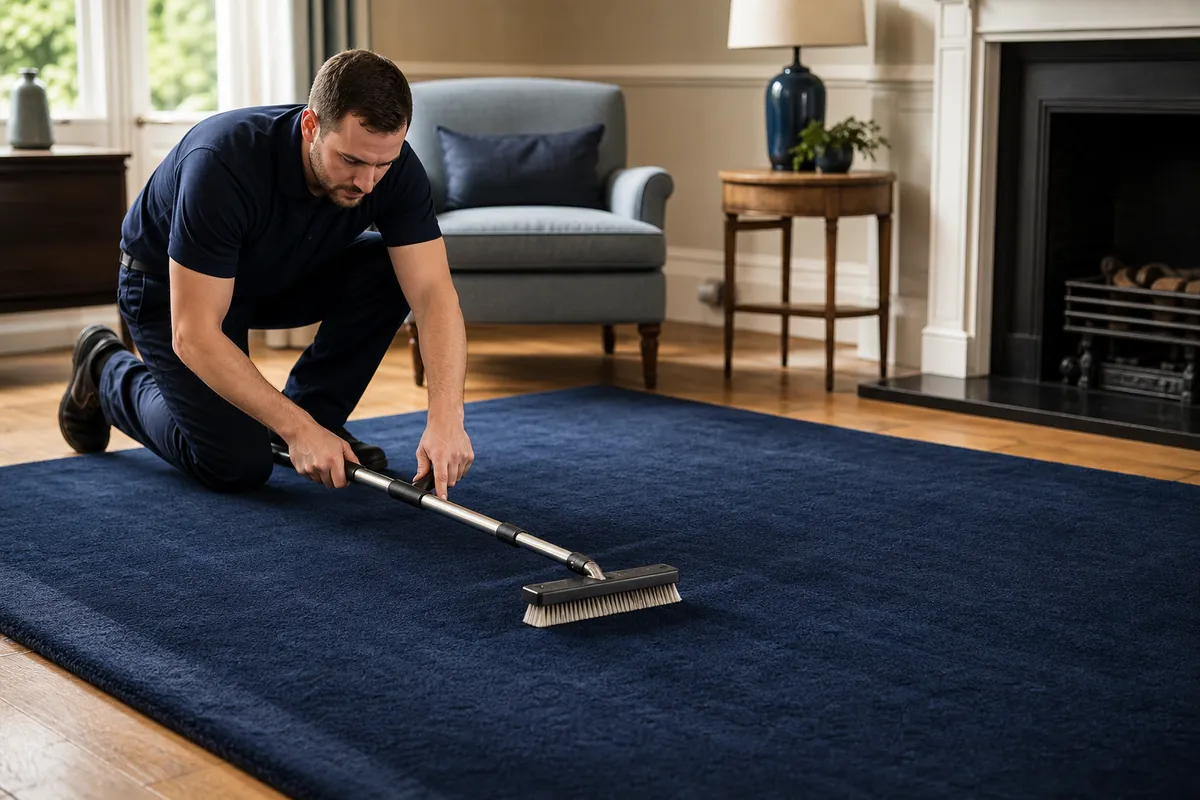
We carry out steam rug cleaning in Camden Town with portable hot-water extraction machines. The rug is assessed at your property, even if earlier care records are incomplete. We remove dry debris, attend to suitable marks and extract released soil, then explain the condition of the cleaned textile and its drying needs before leaving.
Mobile service in Camden Town · Cleaning method agreed after inspection
A useful clean starts with the rug you have now
You do not need a complete ownership history to ask us about cleaning a rug. We can begin with its size, photographs and the changes you have noticed, then examine the material at your address. Information about a spill or earlier product helps when available, but gaps are not filled by guessing. We look for a practical cleaning objective and establish whether the item can receive the process we provide.
Our steam service uses hot-water extraction. It brings liquid into the textile and recovers that liquid with released dirt through portable machinery. The rug stays at the property for the work and the drying afterwards. We prepare the pile and select local attention before the main clean, with the accessible area agreed in advance. The visit ends with an account of what changed and what remains, including any lasting wear or colour difference, so the service is understandable without needing a technical explanation of the rug’s entire past.
Hearing what you know and examining what is present
We ask what prompted the enquiry and where the concern appears. A darker route, a patch that feels different or a spill can all form part of the same request. A whole-item image helps locate each observation within the rug, while close views give detail. We use those images to prepare the assessment, not as proof of an exact result. At the property we compare the concerns with the rest of the pile and discuss the improvement the appointment is intended to achieve.
Known care wording, repairs and products already used can add context. Missing information remains clear rather than replaced with an assumed fibre or stain cause. This lets us focus on the actual textile instead of asking you to reconstruct every earlier event. The decision is then made from its present construction and response. We explain the useful scope before starting, keeping the main concern in view while including the general dirt across the accessible area you want cleaned.
Checking the combined textile before treatment
We inspect more than the visible yarn tips. The accessible backing, edge finish, fringe and repairs can affect handling, particularly where one section has weakened. We consider those details with the pile and any available label. A familiar design cannot tell us everything about the structure beneath it. Relevant material and colour checks help establish whether extraction can be used. Their purpose is a practical decision about this item, with findings explained through what they change about the proposed work.
We also separate deposits from changes to the rug itself. Lost dye and worn yarn do not become removable simply because the surrounding area is dirty. We point out relevant limits and decline the proposed treatment if our process is unsuitable. Where cleaning can proceed, the aim remains worthwhile dirt removal within the current condition. You understand what the work is trying to improve and why a feature may still influence appearance afterwards, without every inspection point becoming an unnecessary warning or a promise of restoration.
What informs the proposed service
Detail
What we establish
Purpose
Available history
Known spills and products
Useful context
Material
Fibre and dye response
Suitability decision
Structure
Accessible backing and edges
Handling choices
Condition
Soil and lasting change
Realistic cleaning aim
Making the work area and price definite
We confirm which rug is included, its approximate dimensions and the surface available around furniture. Full size and reachable area are not always the same. Movement of a piece must be agreed before starting; if it remains over the textile, we identify the concealed section clearly. This gives the quotation a practical meaning and prevents a hidden part being assumed to have received identical work to the open field. The scope is settled with you before the cleaning sequence begins.
We ask about the route into the room, including stairs, entry arrangements and relevant parking restrictions during booking. At the address we check space for the portable equipment and the floor below the rug. The setup supports both machine work and the period of drying that follows. With the work and charge confirmed, the appointment can concentrate on the textile rather than stop midway to resolve a corner that cannot be reached or movement that was never included in the agreement.
Illustration of checks used to inform suitability.
Taking dry debris out as the first working stage
We prepare the pile using a vacuum approach suited to its texture and present strength. Grit can settle between yarns along walking routes while fine dust collects at quieter margins. We work across the accessible surface rather than concentrate only on the obvious mark. Loose strands and weak edging are handled carefully. The removal has value in its own right and leaves less debris to mix with the liquid stage, giving subsequent treatment a cleaner and more clearly assessed starting point.
As particles lift, we examine what remains. Some grey patches may reduce, while attached residue or a change in texture becomes easier to recognise. We use that closer view to choose local attention. A prepared surface can tell us more than the initial photograph, so the plan stays responsive to what the rug reveals. This is not a cosmetic sweep before the equipment’s main performance; it is part of removing dirt and making the later work more purposeful, with the original construction findings still guiding contact.
Treating a local concern from its current response
We select treatment for a suitable deposit after considering the material checks and any known incident history. The chosen product is placed where it has a useful task and given time to work. Appropriate gentle action may assist release, but vigorous rubbing is not a substitute for observing the response. Our objective is to free material for recovery. A patch with an uncertain past still receives a considered assessment rather than a stronger application merely because nobody knows exactly how it started.
We check whether the treatment is helping before doing more. Residue can leave while a permanent shade change remains beneath it; that needs explanation rather than endless repeated application. The wider clean continues through the agreed surface, so useful removal elsewhere is not lost behind one resistant mark. During the final discussion, we refer to the same location and describe its response beside the general result. You receive a practical account of attention to the original concern even where complete disappearance is not possible.
Illustration of hot-water extraction at the property.
Using hot-water extraction to finish removal
The main clean works through manageable parts of the rug. We apply solution to assist release of attached soil, with the amount and any action chosen from the checked construction. The extraction head then draws liquid carrying the loosened material into the machine. This is the actual steam service we provide: hot-water extraction, with release and removal connected. It is not simply vapour passing over the top, and we do not make claims that a particular heat level reverses wear or sterilises the textile.
We follow the accessible outline and adapt contact at thicker borders or areas in different condition. Recovery is monitored as the route progresses, with further suitable passes where they help reduce retained moisture without another application. A wet surface alone is not the conclusion of the work. The released dirt needs to leave. By completing that stage across the agreed area, including reachable margins, we give preparation and treatment their removal outcome rather than products left in the pile to dry.
Showing the finish and discussing lasting differences
We look at the rug from useful positions in the room once extraction is complete. Yarn direction and light can create contrasting shades, so those effects are considered before deciding that a patch needs extra attention. Suitable finishing helps the pile lie clearly for viewing. We then return to your priorities and assess whether further appropriate local work has a benefit. The review ties the cleaning stages to the whole surface rather than only the line left behind a tool or one small mark.
We describe what improved, any trace that remains and any boundary created by furniture or condition. A worn area can remain distinct after the dirt around it has gone; a treated spill can lighten without vanishing. The rug also still contains moisture, so its precise dry look is not settled in every detail. We explain that context before leaving. You have an account based on the textile and the treatment observed at this appointment, even when earlier care information could not be supplied.
The appointment and its next stage
Stage
Our work
Result
Preparation
Remove dry debris
Clearer surface
Local attention
Treat suitable deposits
Residue prepared for recovery
Extraction
Remove liquid and released dirt
Completed machine clean
Review
Discuss finish and dampness
Drying instructions
Leaving drying instructions for the actual room
Machine recovery removes liquid but does not make every fibre dry before the visit ends. We consider the rug’s thickness, supporting materials and retained moisture with the room’s temperature and air movement when discussing the next period. One guaranteed finish time would ignore those differences. The textile remains at your address while drying, and our instructions relate to its actual position. This makes the period after cleaning a planned part of the service rather than an unexpected requirement once the equipment is packed away.
We clarify relevant furniture contact, coverings and activity across the damp area. Any piece moved for access is included in that explanation. If you need the space at a certain time, tell us during the enquiry so the interruption can be considered beforehand. At completion, we leave the result and drying arrangements understood, with an opportunity to ask about a remaining feature. The current observations provide useful context for the rug now, without pretending the appointment has resolved every unknown detail from its previous use.
Steam Rug Cleaning price reference
Use these starting prices as a guide. Share the item size, condition and access details so the work and final quote can be confirmed.
Service
Published starting price
What is included
Timing
Carpet cleaning
From £25 per room
Inspect, pre-treat, clean
Room dependent
Rug cleaning
From £20 per rug
Inspect, assess spots, clean
Size dependent
Steam rug cleaning
From £25 per rug
Check suitability, extract
Varies
Oriental rug cleaning
From £35 per rug
Fibre, dye and condition checks
Varies
Luxury rug cleaning
From £40 per rug
Assess and select method
Varies
Mattress cleaning
From £30 per mattress
Inspect and clean fabric
Varies
Upholstery cleaning
From £12 per seat
Check fabric and clean
Varies
Sofa cleaning
From £35 per sofa
Assess fabric and clean
Varies
Organising your Camden Town appointment
We discuss the rug and practical route for portable machinery before attending. Stairs, entry and parking arrangements are considered with furniture and available room space. The agreed surface, work and price are confirmed before treatment, with drying explained as part of the service.
Local postcode districts: NW1. We confirm the visit against your full address.
Can I enquire without knowing the last cleaning date?
Yes. We can begin with present photographs, measurements and your concerns. Inspection and response checks guide the proposed work rather than a guessed history.
What does your steam service involve?
We use hot-water extraction at the property. Cleaning liquid assists release of soil and is recovered with the dirt through portable equipment. Drying follows afterwards.
Do you inspect the backing and edges?
We examine accessible construction alongside the pile. Details such as repairs or weak edging can influence suitability and handling, and relevant limits are explained before treatment.
Can an unknown old mark be treated?
We assess its current condition and use suitable local attention where appropriate. Some changes to fibre or dye can remain even when removable residue has been recovered.
Will furniture be moved automatically?
Any movement must be agreed first. If an item stays over part of the rug, we identify the reachable area and concealed section so the scope is clear.
How do I request a Camden Town quote?
Send the approximate size, a whole-rug image and details of the concerns. Mention access and large furniture so we can discuss a practical visit and defined scope.
Arrange a considered rug clean
Contact us with details of your Camden Town rug. We will discuss assessment, access and a quotation for hot-water extraction carried out at your property.