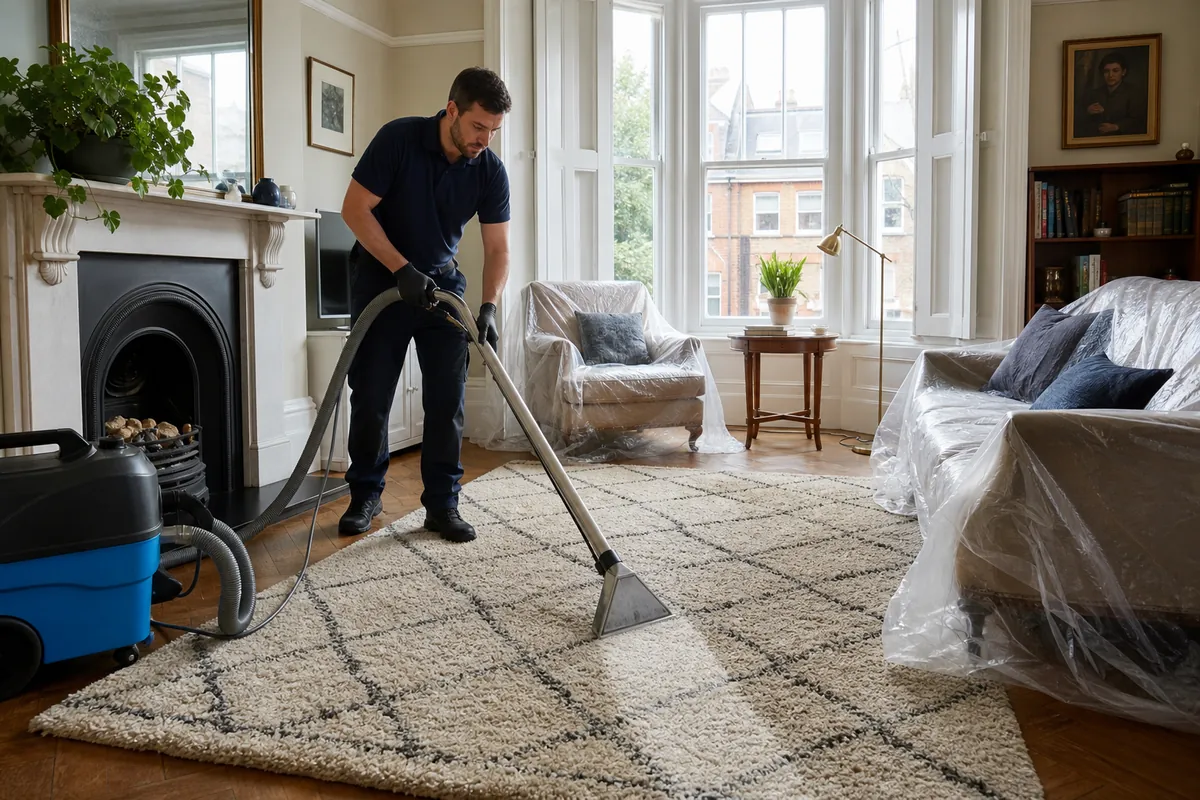
We clean suitable rugs in Chelsea using portable hot-water extraction equipment at your property. Our steam service starts with an assessment of the textile and your concerns, followed by preparation, selected stain attention and liquid recovery. We review the result with you and explain the drying needed after the machine work is complete.
Mobile service in Chelsea · Cleaning method agreed after inspection
A clean that addresses the whole rug and the areas you notice most
You may book because one patch looks wrong while the rest of the rug seems reasonably clean. We inspect that concern, but also look at the ordinary dirt across the surface and what is held within the pile. A useful service connects local treatment with general cleaning instead of treating the mark as a separate object. We explain the proposed work and its practical aim before starting, so you understand what the appointment covers.
Steam rug cleaning in our service means hot-water extraction. Liquid helps loosen dirt and portable equipment recovers it with the released material. We carry out the work at your address, leaving the rug to dry there afterwards. The material, colour response, construction and accessible area determine the approach. Preparation, local attention and recovery are organised into one sequence, followed by a final discussion of the finish. You receive an account of the improvement and any lasting difference rather than a promise that every visible change is removable.
Giving your main concern a clear place in the plan
We ask you to show us the areas that prompted your enquiry. A dark patch near a chair, a drink ring and a gradual loss of clarity across the design may each have different causes. We inspect them with the rest of the rug, considering both appearance and texture. This gives us a practical starting point for choosing preparation and local treatment. You do not need to identify the fibre or tell us which product to use before we can assess what may help.
We ask about anything already applied and any known incident or repair. The current patch may include residue from an earlier cleaning attempt as well as the original spill. We consider that information alongside what is present now, without assuming the history guarantees a particular response. The agreed priorities remain part of the overall scope and are revisited at the end. This gives the review a direct connection to your reason for booking while still recognising the wider soil removal included in the appointment.
Establishing suitability from the material itself
We examine fibres and accessible construction details, including backing, bindings and any fringe. Loose yarn, thin sections or old repairs can affect contact with tools even where most of the rug appears sound. We look at those variations before selecting the approach. The floor beneath and available working room are considered too. The textile is assessed in its present condition, because a pattern or a familiar material name does not establish how every detail will respond to handling and cleaning liquid.
Material and colour response are checked before larger treatment is agreed. We explain whether extraction is appropriate and any restriction that affects the work. If the rug cannot accept our process, we decline the proposed clean. Existing fading, fibre loss and lasting damage are separated from deposits, keeping expectations tied to useful cleaning. We can remove soil from the remaining yarn, but cannot replace missing pile or dye. Where work proceeds, you understand the suitability decision and the relevant limits before the wet stages begin.
What guides the proposed treatment
Point
Our assessment
Purpose
Material
Fibre and colour response
Confirm suitability
Structure
Edges, backing and repairs
Set handling limits
Condition
Wear and lasting damage
Realistic expectations
Concerns
Marks and general soil
Plan useful attention
Agreeing the reachable area and room arrangements
We discuss dimensions, photographs and the number of rugs while preparing the quotation. At your property, we confirm the accessible scope and any large furniture covering part of the item. Movement must be agreed before work starts. If a table or other piece remains, the concealed section is identified as a boundary rather than assumed to receive identical treatment to the open field. This gives the appointment a definite area and allows the cleaning route to be organised from the beginning.
We also discuss access for portable machinery, including stairs and relevant restrictions during booking. Practical space around the rug and the floor beneath are checked alongside the item. These arrangements support cleaning and the drying stage afterwards. You receive an explanation of the room setup and intended work before preparation begins, rather than important details being improvised once liquid is applied. If a particular schedule matters for the space, tell us during the enquiry so timing can be considered before the visit is confirmed.
Illustration of suitable attention to a deposit within a wider clean.
Clearing dry soil before treating attached marks
We vacuum the accessible rug with handling suited to the pile and condition. Fine grit can sit below the tips and collect where people repeatedly cross, while dust settles along margins beside furniture. Removing those particles first reduces debris in the wet stage and helps us see remaining deposits more accurately. Reachable edges are prepared as well as the centre, with care around loose strands or vulnerable binding so equipment does not catch a detail that needs limited contact.
We then reassess the surface and select suitable local attention. Product is applied where a useful deposit remains, allowed time to act and worked appropriately when needed. We watch the response rather than repeatedly rubbing an outline. Some residue releases while a lasting colour difference stays visible, and we explain that distinction. Local treatment prepares removable material for recovery without replacing the wider clean. The rest of the accessible rug remains part of the plan, so general dirt removal continues alongside the individual concerns that first attracted attention.
Applying solution as part of a controlled route
We organise the machine stage into sections suited to the rug’s shape, thickness and working room. Cleaning solution helps release soil attached around the fibres, with any action matched to the checked material. Borders and changes in depth receive consideration as the route progresses. Application stays linked to recovery so the treatment does not become liquid left across the whole surface while work moves elsewhere. We focus on useful release within the limits established by the inspection, not on producing the wettest possible appearance.
Hot water forms part of the extraction process, but heat is not a substitute for preparation or removal. We do not describe the service as vapour-only treatment or sterilisation. The dirt needs to separate from the yarn and then leave through the machine. Extra liquid is not automatically a better clean, so we observe the response and keep application tied to its purpose. The stages are connected in plain terms: remove loose particles, assist suitable marks, release remaining soil and recover it from the textile.
Illustration of the hot-water extraction stage.
Recovering the liquid carrying released dirt
Our portable extraction head draws cleaning liquid and loosened material into the recovery system. We guide it with suitable contact and inspect progress as sections are completed. Further appropriate recovery work helps reduce moisture left after cleaning. This stage is central to finishing the service, because deposits released by treatment need to leave the rug. We give removal considered attention over the accessible area rather than treating it as a brief last sweep after solution has been applied and the surface appears refreshed.
Narrow strips and edge details are handled within their construction and reach. We avoid pulling weak trim into place for convenience, and furniture boundaries stay as agreed. Where movement is included, it fits within the sequence; where an item remains, its concealed area stays identified in the scope. This makes the finished work understandable and gives any restricted handling a clear explanation. You can see how the machine route relates to the actual rug and why a fragile detail may not receive the same contact as its stronger central field.
Assessing the whole result after extraction
We inspect the surface in the room rather than judging only the path immediately behind the tool. Pile direction and lighting can alter apparent shade, so we consider those effects before deciding whether further work is useful. Where appropriate, we settle the yarn towards an orderly finish. We return to your original priorities and assess any patch that remains. Additional suitable attention is considered where it is likely to help, not repeated simply because an old mark has not become identical to the surrounding design.
We explain visible improvements and lasting differences in ordinary language. A stain may reduce while retaining a trace, and fading or wear can remain distinct after nearby dirt is removed. The rug is still damp, so its exact dry shade may differ from the current surface. We put those observations alongside the original checks and agreed scope. You receive a clear account of the completed clean and any limit that affected it before we discuss retained moisture and the practical next stage while the textile dries at your property.
The connected cleaning sequence
Stage
Our work
Next step
Preparation
Vacuum loose particles
Assess attached marks
Local treatment
Release suitable residue
Recover through extraction
Machine clean
Remove liquid and soil
Review the surface
Completion
Explain finish and moisture
Drying at home
Explaining the drying period before we finish
Extraction removes cleaning liquid but leaves some moisture in the rug. We discuss drying according to its depth, density and the conditions around it, including air movement and temperature. One guaranteed duration would not reflect the differences between textiles and rooms. The rug stays at your address, and our guidance follows the item we have cleaned and the environment we can observe. This helps you plan the period after the equipment stops rather than assume the surface is immediately ready for full everyday use.
We clarify relevant arrangements for furniture, coverings and activity over the damp textile. The instructions are specific to the item and layout agreed for the visit, making the next steps practical. At completion, we confirm the result and drying still required, leaving an opportunity to ask about any remaining mark or part of the work. You know what the appointment achieved, the condition in which the rug is being left and what still needs time as moisture continues to leave it in the room.
Steam Rug Cleaning price reference
Use these starting prices as a guide. Share the item size, condition and access details so the work and final quote can be confirmed.
Service
Published starting price
What is included
Timing
Carpet cleaning
From £25 per room
Inspect, pre-treat, clean
Room dependent
Rug cleaning
From £20 per rug
Inspect, assess spots, clean
Size dependent
Steam rug cleaning
From £25 per rug
Check suitability, extract
Varies
Oriental rug cleaning
From £35 per rug
Fibre, dye and condition checks
Varies
Luxury rug cleaning
From £40 per rug
Assess and select method
Varies
Mattress cleaning
From £30 per mattress
Inspect and clean fabric
Varies
Upholstery cleaning
From £12 per seat
Check fabric and clean
Varies
Sofa cleaning
From £35 per sofa
Assess fabric and clean
Varies
Arranging your Chelsea rug cleaning visit
We plan the appointment around the rug details and route for portable equipment. Mention stairs, parking restrictions and large furniture over the textile. The accessible scope and any movement are confirmed before the work, with drying explained as part of completing the service.
Local postcode districts: SW3, SW10. We confirm the visit against your full address.
We use hot-water extraction with portable machines at your property. Cleaning liquid helps release soil and is recovered with the loosened dirt. The rug requires drying afterwards.
Will a local stain receive attention during the wider clean?
We assess it and select suitable treatment within the agreed scope. The rest of the accessible rug receives preparation and extraction to address general soil as well.
Can all rugs be cleaned by extraction?
No. Material, dye response and construction are checked before agreeing treatment. We explain any restriction and decline the proposed process where the rug cannot accept it.
What happens where furniture covers the surface?
We agree any movement before work begins and identify the accessible boundary. A concealed section is not assumed to receive the same treatment as the open field.
Does cleaning reverse wear or fading?
It removes soil but does not replace missing yarn or dye. We distinguish those changes from deposits during the assessment and explain their appearance in the final review.
How do I request a Chelsea quotation?
Send photographs, dimensions and the concerns you want addressed. Include access and furniture details so we can discuss the proposed scope and a practical visit to your address.
Arrange steam cleaning for your rug
Contact us with photographs and dimensions for your Chelsea rug. We will discuss suitability checks, scope and a quotation for hot-water extraction at your property.