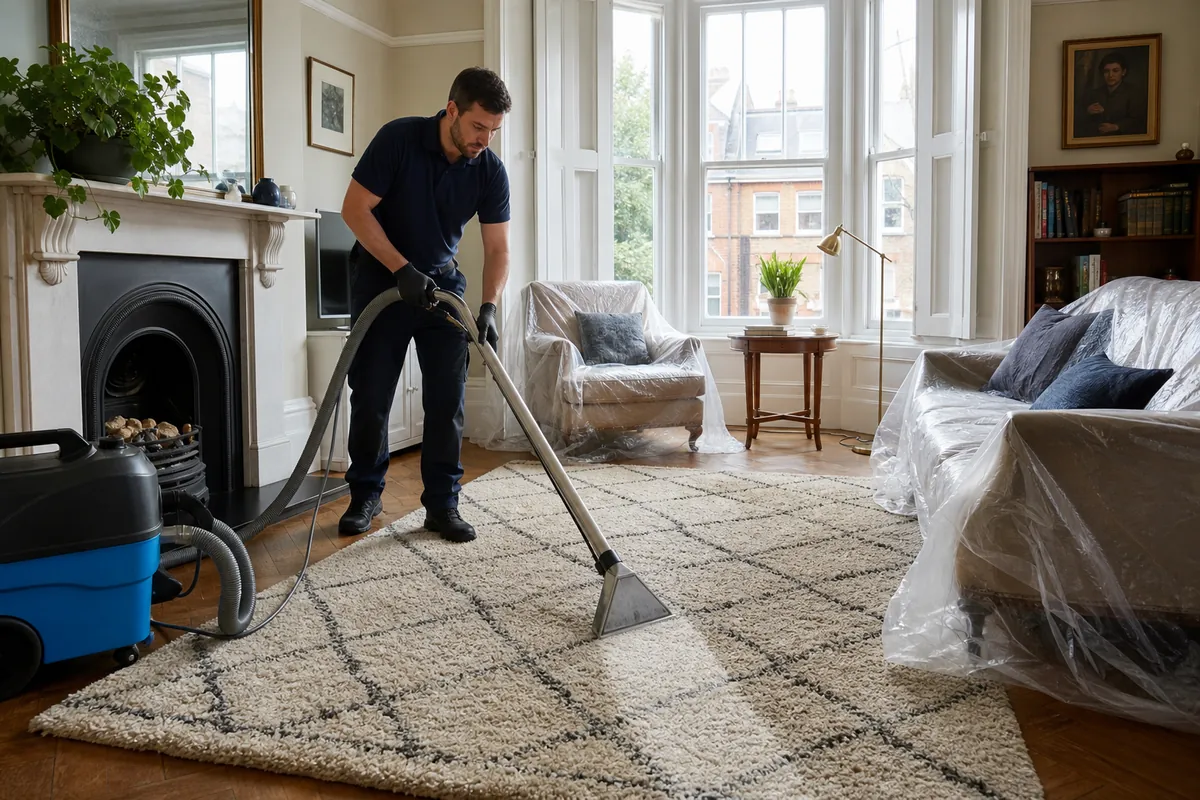
We bring portable hot-water extraction equipment to your Clapham property to clean suitable rugs on site. Dense pile receives assessment and preparation suited to its construction, followed by selected mark treatment and controlled extraction. Our cleaner manages solution application and recovery, reviews the result and explains the drying stage for the item in its room.
Mobile service in Clapham · Cleaning method agreed after inspection
Substantial pile still needs a considered cleaning approach
A deep or dense face can conceal dirt among the yarns and make the surface alone a poor guide to the whole rug. We assess what supports that pile as well as what you can see and feel. The fibres, backing or foundation, edge condition and repairs all help determine whether our extraction service is appropriate. You can describe general dullness, a local texture change or a spill; we connect those concerns with the material rather than assuming thickness explains the treatment needed.
Our steam cleaning is hot-water extraction carried out at your property. We prepare the suitable pile, use selected attention for marks and manage cleaning-solution application with suction recovery to remove released soil. We explain the realistic result and the need for drying before you agree. The aim is a useful clean through controlled work, not a claim that more liquid or stronger action will improve every substantial rug. We handle the process and give you a clear account of the work afterwards.
We establish what the rug contains beneath its surface
The assessment begins with the whole item and your cleaning priorities. We consider reliable fibre and care information, examine accessible supporting layers and look for changes in strength or construction. A dense pile can look robust while an edge, attachment or backing needs a more restricted approach. We take those details together when deciding whether extraction is suitable, with appropriate discreet checks helping us judge the material’s response. The cleaner explains any finding that affects the proposed work before treatment begins.
We also ask about earlier cleaning and products used at home. A section that feels stiff or different may include a deposit, previous application or a lasting fibre change, and the history helps us assess it sensibly. When the cause is uncertain, we do not ask you to choose a diagnosis. We inspect the current condition and explain what can be attempted within the textile’s limits. This keeps the quotation connected to an actual removal aim, rather than a vague promise to restore every change hidden in the pile.
The proposal distinguishes general soil from local concerns
A whole-rug photograph helps show the outline, pattern and location of the areas that matter most to you. We discuss dimensions and the wider improvement wanted, then identify any particular marks or changes in texture. A small deposit may need targeted work while the surrounding pile mainly benefits from preparation and extraction. We explain those roles together, so one stubborn patch does not become the only measure of whether the complete cleaning service is useful for your rug.
Where wear, colour loss or a damaged section limits the outcome, we describe that before you agree to the work. Cleaning can remove suitable contamination without rebuilding a changed fibre or replacing missing yarn. We also identify any portion that cannot be reached because furniture will remain over it. The proposed area and local priorities therefore remain understandable. You know what will receive treatment, which concern needs particular attention and where the existing textile or practical access may prevent the result you initially hoped for.
What informs a dense-pile cleaning plan
Detail
Our consideration
Practical purpose
Pile and fibre
Material and current strength
Select suitable working action
Supporting layers
Accessible construction and condition
Assess extraction compatibility
Local texture change
History and response
Explain achievable attention
Covered sections
Agreed furniture access
Define the cleaning area
We prepare the room for the complete machine task
We discuss the approach to the rug, including the property floor level, stairs or lift arrangements and any restriction on access. Portable equipment still needs a usable route and working space, which we establish before starting. Furniture movement is agreed, not assumed. We consider the rug’s current strength when deciding how its position can be approached, and account for the floor beneath it within the setup. The agreed surface needs to be available for preparation, local work and effective extraction recovery.
The arrangement must also work after the machine stops. We discuss where the rug can stay while drying and how normal use of the room will be affected. Furniture or coverings that usually rest against the pile may require a temporary change, and any important deadline is considered during booking. These practical details make the appointment easier to understand as a complete service. The cleaning position is not chosen solely for the first application; it needs to support the removal work and the drying stage that follows in your home.
Illustrative cleaning of suitable deep rug pile at home.
We work through suitable particle preparation first
Vacuum preparation removes accessible dry material before the selected wet-treatment stages. In a dense pile, loose dirt can be held among the yarns rather than appearing as a simple surface layer. We work with the structure and condition, using action suited to the textile and care at vulnerable details. This preparation is deliberate. It reduces the particles present when cleaning solution is introduced and gives the subsequent removal stage a more appropriate starting point across the agreed rug area.
We watch how the pile responds during that work and what becomes clearer as loose dirt is removed. A local deposit may remain, while some general dullness may already lessen. We use those observations to guide the next stage rather than repeatedly increasing brush force because the textile is thick. Preparation is intended to clear suitable particles, not to prove that every texture difference can be mechanically corrected. The cleaner keeps the working purpose connected to the assessment and recognises when a remaining feature requires a different expectation.
Local deposits receive selected attention within the material limits
We assess particular marks with their known spill and product history. Where appropriate, targeted treatment helps loosen a deposit before the broader extraction stage. The application and working action are chosen for the affected fibre and condition, with the response observed as we proceed. A patch within deep pile may require careful attention, but its position does not justify saturating the area or treating uncertain resistance as a reason to repeat an action indefinitely.
We explain when a remaining texture or colour difference appears to be a lasting change rather than material that can usefully be removed. The cleaner may reach a sensible limit on local attention even while wider cleaning remains worthwhile. This is particularly important when the original request combines general dirt with one persistent concern. You receive an honest account of the response, including the improvement achieved and the reason for stopping further work where additional application would not offer a reasonable benefit for the rug.
Illustrative controlled machine application and recovery.
Extraction application is matched by close recovery attention
For a suitable item, our portable machine applies cleaning solution and draws used moisture back with released soil. Steam cleaning is the familiar name for this hot-water extraction service; the work is not based on a promise of vapour sterilisation. We manage the coverage across the pile and observe the material’s response. The cleaner controls the working progression rather than assuming that a thick rug should receive the greatest possible heat, force or quantity of liquid.
Recovery is a central part of the machine work, particularly where the pile holds moisture. We watch the response and make appropriate recovery passes where useful, coordinating removal with what has been applied. Leaving more solution behind is not evidence of a better clean. After extraction, the rug will still need to dry, including components that cannot be judged merely by touching the tips of the yarns. We explain that distinction clearly and relate the next arrangements to the actual item and room rather than a universal finishing time.
We review the treated pile and the original priorities
The completion check considers both the wider accessible surface and the concerns raised at the start. Where suitable, pile finishing helps settle the yarns for a more consistent view. We explain observed soil removal, local treatment response and any continuing appearance or texture difference. A damp rug can look different from its later dry state, so the review recognises the stage the textile has reached instead of claiming that the immediate view settles every question about its final appearance.
We also keep practical exclusions and existing damage clear. A covered portion has not received the same cleaning as the accessible area, and an old weak section has not been structurally repaired by extraction. The discussion explains what our work did achieve and what remains because of condition or access. That gives you a useful account to retain, especially if your main concern was a particular patch within otherwise substantial pile. You are not left to infer the result from the cleaner’s equipment being packed away.
Removal and the stage afterwards
Stage
Company action
What it establishes
Preparation
Remove suitable loose particles
A prepared pile
Local treatment
Address assessed deposits
Useful response within limits
Machine recovery
Draw back moisture with released soil
Removal before drying
Final discussion
Review concerns and room arrangements
Clear result and contact guidance
The rug dries at home under the arrangements discussed
Our drying explanation takes account of construction, retained moisture and available air movement around the agreed position. We discuss when normal contact with furniture and coverings can resume and any temporary restriction relevant to the room. The tips of a dense pile may not tell the whole story about moisture elsewhere in the textile. We therefore avoid a fixed readiness promise made from appearance alone and explain the practical stage that remains after the machine has completed its removal work.
For a Clapham enquiry, provide approximate measurements, current whole-item photographs and a description of the improvement wanted. Accessible care information and a close view of a particular concern are useful, with any known previous applications. Tell us about access and the usual room arrangement so we can prepare a relevant quotation and appointment. We confirm the extraction plan through direct inspection, carry out the agreed cleaning and finish with a review and drying guidance tied to this rug, keeping the complete service clear from the first discussion onwards.
Steam Rug Cleaning price reference
Use these starting prices as a guide. Share the item size, condition and access details so the work and final quote can be confirmed.
Service
Published starting price
What is included
Timing
Carpet cleaning
From £25 per room
Inspect, pre-treat, clean
Room dependent
Rug cleaning
From £20 per rug
Inspect, assess spots, clean
Size dependent
Steam rug cleaning
From £25 per rug
Check suitability, extract
Varies
Oriental rug cleaning
From £35 per rug
Fibre, dye and condition checks
Varies
Luxury rug cleaning
From £40 per rug
Assess and select method
Varies
Mattress cleaning
From £30 per mattress
Inspect and clean fabric
Varies
Upholstery cleaning
From £12 per seat
Check fabric and clean
Varies
Sofa cleaning
From £35 per sofa
Assess fabric and clean
Varies
Plan a Clapham extraction appointment
Send the rug size and tell us how portable equipment will reach its room. Include stairs, lift details and any furniture restriction. We discuss the cleaning concerns and quotation, then confirm suitability and the working area before treatment at your property.
Local postcode districts: SW4. We confirm the visit against your full address.
Is a dense rug automatically suitable for steam cleaning?
No. We consider fibres, supporting construction, colour response and present condition. A substantial face does not establish the requirements of every layer, so suitability is assessed before extraction is agreed.
What does your steam service involve?
It is portable hot-water extraction at your property. We prepare suitable pile, give selected marks attention, apply cleaning solution and recover used moisture with released soil. The rug then needs to dry at home.
Why ask about previous products in one stiff patch?
Earlier applications can affect the current texture and treatment response. Knowing what was used helps us assess that area without assuming its present condition comes solely from the original spill or ordinary soil.
Does stronger working always clean deeper pile better?
No. The action must remain suitable for the material and condition. We prepare and treat with control, using the textile’s response to judge useful work rather than making force the measure of thoroughness.
Will the surface feel prove that drying is finished?
The pile tips alone may not represent every supporting component. We explain the relevant drying and contact arrangements for your rug and room rather than treating a quick surface touch as a universal readiness test.
Can you clean only the area exposed around furniture?
We discuss the reachable scope and any practical movement before booking. Portions that remain covered are identified clearly, and the quotation reflects the area agreed for the complete preparation and extraction process.
Discuss your rug and its condition
Send an overall image, approximate dimensions and the concerns you want us to address. We will explain assessment, on-site extraction and the practical arrangements needed for a relevant quotation.