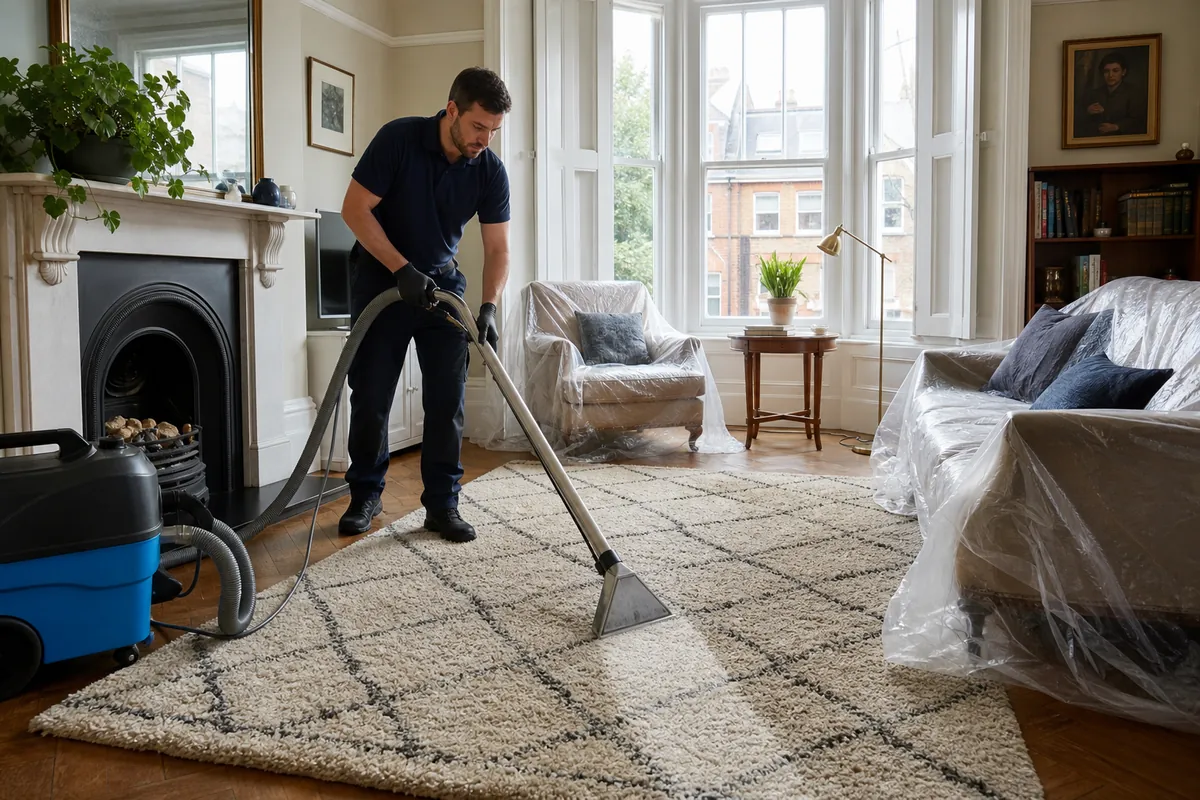
We provide steam rug cleaning in Holborn through on-site hot-water machine extraction. We explain the proposed work for the actual rug before agreeing the charge, including suitability and practical access. Vacuum preparation and appropriate local attention support application and collection, followed by a result review and drying guidance for the item and room.
Mobile service in Holborn · Cleaning method agreed after inspection
A cleaning proposal that is easy to understand and act on
We make the request specific to the rug, the accessible area and the concerns you want assessed. This helps the appointment remain clear when arrangements are shared with another person at the property. The actual construction and response are inspected before treatment, and the purpose of preparation, local attention and recovery is explained. You do not need to relay a technical diagnosis or choose machine settings to give us a useful account of the work wanted.
Our service is hot-water machine extraction, often called steam rug cleaning. Portable equipment comes to your Holborn address and the item remains there throughout the appointment and drying. We agree any furniture movement, prepare suitable loose dirt and coordinate application with collection of released contamination and used liquid. The method introduces moisture. The closing discussion returns to the priorities and wider response, explaining lasting condition differences and normal room use for the actual textile rather than a universal result or timing promise attached only to the familiar cleaning name.
Turning the cleaning aim into a definite request
We begin with the rug and the improvement you want considered. A photograph of the complete item and approximate dimensions help describe it, while close views can show particular concerns. Available care details, incidents and previous products add context. We keep uncertainty clear rather than replace missing information with a guessed fibre or stain cause. These observations prepare a physical assessment without requiring the customer or person present to choose technical treatment instructions before the material and condition are inspected at the property.
The proposal identifies the accessible surface and any other rugs wanted. Full item size is considered separately from sections covered by furniture, with movement discussed rather than assumed. This gives the initial quotation practical boundaries and an understandable set of priorities. Inspection then confirms suitability, the included work and charge before application. The appointment concerns actual agreed surfaces and concerns, not a vague property refresh or an unrestricted promise about every difference shown in a close photograph or described second-hand before the visit.
Checking the actual material before extraction
We examine pile, accessible backing, edges and finishing details, noting repairs, weakness and wear. Relevant material and colour response checks help determine suitability and appropriate handling. Available labels assist, but the present item remains central to the decision. Findings are explained through their practical effect on the proposed clean, so a delicate border or unstable response is not left as technical terminology with no connection to the work. One stable-looking central area does not replace assessment of other features that may have a different condition or response.
Before the wet stage we discuss the differences that belong to the textile itself. Missing pile, faded colour or damaged fibres can influence the finish without being remaining dirt. We point these out so the cleaning aim is realistic. A material or construction finding can also rule out extraction, in which case we explain that limit or decline treatment. Where the item is suitable, the proposal concerns soil and assessed marks within its current condition, rather than a promise to rebuild worn sections or make every protected and busy area identical through further liquid application.
What makes the cleaning proposal clear
Point
Our assessment
Purpose
Item identity
Whole rug and own concerns
Recognisable request
Construction
Pile, backing and features
Extraction suitability
Response
Relevant material and dye checks
Compatible treatment
Access
Furniture and entry arrangement
Practical scope
Preparing the surface and the working space
Suitable vacuum preparation recovers accessible dust, grit and debris before wet application. Handling follows the actual pile and is adapted around vulnerable ends or edges found at inspection. Taking out particles first supports the main clean and helps reveal concerns remaining in the fibres. The prepared surface follows the accessible scope requested rather than only one visible stain or a convenient open centre. This gives preparation a practical purpose within extraction, with machine collection and subsequent drying still included rather than an assumption that surface tidiness completes the whole service.
We establish a usable room layout alongside the textile preparation, considering the floor beneath the rug, machine position and hose route. Furniture movement is agreed before it happens. Where items stay in place, covered boundaries are identified so the quotation relates to surfaces actually available. This allows a sensible working sequence and keeps access to a hidden corner or delicate edge from becoming an unresolved scope question halfway through application. The practical plan supports the material decisions rather than avoidable room arrangements interrupting the cleaning once portable equipment is already operating inside.
Illustration of extraction organised at the customer’s property.
Giving particular concerns suitable local attention
A mark is examined against its surrounding fibres and checked colour response, using known incident details and products already applied where available. Uncertainty about a cause stays clear rather than being assigned from appearance alone. Suitable treatment aims to release removable contamination compatible with the item. We explain how it fits into the wider clean and likely limits where permanent dye or fibre change is involved. This makes focused attention purposeful without expecting the person arranging access to prescribe a product or treating every visible patch as the same substance or material.
The response is observed during treatment and appropriate extraction recovery completes the local sequence. We collect released material instead of leave a product isolated in the pile. Additional attention is considered for usefulness and compatibility rather than repeated automatically because a difference remains. If a stain has permanently changed the fibre, we explain why it can persist after residue is addressed. Partial improvement is discussed plainly in the final review, keeping the original concern within the account alongside broader soil removal without attaching an unconditional complete-removal guarantee to the appointment.
Working hot-water extraction through the agreed sections
For a suitable rug, the portable machine applies the selected process and returns used liquid containing dirt released from the pile. We organise a route through the accessible area and coordinate application with collection in manageable sections. Operating choices follow the actual construction and condition, including suitable handling near borders. Reachable areas beside furniture remain part of the agreed sequence. We explain the equipment’s role for your item while retaining responsibility for technical settings and treatment decisions rather than asking the customer to specify unfamiliar operating details during the visit.
The process adds moisture and requires drying at the property afterwards. We monitor the response while work proceeds rather than assume heavier wetting improves every dark section. Wear and fading are physical changes, not repairs accomplished with extra liquid, so the distinction between contamination and condition remains useful during cleaning. The familiar steam-cleaning term describes hot-water extraction and does not imply vapour sterilisation. The actual material findings stay central throughout, giving the machine sequence a practical basis in the current rug instead of a promise attached only to its appearance or service label.
Illustration of suitable on-site hot-water extraction and recovery.
Recovering soil and explaining what remains
Collection actively removes suitable contamination released during cleaning with the used solution. We evaluate recovery while progressing and make appropriate additional passes where needed to reduce moisture remaining within the textile. Application alone does not complete the service. The purpose is to recover dirt through the equipment rather than leave it in the pile while the rug dries. We track the accessible scope, including quieter reachable ends and borders, keeping the sequence related to the full area requested rather than let a convenient central pass stand for the entire item.
We look at the relationship between the way the rug has been used and the condition visible after contamination is removed. Protected areas and busy routes can differ physically as well as in dirt levels. Suitable attention follows the soil present without unnecessary repetition everywhere. Compression, fading or missing fibres may still affect the finish, which we explain as condition rather than every contrast being called a persistent stain. This gives the actual result a realistic basis and helps avoid extra application simply to chase a physical difference that a cleaning process cannot recreate or rebuild.
Reviewing completion against the initial priorities
Our final account follows the concerns and surface agreed before treatment. We describe local responses and wider appearance after extraction, with suitable pile finishing where appropriate. Accessible details noted at inspection remain in that review. A persistent issue is explained against the actual findings rather than left outside the discussion. We confirm boundaries where furniture stayed in position so completion relates to the area included, giving useful information about work performed on the rug instead of only saying the machinery has finished or offering a broad statement about every textile at the property.
After extraction the rug remains in the Holborn property for drying. We explain how its construction and thickness combine with the room conditions and the moisture still present, including relevant arrangements for air movement and furniture. Where a visual detail is better assessed once the fibres settle dry, we identify it. Normal use is discussed for that particular item and setting instead of one timetable for every service request. The remaining stage is therefore understood as part of the agreed moisture-bearing clean rather than an unexplained interval after the machine work ends.
The actual on-site sequence
Stage
Our work
What is clarified
Preparation
Suitable vacuuming
Starting condition
Local attention
Treat assessed concerns
Response limits
Recovery
Collect dirt and used liquid
Active removal
Completion
Review result and drying
Normal room use
Settling the quotation and practical attendance details
The proposed charge is prepared for the requested rugs and concerns, using photographs, approximate measurements and available care information as a starting point. Physical assessment confirms suitability and any necessary scope change before application. We explain the included work clearly enough to consider on definite terms. Additional fitted carpet areas have their own description where requested, keeping a general price from depending on unresolved assumptions about local attention, furniture movement or reachable surfaces once treatment has begun. The actual extraction service and drying requirement are understood before agreement rather than inferred later from the cleaning name.
We plan the equipment journey before attending, checking entry instructions and parking with floor level and access by stairs or lift where needed. The requested rug and concerns should be recognisable to the person providing entry rather than guessed from an unmentioned room or unrelated close photograph. Multiple items can have a workable order while retaining individual material decisions. We explain spaces affected by cleaning and drying and arrange movement explicitly, letting the appointment focus on the textile and result with practical boundaries understood before portable machinery is brought into the working room.
Steam Rug Cleaning price reference
Use these starting prices as a guide. Share the item size, condition and access details so the work and final quote can be confirmed.
Service
Published starting price
What is included
Timing
Carpet cleaning
From £25 per room
Inspect, pre-treat, clean
Room dependent
Rug cleaning
From £20 per rug
Inspect, assess spots, clean
Size dependent
Steam rug cleaning
From £25 per rug
Check suitability, extract
Varies
Oriental rug cleaning
From £35 per rug
Fibre, dye and condition checks
Varies
Luxury rug cleaning
From £40 per rug
Assess and select method
Varies
Mattress cleaning
From £30 per mattress
Inspect and clean fabric
Varies
Upholstery cleaning
From £12 per seat
Check fabric and clean
Varies
Sofa cleaning
From £35 per sofa
Assess fabric and clean
Varies
Arranging steam rug cleaning in Holborn
We confirm requested items and practical equipment access before attendance. Entry and floor-level arrangements are discussed with the route to the room. These details support an organised visit connected to an identifiable rug request, actual material assessment and the hot-water extraction scope agreed for your property.
Local postcode districts: WC1V, WC2A. We confirm the visit against your full address.
Our service is on-site hot-water machine extraction. Suitable application releases contamination and the equipment collects dirt with used liquid. It introduces moisture and requires drying afterwards, with the actual method explained before agreement rather than a promise of vapour sterilisation or identical treatment for every material.
Can the proposed work be made clear for another person present?
We identify the rug, accessible area and concerns in understandable terms, with practical arrangements discussed before attendance. The person providing entry should be able to recognise the requested item rather than choose technical treatment or guess an unmentioned room from a general property description.
Can extraction be unsuitable?
Yes. Unstable response or weakened construction may limit or prevent treatment. We explain the restriction or decline the proposed work before starting, keeping the service based on the actual current item rather than an assumption from appearance, a label or the suitability of another textile.
Can particular marks be included with a full clean?
We define the requested scope and assess concerns alongside general dirt. Suitable attention is selected within the plan, with realistic limits where permanent colour or fibre change affects the response. The original concern is revisited clearly with the wider result at completion.
Where does the rug stay in Holborn?
At your property throughout the work and drying. Portable equipment is brought to the address and the agreed service is performed there, with access and furniture arrangements discussed before treatment so the practical surface and sequence are clearly defined.
How is normal use explained afterwards?
We consider fibre, thickness, indoor conditions and moisture remaining after recovery. Drying and relevant furniture positioning are discussed for the actual rug, with any appearance needing another review once dry connected clearly to the work performed.
Discuss steam rug cleaning in Holborn
Share a whole-rug photograph, approximate size and the concerns you want assessed. We will explain suitable on-site hot-water extraction and prepare a proposal with the actual scope and quotation confirmed before application.