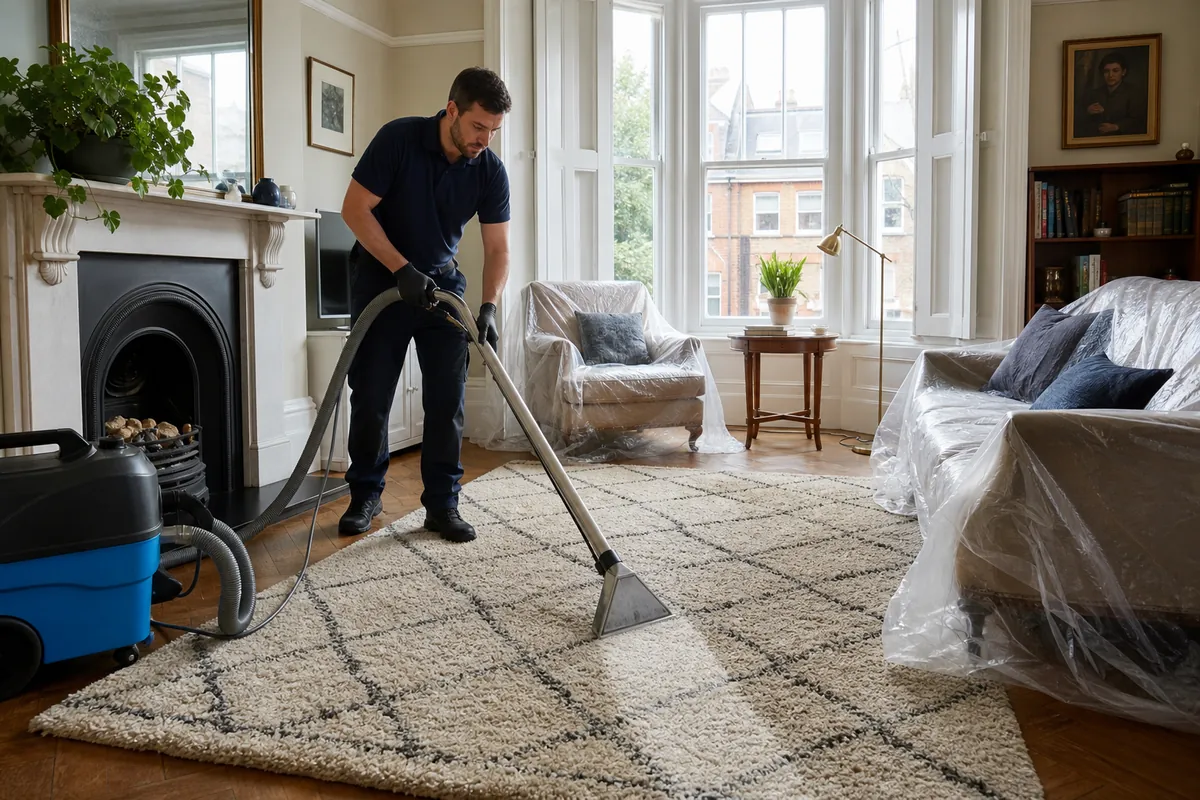
We clean rugs at Marylebone properties using portable hot-water extraction machines. A spill receives focused attention within the wider clean, with the material checked before preparation, suitable treatment and recovery. Our steam rug cleaning service uses moisture, and we explain the result and relevant room conditions while the rug dries at home afterwards.
Mobile service in Marylebone · Cleaning method agreed after inspection
The mark gets attention, and the rest of the rug gets cleaned
A spill often brings a rug to your attention, but the surrounding pile may also hold ordinary soil from everyday use. We consider both when arranging the job at your Marylebone property. The work takes place there with portable machines. Our steam rug cleaning service is hot-water extraction: selected solution helps loosen dirt from the fibres and the machine collects it with the used liquid. The rug then continues drying at home.
We start the quotation discussion with approximate measurements, a full photograph and the concerns you want addressed. Known incidents and earlier products help us prepare. Furniture movement and access are agreed before the appointment so the included area is clear. At the visit, inspection informs the work, from vacuum preparation and local treatment to the main clean and recovery. We return to the priority mark at completion and explain how it responded alongside the overall result, leaving practical information for the actual room before ordinary use resumes.
We look at the rug with the cleaning priorities in mind
We identify the particular mark and assess the general surface around it. The pile, backing, edges and visible repairs are examined before products or tool action are chosen. Relevant colour checks help inform the decision where appropriate. We explain what the findings mean for extraction in straightforward terms, giving the work a practical basis in the actual item. Known material information can help, but the current textile and its strength remain central to the assessment at the property.
The intended improvement is discussed before treatment. Soil can be removed from a worn area while abrasion or faded colour still affects its appearance. Delicate or weakened rugs may be unsuitable for extraction, which we explain before agreeing the work. For suitable items, the inspection gives local attention and the wider clean a shared aim. You know what we are working on and why some existing differences may remain, with the final review referring back to the same condition and priorities.
Vacuum preparation removes loose dirt before the solution stage
We take accessible dust, grit and debris out of the pile with suitable vacuum action. The handling is chosen for the fibres and construction, including care around fringes and vulnerable edges. Loose material can be present across the design even where there is no obvious dark patch, so preparation covers the agreed accessible area. This early removal reduces what would otherwise become mixed with cleaning solution and gives the later products a better surface on which to work.
As the pile clears, the remaining deposits become easier to see. A food spot may need selected local treatment, while a flattened section may continue to look different because of its fibres. We use those observations to choose useful further attention. Preparation is a practical first job within the clean: it removes loose matter, supports the following product work and helps us separate everyday dirt from changes that belong to the rug’s current condition. The machine stages then address soil still attached to the accessible pile.
What the assessment brings together
Detail
Our check
What it guides
Whole item
Pile, backing and current strength
Extraction suitability
Particular mark
Deposit and known earlier products
Selected local treatment
General surface
Loose and attached soil
Preparation and wider cleaning
Furniture arrangement
Agreed movement and reachable sections
Clear coverage
The particular spill receives its own treatment decision
We ask what happened and which products have already been used, where that history is known. The affected fibres are checked against the material findings before a suitable local product is selected. We apply it in a controlled way, allow relevant working time and use appropriate action where the rug permits. The nearby colours and pile remain part of the decision. The mark’s position is identified clearly enough to check again after the broader extraction has been completed.
We explain the likely result for that patch. A spill may leave removable material and a permanent colour change together, while earlier applications can affect the response. Complete disappearance is not guaranteed. Suitable local work still has a useful purpose where a deposit can be released and recovered. It stays connected with the wider clean, giving the rest of the accessible rug its preparation, solution and removal stages as well. This lets the final account explain both the focused attention and general soil removal performed.
Illustrative image of focused attention before extraction.
The main clean loosens dirt across the agreed rug area
Once suitability is established, we introduce selected solution to help detach soil from the fibres. Application is managed around the pile, backing and current strength, including repaired details. Moisture is part of this hot-water extraction process and drying follows afterwards. We explain the method before work, giving the solution stage a clear purpose in release and removal. The amount and distribution follow the actual textile and the treatment chosen, with the working area already agreed before wet cleaning begins.
Focused products and the broader application attend to different needs within one job. The specific deposit has its selected work while ordinary attached soil across the rug is prepared for recovery. We manage coverage around its shape and accessible sections, keeping the inspection findings in view. This lets the following action and extraction do useful jobs on dirt already prepared for release, giving the service a practical sequence from loose-particle removal through to collecting used liquid and soil away from the pile.
Working the product helps it reach the soil
Where suitable, controlled action supports the selected solution and relevant contact time is allowed. We adapt handling across the rug, accounting for edges, joins and weaker details. The action serves the cleaning aim identified during inspection and prepares material for removal. This gives different parts of the construction appropriate attention within the same service, keeping the mark and wider surface connected instead of treating every visible patch as an unrelated job with no wider removal plan.
We observe the pile while work progresses. Its direction can change shade, and existing wear may continue to influence an area even after dirt has been loosened. Those observations guide whether more attention is useful. The completion explanation can then relate the appearance to the actual work and starting condition. The process is understandable as suitable release followed by recovery, with each decision grounded in the rug’s present materials rather than one fixed intensity applied to all details.
Illustrative image of on-site hot-water extraction.
The extraction tool takes the released dirt away
We make managed passes across the included area to collect used solution and loosened soil. Coverage and overlap are considered around the rug’s shape, with portable equipment performing the work in the property. Recovery completes the purpose of vacuum preparation, local products and the main clean. It takes material out after suitable release, connecting the earlier tasks as one removal service. The room setup is already understood, allowing the machine work to follow the area agreed before solution was introduced.
Where appropriate, further recovery passes collect more moisture without another solution application. We check the response and explain remaining observations against the initial assessment. The machine work finishes while drying continues at home. We make that transition clear so the person managing the space understands what has been removed and which conditions matter next. Useful improvement, existing wear and the period before ordinary traffic and furniture pressure return are described together when the on-site clean is complete.
The final check returns to the original concern
We revisit the priority mark and inspect the broader cleaned surface, carrying out suitable pile finishing where appropriate. We describe the local response alongside general improvement and identify any remaining limits. Dampness and pile direction can influence the immediate view, so the review gives context while the textile progresses towards its dry condition. The account stays specific to the actual item and work performed, helping the household understand the result beyond one quick impression of the wet surface.
The person present receives practical information about the included area and next steps. If the appointment was arranged for somebody else, they have a clear account for restoring the room. After drying, a question can identify the relevant location and observation against the treatment already discussed. This keeps the result useful after the equipment is packed away, distinguishing dirt removal from sections still affected by abrasion, changed dye or compressed fibres and giving context for the dry appearance of the rug.
From preparation to the final review
Stage
Our work
Purpose
Preparation
Vacuum accessible particles
Removes loose dirt
Treatment
Selected solution and suitable action
Loosens attached soil
Recovery
Collect used liquid and released material
Completes removal
Review
Explain response and room conditions
Clarifies drying and use
The appointment includes the room and drying arrangements
We discuss equipment access when booking, including parking and any stairs or lift. Furniture movement and responsibilities are agreed, with remaining covered sections identified as inaccessible. Before wet work, we inspect the supporting floor and consider suitable protection for nearby finishes. These arrangements make the quotation reflect the area we can actually reach and let portable extraction follow an orderly sequence within the property, with the textile and its setting understood together before treatment.
At completion, we explain relevant ventilation, traffic and furniture contact while drying continues. Construction, treatment and airflow affect timing, so the information fits the actual room and rug. Other items or fitted carpet can be listed in the request, with each assessed separately and a practical order agreed. The closing discussion links useful work completed with remaining observations and immediate needs of the space, giving the household clear next steps before normal use of the treated area resumes.
Steam Rug Cleaning price reference
Use these starting prices as a guide. Share the item size, condition and access details so the work and final quote can be confirmed.
Service
Published starting price
What is included
Timing
Carpet cleaning
From £25 per room
Inspect, pre-treat, clean
Room dependent
Rug cleaning
From £20 per rug
Inspect, assess spots, clean
Size dependent
Steam rug cleaning
From £25 per rug
Check suitability, extract
Varies
Oriental rug cleaning
From £35 per rug
Fibre, dye and condition checks
Varies
Luxury rug cleaning
From £40 per rug
Assess and select method
Varies
Mattress cleaning
From £30 per mattress
Inspect and clean fabric
Varies
Upholstery cleaning
From £12 per seat
Check fabric and clean
Varies
Sofa cleaning
From £35 per sofa
Assess fabric and clean
Varies
Arranging steam rug cleaning in Marylebone
We confirm the item, address and route for equipment before the visit. Photographs and furniture details help us organise suitable extraction with practical access understood.
Local postcode districts: W1G, W1H, W1U, NW1. We confirm the visit against your full address.
It is on-site hot-water machine extraction. Selected solution helps loosen dirt and the machine collects it with used liquid. The rug then continues drying at the property.
Will a particular spill receive attention?
We assess suitable local treatment within the agreed area and discuss any known incident or earlier product use. That attention is connected with cleaning the wider rug and recovering released soil.
Do you work at Marylebone properties?
Yes. Portable equipment comes to your address and the agreed assessment, preparation, treatment and extraction are completed there, followed by a review and practical drying information.
Is every rug suitable for extraction?
No. Fibres, backing, relevant colour response and current condition guide suitability. We explain any restriction before work is agreed, keeping treatment based on the actual item.
Can every stain be removed completely?
Earlier products or permanent changes to dye and fibres can limit improvement. We select suitable attention and explain realistic expectations for the concern rather than guarantee complete removal.
When can furniture go back on the rug?
We explain relevant drying and contact conditions after treatment. The construction, process and available airflow affect timing, so the information fits the actual textile and room.
Discuss extraction for your Marylebone rug
Send photographs, approximate size and the concerns needing attention. We will discuss suitability, practical access and a quotation for on-site hot-water extraction.