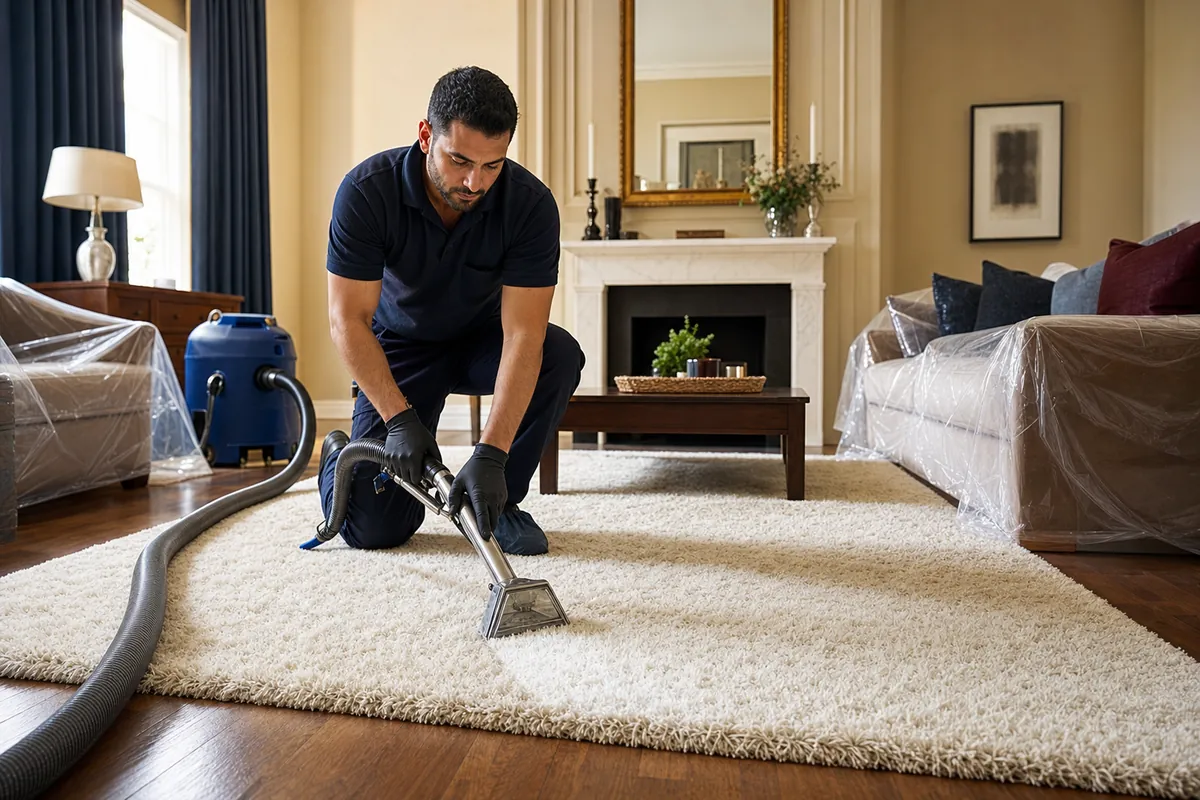
Our steam rug cleaning in Muswell Hill is on-site hot-water extraction with portable equipment. We assess the textile and plan the work around the actual room arrangement. Suitable preparation and local attention support controlled removal of released soil and used solution, followed by a finish review and drying information before furniture or normal traffic resumes.
Mobile service in Muswell Hill · Cleaning method agreed after inspection
The rug’s clean and the room’s rearrangement are considered together
If furniture is moving or a room layout is changing, we establish where the rug can be reached and remain while drying. The appointment is planned around that actual setting. Fibres, colours, supporting construction and current strength still determine whether extraction is appropriate. We explain the suitable scope and practical interruption before treatment, so the cleaning aim and room arrangement are understood as parts of the same service.
We arrive with the equipment for the agreed job and talk through the order of work with you. The rug is cleaned in the room: first we remove dry debris, then deal with suitable deposits before extracting the remaining dirt. You can see how the surface responds as the visit progresses. Before leaving, we show you the finish and explain the moisture still in the textile. If furniture is being repositioned, we relate that explanation to the next layout so the cleaned rug is not covered or put under pressure too soon.
We assess the current rug before confirming extraction
The inspection considers fibres, relevant colour response, pile, backing information and accessible edges. Present strength, known repairs and reliable care details inform suitable handling and product selection. Earlier treatment is discussed where available. These findings establish the appropriate extraction decision. Any limitation affecting the proposed work is explained before agreement, with unsuitable treatment declined where the actual material or condition prevents appropriate cleaning. The plan follows the textile itself alongside the practical room changes being discussed.
We locate the concerns and establish the broader improvement wanted. General soil, a local spill and a worn area can involve different causes. Removable contamination may sit beside permanent colour or physical change. We identify relevant examples and explain the cleaning aim against that starting condition. This gives the later review a realistic basis. The service concerns suitable removal within the accessible item, with lasting changes recognised where they may continue to influence appearance after the included surface has received appropriate treatment.
Furniture movement and drying space are agreed first
Before anything is shifted, we look at the furniture that currently rests on the rug and ask what you intend to change. We agree which pieces can move as part of this appointment and point out any textile that will remain out of reach. The room also needs a place for us to operate the portable equipment. We settle these details with you at the beginning, including where the rug will stay afterwards, so access for cleaning and space for drying are planned together.
Our first cleaning work removes dry dirt from the pile with an appropriate vacuum approach. We pay attention to the paths people use and the quieter margins, where dust can be less obvious against the design. A repaired edge or loose yarn changes the way we handle that part. As the debris comes away, we can see the marks more clearly and decide which need local attention. This is a useful removal stage, not simply a quick sweep before the main machine is brought into use.
What establishes the appointment plan
Detail
Our assessment
Practical effect
Textile material
Fibres and colour response
Compatible extraction
Current condition
Backing, edges and repairs
Suitable handling
Furniture arrangement
Movement and covered sections
Reachable scope
Planned room change
Position and available drying space
Practical timing discussion
Appropriate deposits receive selected local treatment
Known spill details and earlier products are considered where useful, alongside the affected fibres and colours. We choose compatible attention for suitable deposits and apply it with controlled working time and measured action. The response is observed and released residue recovered where appropriate. Further treatment follows the actual effect and present construction. A mark near a binding, fringe or weak area remains subject to those limits, keeping local handling suitable throughout instead of allowing one persistent shade to dictate intensity.
Some residues partly release while permanent fibre or colour change stays visible. We explain the improvement achieved and identify that distinction where relevant. Broader extraction also addresses appropriate general dirt within the agreement. At completion, local and wider responses are discussed together, giving you a practical account of the concern raised and the work across the rest of the accessible textile. The outcome remains connected to the starting condition rather than an assumption that all differences will disappear when the room is rearranged around the cleaned rug.
Illustrative image: local treatment follows the material assessment.
Hot-water extraction releases and recovers attached soil
Hot-water extraction combines a liquid treatment with removal through the machine. We introduce the cleaning solution in an area we can work and recover properly, allowing it to help separate dirt from the fibres. The movement used to assist that release depends on the rug we have checked. We then guide the extraction head over the section, drawing the liquid into the recovery system. The rug stays at your property throughout, and the route is organised around the accessible shape rather than one broad central pass.
We watch the rug as the clean develops. A heavily used strip may release more dirt than an area usually sheltered by a chair, but a difference in shade can also come from the way yarn lies or from wear. We check which explanation fits before deciding on extra work. That keeps the treatment purposeful. The machine stage is followed by a review and a drying discussion, so you receive an account of both the soil removed and the condition in which the room will be left.
Recovery concludes the active machine removal
Once the solution has helped the dirt release, recovery takes that material out of the rug. We make considered passes with the extraction tool and check whether further suitable recovery would be beneficial. An additional pass can remove more liquid without another application. We give this part of the visit attention because a treated surface is not yet a completed clean if the released material remains in the pile. When the equipment has finished, the textile is cleaner but still holds moisture that must dry in the room.
We make the change from cleaning to drying explicit. The machinery has finished recovering liquid; moisture now has to leave the remaining fibres under the conditions at your address. We explain what that means for the room and the furniture you intend to move. A rug should not be treated as ready for every kind of contact merely because the last tool pass is complete. You leave the discussion knowing what needs to remain clear and why that short-term arrangement follows the actual damp textile.
Illustrative image: controlled recovery removes released dirt with used liquid.
The finish review connects the result with the initial condition
We inspect the field, reachable perimeter and suitable marks given local attention. The observed responses are compared with the starting priorities. Existing abrasion or lasting colour change is identified where relevant to appearance. Suitable pile is settled where appropriate, and directional shade considered in the room’s light. The account refers to the actual textile and removal achieved. This gives you a specific explanation of the local and broader results before the next practical stage for the rearranged room is confirmed.
We show you the boundary of the work as well as its appearance. If a large item stayed over one part, we identify that section again; if a fragile detail restricted treatment, we explain how it was handled. This prevents a covered or vulnerable area being mistaken for an unexplained failure in the clean. We also discuss any permanent feature still visible. A new furniture position may reveal it more clearly, so the completion conversation relates the result to the room you plan to use next.
Drying arrangements account for the planned room change
We discuss drying after seeing the amount of moisture left and the environment around the rug. Dense pile, its supporting materials and the room’s air movement all affect progress. If you have arranged a furniture change for a particular time, that needs to be considered with the booking rather than assumed achievable at the end of extraction. Our explanation is based on the item treated at the visit. It gives the next step a practical basis instead of attaching the same immediate-use promise to every clean.
We explain the temporary arrangement in terms of the things that will actually return to this rug. That includes furniture moved for access and the areas people need to cross. We identify where pressure or covering should wait and leave you clear about the space required while drying continues. When more than one rug is involved, we do not assume the same guidance automatically fits both. Their different thicknesses and positions can matter, so we explain each in relation to the room change being planned.
The service and its next stage
Stage
Company action
What we explain
Prepare
Collect accessible particles
Current surface concerns
Treat
Address suitable deposits
Observed local response
Extract
Recover soil and used liquid
Main removal completed
Review
Inspect finish and contact needs
Drying before normal room use
The quotation and completion follow one practical scope
For the first quotation, we ask to see the whole rug and close views of anything you want assessed, together with approximate dimensions. A photograph of the room helps us understand the proposed furniture arrangement. We discuss practical arrival details, such as the floor level and route for equipment, before attending. At the property we confirm the textile, the area available and the price before starting. The resulting agreement describes a real piece of work in your room, including any limit found during inspection.
The closing discussion brings the agreed priorities and treatment observations together. We describe local responses and general improvement, explaining lasting details where the current condition remains relevant. The surface treated and drying plan are confirmed for the actual room. Our company manages appropriate product and machine choices and makes their effects understandable. From particle preparation through selected attention and recovery, the service stays connected to the assessed rug and ends with a clear account of the result and what needs to happen before ordinary use resumes.
Steam Rug Cleaning price reference
Use these starting prices as a guide. Share the item size, condition and access details so the work and final quote can be confirmed.
Service
Published starting price
What is included
Timing
Carpet cleaning
From £25 per room
Inspect, pre-treat, clean
Room dependent
Rug cleaning
From £20 per rug
Inspect, assess spots, clean
Size dependent
Steam rug cleaning
From £25 per rug
Check suitability, extract
Varies
Oriental rug cleaning
From £35 per rug
Fibre, dye and condition checks
Varies
Luxury rug cleaning
From £40 per rug
Assess and select method
Varies
Mattress cleaning
From £30 per mattress
Inspect and clean fabric
Varies
Upholstery cleaning
From £12 per seat
Check fabric and clean
Varies
Sofa cleaning
From £35 per sofa
Assess fabric and clean
Varies
Arranging steam rug cleaning in Muswell Hill
We confirm the address, entry details and route for portable equipment, including stairs or lift where relevant. Photographs help discuss the room layout, furniture and accessible area. Final suitability, practical scope and charge are agreed at inspection before treatment.
Local postcode districts: N10. We confirm the visit against your full address.
We provide hot-water extraction at the property using portable machines. Selected solution releases suitable dirt and the equipment recovers it with used liquid and moisture. The rug then completes drying under the arrangement discussed for its room.
Can the appointment be planned around a room rearrangement?
Yes. We discuss the current position, furniture movement and where the rug can remain during drying. Material suitability and the practical arrangement are established before agreement, including the expected interruption to room use.
What preparation is included?
Suitable vacuum work collects accessible particles and appropriate deposits receive selected local attention before the main extraction. Those stages contribute directly to removal and give controlled application and recovery a clearer starting surface.
Will all marks or shade differences disappear?
Some differences follow wear, fibre direction or permanent colour change. We assess the actual item and explain the response of suitable treatment against its starting condition, including relevant lasting variation.
How are covered portions handled?
Furniture movement is agreed and the reachable area defined before work. A piece staying in place can limit coverage. The quotation and completion account refer to that actual surface included in the agreement.
How is furniture contact managed after cleaning?
We explain temporary restrictions for the actual textile, retained moisture and room conditions. Any pieces moved for access and the planned layout change are discussed alongside drying, with ordinary contact resumed according to the arrangement given.
Discuss your rug and planned room arrangement
Send full and detail photographs, approximate dimensions and your Muswell Hill address. A room image helps explain furniture changes. We will discuss suitable extraction and prepare a quotation confirmed after inspection.