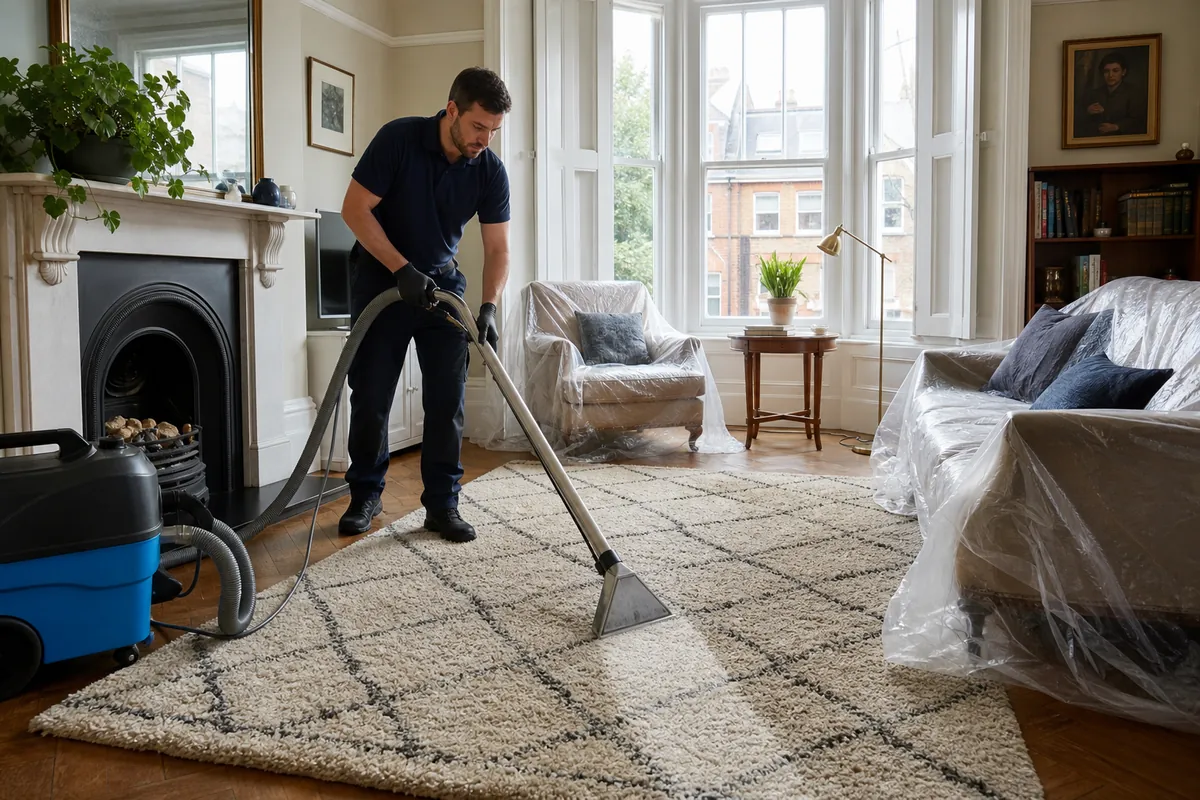
We provide steam rug cleaning in Shepherd’s Bush with portable hot-water extraction equipment at your property. We check the material before agreeing treatment, then remove loose particles, attend to suitable marks and recover the cleaning liquid with loosened soil. The visit ends with the result reviewed and the drying arrangements explained.
Mobile service in Shepherd's Bush · Cleaning method agreed after inspection
Preparation matched to what is actually in the pile
A rug can look similarly dull whether it holds loose grit, a sticky deposit or dirt attached around the fibres. We assess those differences because they affect the work that will help. Vacuum preparation has a purpose before liquid is introduced, while a selected local treatment may assist a particular spill. The machine extraction then completes the removal of material released during cleaning. You receive the full sequence, with each stage explained in relation to your rug.
Our steam service uses hot-water extraction, carried out in the room with portable equipment. It is a liquid-using process rather than a vapour-only pass, and the textile needs drying afterwards. We confirm suitability from the fibres, dye response and construction before cleaning begins. The scope also takes account of furniture and the floor beneath. This gives your appointment a practical plan, with clear working boundaries and a final discussion of the surface rather than an unexplained series of tool movements.
Assessing the dirt and the textile together
We inspect the rug and ask you to point out the main concern. A gritty feel beneath the feet, a dark route through a room or a stiff patch near a spill each tells us something useful. We look at the surrounding area as well, so local attention is planned within the broader clean. Your description helps, but you do not need to know the material or identify a stain yourself. Our assessment connects what you have noticed with the preparation and treatment we propose.
We ask about products already used and any previous damage or repair you know about. That information may explain why a patch now behaves differently from the rest of the pile. We examine accessible backing, edges and joins alongside the visible yarn, checking whether a section needs different handling. This avoids choosing the method purely from the rug’s pattern. The practical aim is to understand what we will be working on before a vacuum tool, cleaning product or extraction head contacts the surface.
Confirming suitability and an accessible cleaning area
Material and colour response are checked before larger treatment is agreed. If those checks support extraction, we explain the intended approach and any restriction. If the rug is unsuitable, we decline the proposed machine clean. We also identify wear and permanent colour change, so these are not mistaken for deposits that cleaning can remove. That establishes a realistic objective: improve the condition through soil removal while recognising any feature of the textile that will remain after the clean.
We confirm the area to be treated around the room layout. Furniture movement is discussed and agreed before work begins, and any section left concealed is identified in the scope. Photographs and approximate measurements help us prepare the quotation, while the visit confirms the practical details. Access for portable equipment is considered at the same time. These arrangements make it clear what the appointment covers and allow the working route to be organised without assumptions about a hidden part of the rug.
Checks before the working stages
Check
What we establish
Purpose
Material
Fibre and colour response
Extraction suitability
Condition
Wear, edges and repairs
Appropriate handling
Access
Furniture and reachable area
A clear cleaning scope
Soiling
Loose and attached deposits
Useful preparation
Lifting loose particles before wet cleaning
We use appropriate vacuum preparation across the accessible rug. Grit can settle below the yarn tips and accumulate where people repeatedly cross or turn, even if the surface does not look heavily dirty. Removing it first reduces the loose material entering the wet stage. We include reachable margins where dust collects beside furniture and the field itself. This stage is useful cleaning work in its own right, and it creates better conditions for the treatment and extraction that follow.
The handling follows the pile and the limits found during inspection. We take care with loops, long strands and loose edging rather than using the same contact everywhere. As dry particles leave, we reassess the surface. Some apparent marks may fade with the dust, while an attached residue becomes easier to distinguish. That clearer view helps us choose local treatment more accurately. It also keeps product use focused on something that remains in the rug, rather than treating every initially dark patch as one kind of stain.
Illustration of suitable attention to an attached mark.
Treating attached marks where the material allows
We examine individual deposits after preparation and select local attention where it can help. A sugary residue can continue gathering dirt, while a greasy patch or a pale abrasion has a different explanation. We consider appearance, feel and any known history before applying a suitable product. It is given time to act, with appropriate gentle working when needed. The treatment has a specific role: help removable material separate from the fibres so it can leave during machine recovery.
We watch the response and decide whether more work would be beneficial. Some residue releases while a lasting outline remains because the dye or fibre has changed. We explain that without repeatedly applying product once it is no longer helping. The wider clean still proceeds through the agreed area. This keeps attention to marks balanced with removal of general soil, giving you a useful result across the rug rather than making the entire appointment depend on an unrealistic promise about one permanent difference.
Using hot water within a controlled extraction process
We plan the machine route in manageable sections. Cleaning solution helps release dirt held around the yarn, and suitable action may assist that release before the extraction head follows. We keep application under control and adjust handling around thicker areas or borders. The approach is guided by the textile’s checked response, not by an assumption that every part of a rug can receive identical contact. This lets the main field and its details receive considered attention within the same overall cleaning plan.
Hot water is part of the method, but the service does not rely on heat alone. We need the dirt to release and then be taken out through recovery. We do not describe the work as sterilisation or a vapour-only treatment. Extra wetness is not treated as proof of a better clean either. Application is kept tied to its purpose and followed by removal, so the stages form a coherent process rather than a wet surface being left as the visible evidence of work.
Illustration of hot-water extraction at the property.
Recovering liquid with the soil it has released
The portable extraction machine draws liquid from the treated pile into its recovery system. We guide the head with suitable contact and inspect sections as they are completed, giving recovery appropriate attention. Further suitable passes reduce retained moisture after cleaning. This is the stage that carries loosened material away from the textile. Without it, product application and working would leave the dirt in the rug, so we consider removal central to the service rather than a quick final sweep over the surface.
We work up to the agreed accessible boundary, handling edges and narrow spaces according to their condition. A weak binding is not pulled into position to make a pass convenient. Furniture left in place remains a known scope limit; where movement is agreed, we build it into the cleaning sequence. These details help produce an understandable finished area. You can see which parts received the full process and why a particular detail or concealed section may have had different or restricted attention.
Reviewing the surface away from the tool head
Once the main extraction is complete, we look across the rug in the room’s light. Pile direction can alter the apparent shade and make adjacent sections seem different, so we assess that before deciding whether more attention is needed. Where suitable, we settle the yarn towards an orderly finish. We return to the concerns raised before cleaning and inspect any remaining patch. The review gives the overall result a clear assessment instead of judging only the wet line immediately behind the equipment.
We explain visible improvements and lasting differences. Dirt removal may clarify a pattern while leaving a worn or faded area unchanged. A treated spill can improve without completely disappearing. The rug is still damp, and its final dry appearance may not match every shade visible at that moment. We place those observations alongside the agreed scope and inspection findings. You receive a plain account of what the appointment achieved, including any limitation, before we discuss the moisture that remains and the conditions needed for drying.
From preparation to drying
Stage
Our work
What follows
Vacuuming
Remove loose dry particles
Assess remaining marks
Local attention
Treat suitable residue
Recover released material
Extraction
Draw out liquid and soil
Review the surface
Completion
Explain finish and moisture
Drying at home
Making the return to use a clear next stage
Extraction recovers liquid but leaves moisture in the textile. We discuss drying according to the depth, density and room conditions we can observe. Air movement and temperature affect the process, so we do not give an identical guaranteed time for every rug. The item remains at your property while moisture leaves it. Our explanation helps you plan the space and understand why finishing the machine passes is not necessarily the same point as putting the area back into full everyday use.
We clarify the return of furniture, coverings and activity over the damp surface. Any restriction is specific to the rug and layout, keeping the next steps practical. If you need the room for a particular time, mention it during the enquiry so timing can be considered before booking. We finish by confirming the cleaned result and drying still required, with an opportunity to ask about a remaining mark or any part of the work. The appointment ends with the next stage understood.
Steam Rug Cleaning price reference
Use these starting prices as a guide. Share the item size, condition and access details so the work and final quote can be confirmed.
Service
Published starting price
What is included
Timing
Carpet cleaning
From £25 per room
Inspect, pre-treat, clean
Room dependent
Rug cleaning
From £20 per rug
Inspect, assess spots, clean
Size dependent
Steam rug cleaning
From £25 per rug
Check suitability, extract
Varies
Oriental rug cleaning
From £35 per rug
Fibre, dye and condition checks
Varies
Luxury rug cleaning
From £40 per rug
Assess and select method
Varies
Mattress cleaning
From £30 per mattress
Inspect and clean fabric
Varies
Upholstery cleaning
From £12 per seat
Check fabric and clean
Varies
Sofa cleaning
From £35 per sofa
Assess fabric and clean
Varies
Arranging your Shepherd’s Bush appointment
We plan the visit around the rug details and access for portable machinery. Tell us about stairs, parking restrictions and large furniture over the textile. Any movement and the accessible scope are agreed before cleaning starts, with drying discussed as part of the service.
Local postcode districts: W12. We confirm the visit against your full address.
We use hot-water extraction with portable equipment. Cleaning liquid assists soil release and the machine recovers it. It is not a vapour-only treatment, and the rug needs drying afterwards.
Do you clean inside my property?
Yes. We bring equipment to your address and carry out the agreed work there. The rug and working room are assessed before the machine process begins.
Why is vacuum preparation included?
It removes loose particles before liquid is introduced, reducing debris in the wet stage. It also helps us see which attached marks remain and need suitable local attention.
Can you treat a patch where a product was used already?
We assess its current condition and ask what was applied if you know. Previous treatment may affect the response, especially where the dye or fibre has changed permanently.
Can every rug receive extraction?
No. We check material, colour response and construction. We explain any relevant limit and decline the proposed treatment when the rug is unsuitable for our process.
How do I request a quotation?
Send dimensions, photographs and a description of the concern. Include information about access and furniture so we can discuss a clear scope and a practical appointment at your property.
Talk to us about your rug
Send photographs and measurements for your Shepherd’s Bush rug. We will discuss suitability, scope and a quotation for hot-water extraction at your property.