
How to Keep a Hallway Rug from Sliding
A hallway runner should lie flat and stay in place when people walk and turn on it. First lift it and clean and dry the floor and rug underside. Then use an underlay made for the rug and that particular floor finish, cut so it supports the runner without protruding. Test the arrangement by walking its full length and turning at both ends. A moving rug, curled corner or raised edge needs correction before the hallway is back in regular use.
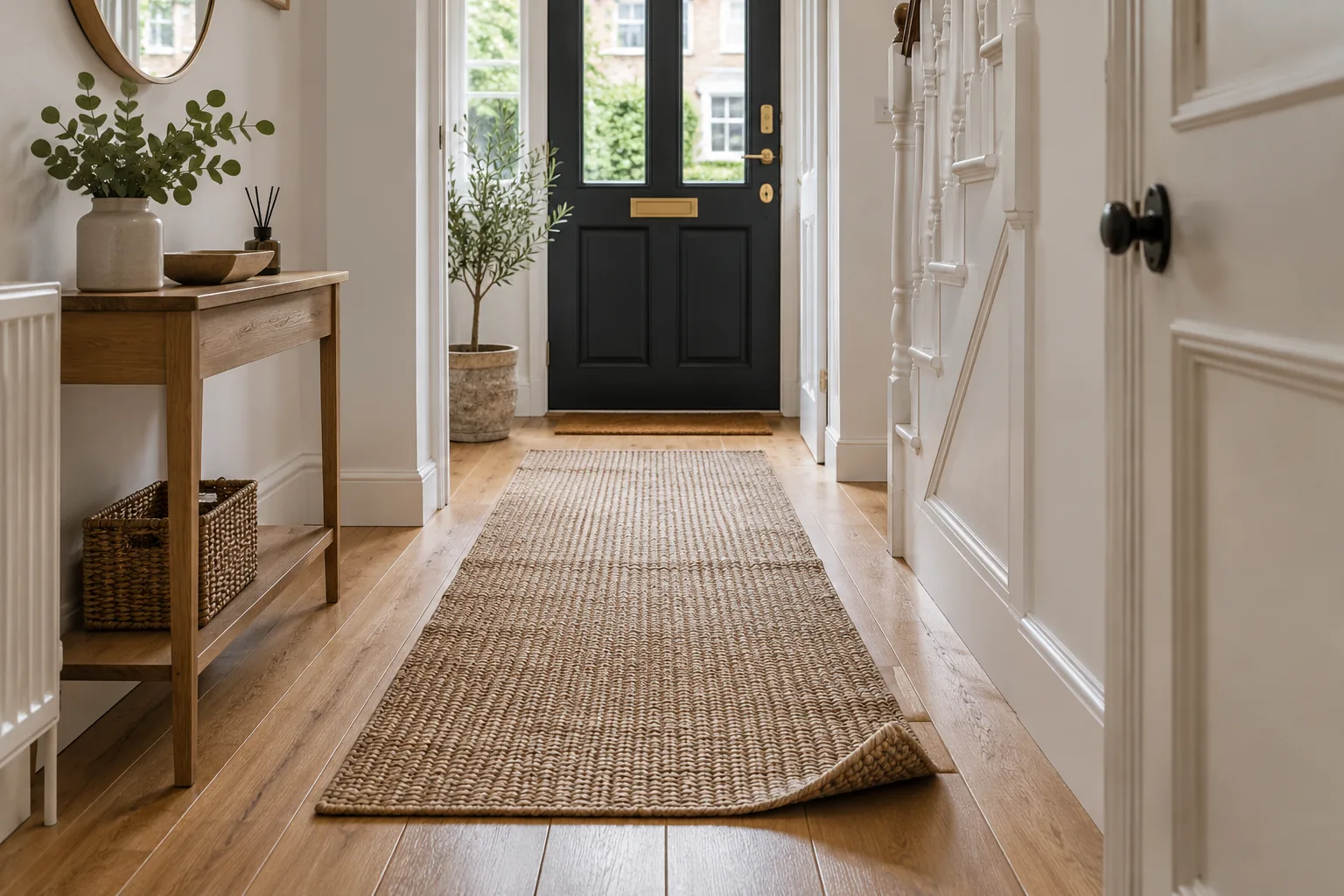
The answer is not simply to add the stickiest tape available. Adhesives can leave residue on a rug or floor, and a pad that grips one finish can mark another. A worn rug edge may still trip someone even if its centre is fixed. Think about the rug, underlay, floor and route together. Our hallway runner care guide covers day-to-day wear; this article focuses on a secure placement.
Work out where the movement begins
Observe the runner during normal use without creating a trip risk. Does the whole rug creep towards the door, or does one corner curl while the rest stays put? Does it slide only when shoes are wet? A smooth floor with dust beneath the rug may behave differently from one with a fresh polish or cleaner. The answer guides whether you need a suitable pad, a different position, or repair of an edge.
Lift the rug and inspect the reverse. Worn backing, loose binding or an uneven repair can prevent flat contact. Check the floor for grit, dampness and changes to the finish. Clean it using the flooring maker's instructions and allow it to dry fully. Moisture trapped under a runner is a separate concern from slipping: it may affect the floor and can remain hidden by the textile.
Measure the clear walking area. A runner that is too wide may curl against a skirting board; one that extends into the door swing may bunch every time the door opens. If furniture legs pin only one side, foot traffic can pull the other side askew. A safer layout may require shifting the runner or choosing another size rather than adding more grip to an unsuitable placement.
Choose an underlay for both surfaces
An underlay should support the rug evenly and be compatible with the floor finish. Ask the floor or underlay supplier if you are unsure about wood, laminate, stone, vinyl or underfloor heating. Avoid choosing solely from a vague label such as “non-slip”. Materials can age, transfer residue or react with finishes under heat and pressure. Check manufacturer care instructions and any warranty conditions before buying.
The Canadian Conservation Institute recommends a good underlay to cushion rugs and specifically advises against self-adhesive underlays for important rugs. It also recommends checking the rug and underlay periodically for deterioration. That advice is directed at rug preservation; in a busy home hallway, stable footing matters as well. An underlay that protects fibres but allows the runner to skate is not doing the whole job.
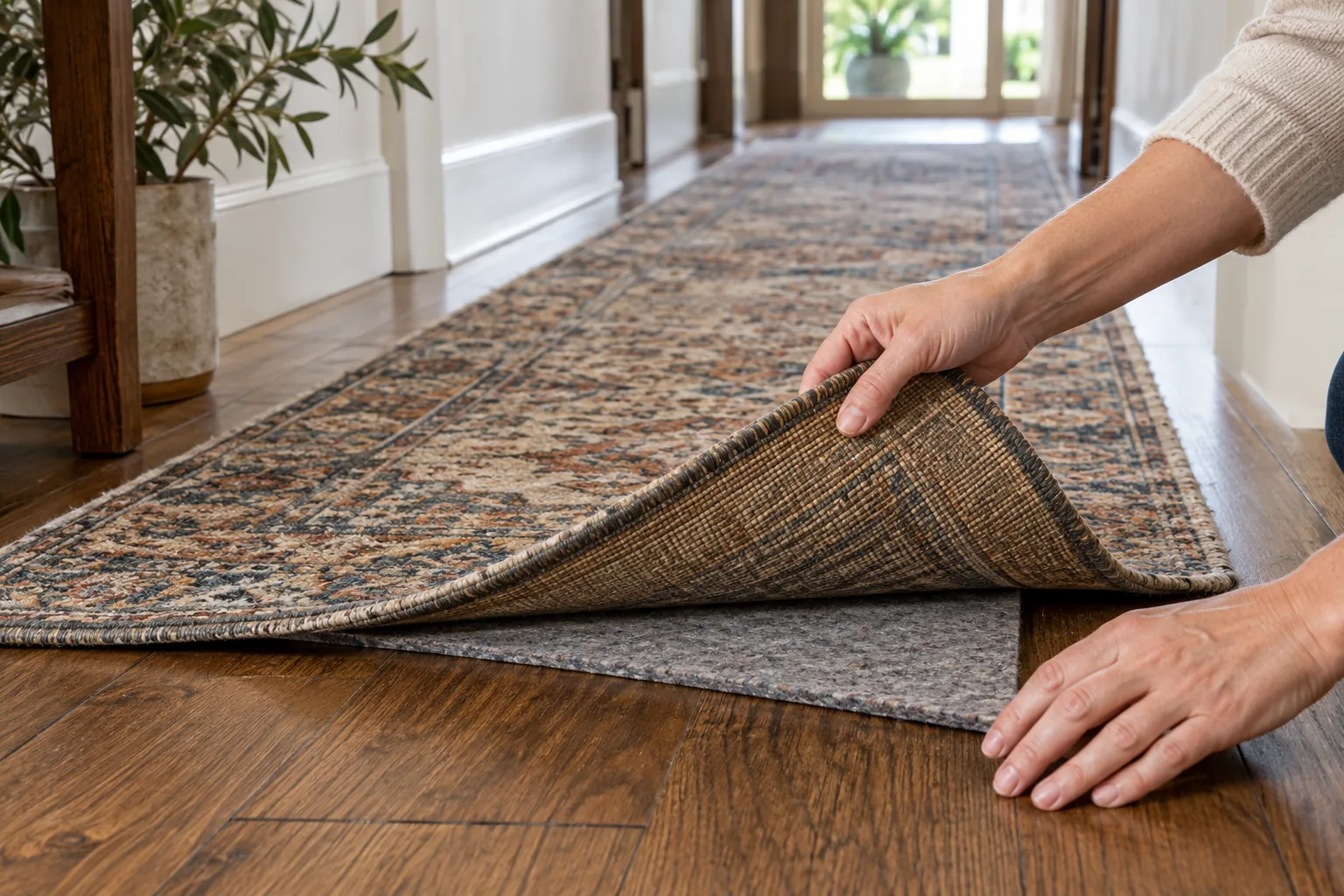
Size the pad so it sits wholly beneath the rug and does not create a visible ridge at the edge. Follow the chosen product's directions rather than stacking offcuts. Overlapping pads can make a raised strip, and a pad sticking out may catch a shoe or collect grime. Lay the runner flat from one end to the other, smoothing out waves without stretching the textile.
Inspect corners and worn edges separately
A curled corner can form a trip point even where the rest of the runner does not move. Look for a stiff binding, a distorted weave or a fold left by storage. Do not glue or tape an antique or valuable rug flat as a quick fix. Adhesives may stain the yarn and be difficult to remove later. A specialist can assess whether a border repair or different support is appropriate.
Likewise, a thinning edge may need repair rather than a thicker pad. A pad cannot restore missing binding, and a raised strip placed underneath may make the edge more noticeable underfoot. If the rug is badly worn, remove it from the route until it can be assessed. The cost of a repair is a different question from the immediate need for a clear, safe walking surface.
Check the fringe. Long fringe in a narrow hall can twist or catch shoes and the vacuum head. Do not cut fringe casually; on some rugs it is part of the structure. If it repeatedly reaches the main walking line, consider repositioning the runner or seeking repair advice. A visually attractive rug that must be stepped around may not suit a busy entrance.
Wet shoes and cleaning change the grip
Rainy London days bring moisture and grit into the entrance. The UK Health and Safety Executive highlights how inadequate entrance matting can contribute to slippery conditions in a public setting. At home, a separate absorbent entrance mat can catch wetness before shoes reach the runner. Keep that mat large enough for the way the doorway is used and replace or dry it when saturated.
Vacuum the runner with a setting suitable for its pile, and periodically lift it to clean the underlay and floor. The Canadian Conservation Institute recommends low suction and no power head for important rugs, with attention to fringe and loose threads. Grit beneath a pad can abrade the finish and change how well it grips. Check for dampness and staining each time you lift it.
After any floor cleaning, wait for the floor to dry before replacing the pad and rug. A freshly polished surface may have a different friction level, so repeat the walk test. If a pad has become brittle, sticky or crumbled, replace it rather than trapping fragments beneath the runner. Follow the floor maker's advice when removing residue so the attempted fix does not harm the finish.
A practical final check
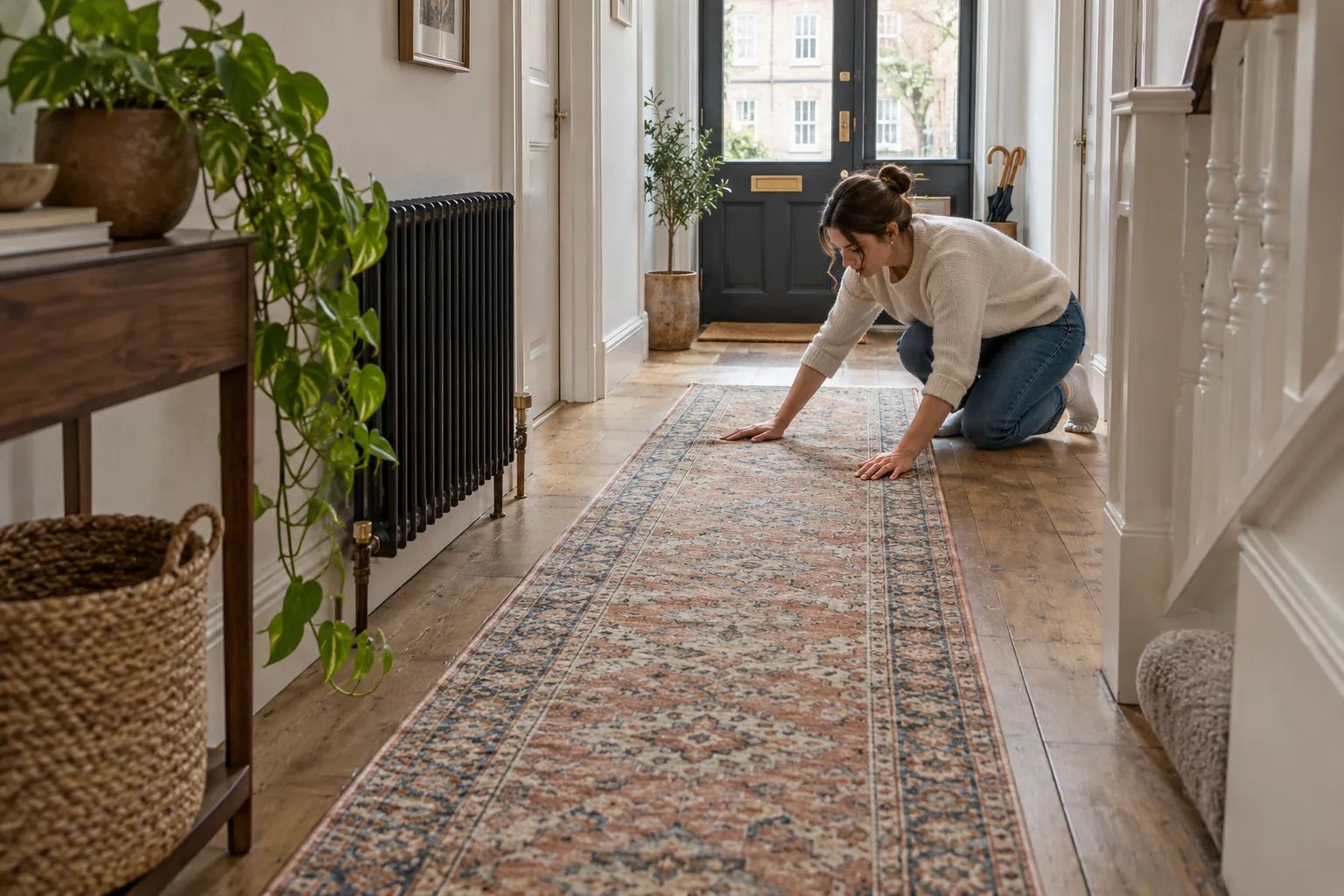
Walk along the runner in ordinary shoes, turn where people normally turn and check both ends. It should not bunch, slide, rock on a raised pad or catch a shoe at the corners. Ask another household member to try it too; different steps may expose a problem you missed. Recheck after several days of use and after moving furniture or cleaning the floor.
If the rug's shape, backing or worn edge prevents it lying flat, a rug cleaning and care assessment may help distinguish soiling from structural issues. Cleaning alone cannot correct every curled border. Our article on DIY rug cleaning mistakes explains why heavy wet cleaning can introduce fresh distortion in a sensitive rug.
For advice about a runner that keeps shifting or has a damaged edge, contact us with photographs of the full hallway, the rug reverse and the floor. Include the floor type and any underlay already tried. A secure runner should be comfortable to walk on, straightforward to lift for cleaning, and kind to both the rug and the floor beneath.
Related Rug Cleaning Services
Explore professional cleaning options selected around the fibre, construction and condition of each textile.
Rug Cleaning Near You
View local rug cleaning information, appointment guidance and coverage across popular London districts.
Continue Reading
Read more practical guidance about fibres, stains, cleaning methods, drying and routine rug care.
Send us rug photographs and a few details.
Include the approximate dimensions, material if known, stain information and your London postcode.