
Chewing Gum in Rug Pile: Avoiding Damage
Do not cut the pile or pull hard at chewing gum caught in a rug. Keep people from stepping on it, let a fresh piece settle without pressing it farther down, and examine how many yarns are involved. A tiny piece sitting on the tips of a robust rug may be easier to deal with than gum wrapped around the base of a delicate or looped pile. The aim is to separate the gum without losing fibres, changing colour or leaving an oily residue.
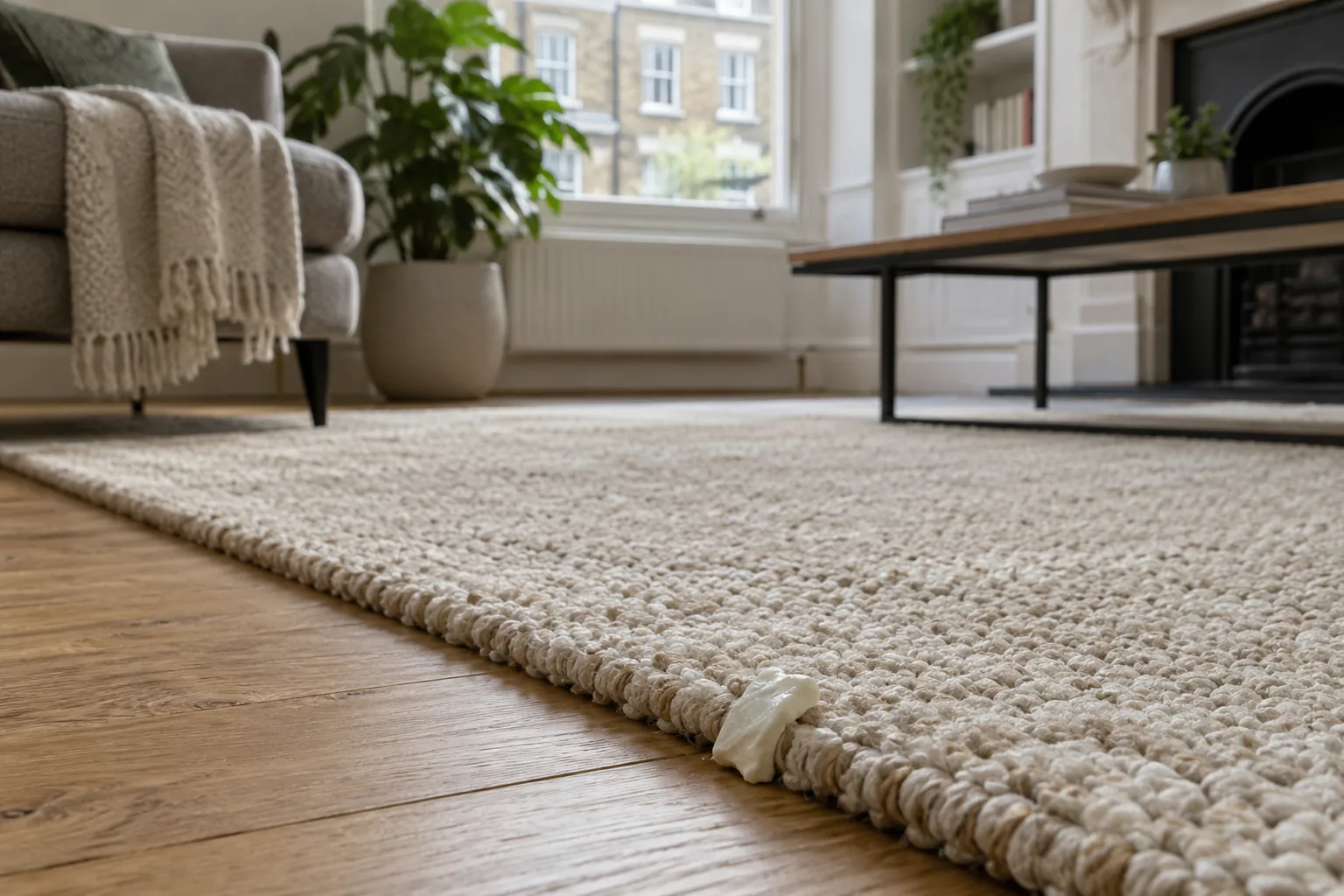
Freezing is often suggested for carpet gum, and the Carpet and Rug Institute describes it as one option. That does not make it risk free for every rug. A brittle lump still has to be removed, and force used at that stage can break or uproot yarn. A hand-knotted wool rug, a viscose pile, a fragile antique and a modern synthetic carpet may respond quite differently. Identify the rug and the depth of the gum before choosing a method.
Stop the gum spreading
Pick up any loose wrapper and keep shoes off the area. If the rug is in a hallway, mark the spot so nobody treads through it while you decide what to do. A fresh, soft deposit can flatten under a foot and grip more yarns. Avoid brushing or vacuuming directly over sticky gum; the vacuum head may pick it up and drag it across the rug.
Take a close photograph and one wider view. Note whether the gum is on the face, near a fringe, or has passed through an open weave. If you know when it arrived, record that too. A small spot that has already been rubbed with oil or solvent is a different treatment problem from untouched gum. A cleaner needs to know about previous attempts.
Look at the colour of the gum and the surrounding yarn. Some coloured gum may leave a separate pigment mark after the bulk is removed. If the rug's pile is already worn or has loose loops, the apparent gum problem may be less serious than the damage caused by pulling. On a valuable piece, protecting the construction deserves priority over achieving an immediate spotless appearance.
Why cutting it out is usually a poor shortcut
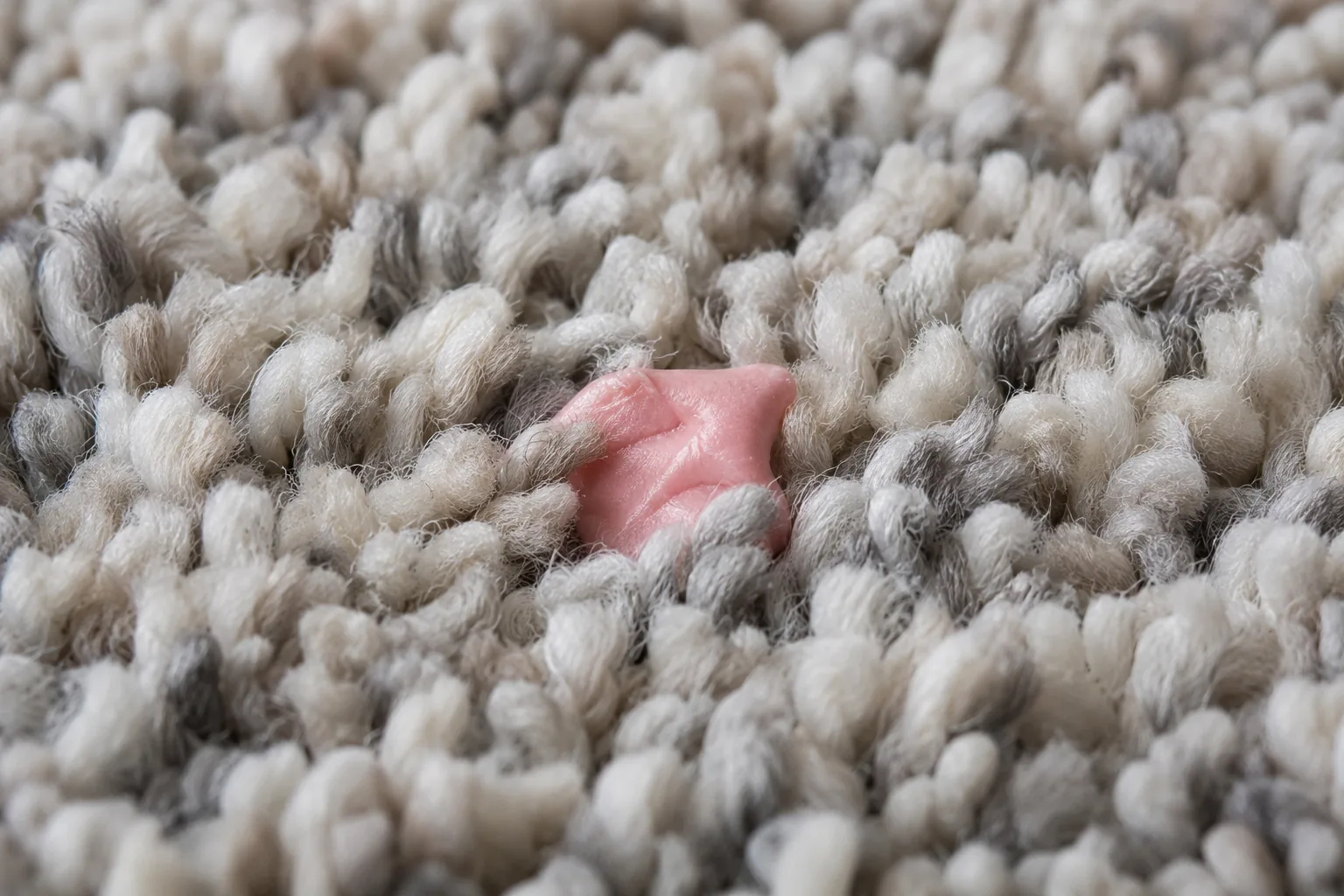
Scissors remove rug material along with gum. The resulting low patch may show from every angle and cannot be cleaned back to full height. Cutting a loop can also create an end that unravels or stands above its neighbours. A sharp blade used close to the foundation adds a risk of severing structural yarns. Those changes are often more permanent than the original deposit.
Pulling with tweezers has a similar problem if the gum has gripped several strands. A yarn may stretch or leave the foundation before the adhesive releases. Do not keep tugging just because one edge lifts easily. Work that seems effective at the surface may be tightening gum lower down. If you see yarns moving with the gum, stop and let a specialist consider the next step.
The Canadian Conservation Institute's rug-care guidance cautions against rubbing and pressure that damage fibres. Its advice is for general rug care, not a recipe for gum, but the principle applies: the mechanical action needed for a stain is part of the risk. A rug in weak condition has less tolerance for scraping than a stable commercial carpet.
Freezing can help, but assess the aftermath
Cooling gum can make it firmer and easier to fracture, which is why freezing appears in carpet-cleaning guidance. If considering an ice pack on a stable rug, keep meltwater out of the textile by using a clean, sealed barrier, and avoid soaking the backing. Do not leave wet ice directly on wool, silk, viscose or a colour-sensitive border. Moisture can create a second mark or alter dyes.
After cooling, resist the urge to chip forcefully. If the gum will not release with minimal pressure, stop. Small fragments may remain between yarns even if the main piece comes away. Repeated freezing and scraping can roughen the pile. A delicate fringe or a looped surface is particularly easy to catch with an implement.
High heat is not the opposite solution. A hairdryer or iron may soften gum and carry it deeper through the pile; heat may also affect fibres, finishes or backing. Avoid household oils such as peanut butter, cooking oil or lubricants intended to make gum slippery. They can create a greasy stain that needs its own treatment. Strong solvents chosen without fibre and dye checks can do still more harm.
Decide when to hand it over
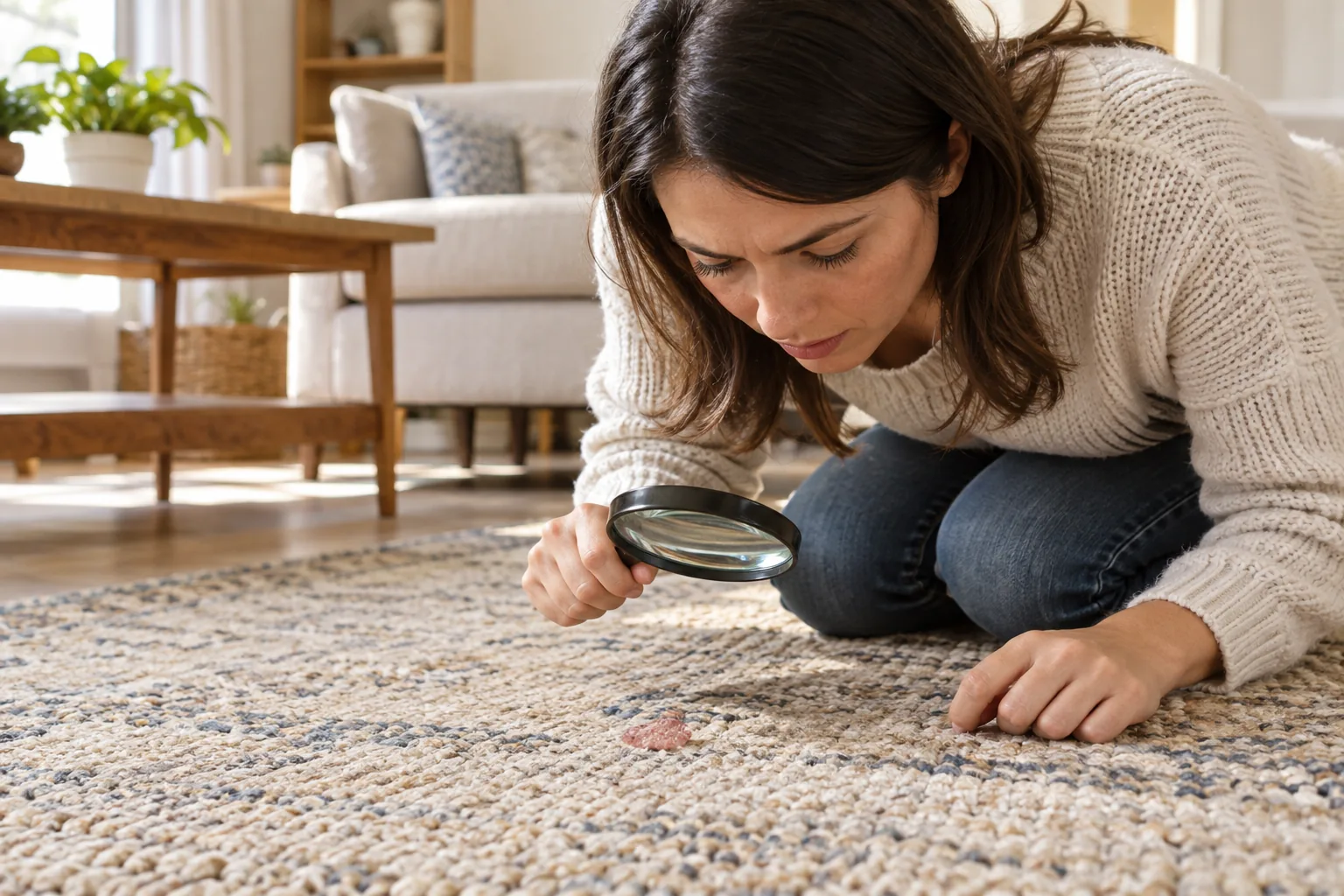
Seek advice if gum reaches the foundation, sits on a fragile border, or covers more than a few yarns. Also pause if the rug is valuable, the pile is already worn, or an earlier attempt left an oily or coloured mark. A professional rug cleaning assessment can separate the problem into bulk gum, remaining adhesive and possible colour transfer. Each part may need a different approach.
Professional treatment still has limits. The gum may be removable while a faint pigment stain remains, or the yarn may already have been pulled out before the cleaner sees it. Give the specialist a clear history rather than hiding a previous attempt. Our guide to DIY rug cleaning mistakes covers the risk of several products applied in sequence. The article on oil on a rug is relevant if an oily home remedy has already been used.
Keep the rug usable while arranging help
If the spot is in a busy route, keep that section out of traffic without folding the rug sharply or creating a trip edge. A clean, breathable cover placed loosely around the area may prevent a shoe from touching it temporarily, but do not press anything onto sticky gum. Do not roll the rug with the gum facing another part of the pile; it may bond to a second area.
If you need to move the rug, support its full width and keep the affected patch facing outward. Ask another person to help with a large rug, especially where furniture would otherwise need to be dragged. A quick move made alone can stretch a weak border or transfer gum to clothing. Once the rug is in a safe position, leave it undisturbed until you have a treatment plan.
To contact us, send a close photograph, a whole-rug view, the care label if present, and any details of freezing, oil or solvent already tried. The best next step depends on what is attached to the yarn, not simply on the size of the visible lump. A cautious response now gives the rug the best chance of keeping an even pile after the gum is gone.
Related Rug Cleaning Services
Explore professional cleaning options selected around the fibre, construction and condition of each textile.
Rug Cleaning Near You
View local rug cleaning information, appointment guidance and coverage across popular London districts.
Continue Reading
Read more practical guidance about fibres, stains, cleaning methods, drying and routine rug care.
Send us rug photographs and a few details.
Include the approximate dimensions, material if known, stain information and your London postcode.