1. Explain normal care alongside the cleaning improvement
Introduce the rug with dimensions, a complete photograph and reliable care wording. Describe general soiling and individual incidents, naming known products and repairs. Explain the normal particle-care routine and any automatic schedule, including who can pause it. A clean-looking surface after a routine pass does not establish whether adhered material or other assessed contamination has been removed.
2. Pause scheduled passes before clearing the space
Arrange for automatic household operation to remain paused while treatment and aftercare require it, using the device manufacturer instructions. Clear manageable belongings and show furniture contact. Arrange difficult handling before the textile is lifted or repositioned. Keep loose cables and parked equipment out of the planned work area without changing essential equipment arrangements unexpectedly.
- Identify the person who can manage the ordinary equipment schedule.
- Keep rug-care wording separate from device operating instructions.
- Explain the intended furniture arrangement after treatment.
3. Select action for the actual rug
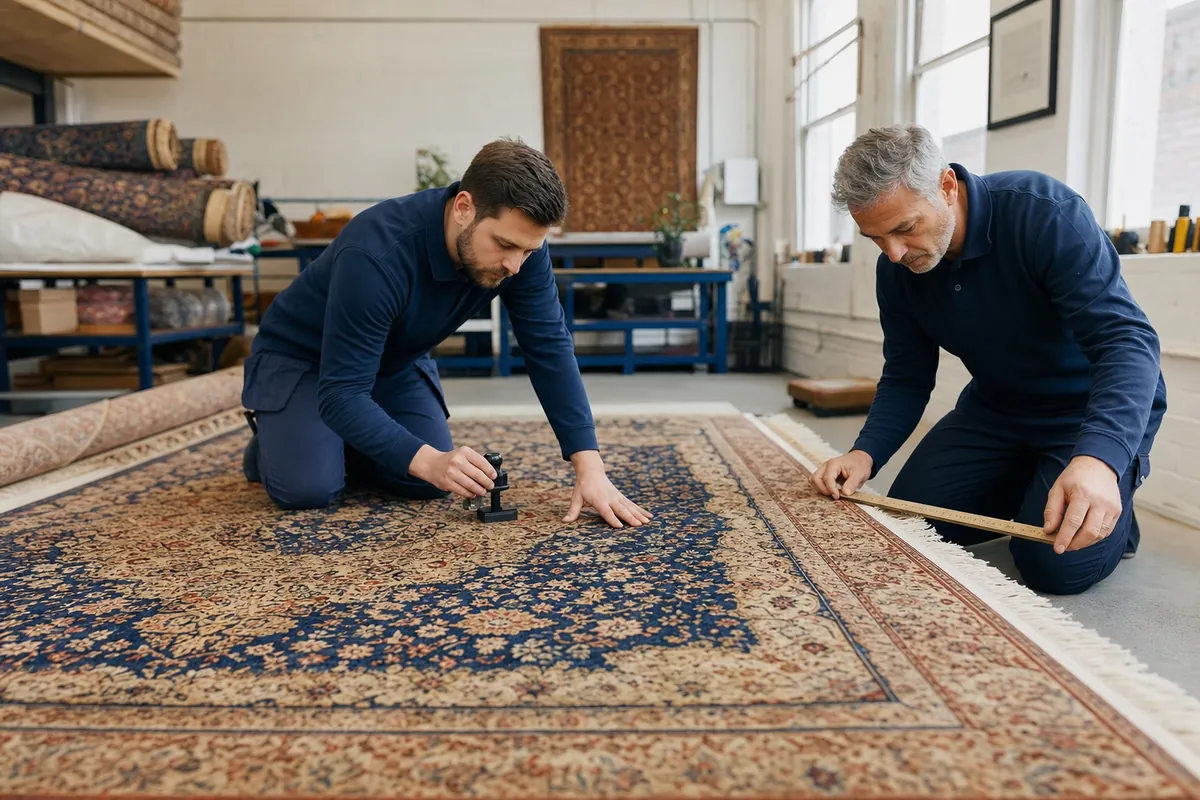
Examination considers the pile and foundation alongside colours, repaired details and the strength of the current connections. Suitable checks help match products and equipment action to the combined construction. A routine machine operating without an obvious incident does not describe every material requirement. Understand the compatible cleaning route and the practical care advice, with a separate condition question clarified where an edge or connection needs attention first.
4. Keep individual marks distinct from equipment observations
Locate known spills and earlier products separately from the ordinary vacuum routine. Loose dirt, adhered deposits and lasting wear can need different expectations. A scheduled particle-removal pass cannot be assumed to perform selected stain treatment. The cleaner assesses useful local improvement alongside broader soil removal, without asking the household to introduce a product or repeat concentrated equipment passes before inspection.
5. Follow suitable preparation through complete recovery
Appropriate dry preparation collects accessible particles using action selected for the assessed pile and connections. Local work follows mark findings and application history. Compatible broader working loosens remaining soil, and recovery carries it away with the applied solution or cleaning material. This gives the professional clean its own removal account rather than equating it with another pass by routine household equipment.
For a suitable wet route, controlled application and recovery connect with support and drying. A lower-moisture system needs its own compatible working and collection. The chosen method should explain actual removal and handling for the whole included textile, with vulnerable details relevant during recovery as well as initial preparation.
6. Resume use according to current process guidance
Discuss airflow, intended position and furniture or coverings returning. Follow supplied readiness instructions before normal traffic or equipment use resumes. Keep automatic routines away until the actual guidance is understood, including any continuing restriction near an end. Review original priorities when advised under comparable light, describing a later new concern before another application or machine pass changes it.
7. Connect the agreed clean with a usable household handover
Give measured size, access and the cleaning improvement wanted for the proposal. Clarify included local attention, broader treatment and inspection-dependent decisions. Another task or repair needs an explicit request. At completion, obtain practical equipment and placement advice for the assessed rug, sharing it with whoever manages the ordinary routine rather than inventing one universal device setting for every textile.
8. Keep routine equipment care controlled
Keep the assessed rug guidance available to the person managing automatic schedules. Follow equipment instructions for operation and maintenance, checking attachments as directed and clearing small hard objects before ordinary care. If the device is unsuitable for a textile or part of it, use the recommended alternative arrangement rather than treating a programmed schedule as permission to cross every surface.
- Share vulnerable locations with the person managing the device.
- Keep new repairs identified at a future cleaning enquiry.
- Describe a changed rug position before reusing older placement guidance.