1. Make the starting request recognisable to another person
Prepare an item brief with measurements, a whole-rug image and the care instructions you can show. Locate the priority concerns in the design, describing known spills, products and repairs. State the general cleaning aim alongside individual marks. Give the same brief to the person attending so a reference such as the area discussed earlier does not leave them searching the rug or inventing details they were never told.
2. Agree access and practical responsibilities
Describe furniture, the working route and any area that remains concealed. Identify who handles agreed movement and who restores the room afterwards. Clear safe small belongings, leaving heavier handling within the practical plan. Explain any essential room use so the attending person can follow the arrangement without reopening a treated area simply because somebody else needs a shortcut.
- Keep the item reference linked to the complete photograph.
- Identify a contact able to clarify an inspection-dependent question.
- Give the attending person known product and repair information.
3. Let findings guide the compatible route
Assessment brings together the face fibres, supporting layers, colour response and strength of original or repaired sections. Relevant checks inform products, moisture and working action. A preliminary method discussion remains connected to the rug actually assessed. If a recommendation changes, the person able to decide should understand its purpose and implications before work rather than treat an absent owner’s initial preference as an unrestricted instruction.
4. Keep local histories and realistic aims clear
Locate incidents and previous applications by their positions in the design. A delegate can relay a known account without supplying a confident cause for an unexplained mark. Deposits, wear and lost colour can require different expectations. The cleaner can assess useful local attention while broader soil removal remains central, with repair or reconstruction treated as a separate request where relevant.
5. Understand the complete cleaning sequence
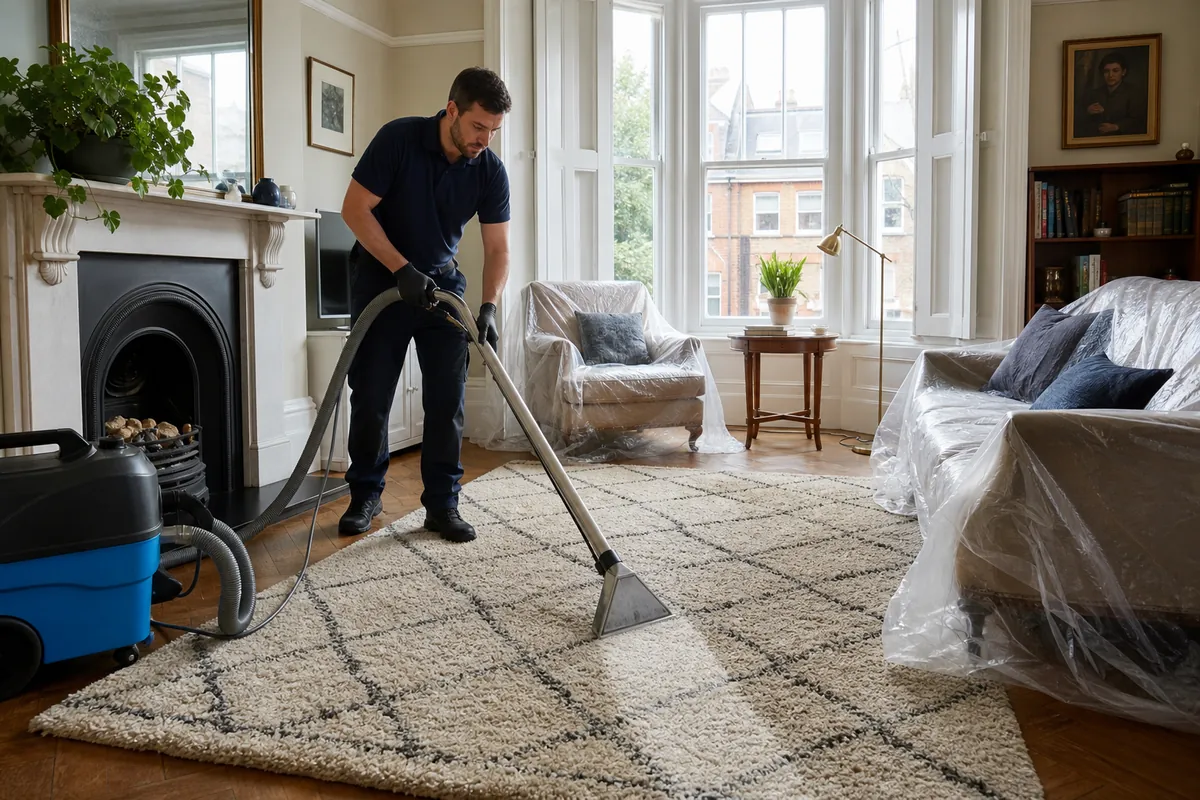
Preparation takes reachable particles out with a dry action chosen to respect the assessed pile and vulnerable details. Selected treatment follows the findings for marks and earlier products. Compatible cleaning products and measured working then loosen further contamination for the chosen recovery stage. Collection removes released soil and applied solution or cleaning material according to the selected system.
For a suitable wet process, the cleaner plans recovery of used solution alongside the support and drying needed afterwards. A lower-moisture route has its own suitable working and collection requirements. The handover should explain the process actually completed, rather than use a message that the rug has been done as a substitute for the treatment and care information.
6. Put readiness guidance into practical actions
Give the attending person the intended aftercare arrangement, including ventilation and any objects returning to contact. Follow the supplied instructions for traffic, rolling and coverings after treatment. Give that guidance directly to the person taking the next action. Review original concerns at the advised stage under comparable light; an owner returning later can use the same design references and findings rather than judge the entire outcome from one immediate damp image.
7. Make the proposal and completion account usable
Provide size, access and priorities for the quotation, with the contact arrangement identified. Clarify included work and inspection-dependent decisions. At handover, retain relevant findings and practical maintenance instructions under the rug identity. Keep any separate repair recommendation visible so completed soil removal does not become an assumption that every structural concern was resolved while the owner was absent.
8. Share a manageable maintenance routine
Use the advised equipment action for the assessed construction, clearing small objects before care and avoiding catches at vulnerable ends. Keep the current guidance accessible to people who actually maintain the room. Give later incidents their own dated accounts and seek suitable advice before applying another household cleaning product, rather than let several independent attempts create an application history nobody can explain.
- Record a new spill before separate household responses begin.
- Keep later product details beside their design locations.
- Share completed repair information before a future cleaning enquiry.