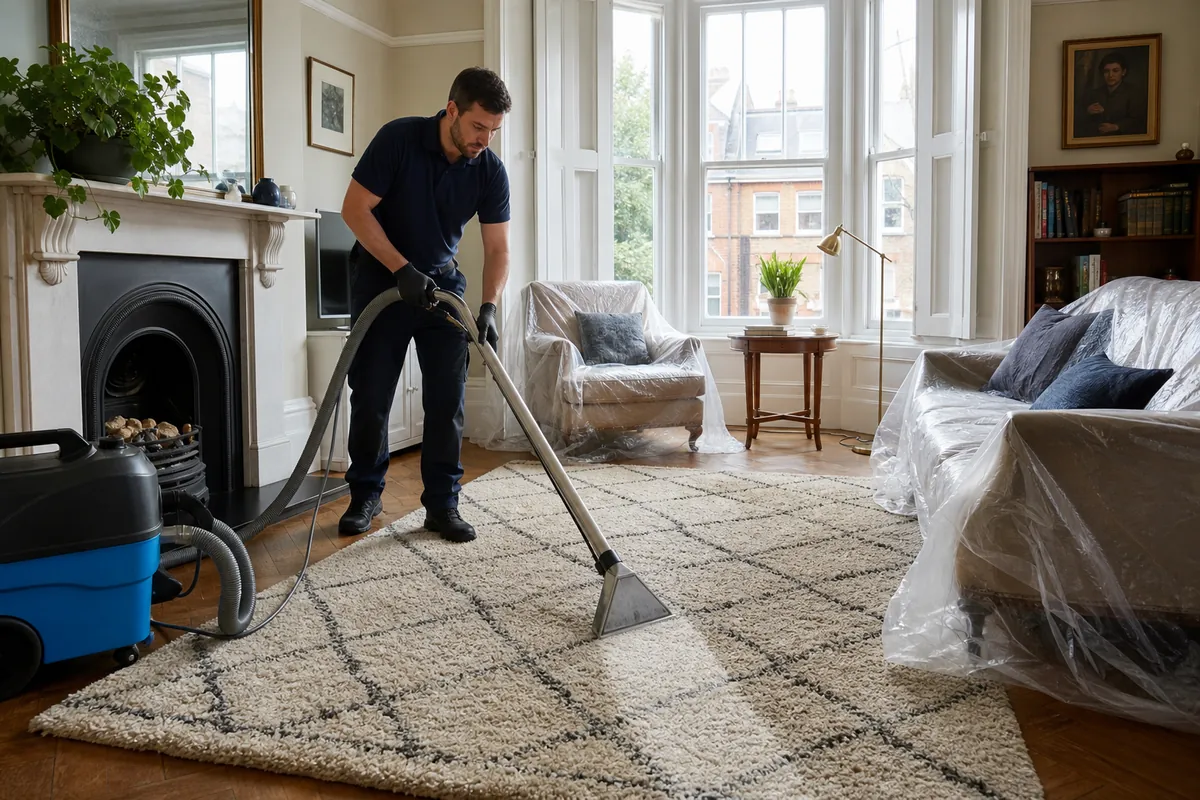
Rugs near an entrance can collect more than an occasional visible mark. We visit your Shepherd’s Bush property with portable machines to assess and clean suitable rugs on site. Our work includes dry particle removal, compatible treatment, machine recovery and a clear explanation of drying and access through the room.
Mobile service in Shepherd's Bush · Cleaning method agreed after inspection
Taking everyday entrance soil out of the rug
The rug beside a door or on the route into a living room receives repeated contact with shoes and everyday debris. A darker edge may be obvious, while fine grit is less easy to see within the pile. We assess the whole item and plan the cleaning around that pattern of use. The work is carried out at your property with portable equipment, allowing us to account for both the rug and the supporting floor.
Our quotation discussion covers approximate size, material information, photographs and any particular marks. We also establish how the room and access route will work during cleaning and drying. Furniture movement is agreed, and any area that remains inaccessible is identified. The visit then follows the needs of the textile: inspection, appropriate dry preparation, focused local work where suitable, controlled cleaning and recovery. We finish with an explanation of the result and the practical conditions needed before the usual traffic through the area resumes.
Mobile serviceLondon and the surrounding M25 area
Material checksFibres and dyes assessed before treatment
Clear pricingPublished starting prices with a confirmed quote
Open dailyMonday–Sunday, 07:00–19:00
The entrance position explains use, not the cleaning method
We consider where a rug sits because it helps explain the soil pattern and practical access. It does not establish the fibre type or suitable machine treatment. We inspect the pile, backing, border and any joins or repairs to understand the full construction. Relevant colour checks may also be needed before product selection. A small entrance rug can require as much care in choosing the process as a larger piece elsewhere in the property, depending on its material and present strength.
We explain what the inspection means for the work. A durable construction, a delicate decorative piece and a rug with a weak backing do not automatically receive the same process. If a proposed machine method is unsuitable, we make that clear before agreeing treatment. We also distinguish removable contamination from lasting changes such as abrasion or faded colour. This gives the cleaning a useful goal that reflects the textile, rather than assuming every dark patch near a doorway can be removed completely.
We remove loose grit before applying cleaning solution
Dry preparation is important where fine particles have been repeatedly walked into the pile. We use suitable equipment action to remove accessible loose material across the agreed area, including the less visibly soiled sections. Borders and fringes are handled according to their condition. This first removal stage reduces the grit and dust that would otherwise be mixed into the wet clean, giving the following treatment a better starting point than simply introducing solution to an unprepared surface.
We pay attention to the response rather than increasing force automatically along the darkest edge. Some areas may contain loose particles, while others show compressed pile or wear from regular traffic. We consider those differences as preparation makes the surface clearer. The dry stage is not expected to reverse every visible change. Its job is to remove what can appropriately be taken out as loose material and inform the next treatment decisions for attached soil and individual deposits.
How we approach an entrance rug
Detail
Our work
What it clarifies
Construction
Inspect pile, backing and edges
Suitable treatment
Loose grit
Appropriate dry preparation
Particles removed before solution
Darkened route
Assess soil alongside wear
Realistic improvement
Room access
Discuss the household route
Practical appointment arrangements
Tracked-in marks and isolated spills are assessed separately
A rug near an entrance may carry general tracked soil as well as a drink spill, food deposit or other local mark. We do not treat those concerns as a single stain merely because they overlap. We ask about known incidents and earlier products, then examine the affected fibres. Suitable local treatment is chosen around that information and the material checks, giving a particular mark attention without using the same product indiscriminately across the full surface of the rug.
We also look for differences that local treatment cannot safely reverse. Colour loss and worn fibres may remain even where contamination has been removed. An uncertain incident history can affect expectations, and we explain that directly rather than inventing a source from the shape of the mark. The purpose of focused work is to release compatible deposits as part of the broader service, with realistic expectations for both the individual patch and the general condition of the item.
Illustrative image of rug cleaning on a household route.
Product application is controlled around the textile
We apply selected products where they serve a defined cleaning purpose, allowing appropriate time for them to act. The volume and distribution are chosen around the pile and construction. A heavily used location is not a reason to apply more liquid without considering the material. For a rug suitable for extraction, the broader solution stage helps loosen soil attached to the fibres so the machine can subsequently recover it with the used cleaning solution.
The floor beneath the rug and the finishes around it are considered before this work begins. We plan suitable protection and establish the accessible area under the agreed furniture arrangement. We also organise the equipment route so the treatment can proceed without repeatedly changing the setup. The service takes place in your home with portable machines, so practical room preparation supports the cleaning rather than being left until the moment solution is introduced to the textile.
Working action supports the product instead of replacing assessment
Where appropriate, controlled agitation helps release the soil from the pile. We select the action around the fibres, backing and current condition, with attention to borders, repairs and weaker details. We do not respond to a stubborn appearance by scrubbing indefinitely. Products need suitable time, and the working process needs to remain compatible with the textile. This gives the cleaning a purposeful middle stage between application and removal, rather than relying on force to make every section look identical.
We continue to observe differences through the work. A worn doorway edge may respond to soil removal but still show the effect of repeated use. Pile direction may create a shade change as the tool passes. Those observations are assessed against the inspection so the next decision remains useful. If the cause is lasting wear, additional action is not presented as a way to replace damaged fibres. Our focus stays on the contamination that can appropriately be released and recovered from the agreed area.
Illustrative image of portable equipment used at a property.
Machine recovery takes the used solution and soil away
The extraction stage is the removal step that follows compatible treatment. We use controlled passes to collect released contamination with the used solution, managing coverage across the included area. This is why cleaning is more than dampening a rug or applying a product that changes its smell. Preparation removes loose material, the solution and working action release attached soil, and recovery takes that material away. Each stage contributes something different to the service completed at your property.
Where suitable, we make further recovery passes to collect additional moisture without automatically adding more liquid. We monitor the response and do not repeat wet treatment simply because one section remains a different shade. The interpretation may involve wear, texture or permanent colour change, and that is explained. The result of this stage is a rug ready for drying under appropriate conditions, with the machine work complete and the remaining practical arrangements discussed for the entrance or room where it sits.
The final check includes the busiest parts of the rug
We revisit the edge or route highlighted in the original request and explain how it has responded. We also check the wider cleaned area and any local marks, with suitable pile finishing where appropriate. The review identifies remaining limitations rather than suggesting every sign of use has disappeared. Damp fibres and changes in pile direction can influence the immediate appearance, so we put those observations into context instead of treating a quick look at the wet surface as the complete final result.
The explanation remains specific enough for the person present to understand the work. If you arranged the appointment for someone else, we make sure they know which items were cleaned, which concerns received attention and what remains relevant during drying. A later question can then be linked to a particular area and the treatment discussed. This keeps the service understandable after the equipment is packed away, including where an entrance rug still shows wear despite a useful reduction in soil.
Stages completed at the property
Stage
What happens
Purpose
Local treatment
Compatible attention to assessed marks
Targets particular deposits
Wider clean
Controlled solution and working action
Releases attached soil
Recovery
Extract used solution and contamination
Takes released material away
Final review
Explain result and drying
Connects the clean with access
We plan drying around the route the household uses
An entrance area may be difficult to avoid, so access is part of our planning conversation rather than an afterthought. After treatment, we explain the relevant drying, traffic and furniture-contact conditions. The rug’s construction, the treatment and room airflow affect the time needed, and we do not promise one exact figure for every piece. We discuss what those conditions mean for the actual route through your property and the arrangement that has been agreed for the appointment.
Before booking, we confirm parking, stairs or lift access and the way equipment reaches the rug. Additional items, including other rugs or fitted carpet, are listed so the quotation and order of work remain clear. Each textile is assessed individually. We finish by connecting the completed cleaning with the practical next steps, giving you a clear account of the useful improvement and the conditions required before the area returns to its usual pattern of household traffic.
Price guide
Starting prices for Shepherds Bush
Published starting prices; the final quote reflects the rug and access.
For a booking in Shepherd's Bush, include your full postcode and property access information. The map shows the service area.
Local postcode districts: W12. We confirm the visit against your full address.
Arranging your Shepherd’s Bush visit
We confirm the address, access route, included items and any practical restriction before the appointment. These details help us organise portable equipment and a usable working area for the agreed on-site service.
Published customer feedback
Reviews shown to Shepherds Bush customers
“Highly professional and efficient service. They cleaned two rugs at my flat and even gave advice on long-term care. Great value for money and a friendly team.”
“I booked a last-minute clean before guests arrived, and they delivered beyond expectations. The rug looks brand new!”
The supporting floor is part of the assessment
We consider the surface beneath the rug and nearby finishes before wet treatment. This informs practical protection and setup alongside the construction checks that guide the cleaning itself.
The next room use is explained
Our completion discussion includes the result and the relevant drying conditions. That lets the person managing the entrance understand how the area should be treated before normal traffic resumes.
We inspect its construction and condition before agreeing suitable treatment. An entrance position helps us understand the soil pattern, but the material determines the process we use.
Do you clean rugs at Shepherd’s Bush properties?
Yes. We bring portable equipment to the address and carry out the agreed work there, including assessment, preparation, compatible cleaning, recovery and a final explanation.
Is dry preparation included?
Suitable dry preparation removes accessible loose particles before solution is introduced. It is especially relevant where grit and dust collect in the pile, while the action is still chosen around the textile.
Will the darkest edge look like the rest afterwards?
It may improve where soil is responsible, but abrasion, fading or compressed fibres can leave lasting differences. We explain these possibilities before cleaning and review the result at completion.
How is access through the room handled?
We discuss the usual route when planning the appointment and explain the relevant drying and traffic conditions after treatment. The arrangement is based on your property and the item cleaned.
Can you move furniture off the rug?
Movement and responsibilities are agreed in advance. If something remains on the rug, we define the accessible area so the quotation and scope do not imply cleaning beneath an item we cannot reach.
Next step in Shepherds Bush
Discuss cleaning for your rug in Shepherd’s Bush
Tell us its approximate size, where it sits and the areas that need attention. We will discuss the proposed work, access arrangements and a quotation for cleaning at your property.