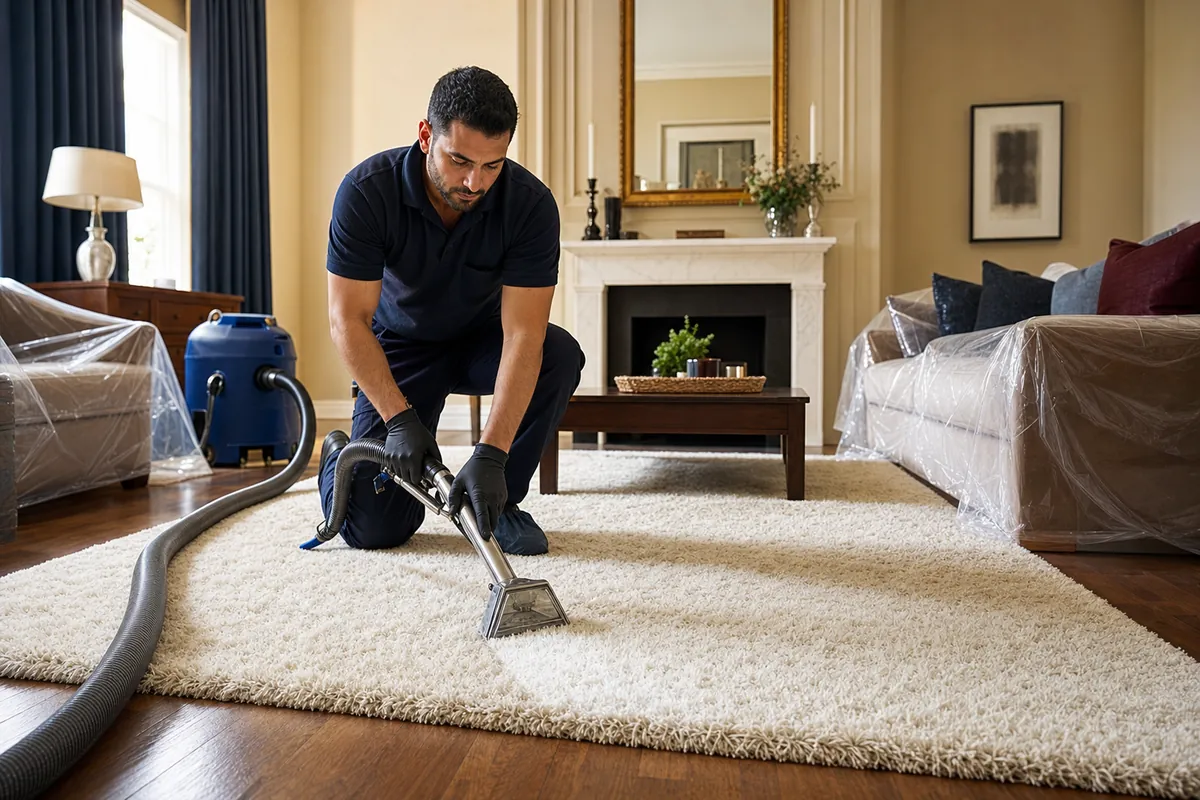
We provide on-site machine extraction rug cleaning in Acton. This is a moisture-using process, with liquid recovered alongside released dirt and drying needed afterwards; we do not offer dry cleaning. We assess suitability, prepare the accessible pile and treat suitable marks before completing the machine work and explaining the result at your property.
Mobile service in Acton · Cleaning method agreed after inspection
Knowing what is on the rug before deciding how to remove it
A change in appearance can come from loose soil, an attached deposit or a lasting alteration to the fibre. We look at the rug and discuss the concern with you before choosing our approach. A mark that has been treated already may now include product residue, while a dark route through the centre may carry grit as well as everyday dirt. Understanding that mixture helps us plan a useful clean, with the right purpose for each working stage.
We bring portable extraction equipment to your Acton property. The service includes inspection, suitable vacuum preparation, local attention where appropriate and controlled application and recovery. The rug then dries at home, with instructions explained before the visit ends. You receive a clear account of what we can do for the textile in its current condition, including the accessible scope and the likely limits of individual marks. Our focus is on removing dirt through a complete cleaning sequence that you can follow without needing to choose the technical details yourself.
Building the plan around your main concern
We ask you to identify the area you want improved and tell us what you know about it. A short account of a spill or previous product use is helpful, but you do not need to know a stain’s technical category. We inspect the current patch and the surrounding pile. That gives us a clearer picture of whether the issue is mainly attached residue, wider soiling or a permanent difference that cleaning is unlikely to change. The whole accessible rug stays within view.
The quotation discussion uses the dimensions, number of rugs and photographs where available. We confirm those details at the property and agree the working boundary. Furniture covering part of the item affects access, so any movement is arranged before cleaning begins. If an area stays concealed, it is identified rather than assumed to be included in the same way as the open field. This makes the scope practical and gives us a clear basis for the result discussion at the end of the appointment.
Inspecting the textile and its response to treatment
We examine the fibres and construction, including accessible backing, edge finish and decorative details. Loose stitching, weak corners and areas of wear can affect handling even when most of the surface appears sound. We consider the rug as it is today, not simply as an example of a particular style. The floor beneath and room around it are also assessed so the work can be organised appropriately. These observations come before deciding how the machine process should be applied to the agreed area.
We check material and colour response to establish suitability. The findings are explained in relation to the proposed work, including any restriction on a vulnerable section. Where the rug cannot accept our process, we decline the treatment. We also distinguish existing fading, fibre loss and damage from deposits that can be removed. This sets an honest cleaning objective. A clean can improve the rug by removing soil, but it cannot recreate missing pile or restore dye that is no longer present in the textile.
What we establish before cleaning
Check
What we consider
Purpose
Material
Fibre and colour response
Decide suitability
Structure
Backing, edges and wear
Set handling boundaries
Deposits
Loose soil and attached residue
Plan useful treatment
Access
Furniture and open area
Confirm the scope
Taking loose particles out before wet work starts
We vacuum the accessible pile with handling suited to its condition. Dry grit and dust can settle below the visible tips, particularly on the route people walk across the rug. Removing those particles first reduces the material the wet stage must handle. We work across the agreed field and reachable margins rather than preparing only a visible stain. The purpose is to leave less loose debris behind and give the subsequent treatment a surface on which attached deposits can be assessed more accurately.
Texture guides the way preparation is carried out. Deep yarn, loops and vulnerable edging need care for different reasons, and loose strands are kept out of the equipment’s path. As the pile clears, we look again at the areas of concern. Some dusty patches may reduce while others remain stiff or sticky. That second view is useful: local treatment can now focus on the residue still present rather than on an appearance partly caused by loose material that preparation has already removed from the rug.
Illustration of local attention to a suitable deposit.
Choosing a useful response to individual marks
We assess the remaining spots by their feel, appearance and available history. An oily deposit and a drink residue need not respond in the same way, and a pale patch may be lost colour rather than dirt. We select suitable treatment where it has a purpose and the checked textile allows it. Product is applied to the relevant area, given time to act and worked appropriately where needed. The objective is to loosen removable material for recovery, keeping the treatment connected to the extraction stage.
We watch the response before deciding whether further local attention would help. A mark can improve without vanishing, especially when residue sits over permanent change. We explain that directly rather than repeatedly adding product once it has stopped giving a useful result. The appointment also includes the wider clean, addressing ordinary dirt across the agreed rug. This keeps the work balanced: particular marks receive considered attention while the rest of the textile benefits from the preparation and machine cleaning included in the scope.
Using solution to release dirt held by the fibres
We arrange the cleaning route in sections that suit the rug’s size and the working space. The liquid stage helps detach deposits left after preparation, with application controlled to the material and degree of soiling. Any suitable working action is matched to the pile. We take account of thicker areas and borders as the job progresses, instead of applying one hurried movement to every detail. This organisation keeps treatment close to the recovery that needs to follow it.
We judge the application by its cleaning purpose rather than by how wet the surface appears. A heavily used section may need more considered attention, but extra liquid is not automatically more effective. We observe the response and stay within the limits established during inspection. The process has an understandable progression: remove loose soil, assist suitable marks, release remaining dirt and then extract it. Each stage contributes to the same practical outcome instead of relying on a single product to do everything at once.
Illustration of the machine extraction process carried out on site.
Recovering liquid carrying released soil out of the rug
Our portable extraction machine draws cleaning liquid from the pile through the recovery tool. The liquid carries released dirt into the equipment’s recovery system. We guide the head with suitable contact and inspect sections as they are completed, using appropriate further recovery work to reduce retained moisture. This is a central part of the clean. Treatment that has loosened deposits needs to be followed by removal, so the work is not complete merely because cleaning solution has been applied across the visible surface.
We work reachable edges and narrow areas within their condition limits, avoiding strain on weak trim or loose construction. Furniture remains part of the scope: any item left in place sets a known boundary, while agreed movement is built into the route. This prevents uncertainty about concealed sections. The accessible rug receives a coherent clean, and you can understand why a particular detail or area may have had different handling. That explanation continues into the final review rather than being left implicit in the machine work.
Making the finished surface understandable
We inspect the whole rug after extraction, looking beyond the individual paths of the tool. Light and pile direction can create different shades across adjacent areas, so we assess those effects before deciding a patch needs further work. Where appropriate, we settle the yarn towards an orderly finish. We revisit the concerns you raised before cleaning and consider whether additional suitable attention would help. The review connects the practical stages with the way the rug now appears in its normal setting.
We explain what has changed and what remains visible. A treated stain may retain a trace, while an area affected by wear or fading can stay distinct despite soil removal around it. The rug is also still damp, so its precise dry appearance may differ from the surface at the time of review. We put those points into context with the original inspection and any agreed limitation. You receive a clear account of the appointment and its result, rather than having to infer the meaning of every remaining colour difference.
The complete service sequence
Stage
Company action
Next step
Preparation
Vacuum loose particles
Assess remaining marks
Treatment
Loosen suitable deposits
Extraction recovery
Machine work
Recover liquid and dirt
Surface review
Completion
Explain result and moisture
Drying at home
Leaving the rug with drying properly explained
Moisture remains in the textile after recovery and needs time to leave it at your property. We consider its depth, density and the room conditions when discussing that stage. Air movement and temperature influence the process, so a single guaranteed duration would not fit every rug. Our explanation follows the item we have cleaned and the environment we can observe. This helps you plan the space after the machine work has ended and understand why normal use may need to wait.
We clarify the return of furniture, coverings and ordinary activity over the damp rug. The instructions are relevant to the actual layout and condition, making the next steps practical rather than a long list of general care suggestions. If timing is important for the room, tell us when enquiring so it can be discussed before the appointment is arranged. We finish with the cleaned result reviewed, the drying stage understood and an opportunity to ask about anything that remains on the surface or in the proposed next steps.
Machine extraction cleaning price guide
Use these starting prices as a guide. Share the item size, condition and access details so the work and final quote can be confirmed.
Service
Published starting price
What is included
Timing
Carpet cleaning
From £25 per room
Inspect, pre-treat, clean
Room dependent
Rug cleaning
From £20 per rug
Inspect, assess spots, clean
Size dependent
Steam rug cleaning
From £25 per rug
Check suitability, extract
Varies
Oriental rug cleaning
From £35 per rug
Fibre, dye and condition checks
Varies
Luxury rug cleaning
From £40 per rug
Assess and select method
Varies
Mattress cleaning
From £30 per mattress
Inspect and clean fabric
Varies
Upholstery cleaning
From £12 per seat
Check fabric and clean
Varies
Sofa cleaning
From £35 per sofa
Assess fabric and clean
Varies
Arranging your Acton rug cleaning visit
We discuss the rug details alongside access for portable equipment and the available working area. Mention stairs, parking arrangements and any large furniture covering the textile. The scope and movement arrangements are confirmed before treatment begins at your property.
Local postcode districts: W3. We confirm the visit against your full address.
No. We provide on-site machine extraction only. The process uses cleaning liquid, recovers it with released dirt and leaves moisture that needs to dry at your property.
Can you assess residue from a previous treatment?
Yes. Tell us what was used if you know. We examine the current patch and its response, then explain suitable treatment and any limit caused by permanent fibre or colour change.
What preparation is included before the machine clean?
We carry out appropriate dry-soil vacuum work on the agreed accessible area. Remaining marks are assessed and receive suitable local attention before the main application and extraction stages.
What if my rug is not suitable for extraction?
We explain the assessment and decline the proposed treatment. Our decision follows the actual fibres, dyes and construction rather than assuming every rug can receive the same process.
Can you work where furniture stays in place?
We agree the accessible area before starting. Any movement must be arranged, and concealed sections are identified in the scope so the boundary of the work is clear.
Will the rug require drying time after the visit?
Yes. Recovery reduces liquid but does not leave the textile completely dry. We explain conditions and relevant arrangements for furniture and use based on the rug and the room.
Discuss machine cleaning for your rug
Send photographs and approximate dimensions for your Acton rug. We will explain the assessment, proposed scope and quotation for an on-site extraction appointment.