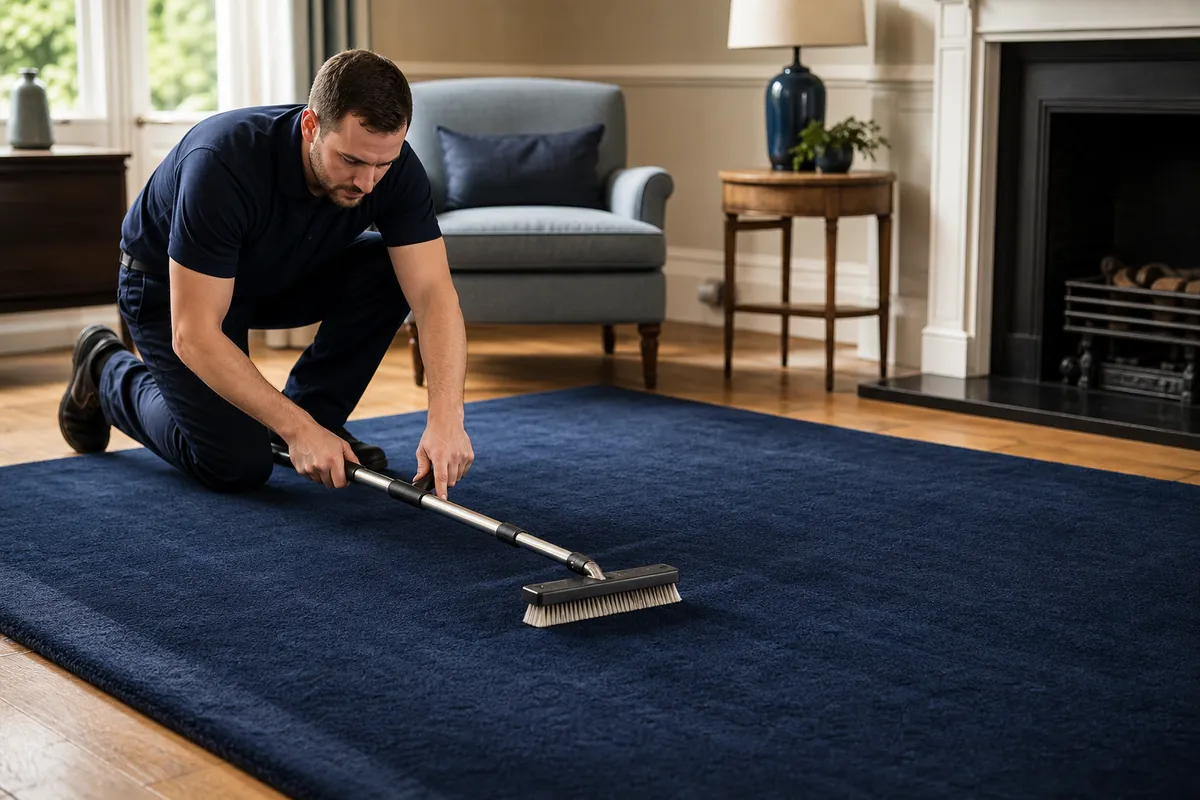
Our steam rug cleaning in Acton uses hot-water extraction at your property. We inspect the rug, remove loose soil and address suitable marks before applying and recovering cleaning liquid with portable equipment. The appointment finishes with a review of the accessible cleaned area and an explanation of moisture, drying and the return to use.
Mobile service in Acton · Cleaning method agreed after inspection
A complete cleaning sequence for the rug in your room
We bring the equipment and the working plan together at your address. If the rug has become dull, feels gritty or has a mark you want assessed, we examine those concerns and explain the work that can help. Some material needs removing before wet cleaning, some attached deposits benefit from local treatment and other dirt releases during extraction. Our appointment connects those stages rather than treating the machine’s arrival as the whole service.
The steam method we provide is hot-water extraction. Liquid assists the release of soil and is then drawn out with that material by the recovery equipment. The rug remains at your Acton property and needs drying afterwards. We establish suitability before starting and agree the scope around its construction, condition and accessible area. You receive an explanation in plain language, with a final discussion of the visible result and anything that remains, so the work is understandable from the first inspection to the end of the visit.
Confirming the rug and the result you want
We begin with the practical reason for cleaning. A large rug may look uniformly tired, while a runner may carry a concentrated line of dirt down the middle. You might instead be concerned about one spill or an area that has become sticky. We look at the whole accessible textile and discuss those priorities with you. This makes the proposed clean specific to the item, with local attention placed within the wider task of removing soil from the agreed surface.
Photographs, measurements and a description of the issue help us prepare a quotation. We confirm the details at the property, including furniture that covers part of the rug. Any movement is agreed before cleaning begins. If a section remains inaccessible, we identify it clearly so the scope does not rely on assumptions. These arrangements give the appointment a workable boundary and help you understand the final review, where we return to the areas that mattered most and explain the improvement achieved.
Assessing condition before the wet stages
We examine the pile, accessible backing and edge construction. Loose yarn, fragile bindings and previous repairs can change how a section should be handled, even when it looks similar to the stronger area beside it. We also consider the floor beneath the rug and the space needed to work around it. This inspection concerns the textile as it stands today. Its pattern, appearance or description alone is not enough to establish that our extraction process is appropriate across every part.
We check material and colour response and explain whether the proposed work is suitable. Any relevant restriction is discussed before the machine stage is agreed. Where the rug cannot accept our process, we decline the treatment. We also identify existing fading, wear or damage that differs from removable dirt. This helps set a useful cleaning objective: lift deposits from the fibres and improve the rug within its present condition, without implying that lost yarn or altered dye will be replaced by the cleaning liquid.
What shapes the proposed clean
Point checked
Our assessment
Purpose
Material
Fibre and colour response
Confirm suitability
Construction
Backing and edge condition
Set working limits
Soiling
Loose and attached deposits
Choose useful preparation
Room
Accessible surface and furniture
Agree the scope
Removing dry dirt that hides among the fibres
We prepare the rug with vacuum work adapted to its pile and condition. Fine particles may sit beneath the visible tips, especially where people repeatedly walk or turn. Removing them first means less loose debris enters the wet stage. We move through the accessible area with attention to the pattern of use, including reachable margins beside furniture. The preparation is part of soil removal in its own right and creates a more useful starting surface for treatment and extraction.
We handle loose details carefully and adjust the approach for different textures. A long pile or a vulnerable edge is not worked as though it were a firm, even central field. As particles are removed, we assess the remaining marks again. Some dullness may reduce, while an attached patch can become easier to identify. This gives local treatment a clearer target and prevents the unnecessary use of stain product on an area whose main problem was loose material that could be taken out before introducing moisture.
Illustration of suitable stain attention before extraction.
Working on marks with a reasoned treatment choice
We examine individual stains and consider whatever is known about their cause or earlier treatment. A residue from a drink can continue attracting dirt, and an old product can change the feel of a patch. We select local attention where it is suitable for the textile and has a useful purpose. Product is applied to the relevant area and allowed to act, with appropriate gentle working where needed. The intention is to release material that can be removed during extraction rather than simply obscure the mark temporarily.
We observe the response as treatment progresses. If residue releases, recovery can take it away; if the colour of the fibre itself has changed, the remaining outline may be permanent. We explain that distinction and avoid repeatedly working the same patch without benefit. The full clean still addresses the dirt across the accessible rug, so useful improvement is not reduced to whether one resistant stain disappears. You receive an account of the treatment’s actual response within the overall service agreed for the appointment.
Using hot-water extraction as a connected process
We organise the machine cleaning in sections appropriate to the rug and working room. Cleaning solution helps release the soil held around the fibres, with application controlled to the material and soiling. Suitable working may assist that release before recovery. We pay attention to the border, changes in depth and any detail identified during inspection. This keeps the route responsive to the textile rather than treating it as one uniform area that needs exactly the same handling from end to end.
Hot water is part of the method, but the clean relies on more than heat. Soil needs to release and then be removed through extraction. We do not describe the service as vapour-only treatment or claim that it sterilises the rug. The purpose remains practical dirt removal. We keep application and recovery close enough to form an organised sequence, avoiding the assumption that extra liquid by itself makes the work more thorough. The stages you see all contribute to that same cleaning objective.
Illustration of the hot-water extraction stage.
Recovering the liquid that carries the soil away
The portable extraction head draws liquid and released deposits from the treated pile into the recovery system. We guide the tool with appropriate contact and inspect the work as sections are completed. Additional suitable recovery passes help reduce moisture left after cleaning. This completes the removal prepared by earlier stages: applying solution without taking it out would leave the work unfinished. We therefore give recovery considered attention across the agreed accessible rug, not only across the most open central space.
We adapt handling around margins and narrow areas while respecting the strength of the textile. Weak edging is not pulled into position for convenience, and any part covered by furniture remains a known boundary unless movement has been agreed. Where movement is included, the route is arranged around it. This gives the overall clean a clear shape and leaves you able to understand any exclusion. The final result is tied to the actual area treated, rather than an unclear promise that hidden sections received the same machine work.
Reviewing appearance, texture and residual marks
We inspect the rug after extraction as a whole surface in the room. Pile direction and the angle of light can create shade differences, so we consider those before deciding whether further local attention is useful. Where appropriate, we settle the yarn towards a neat finish. We also revisit the original concerns and assess any patch that remains. This gives the review a practical focus and helps distinguish a directional effect from a deposit that might still respond to additional suitable work.
We explain the visible changes and any lasting difference. General dirt may have lifted while a faded or worn section stays distinct, and a treated mark may improve without disappearing completely. The rug is damp, so its final dry colour may differ from what is visible at that moment. We put those observations into context with the scope agreed at the start. You receive a plain account of the completed clean, its limits and the next stage, rather than being left to judge the surface without explanation.
The appointment in working stages
Stage
Our action
What follows
Preparation
Vacuum dry particles
Assess remaining marks
Local attention
Treat suitable residue
Extraction recovery
Machine cleaning
Remove liquid and soil
Review the finish
Completion
Discuss moisture and result
Drying in your room
Explaining the room arrangements while drying continues
The rug retains moisture after extraction and dries at your property. We consider the depth, density and conditions around it when describing this stage. Air movement and temperature influence how quickly moisture leaves the textile, so we do not promise one fixed duration for every rug. Our guidance relates to the item and room we have seen. This helps you plan the area after the machine work, understanding that full ordinary use may need to wait beyond the end of the appointment.
We discuss the return of furniture, coverings and activity over the damp surface. Any relevant restriction is explained for the actual layout and rug, making the next steps clear. If you need the room at a particular time, mention it when enquiring so timing can be considered before booking. We finish by confirming the cleaned result and remaining drying, with an opportunity to ask about any mark or aspect of the service. You know what has been completed and what still needs time at home.
Steam Rug Cleaning price reference
Use these starting prices as a guide. Share the item size, condition and access details so the work and final quote can be confirmed.
Service
Published starting price
What is included
Timing
Carpet cleaning
From £25 per room
Inspect, pre-treat, clean
Room dependent
Rug cleaning
From £20 per rug
Inspect, assess spots, clean
Size dependent
Steam rug cleaning
From £25 per rug
Check suitability, extract
Varies
Oriental rug cleaning
From £35 per rug
Fibre, dye and condition checks
Varies
Luxury rug cleaning
From £40 per rug
Assess and select method
Varies
Mattress cleaning
From £30 per mattress
Inspect and clean fabric
Varies
Upholstery cleaning
From £12 per seat
Check fabric and clean
Varies
Sofa cleaning
From £35 per sofa
Assess fabric and clean
Varies
Planning your Acton appointment
Send the rug sizes and photographs so we can discuss the proposed work. Mention stairs, parking restrictions and any large furniture affecting the area. We confirm access, the reachable scope and movement arrangements before treatment begins at your property.
Local postcode districts: W3. We confirm the visit against your full address.
We use hot-water extraction with portable equipment. Liquid helps loosen soil, and the machine recovers it with the released dirt. It is not a vapour-only treatment.
Will you clean at my Acton property?
Yes. We bring our equipment to your address and clean suitable rugs there. We discuss access and the working room, then inspect the item before agreeing treatment.
Is every rug suitable for this method?
No. We check the material, colour response and construction. We explain any restriction and decline the proposed clean when the rug cannot accept our extraction process.
Do you include attention to individual marks?
We assess them and select suitable local treatment within the agreed clean. The response depends on the residue and any permanent change already present in the fibre or dye.
What happens if furniture covers part of the rug?
We agree any movement before starting and explain the accessible scope. Where an item stays in place, the concealed section is identified so the cleaning boundary is clear.
Will the rug require drying after you finish?
Yes. Recovery removes cleaning liquid but leaves moisture within the textile. We explain drying conditions and relevant arrangements for furniture and use before completing the appointment.
Arrange steam rug cleaning
Contact us about your Acton rug with photographs and approximate dimensions. We will discuss assessment, scope and a quotation for hot-water extraction at your property.