1. Describe the item and the change you noticed
Provide overall size, available care wording and a full photograph. Locate any local concern and explain when it became visible. If an object was sitting there, identify what is known about contact, spills or movement. Include previous products or repairs and state the wider cleaning priority, so a local observation does not become the only part of the service discussed.
2. Clear safe small belongings and describe the rest
Lift loose personal items that can safely be removed, keeping liquids and hard objects away from the intended work area. Describe furniture that remains and agree any heavier movement. Do not pull the rug to expose a hidden mark beneath a heavy object solely for another photograph. Access can be discussed from the arrangement actually available.
- Show the concern within the surrounding design.
- Keep relevant product packaging information if an incident is known.
- Identify loose details near a furniture-contact area.
3. Select cleaning for supporting materials as well as pile
Inspection considers fibre evidence, dye response, backing or foundation and current strength. Suitable checks guide the products, moisture and mechanical action. A visible outline cannot determine whether the textile tolerates a particular process. The recommendation should explain how the selected route fits the complete item, with attached components and repairs included in the reasoning.
4. Give a contact-area mark realistic expectations
A section previously covered by an object can show different soiling, compressed pile, transferred material or a lasting colour change. Describe known events rather than choosing a substance from the outline. The cleaner can assess purposeful local attention within the broader cleaning aim. Avoid scraping or another concentrated product application that alters the starting condition before those questions are considered.
5. Follow cleaning from preparation to collection
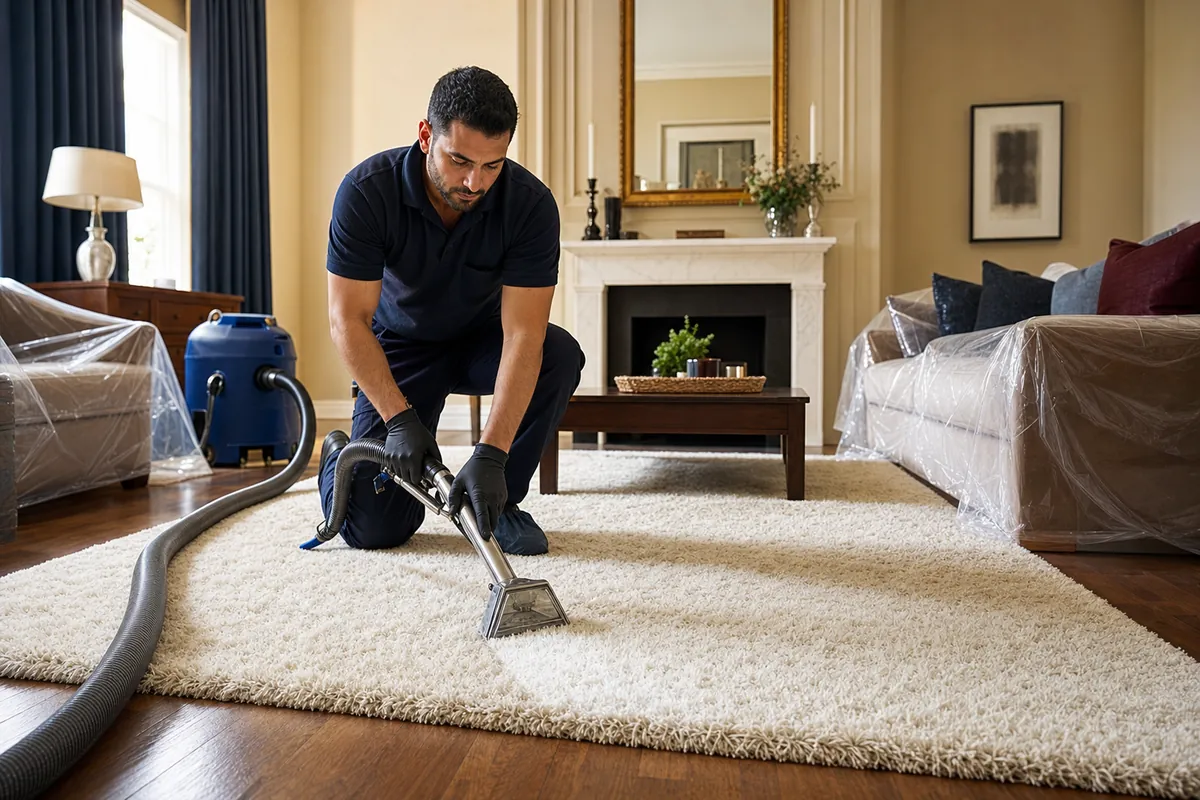
Appropriate dry preparation removes accessible loose particles with action suited to the rug and its vulnerable details. Selected attention to marks uses the findings and known application history. Compatible products and controlled working then release further soil for removal.
The chosen recovery stage collects released contamination and applied solution or cleaning material as appropriate. A suitable wet route connects application with recovery, support and drying; lower-moisture systems have their own collection requirements. An explanation of this sequence helps distinguish a complete cleaning process from treating only the outline that first drew attention.
6. Restore contact when the rug is ready
Discuss available airflow, the aftercare position and when normal room use is needed. Follow the instructions before replacing objects, furniture or coverings. Construction and the selected process influence readiness, so a surface impression alone may not answer every placement question. Review the local concern at the advised stage in comparable light, allowing a useful discussion of improvement and any remaining permanent difference.
7. Keep the proposal and final advice connected
Send dimensions, access information and cleaning priorities for the quotation. Clarify included local attention and wider treatment, with inspection-dependent questions visible. At handover, review the result against the original condition and retain practical placement and maintenance advice. Keep any separate repair or restoration request distinct so an improved surface is not mistaken for work beyond the agreed cleaning service.
8. Make routine care and later placement straightforward
Clear small belongings before suitable maintenance and follow the advised equipment technique. Avoid catches at fringe or weak connections. When objects are moved later, describe any new observation before scrubbing a newly revealed section. For a fresh incident, note the substance and actions taken and obtain material-specific guidance before applying another household product.
- Share current placement guidance with anyone restoring the room.
- Keep hard loose objects out of the routine equipment path.
- Locate later contact changes with a complete-rug photograph.