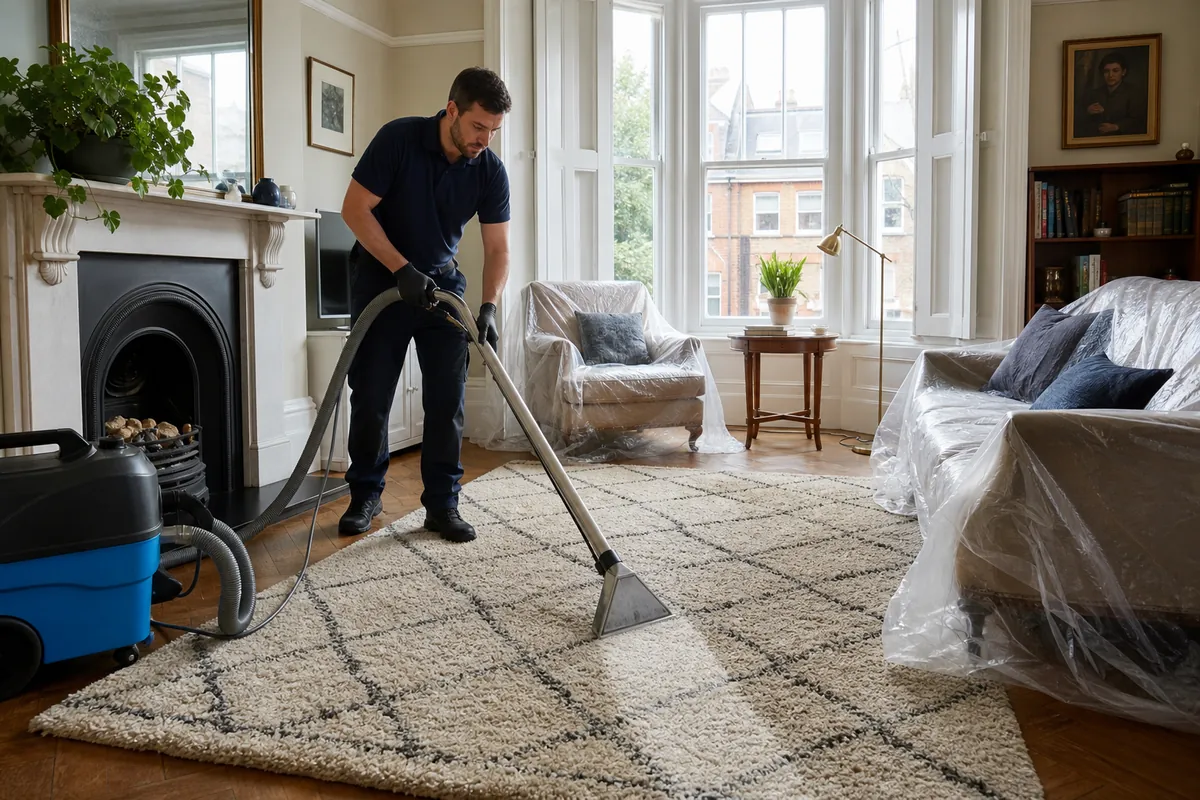
We clean suitable rugs at your Stoke Newington property with portable machinery. Where a mark follows contact with a metal object, we assess the actual concern rather than diagnosing it from colour alone. The service includes preparation, suitable local attention, cleaning and recovery, with scope, price and drying arrangements explained clearly.
Mobile service in Stoke Newington · Cleaning method agreed after inspection
A visible contact mark assessed within the whole rug
A brown or orange-looking patch near an object can prompt a concern about rust, but appearance and location do not establish its cause on their own. We examine the mark, ask about the known contact history and assess the rug’s material before choosing treatment. This gives local attention a clear basis and avoids a confident promise built on an unconfirmed diagnosis. The surrounding condition is considered at the same time, including general soil and existing wear.
Our Stoke Newington service brings portable machines to your property and keeps the rug there throughout. We agree the accessible area, inspect construction and colour response, and confirm the proposed work before starting. Preparation, appropriate mark treatment and the main cleaning and recovery stages form a coordinated process. Any furniture movement is agreed in advance. At completion, we review the local response and wider result, explain remaining limits and discuss drying in the actual room where the rug is used.
Mobile serviceLondon and the surrounding M25 area
Material checksFibres and dyes assessed before treatment
Clear pricingPublished starting prices with a confirmed quote
Open dailyMonday–Sunday, 07:00–19:00
Examining the contact history without assumptions
We ask which object was involved, where it sat and what changes you noticed, alongside any earlier products used on the patch. These details help us prepare for inspection, but do not make a definite diagnosis from a description alone. We look at the actual mark and surrounding pile before agreeing attention. The aim is to understand the concern and identify a suitable cleaning response rather than selecting a product simply because a patch has a particular colour.
We also establish whether the request includes the whole accessible rug. Approximate dimensions and a full photograph help us prepare a quotation, with close views showing the concern in context. General dirt, traffic routes and other marks can be included in the discussion. This defines a practical service rather than an open-ended attempt on one contact area. Important uncertainties are confirmed at your property before the method and charge are agreed, with additional rugs or carpet areas recorded separately where requested.
Checking construction and colour response
Our inspection covers pile, backing, borders and current condition, including repairs and vulnerable sections. Relevant material and colour checks guide suitability before machine treatment is agreed. Labels can support the assessment, but the actual construction and response remain the basis for our decision. We compare the local concern with surrounding fibres and explain important findings. This helps choose appropriate action without letting a suspected stain type displace the material requirements of the rug itself.
A contact mark can include permanent discolouration or fibre change as well as removable contamination. We explain that possibility and identify fading, pile loss or other existing damage that cleaning cannot reverse. Delicate construction or unstable dyes may also limit the proposed method. These issues are discussed before starting, with any scope change made clear. The aim is a useful clean within the item’s condition, not a guarantee that every trace associated with the object will disappear through repeated application.
Assessing an object-contact concern
Point
What we consider
Purpose
Known history
Object and timing
Useful context
Appearance
Mark and surrounding pile
Focused inspection
Material
Fibre and colour response
Suitable treatment
Whole rug
Soil, wear and access
Defined scope
Preparing the surface for suitable attention
We address accessible loose particles with appropriate equipment and handling before the main application. Dust and grit elsewhere in the rug are considered alongside the local patch. We adapt the action around fringes, weakened edges and vulnerable sections found at inspection. Recovering what can first be removed provides a better foundation for the next stage and helps reveal remaining concerns. Preparation is part of the whole agreed clean rather than a quick response limited to the most noticeable mark.
The room plan is established at the same time. We consider the floor beneath the rug, route for machinery and usable working space. Furniture movement is discussed and agreed before carrying it out, with inaccessible sections identified where items stay in position. This gives the cleaning a clear boundary and connects the quotation with the surface actually available. It also supports an orderly working sequence rather than leaving a covered edge or practical access question unresolved once treatment has started.
Illustration of focused attention within an on-site rug clean.
Selecting local treatment after assessment
Suitable local attention is chosen around the material response, current appearance and known history. The purpose is to release removable contamination where possible, not to apply an assumed rust treatment solely from a colour description. We explain how the selected attention fits into the wider clean and what realistic limits may apply. Unknown causes remain part of the assessment. A particularly visible concern still needs a proportionate process compatible with the fibre and colour response of the actual rug.
We monitor the result as treatment progresses and follow application with appropriate recovery. Repeated product or rubbing is not assumed to improve every remaining difference. Where further action is not useful or suitable, we explain that limit and discuss partial improvement clearly. The local response is reviewed alongside the broader clean, giving you an account of what was addressed. This avoids both ignoring a persistent mark and presenting an unsupported complete-removal promise for a concern whose cause or permanence may be uncertain.
Working the extraction head across the agreed sections
Once the rug has passed assessment, we set up our extraction machine for that item and explain where we will begin. We work in manageable sections so that application and recovery remain coordinated. At a border near the contact mark, the handling reflects the condition seen during inspection; the open centre does not determine how every edge is treated. This gives the job an observable sequence and keeps the specific concern within the larger area you asked us to clean.
The cleaning liquid has a job to do in releasing suitable soil, and the machine then recovers it with the suspended contamination. We pay attention to the head’s contact with the pile and the response of each section as it is worked. Our process adds moisture, so it cannot be described as a dry treatment. The rug stays in your room for the service and drying, with our extraction decisions made for its construction rather than an assumed stain diagnosis.
Illustration of suitable machine cleaning and recovery at the property.
Checking recovery where the local work meets the rest
A treated patch and its surrounding pile should be part of one completed sequence. We check that the area receiving local attention is also included in suitable machine recovery rather than leaving an application at the contact point and moving on. When the surrounding rug is included, our working route makes the boundary between local and general attention clear. You can understand what we have done to the concern and what work was carried out across the remaining accessible surface.
We also inspect the response in the busy parts of the rug. Dirt near a walking route may require a different emphasis from a sheltered corner, while worn fibres can retain a different appearance after cleaning. The decision to give an area more attention follows the textile response, not just how dark it looks. Recovery helps remove what treatment has released; it does not replace pile or repair a permanent colour change. We explain those distinctions during the check.
Showing the result before the rug is used again
At completion we look again at the contact area you identified. We explain its visible response alongside the wider cleaning result, so the discussion returns to the reason for your enquiry. We can point out a remaining outline or colour difference without calling it recoverable dirt when the assessment indicates a lasting change. The review also accounts for the edges reached and any section excluded because an object or furnishing remained in its original position throughout the visit.
Drying is the remaining stage of our wet extraction service. We assess the room and textile together when explaining how the cleaned area can be used, including relevant air movement and the position of furniture. A thick rug in a still room presents different conditions from a lighter construction with better ventilation. We describe the arrangements for your item, and any appearance that needs reassessing after drying, rather than assigning the same finish time to every rug we attend.
What the service reviews
Part
Our work
What is explained
Preparation
Address loose particles
Starting condition
Local attention
Treat suitable concerns
Response and limits
Machine recovery
Collect soil and solution
Active removal
Completion
Review and discuss drying
Normal room use
Preparing a quotation for the contact concern and full clean
Our quotation discussion identifies the specific rug and whether the request includes the entire accessible surface. Size, condition and the contact concern are considered together, with photographs helping us prepare for inspection. We make clear what still needs checking at the property and settle the proposed charge before treatment. If a dye or structural finding prevents extraction, we explain that limitation directly. We do not substitute an unoffered process to keep the original proposal in place.
For the appointment itself, we establish how our portable machine will reach the room and where equipment can be positioned. Entry instructions, any stairs or lift and parking arrangements are checked against your address. We discuss extra rugs as separate items, even if they are being attended to during the same visit. This lets us plan a sensible order and explain which spaces will be affected by work and drying, with the practical arrangements supporting the actual cleaning agreed.
Price guide
Starting prices for Stoke Newington
Published starting prices; the final quote reflects the rug and access.
For a booking in Stoke Newington, include your full postcode and property access information. The map shows the service area.
Local postcode districts: N16. We confirm the visit against your full address.
Arranging the Stoke Newington appointment
We confirm requested items and access for portable equipment before attendance. Entry arrangements, parking and floor level are discussed where relevant, along with the route into the room. These practical details support a clear visit plan connected to the rug and agreed service scope.
Published customer feedback
Reviews shown to Stoke Newington customers
“I booked a last-minute clean before guests arrived, and they delivered beyond expectations. The rug looks brand new!”
“Highly professional and efficient service. They cleaned two rugs at my flat and even gave advice on long-term care. Great value for money and a friendly team.”
A measured response to a suspected mark
We use the contact history as context rather than a definite diagnosis. This helps us explain suitable local attention and realistic limits while keeping the material requirements and wider cleaning request in view throughout the appointment.
A clear result discussion
Our closing review covers the specific response, wider cleaning improvement and lasting condition differences. Drying information then completes the account for your room, giving you useful details about the service and the return to ordinary use.
Not necessarily. We consider the known contact history and inspect the actual concern rather than diagnosing it from colour or position alone. Material and colour response then guide any suitable local attention and the limits we explain.
Can the mark be assessed during a full clean?
Yes. We define the request with you, and suitable local attention can form part of a complete accessible-area clean. The quotation identifies the items and surfaces included, with the concern considered alongside surrounding soil and condition.
Is the service completed at my Stoke Newington property?
Yes. We bring portable machinery and carry out the agreed work on site. The rug remains there throughout, with suitability checks before treatment and drying guidance related to the actual item and room afterwards.
Will every contact mark disappear?
No. Some concerns involve permanent colour or fibre change as well as contamination. We explain realistic limits during assessment and review the actual response, rather than making an unconditional complete-removal promise based on the suspected cause.
How do you work around furniture?
Movement is discussed and agreed before it happens. Where an item remains in place, we define the reachable surface and cleaning boundary clearly. Relevant furniture arrangements during drying are also covered as part of completion.
What is explained about drying?
We consider fibre, thickness, room conditions and moisture left after recovery. Normal use and relevant ventilation are discussed for the actual rug, with any appearance needing another review once dry connected clearly to the treatment carried out.
Next step in Stoke Newington
Discuss your Stoke Newington rug clean
Send a whole-rug photograph, approximate dimensions and any known contact history. We will explain suitable on-site cleaning and prepare a quotation with the requested work and practical arrangements clearly defined.